A player has a problem: the numbers keep going up, but the journey feels as though it is going nowhere. At an AFK Arena meetup, somebody said as much to the people making the game. According to producer Jiangyuan He, that conversation helped inspire AFK Journey’s richer narrative. It is an unusually useful origin story. The customer already liked the machinery. What he wanted was somewhere for the machinery to take him.
- Play: collect heroes, explore fantasy worlds or coordinate an empire.
- Pay: major games start free, with optional purchases inside.
- Learn: progress brings people back; purpose gives them a reason.
Progress needs a destination
Lilith Games, founded in Shanghai in 2013 by Wang Xinwen, Yuan Shuai and Zhang Hao, develops and publishes games for a global audience. Its catalog includes AFK Arena, AFK Journey, Rise of Kingdoms and Dislyte. These are different invitations to spend an evening. Their shared business problem is familiar: persuade someone to return tomorrow, and then give that person enough pleasure to keep returning.
AFK stands for “away from keyboard.” In AFK Arena, heroes continue earning resources while their owner is elsewhere. The design accommodates interruptions. Wang explained in a 2020 interview that research had found players leaving games because life became busy. Lilith’s response was to make absence less costly. An unattended adventure could still produce a little welcome-home present. Wang’s account of the design makes the ordinary demands of a player’s day part of the product brief.
AFK Journey adds somewhere to walk. Players become Merlin, recruit companions, explore Esperia and arrange teams for tactical encounters. Terrain and traps matter; the idle rewards remain. PC and mobile cross-play let the same adventure move between screens. This is entertainment for someone who enjoys choosing a formation and discovering a place, without having to perform every repetitive action personally.
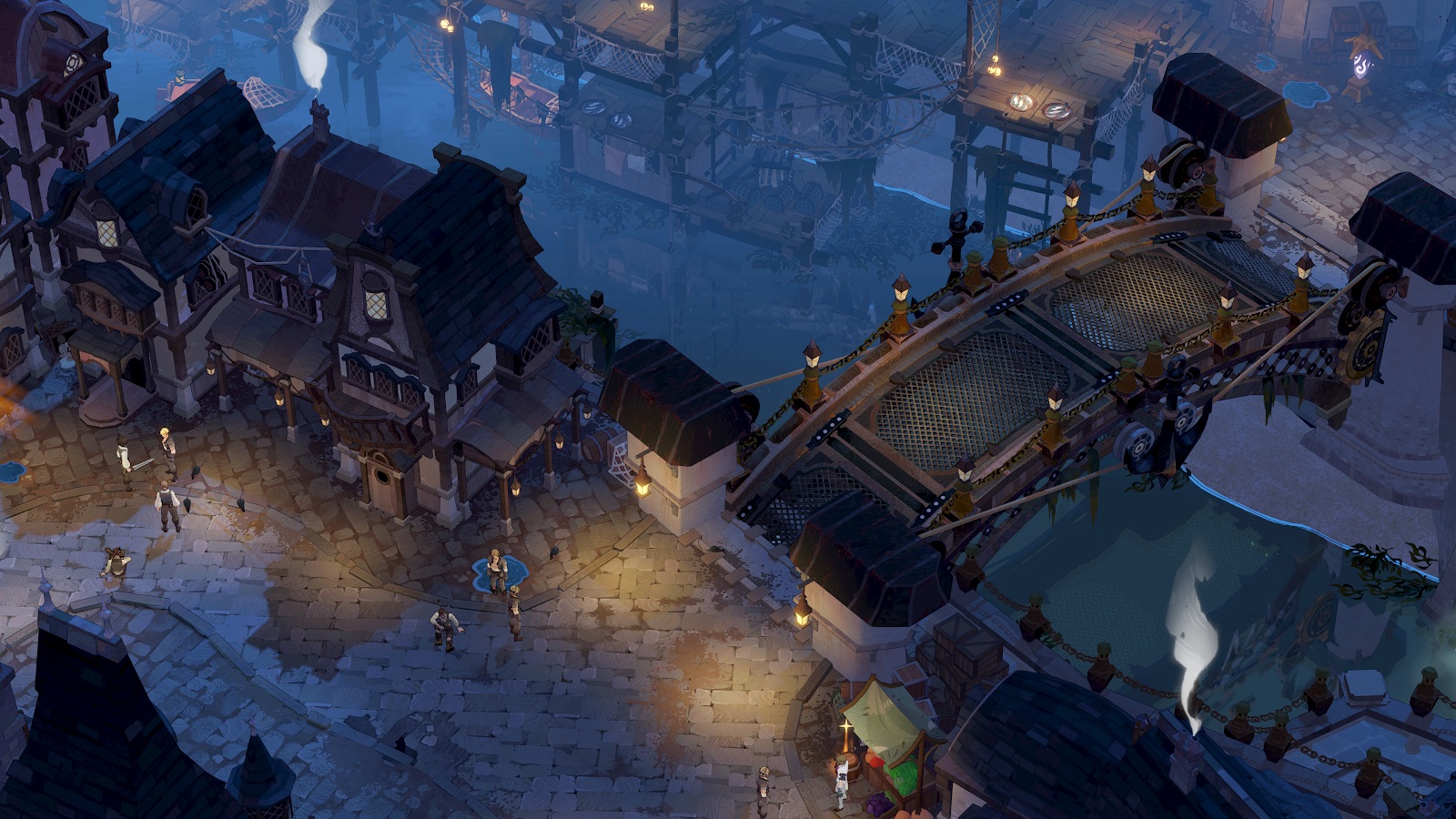
He told Google Play that the art team borrowed from murals, stained glass and illustrated books. The player’s complaint about aimlessness explains why those streets belong here: a setting gives accumulated power a context. That connection is our reading of the design, rather than proof that every player wants a story. The producer’s interview supplies the concrete starting point.
Three ways to spend an evening
Rise of Kingdoms offers a different rhythm. Pick a civilization, develop a city, send out scouts and move troops across a shared map. Alliances give the map a social life. Built-in chat translation and coordination tools help players cooperate across languages. Other people become part of the challenge, rather than scenery around it. An ally needing help can be a stronger reason to log in than another pile of coins.
The scale is substantial, though downloads should not be confused with people currently playing. Google Play lists Rise of Kingdoms at 50 million-plus downloads and AFK Arena at 10 million-plus. These store thresholds describe cumulative Android installations. They tell us Lilith has reached beyond a niche; they do not tell us how many players stayed, how often they returned or how much they spent.
There are further doors into the catalog. Dislyte puts mythological powers in an urban setting with a musical identity. Call of Dragons, developed by Legou Games, offers fantasy strategy through Farlight, Lilith’s Singapore-based global publishing brand. The developer-publisher distinction matters. Lilith’s expertise includes making games and bringing other teams’ work to market. Its catalog also makes room for puzzle titles such as Abi and Isoland 2.
Players have plenty of alternatives. Clash of Clans competes for the empire-building evening; Honkai: Star Rail and RAID: Shadow Legends compete for the pleasure of assembling a roster. Lilith’s AFK games occupy a useful position between casual progression and tactical team choice. Rise of Kingdoms asks for more coordination. Choosing among them means choosing a social commitment as well as a genre.
The price of returning
The entry price for Lilith’s major live games is zero. The continuing relationship includes purchases. Hero collection, currencies and bundles turn a free download into a business. AFK Journey’s direct store, for example, lists a US$99.99 currency package. That is one optional transaction, not a price for completing the game. A player’s total bill depends on repeated choices, and can differ dramatically from somebody else’s.
Estimated lifetime mobile player spending on AFK Arena by April 2026.
AppMagic estimate reported by PocketGamer.biz. Not Lilith’s company revenue.The spending estimate shows how valuable the returning player can be. The same report describes five consecutive years of declining earnings for AFK Arena. A long-lived hit can generate a large lifetime total while its yearly business shrinks. New stories and new games therefore have commercial work to do. The award-winning sequel arrives in a portfolio that must keep renewing its appeal.
For players, the distinction between enjoying a game and winning its competitive rankings deserves attention. Store reviews include complaints about spending pressure. Those are individual experiences, not a measurement of every player’s outcome. Still, somebody seeking a fixed-price adventure with no recurring offers has a different requirement from the customer these free-to-play economies serve.
The players rewrite the rules
In May 2024, AFK Journey’s first season, Song of Strife, drew complaints about reduced rewards. The team acknowledged distribution oversights and announced adjustments to several modes, with compensation for progress already made. Its public response shows what changed the decision: players objected to the new terms of progression. A reward system is also a set of expectations. Alter it, and people notice what their time used to buy.
“Go Beyond Expectation”
The motto cited by AFK Journey producer Jiangyuan He
Apple named AFK Journey its 2024 iPhone Game of the Year; Google Play chose it as Best Game in the US. By 2026, Farlight’s catalog also included Clash of Critters, mixing creature collection with pinball. In Japan, an August AFK Journey event brought in Digimon Adventure characters. The portfolio keeps testing reasons to arrive and reasons to come back.
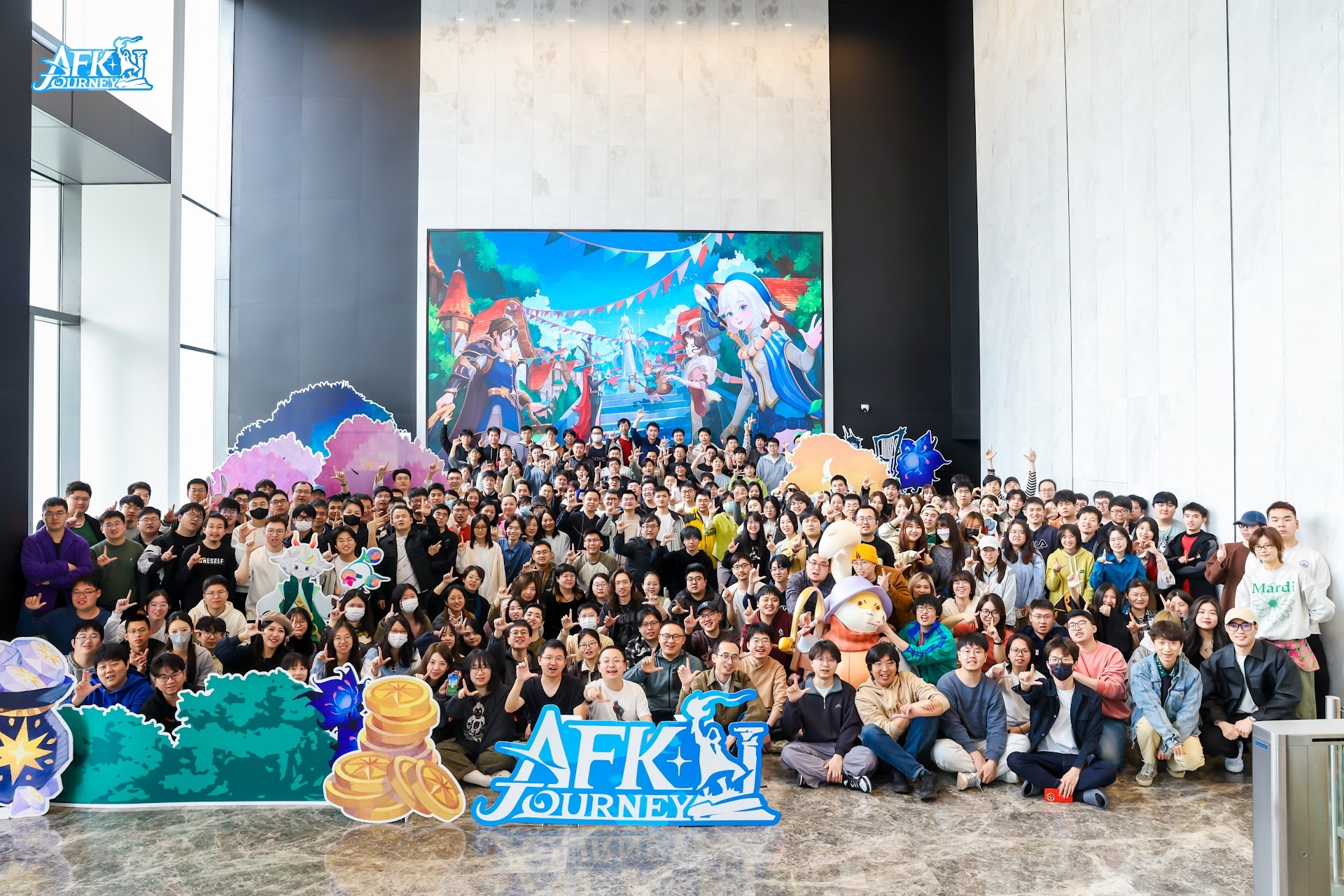
The transferable idea is practical: ask why people leave, then examine what returning feels like. Make repetitive progress easier; give meaningful decisions room. That approach depends on an audience that enjoys accumulation and an operator able to sustain content and fair-feeling rewards. Competitive obligations or an economy that frustrates players can undo the convenience. The welcome-home present only works if somebody still wants to open the door.