At lunchtime, the schoolboy went to the internet café and put his character to work. By the time classes ended, the character in Stone Age had collected experience, money and equipment. Kenny Wang remembered rows of computers carrying on like this, industriously enjoying a game while their owners were elsewhere. He and his friends joked that it was the game most popular with computers. The machines, at least, had an excellent afternoon.
Years later, Wang would run a company associated with AFK Arena, a game that lets progress continue while the player steps away. The initials mean “away from keyboard”, an unusually candid invitation from an entertainment business. Here was a designer who had experienced the pleasure of coming back to something, rather than staying attached to it. A small memory from a café gives his subsequent career a useful human scale.
Wang, also known as Wang Xinwen, is the co-founder and CEO of Shanghai’s Lilith Games. His working life spans Tencent, a startup founded with university friends, an early mobile hit and the long effort to reach players abroad. The interesting part is how often his explanations changed. Follow the decisions rather than the company’s trophies, and a more revealing portrait appears: a person who likes a clear argument, then has to live with what happens when people refuse to behave according to it.
Three friends, one small screen
Wang entered Nanjing University’s software school in 2005 and graduated in 2009. He founded the OPEN student club and took part in debating. Returning to campus in 2014, he spoke about communication as a skill that students could develop through clubs and other activities. For someone heading into software, this was a useful education alongside the technical one. A proposal still needs an audience, even when its eventual destination is a screen.
After university came four years at Tencent in Shanghai. In May 2013, Wang founded Lilith with Yuan Shuai and Zhang Hao, two university friends. Their connection preceded the company; the venture grew out of people who already knew one another. Yuan would become central to the design of Lilith’s games. The familiar startup photograph contains a solitary founder. This beginning requires room for three.
then Tencent
founded in Shanghai
Dota Legend
AFK Arena
Lilith’s first self-developed release, Dota Legend, arrived in 2014 and later became known as Xiaobingbing Legend. It put a card-based game into players’ hands, with taps on illuminated hero portraits triggering special abilities. Wang’s own account described a strong commercial response. The little company had found an audience in a market being remade by smartphones. Such an outcome makes a persuasive argument for the decisions that preceded it, including decisions that may have helped less than their authors imagine.
By 2015, Wang had been included in Forbes’ Chinese under-30 entrepreneur selection. His university would later record the recognition in its alumni profile. The transition from graduate to employer had happened quickly. Recognition, however, leaves an awkward design problem untouched: once a first game works, what should the second one do? A trophy can sit quietly on a shelf. A player expects another reason to open the app.
When “different” becomes the brief
In 2016, Wang had a definite answer. A new project should look different at first sight, and it should be made for players around the world. He prepared for public speaking with the same deliberate approach he brought to work. He compared practising a presentation to returning to Overwatch after a break: concentrated practice restored your fluency. Before negotiating with Valve, he read books about negotiation. The picture is of a founder who preferred preparation to an inspired shrug.
Global ambition had ordinary pleasures attached to it. Wang recalled seeing people play the company’s game at a Taiwan night market. A guide in Thailand told him he had played it and spent money. A language barrier remained, but the game had already crossed it. The encounter gives a concrete meaning to “global”: somewhere else, someone has understood what your team made well enough to care about it.
Art of Conquest became a test of that ambition. Discussing its development in 2016, Wang explained the difficulty of showing hundreds of independently calculated combat units on a phone while accommodating less powerful devices. He disliked battles that ended with a report instead of an intuitive spectacle. The engineering had a purpose that a player could recognise: let the action make sense in front of you. A specification becomes more interesting when it serves something visible.
There was also a willingness to stop. In an internal letter published in April 2016, Wang explained the cancellation of Hanwei Qishi. He paid attention to the players who kept asking when a closed test would return, or continued arguing about tactics after the servers stopped. Enthusiasm had texture. A reassuring retention figure could coexist with a game people did not particularly love. He wanted the team to get close enough to notice the difference.
Yet “innovation” could become a dangerously comfortable explanation. In his 2018 essay about failure, Wang described unsuccessful publishing investments and internal experiments. He also acknowledged the first hit’s borrowed character and skill designs, and the copyright dispute with Blizzard that ended in a costly settlement. His reflection was specific: he had preferred to attribute success to an explanation that felt better to him. Invention mattered, but treating invention as an end in itself had led him astray.
This is the uncomfortable middle of his story. The founder who wanted a dependable method had to examine the method’s premise. Success offers a tempting shortcut: preserve the part of the story that makes you look clever, then repeat it. Wang’s public reconsideration is more useful than that. It allows an early achievement to remain an achievement while reopening the question of why it happened. A good game and a good explanation of its success are separate pieces of work.
A good game and a good explanation of its success are separate pieces of work.On Wang’s changing account of innovation
A game that leaves room for your evening
AFK Arena, released in 2019, supplied a different sort of answer. In his App Store conversation, Wang described research into people playing while watching television on the sofa. People left games because they became busy, then did not return. The design problem was wonderfully unceremonious. The player had an evening, a television programme and other things to do. A game had to earn a place among them.
The brief made room for both short visits and longer sessions. Important resources could accumulate through idle play; players with more time could pursue tactical challenges and exploration. Wang also described lowering the cost of experimentation, including returning upgrade materials when a player reset a hero. These are decisions about what happens after someone makes an imperfect choice. Games are rather good at imposing consequences. Giving someone permission to try again can be just as consequential.
His thinking about social play was equally personal. In college, he had tended to work out the plans himself and ask club members to execute them. He later concluded that people needed space to contribute independently. For a game community, he distinguished being needed from receiving an order. A friend borrowing your character could give you a useful role without making participation compulsory. The appeal lay in having something to offer and a choice about offering it.
The same interview connected creative work with room to experiment. Wang argued that exhausting a team over a design that might later be discarded could make the next attempt harder. The reasoning was practical: uncertain development involves trying things that will fail. It asks people to invest effort while accepting that some of the result will vanish. Under those conditions, a manager has to consider what will keep them willing to try another idea.
The company has to learn to remember
As Lilith grew, that concern acquired an organisational dimension. In a December 2021 interview, chief talent officer Yang Yunya described an employer that put weight on retaining people, supported interest clubs and avoided mandatory 996 schedules. She had joined when the company had a little over 60 employees; by the interview, it had more than 1,900. A relationship that begins in a small office has to find other ways to survive that much growth.
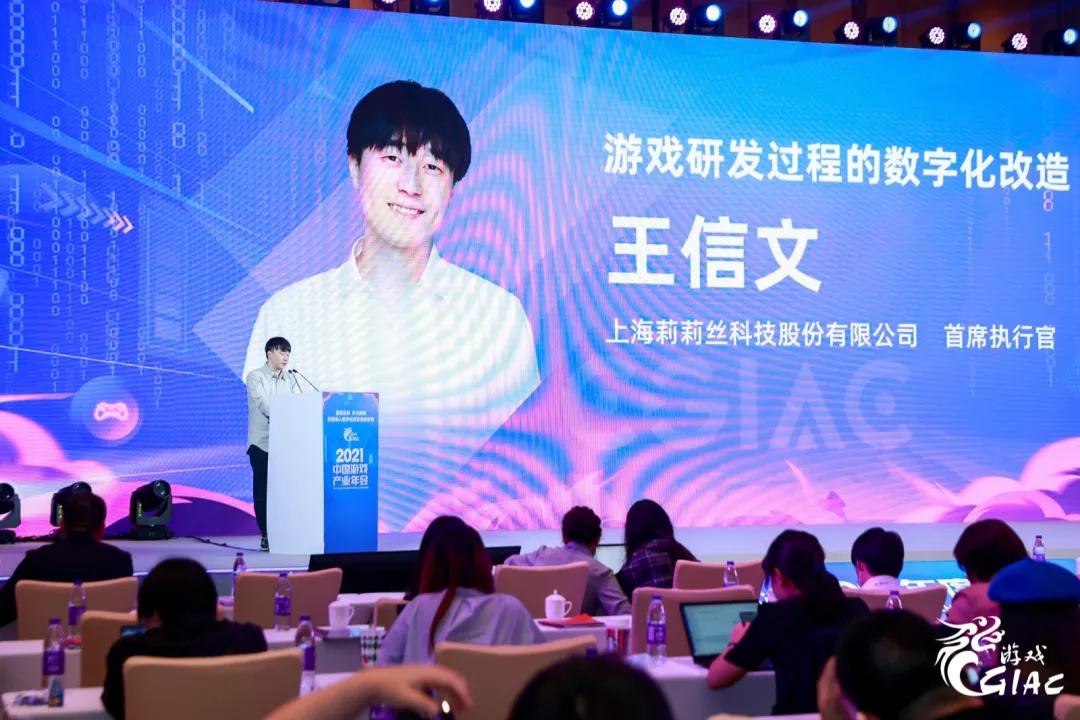
That month, Wang addressed the China Game Industry Annual Conference about digitising game development. His subject was less glamorous than a new fantasy world: tools, automation and online collaboration. Early teams could rely on spoken instructions and improvised coordination. Larger projects needed shared records and more systematic production. Ideas cannot circulate very far if the only copy is in someone’s head, or in a conversation the next colleague never heard.
The two accounts belong together. Giving people autonomy requires them to understand the work around them. Keeping a record of decisions can help a new colleague participate without knowing whom to interrupt. Automated routines can remove some repetitive labour from a creative process. The administrative details are part of the environment in which a game gets made. By this point, Wang’s job involved designing that environment as well as judging the games it produced.
There was room for another scale of project, too. In a June 2025 conversation, Yuan Shuai described Lilith’s renewed investment in independent games, an effort he was leading. He had discussed it with Wang and received his support. For a company known for long-running mobile titles, backing smaller teams kept another kind of design conversation open. The person making the decisions still had university friends beside him, now with years of their own experience and judgement.
A world of players, in the plural
AFK Journey, published internationally by Farlight Games, won Apple’s 2024 iPhone Game of the Year award. It combined idle roleplaying, tactical battles and an explorable fantasy world. The award belongs to a game and its makers, rather than serving as a personal design credit for the CEO. That distinction matters in Wang’s story: the company he founded now contained teams capable of making things that could be recognised on their own terms.
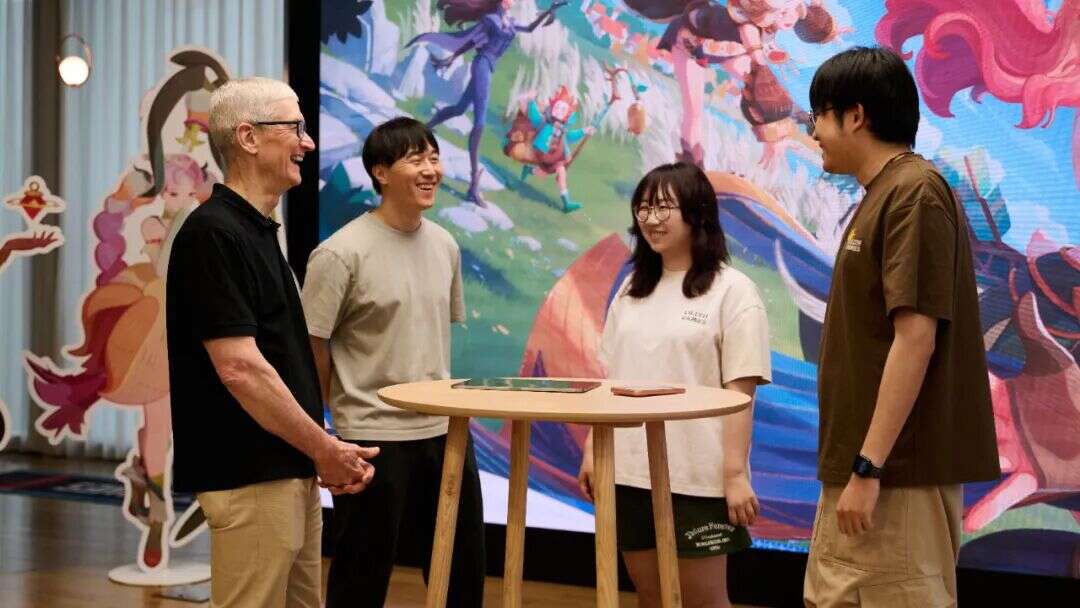
On October 14, 2025, Tim Cook visited Lilith in Shanghai. Wang met him alongside members of the AFK Journey team. Their conversation included games and the company’s communal spaces. The visit made a neat public photograph, but the more interesting item was on the company’s history display: a plan for deeper localisation in 2026. Wang explained that trying to make one game work everywhere had limits.
An April 2026 account returned to that shift towards development for particular regional markets. It offers a useful counterpart to the 2016 insistence on globally appealing design. The ambition still spans countries; the proposed route gives more attention to their differences. A phone may travel with much the same hardware and interface. The person holding it brings tastes, habits and expectations that do not arrive in a standard box.
Wang once put his ambition this way, in a 2016 interview: “We want to become the world’s Lilith.” The wording, translated from Chinese, has survived better than any single prescription for getting there. A founder can keep an ambition while changing a design rule, a management habit or an account of his first success. The willingness to revise gives this career its shape. Somewhere beyond the office, a player is deciding whether to come back. That decision keeps the argument open.
Wang’s stated design principle in 2016 and the strategic direction discussed in 2025–2026.
Follow the conversation
- Kenny Wang on LinkedIn ↗
- Lilith Games ↗
- Lilith Games on X ↗
- Lilith Games on Facebook ↗
- The university years ↗
- The 2016 conversation ↗
- Wang’s essay on failure ↗
- The AFK Arena developer conversation ↗
- AFK Journey’s App Store award ↗
- The Tim Cook visit ↗
- The 2026 strategy ↗
- Archive of Wang’s writing (maintained by a reader) ↗