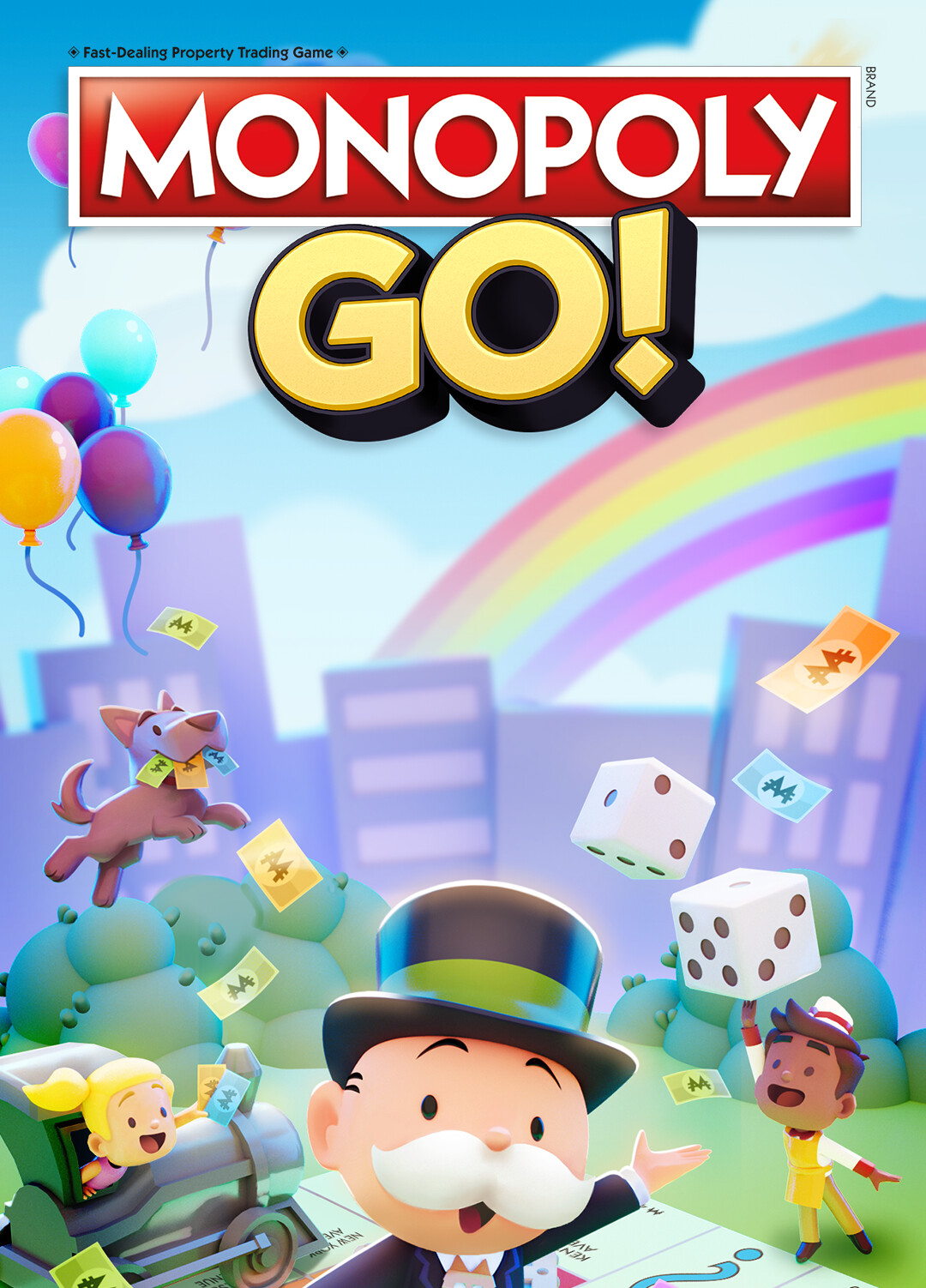
The business lesson inside MONOPOLY GO! is hiding in plain sight. The game asks you to tap a button, roll dice, collect rent and occasionally flatten a friend's tiny landmark. It feels instant. It was anything but. Scopely spent roughly seven years developing the game, about twice the expected schedule. Along the way, the team built a different Monopoly-inspired product, concluded that it missed the promise of the brand, and threw the concept overboard.
The replacement, codenamed Top Hat, arrived in April 2023. Seven months later it had generated $1 billion in consumer spending. It needed just three more months to reach $2 billion. Sensor Tower estimates put lifetime in-app purchase revenue above $6 billion during 2025, the quickest any mobile game had reached that mark. This is not a tidy overnight-success anecdote. It is a story about the awkward years before the chart shoots upward, and the expensive machinery required to keep it there.
The first board went in the bin
Scopely's initial mistake was understandable: treat Monopoly as an object to be adapted. But a famous board is not automatically a good phone game. The physical version uses negotiation, waiting, arithmetic and a long march toward one delighted landlord and several bankrupt relatives. Mobile play demands shorter loops and a reason to return tomorrow.
What changed the team's mind was the gap between recognition and feeling. The earlier concept carried the license but did not deliver what executives called the full promise of the intellectual property. The reset asked a better question: which emotions should survive the trip to a screen? Top Hat kept luck, acquisition, visible progress and petty social treachery. It made movement fast. It put familiar faces on boards. It turned sticker trading, partner events, bank heists and landmark shutdowns into reasons to message another human.
“We first built a different MONOPOLY-inspired game.”Scopely's own account of the pivot
The team also rebuilt the less photogenic parts. Dashboards changed. Teams reorganized. Analytics moved down to the country level. A game designed for a mass audience had to be tuned market by market, event by event and cohort by cohort. The final ten percent of polish, co-CEO Walter Driver has argued, can consume half the work and produce most of the result. That only sounds like philosophy until a seven-year budget is attached.
From board-game imitation to social habit
- License the memory. Start with a property players already understand.
- Reject the literal translation. The first concept did not create the expected emotional payoff.
- Isolate the loop. Fast rolls, visible progress, surprise and friendly sabotage became the center.
- Prove retention locally. Teams and dashboards were rebuilt around country-level learning.
- Buy distribution. Heavy marketing followed a product that could repay it.
Free to enter, meticulously priced inside
Scopely's customers are players, not retailers. Its games are free to download; a fraction of the audience buys dice, currency, progress and time. The company then gives everyone a reason to return through live events, limited collections, alliances, updates and social obligations. Revenue does not arrive at a checkout counter once. It arrives in small decisions across a long relationship.
That model solves two problems for owners of entertainment franchises. It translates a known world into a daily digital habit, and it keeps the property active between films, television seasons or physical-product releases. Hasbro supplies brands including Monopoly, Yahtzee and Scrabble. Paramount supplies Star Trek. Marvel and WWE bring characters with communities already attached. Scopely supplies product design, publishing, analytics, marketing and the calendar that makes an old name feel perpetually in progress.
The cost is not subtle. At the point MONOPOLY GO! had generated roughly $2 billion, industry analysis put user-acquisition spending near $500 million. By early 2025, Scopely's leadership said marketing spend had crossed $1 billion. That money bought celebrity campaigns, performance ads and a great many attempts to place Mr. Monopoly in front of the correct thumb at the correct time.
Three numbers people often mix up
Different dates and definitions. The bars compare scale, not profit.
The tempting conclusion is that Scopely purchased a hit. The sequence matters more. Spending at that scale works when retention, payer conversion and customer value are already strong enough to support it. Put the advertising first and the same budget becomes a very efficient machine for finding people who leave.
The quiet product is Playgami
MONOPOLY GO! is the loudest result, but Scopely's more durable difference is an internal platform called Playgami, a name stitched from play and origami. It is the shared layer beneath a deliberately varied portfolio: publishing infrastructure, data, live-operations systems and accumulated knowledge about growing games. Scopely can pair those capabilities with internal studios, outside development partners or acquired teams.
That arrangement sits between a conventional publisher and a software platform. A partner studio does not simply hand over a finished game for distribution. Scopely says the boundary between developer and publisher disappears into one operating team. Acquired studios retain leaders and creative ownership while the common machinery handles scale. The model is meant to preserve the oddness that made a game work while spreading the boring capabilities every game needs.
The portfolio shows the range. Star Trek Fleet Command is a long-running strategy world. MARVEL Strike Force is a squad role-playing game. Scrabble GO and Yahtzee With Buddies turn tabletop familiarity into social routines. Stumble Guys is multiplayer slapstick that Scopely moved from mobile onto PC and consoles. Pokémon GO, Pikmin Bloom and Monster Hunter Now add real-world movement and location-aware communities. They do not look alike. They do share the problem of earning attention again tomorrow.
The company started buying the board
Scopely was founded in 2011 by Walter Driver, Ankur Bulsara, Eytan Elbaz and Eric Futoran in a small office above the Wiltern Theatre in Los Angeles. It initially pitched a network that could help independent developers promote, monetize and operate mobile games. Successive rounds of venture financing expanded the toolbox. A $200 million Series D in 2019 was explicitly aimed at acquisitions. A $340 million Series E in 2020 valued the company around $3.3 billion.
Then the transactions became part of the product strategy. Scopely bought FoxNext Games Los Angeles, home of MARVEL Strike Force, in 2020. It paid $1 billion in cash and stock for Sony's GSN Games business in 2021. It acquired Stumble Guys in 2022. Savvy Games Group, owned by Saudi Arabia's Public Investment Fund, bought Scopely for $4.9 billion in 2023 and allowed it to operate autonomously.
In May 2025, Scopely closed its $3.5 billion purchase of Niantic's games business. Pokémon GO alone brought more than 20 million weekly active players at announcement, plus a team that had operated one of mobile gaming's most recognizable communities since 2016. The deal also included Pikmin Bloom, Monster Hunter Now, Campfire and Wayfarer. It was less a bet on a launch than a purchase of mature habits, trusted teams and years of live-service knowledge.
By its fifteenth anniversary in 2026, Scopely said its games had generated more than $15 billion in lifetime revenue. More than 3,000 employees worked across over 30 countries. A majority investment in Istanbul's Loom Games, maker of the fast-growing puzzle title Pixel Flow!, showed the flywheel still turning: find an engaged product, keep its builders in charge and connect them to the platform.
What another operator can actually copy
A founder cannot copy Scopely's licenses, balance sheet or decade of data. The useful pieces are behavioral. First, separate sunk cost from earned conviction. Scopely did not keep polishing the first Monopoly concept because it had already spent years on it. It retained the learning and replaced the product. Second, define the emotion before the feature list. The winning game is not a faithful board simulation; it is a machine for surprise, progress and socially acceptable revenge.
A five-part operating checklist
- Write the emotional promise in one sentence before debating mechanics.
- Instrument retention by market and cohort, not only with one global average.
- Give a small cross-functional team authority to rebuild, not merely optimize.
- Design live events as part of the product, not a marketing layer added later.
- Scale acquisition spending against measured payback; do not use spend to manufacture product-market fit.
Third, treat operations as creative work. A live-service calendar changes how players coordinate, compete and return. Fourth, centralize reusable tools while leaving the game-specific judgment with people closest to the community. Scopely's edge over rivals such as King, Supercell, Zynga, Electronic Arts and Playtika is not that it found a genre they missed. It has built a way to operate many genres without demanding that they become the same game.
The conditions are demanding. This approach needs patient capital, a measurable repeat-use loop, a large reachable audience and a team capable of shipping for years. It is a poor fit for a finite premium title, a niche audience with low lifetime value, an unlicensed imitation of a famous world, or a product whose economics collapse under paid distribution. Seven years is evidence of endurance only if each year produces information. Otherwise it is merely seven years.
That is the useful tension in Scopely's story. The company operates at blockbuster scale, but its defining decision was subtractive: admit the first answer was wrong, keep the question and start again. Everything that followed - the dice, the ads, the acquisitions and the billion-dollar milestones - depended on making that uncomfortable move before the market could applaud it.