There is a cherished story about game companies. A few friends crowd into a room, survive on instant noodles, discover something magical, and only then learn how to become a business. Ares Interactive began at the other end of the story. Its founder had run Glu Mobile. Its president had worked at Glu, Scopely, and Mattel. Its Berlin studio already had a game people were playing by the millions. The company did not need to learn that launching is the easy part. Everyone in the room had already lived through what comes next.
The short version
- Ares develops, publishes, markets, and operates free-to-play games.
- Its two studios are Swift Games in Berlin and 7th Inning in San Francisco.
- Its public portfolio is Heroes vs. Hordes, Baseball Hits 26, and The Walking Dead: Aftermath.
- Heroes vs. Hordes had passed 13 million installs when Ares announced a $70 million Series A.
- The bet is simple to say and hard to prove: small veteran teams plus shared data, marketing, live ops, and AI tools can outperform heavier publishers.
The pitch arrived already playable
Niccolo de Masi founded Ares in 2024, three years after Electronic Arts bought his former company, Glu Mobile. Ares closed initial funding that May and quietly acquired Swift Games, the Berlin maker of Heroes vs. Hordes. Mike DeLaet joined in August as chief strategy officer and took the operating lead in February 2025. By the time Ares announced itself broadly a year later, it could show investors a working live-service business instead of concept art.
That sequence matters. Heroes vs. Hordes is a free-to-play roguelite in which players assemble heroes, weapons, talents, and pets against crowds of monsters. The surface is frantic; the business underneath is scheduled. Monthly adventures, competitive events, faction challenges, new characters, progression tracks, and a direct web store create reasons to return. By February 2026, the game had surpassed 13 million installs.
General Catalyst led a $70 million Series A, with de Masi also participating. In a quarter when less than $200 million went to mobile and PC or console studios, the check was conspicuous. The money was meant for more development, selective acquisitions, shared technology, infrastructure, and the expensive distribution work that game companies politely call user acquisition.
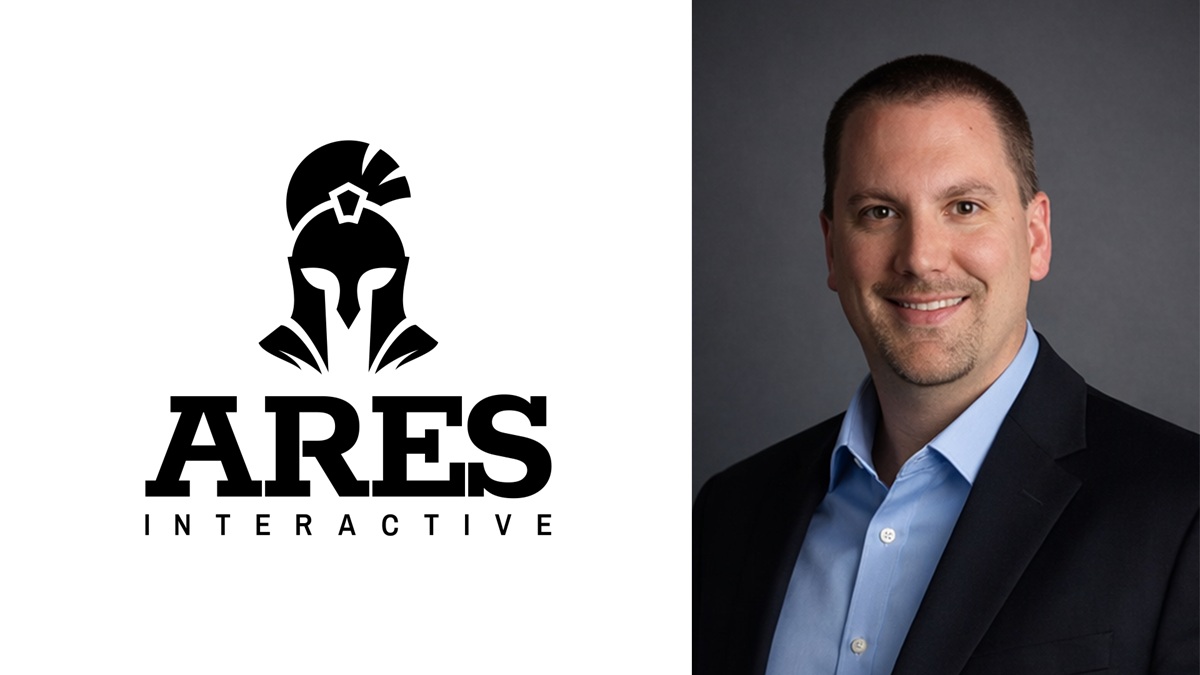
“How do we use AI tooling to learn faster?”Mike DeLaet, President and CEO
AI is the wrench, not the mechanic
Ares calls itself an AI gaming company, and even the initials were intentional. But its version of AI is less dramatic than a machine inventing a universe on command. It is a collection of tools used across development, art, marketing, analytics, and live operations. The ambition is more output per experienced employee: faster tests, more advertising variants, quicker analysis, and campaigns that can adjust without a person turning every knob around the clock.
The person remains at the wheel. This is important because free-to-play games rarely fail from a shortage of content alone. They fail when rewards feel stingy, progression becomes muddy, matchmaking turns cruel, or the store seems more carefully designed than the game. Automation can multiply a choice. It cannot guarantee that the choice is good.
That places Ares between an independent studio and a conventional scaled publisher. It competes with companies such as Scopely, Supercell, Zynga, Jam City, and Electronic Arts for players, talent, licenses, and advertising inventory. Its claimed difference is structural: preserve the speed and identity of a small studio, then supply the expensive capabilities that small studios usually lack. Ares says roughly 80 percent of its games will be made in-house, with outsourcing used when needed.
The first failure was somebody else's
Ares' most instructive product may be Baseball Hits 26. At Glu, de Masi's old company had built MLB Tap Sports Baseball into a durable mobile franchise. After acquiring Glu, EA discontinued it when the title failed to meet performance expectations. Ares saw the closure differently. The product had stopped; the audience had not necessarily vanished.
7th Inning, Ares' San Francisco studio, was assembled from sports and mobile-game veterans to pursue that gap. Baseball Hits 26 uses officially licensed MLB Players, Inc. athletes, portrait orientation, tap-to-swing and tap-to-pitch controls, quick sessions, clubs, roster collection, and seasonal competition. It is free to download and monetizes through optional purchases, rewarded ads, virtual goods, timed offers, and a web store.
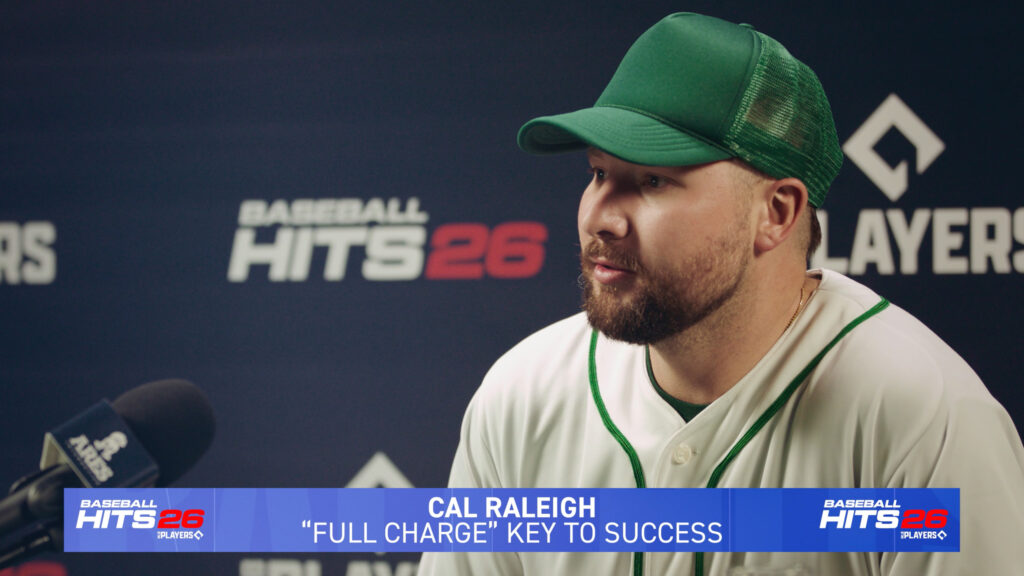
The soft launch did not produce a perfect game. Early updates repaired club stability, event energy, duplicate-player rewards, leaderboard displays, network behavior, store flows, chat, camera problems, crashes, and Android performance. Matchmaking changed from player level to team strength. A later update adjusted matchmaking buckets after players complained. In other words, the first version was not the thesis. The speed and specificity of the response was.
EA treated the old baseball game's weak performance as a reason to close it. Ares treated the same event as market evidence: a known audience had lost its familiar product, while a veteran team still understood the category.
Three audiences, one unglamorous skill
Ares does not really have a genre strategy. Heroes vs. Hordes is original fantasy. Baseball Hits 26 is licensed sport. The Walking Dead: Aftermath, launched worldwide in July 2026 with AMC Global Media, puts familiar survivors into a mobile roguelite with walker swarms, camp construction, difficult choices, and limited-time events. The audiences barely overlap.
The common product is the machinery after launch. Swift Games keeps adding heroes, adventures, guild systems, events, and repairs. 7th Inning tunes rosters, clubs, progression, and competition. Aftermath began cycling through new survivors, supply runs, prestige exchanges, balance passes, and quality-of-life changes within weeks. Ares sells players a game, but it organizes itself around tomorrow's session.

The useful copy is smaller than the company
Few teams can copy the $70 million, the Glu alumni network, or access to major licenses. They can copy the order of operations. Begin with a narrow audience whose behavior can be observed. Put a small senior team close to that audience. Instrument the product. Release before every answer is known. Read complaints as design input, not merely customer-service volume. Build the calendar and community tools at the same time as the core loop. Use automation to shorten feedback cycles, not to outsource taste.
The approach has conditions. It depends on a game people already want to replay, enough capital to survive a soft launch, reliable measurement, and a team capable of changing course without losing its identity. Licensed IP can attract attention but also narrows platforms, raises costs, and introduces approvals. Performance marketing works only while the expected value of a player exceeds the cost of finding one. Live operations become a treadmill when fresh content cannot repair a weak core game.
Ares is young enough that its grand claim remains unproven. Installs are not retention; funding is not profit; three launches are not a decade of franchises. Still, the company has made the wager unusually legible. It believes experience can be made systematic without becoming bureaucratic. It believes software can make veterans faster without pretending to make them unnecessary. Most of all, it believes the work after launch is not maintenance. It is the game.