Making a game and keeping a game studio alive are different skills. One asks whether a player wants another turn. The other asks whether the team can afford to keep working. Game Factory built its business around the space between them: the awkward stretch when developers need colleagues, criticism, publishing contacts and someone who understands why a promising prototype still needs a commercial plan.
The company emerged in 2019 with a practical proposition. Co-founders Murat Kahraman and Efe Küçük brought developers together through an online network, with Voodoo involved in training and game testing. Successful projects could reach publication. Designers and programmers had a reason to join beyond meeting more designers and programmers: there was a route for their work to be examined by a publisher.
That original arrangement explains much of what followed. Game Factory’s contribution is the organization around a studio: education, coaching, introductions and programs with partners that control useful resources. For a developer, its appeal depends on which obstacle comes next. A beginner needs instruction. A team needs a way to work together. A business with players needs help reaching more of them.
First, get the studio to survive
In a November 2020 interview, Küçük described the goal as helping more studios emerge from Turkey. By then, the incubator was reported to house 42 studios. His explanation focused on the difficulties teams face before they can finance themselves and survive. It was an unusually useful description of incubation: make that early period easier, and help more teams get started.
“From the beginning, our main aim was for more studios to emerge from Turkey.”
Efe Küçük · November 2020 · translated from Turkish
The launch also had a particular working environment: Discord. Development and online training were to run through invited channels. That suited a network whose participants could include people entering the industry and experienced professionals trying independent development. The company could start organizing work and feedback without making an office lease the first item on every participant’s shopping list.
The useful distinction was between belonging to a community and having a project ready for commercial attention. Voodoo’s testing offered feedback on game performance; publication remained a possibility for successful titles. That sequence matters. A partner can open a testing opportunity without promising that every game will earn its way onto a store.
A different kind of help at each level
Game Factory’s documentation divides its approach into Academy, pre-incubation and incubation. Academy provides introductory learning. Pre-incubation helps match people into teams or evaluate teams that already exist. Incubation adds studio support, resources and regular individual calls. Each stage answers a different question: what can I do, who can I do it with, and how do we turn the work into a company?
Courses & practice
Matching & evaluation
Coaching & connections
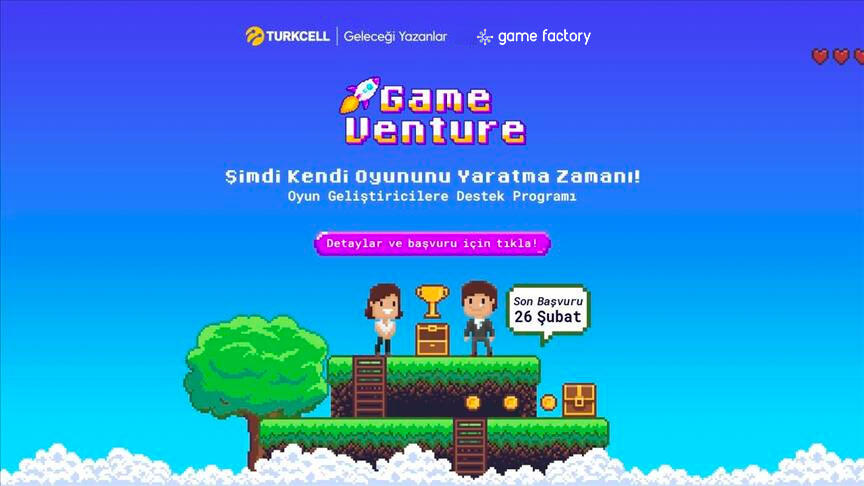
The Academy’s published account describes project experience, technical help, collaboration and preparation for industry work. Its branded programs included OSG with Zynga and Game Venture with Turkcell. For the latter, courses ran on Turkcell’s education portal while Game Factory handled live events and mentoring. The division of labor is revealing: a partner supplies reach and infrastructure; the specialist supplies the game-development program.
There is a lesson here for anyone organizing a developer community. Separate learning from team formation, and team formation from studio coaching. A crowded discussion channel cannot substitute for all three. Matching people becomes more useful when there is a next step for the team they form, and instruction becomes more useful when learners have somewhere to apply it.
Six months, and a reason to finish
Game Booster added a defined calendar. Built with Google for Startups, the documented program ran for six months, combining online training and mentors with a demo day and graduation. An older program page records three cohorts and 38 studios. Its structure gives a team a deadline and an audience, two things that can be surprisingly easy to postpone when a project belongs entirely to its creators.
Rotatelab’s account of the first cohort offers a modest reality check. The program started with 15 teams; two did not continue. Its November 2021 list named 13 graduates, including Rotatelab, Madcraft Studio and PikaApp. Alongside hypercasual developers were an augmented-reality project and a team working in the Auto Chess genre. The mix was broader than a single formula for mobile games.
A completion snapshot, not a measure of commercial success.
Those departures should temper the idea that selection finishes the hard work. A cohort still asks participants to keep showing up and developing their businesses. The graduate list demonstrates participation through the program; it does not establish profitability. For a prospective applicant, the sensible question is whether the team can use six months of structured support while continuing to build its game.
The partner behind the partner logo
The Google relationship supplied specific kinds of access. February 2022 coverage described mentorship from specialists working on Play Store, AdMob, Ads and YouTube, alongside product credits and events. At that point, Game Factory was reported to support more than 70 studios and 4,000 developers. The practical attraction was advice from people familiar with products a mobile-game business might actually use.

The partnership with Istanbul’s municipality addressed a more physical problem. OGEM opened in December 2021 through cooperation involving municipal subsidiary Medya A.Ş. and Game Factory. It offered workspace and support around game design, publishing and reaching audiences. An online community can organize introductions; a development center can give a team somewhere to sit and work.
OGEM’s own description emphasizes shared experience as well as space. Developers meet mentors, work alongside other teams and prepare games for audiences beyond Turkey. Its published roster includes studios and their projects across successive cohorts. That makes the public-sector partnership concrete: the output is an environment where identifiable teams develop work, with industry support attached.
Free entry has several price tags
Game Factory’s current website offers free community membership and a paid GF Premium subscription. Premium includes investor lists, pitch and financial-plan templates, perks and individual mentoring. Academy documentation separately describes free online courses and paid bootcamps lasting three to four months. The word “free” belongs to a particular offer, rather than every activity carrying the company’s name.
Its published perk package illustrates another distinction. The documentation lists ceilings of up to $200,000 in Google Cloud credits, $100,000 in AWS credits and $150,000 in Azure credits. These are advertised service-credit limits in the documentation, subject to the relevant program terms. They should enter a studio’s thinking as possible reductions in eligible spending, rather than money available for salaries.
Free membership ≠ paid training ≠ service credits
Three different offers. Budget for the one your team can actually use.The immediate reader takeaway is straightforward: decide what help you need before choosing a tier or program. A learner may want courses; a studio preparing a pitch may value a mentor’s time. Credits help only where they match real technical needs and eligibility. A team that lacks time to participate will get little from a calendar full of sessions.
Then the incubator became a service
Game Factory’s own explanation for offering incubation to outside organizations is refreshingly operational. After running its core program, it began providing similar services to partners. That is the documented change in its approach: experience organizing its own support operation became something it could deliver for others. The commercial offering now includes partner programs, events, sponsorship and investor services.
Here the customer changes. A studio wants help building a business; a brand wants a useful relationship with developers; an investor wants relevant teams to evaluate. Those needs can meet in the same network. Game Factory advertises startup scouting and due diligence, and self-reports 34 investments and four exits facilitated. The wording matters: facilitation records a role in transactions, not the size of its own investment fund.
Events provide another meeting point. Its documentation records organization rights for the B2B section of GameX, along with webinars and game jams. The business section of an exhibition gives studios, publishers and service providers reasons to meet. That is a more specific account of its work than simply pointing to the size of a gaming crowd.
From getting started to finding more players
Meta Game On shows how the audience broadened. The program began in January 2024, with 15 participating businesses named that March. They included Spektra Games, Rotatelab, Gameguru and Steer Studios. Its support covered advertising strategy, mentoring and international growth. This was a different set of problems from teaching a newcomer how to enter the industry, even if both belonged to the same company’s remit.
Game Factory occupies a busy part of Turkey’s gaming market. Alternatives include ATOM, BUG Lab, DIGIAGE, UDO Garage and WePlay HUB. Its distinctive proposition is the combination of an online community, staged developer support and programs operated with platforms, publishers and public institutions. The right comparison depends on a team’s stage, location and intended market.
The part readers can copy is the order of operations. Learn enough to contribute. Find collaborators. Make something that can be tested. Seek specific advice from people who understand the next decision. Game Factory’s history puts organizations around those steps. The studio still has to make the game worth playing, then give itself enough time and discipline to keep working.