A game character looks cheap when it is tiny. On a phone, it may occupy a thumb’s width of glass. Yet a studio’s estimate for one unit in its cyberpunk shooter began with five days of concept art, ran through ten days of modeling, and ended with five days of effects. Add rigging, animation, texturing, and export, and the list totals 29 task days. The little figure on the screen has already lived through a small bureaucracy of decisions before it has taken one step.
Knocknock Games put that arithmetic in public. The San Francisco-facing studio offered game development and art outsourcing, with an Eastern European production center, while also making titles of its own. Its pitch was broad: bring a sketch, a partial project, or merely an idea; the team could take on design, story, art, engineering, release advice, backend software, and support. But its most convincing material came from the less polished place where a studio explains the labor and compromises inside a shipped game.
- Knocknock Games combined client work with original games, including 2019 mobile shooter Uprising.
- It publicly estimated seven art stages for a single Uprising unit and described the game’s Unity architecture.
- A contemporary review praised the atmosphere but said refill friction and a timed wait ended the reviewer’s session.
- For anyone commissioning a game, the useful model is a staged estimate plus a playable test of the first frustrating moment.
What a client was actually buying
“Full-cycle development” can be a phrase roomy enough to conceal everything. In this case the list was concrete. Knocknock Games advertised prototyping, game design and story writing, concept and in-game art, development, release consulting, server backend work, and post-release support. It also described mobile games as its particular strength in a 2019 post aimed at artists and clients. This was a service business: a customer paid the studio to make or help make a game. A directory listed a $25 to $49 hourly rate, but a rate card is only a starting point; no public contract price establishes what a finished game cost.
The studio described a team of more than 30 developers, some with over a decade in games. The geographic arrangement was part of the offer: a San Francisco representative office and an R&D center in Eastern Europe. For a client, that promises access to several disciplines without hiring a permanent art department, programmers, audio talent, and release staff. It also creates a practical obligation. Someone must decide what the game is, what the next build must prove, and which creative choices cannot be solved by adding more people.
That breakdown is an unusually useful sales document, whether or not the studio intended it as one. It makes the handoffs visible. A character can have a fine concept and poor movement. A polished model can arrive in the engine with effects that obscure it. A client can now ask which stage they need, who approves the reference, and how revisions travel between artist and engineer. “Make it look better” is expensive because it does not say where the work has gone wrong.
The studio used its own game as a shop window
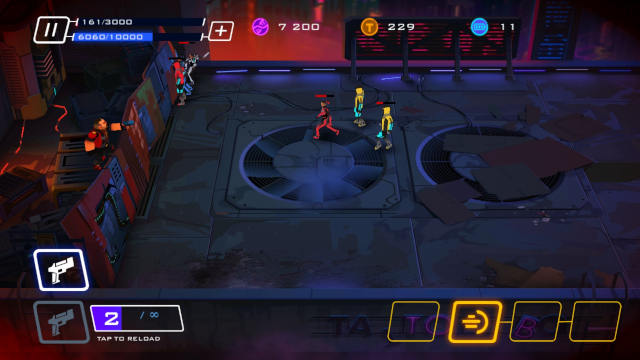
Rise of Colonies: Uprising, commonly listed simply as Uprising, put the studio’s skills where a customer could inspect them. It was a mobile cyberpunk defense shooter: enemies pressed toward a fixed position, weapons and upgrades gave the player ways to hold it, and the atmosphere carried a story. Contemporary listings show a 2019 release. Other titles named in studio roundups include the casual game Lone Tower and the puzzle game Chest of Memories, though public detail about those projects is much thinner.
For Uprising, the team published more than screenshots. Pavel Shylenok described a Unity project divided into three scenes: an initialization scene, a menu scene, and a play scene. His account counted roughly 250 classes and about 55 upgrade parameters, many with 150 levels, held in data files. Those numbers are neither a trophy nor a warning by themselves. They show what happens when a modest-looking mobile game acquires menus, progression, dialogue, purchases, weapons, hints, and all the rules that bind them.
The published notes also reveal a set of preferences a prospective client could copy. Shylenok wanted small code files instead of a single huge controller, and he argued that audio should begin early, when the character first moves and the first bullet fires. His point was practical: a soundtrack can grow tiring during development, and effects change timing, atmosphere, and even the code that plays them. In another piece, he put a basic sound software setup at about $900. That is a described toolkit cost, not the budget for all the game’s audio.
There was a more subtle boundary in the team’s advice about outsourcing. The studio’s CTO recommended outsourcing predominantly technical work while keeping the essential character interactions and the game’s style concept with the people who own the idea. That sounds self-limiting for a company selling outside help. It is also sensible. A vendor can make and integrate an asset; a client still needs to know what experience that asset should create. Delegating the judgment is a different purchase from delegating the production.
The first hard stop belonged to the player
The game’s public review supplied a second kind of evidence, and it was less comfortable. Daikon Media liked the cyberpunk setting, graphics, music, and voice work. The reviewer also struggled to refill weapons, wanted to revisit instructions, and found the game difficult enough to need faster progress. Then came a 13-minute wait for more “courage,” unless the player bought it. The reviewer stopped playing. A handsome world had won the eye, then lost the hand.
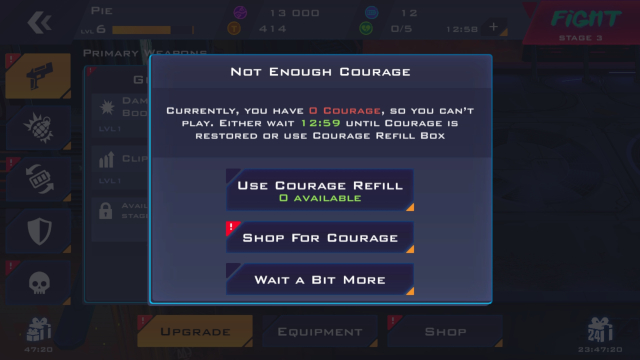
The lesson from that review is narrow and useful. A team can competently design art, build systems, and ship a game, while the player’s first interruption still decides the experience. For a client buying outsourced production, the final question is not whether each deliverable arrived. It is what happened when someone outside the team tried to play for fifteen minutes.
Knocknock Games sits in a crowded market of co-development firms, art houses, freelancers, and internal teams. Its distinctive public record is less about scale than exposure: a service menu, an original game, a production diary with actual counts, and a review willing to name the friction. That is enough to make a useful purchasing test. Ask for the stage estimate. Ask who owns the creative reference. Ask for a build early. Then watch where the player pauses, because the most expensive minute in a game may be the one that persuades someone to leave.