The circle was terrible. A pale little thing on a black computer screen, summoned by a few lines of QBasic at a birthday sleepover in Florida. Everyone else had drifted off. Jason Citron, newly 13, and one friend remained awake. The friend claimed he knew how to make video games. Citron did not believe him, which was reasonable. Then the commands appeared, the circle followed, and disbelief gave way to a useful sort of obsession.
The picture looked like nothing. The power behind it looked like everything. Citron began teaching himself to program, building small games and websites, helping people around town with computers, then finding paid jobs in online programming communities. His father had impressed on him the value of having a skill that could earn money. Code bought more games. More games supplied more reasons to code. A tidy flywheel had started turning.
There are founders whose careers read like arrows. Citron's reads like a boomerang. He would spend years trying to make the game itself, only to discover that the more durable invention sat next to it: the leaderboard, the invitation, the chat room, the quiet social machinery that lets play become friendship. He had to receive the same message twice before it became unmistakable.
The game that wanted to be a network
Citron arrived at Full Sail University thinking computer animation would make him self-sufficient. He could build websites, draw the art, make the games, do the lot. By the third day, he understood the flaw in the plan: he wanted to code all the time. He switched to Game Development and graduated in 2004. What he later remembered most was the permission to focus obsessively on one craft.
After moving west, he built Aurora Feint for the launch of Apple's App Store in 2008. It was a fantasy puzzle game with social features, among that first strange crop of software designed for a phone that had only just learned to accept outside apps. Reviews were encouraging. The business was less so. A paid follow-up did not find enough buyers, and the company came close to the end of its cash.
Yet Aurora Feint contained leaderboards, chat rooms and multiplayer plumbing that other game makers needed. Citron and his partners extracted those systems and called the result OpenFeint. Instead of asking players to love one particular game, it offered many games an identity and social layer, something like a mobile answer to Xbox Live. By 2011, OpenFeint had grown into a network used across thousands of games. Japanese publisher GREE bought it for $104 million.
The pattern Citron encountered twice
iPhone puzzle game
social network for games
iPad multiplayer game
place to talk around games
A nine-figure exit might have persuaded a sensible person to take up sailing, or at least a hobby with fewer servers. Citron wanted to make games again. In 2012 he formed a studio first called Phoenix Guild and later Hammer & Chisel. The ambition was to build rich multiplayer games for tablets, which seemed poised to become serious gaming machines. Stanislav Vishnevskiy joined the following year. Their project, Fates Forever, was an elaborate multiplayer battle game for the iPad.
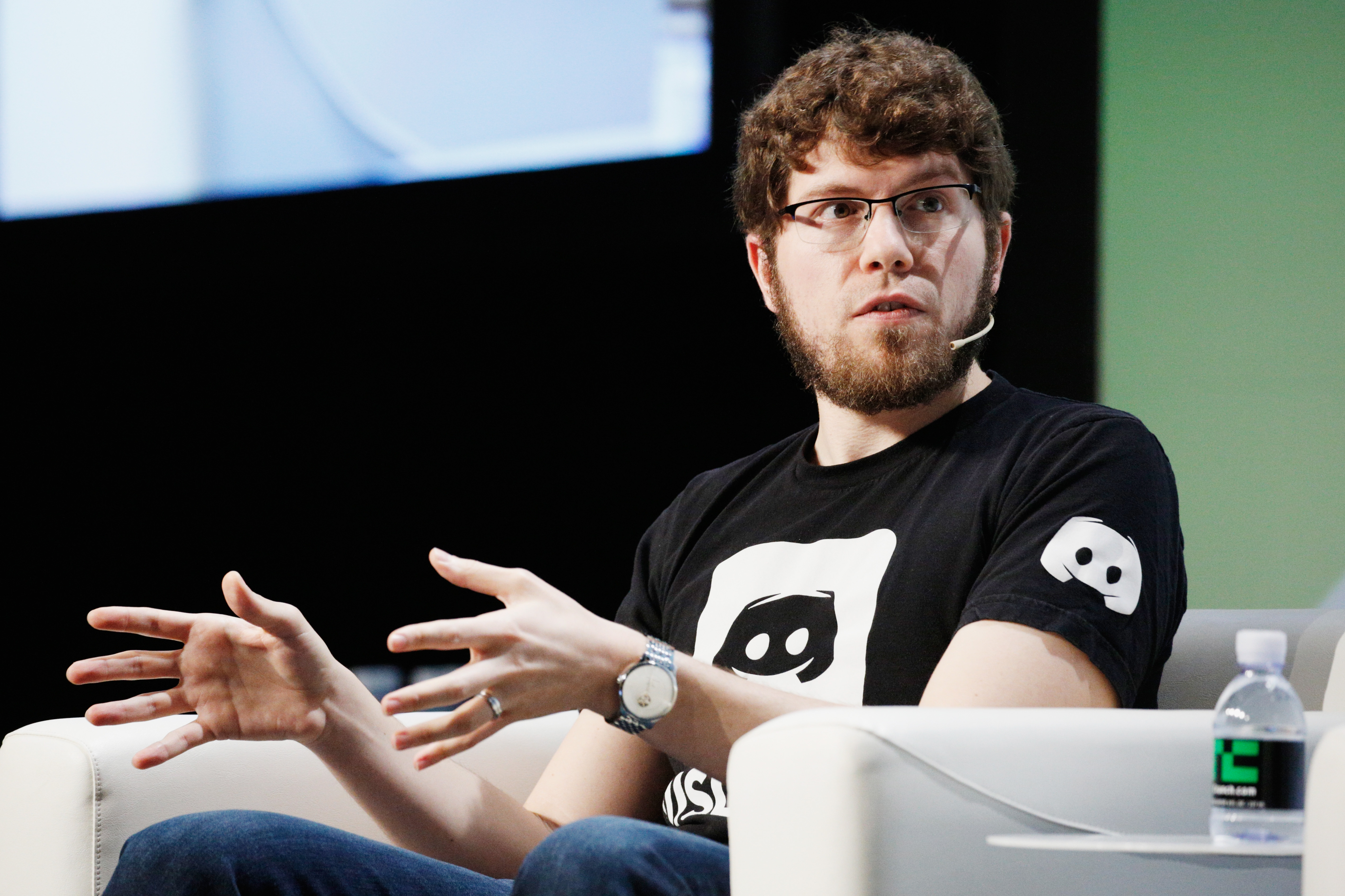
Fates Forever was well reviewed, carefully made and commercially stubborn. Its players did not arrive in the numbers the studio required. But the work had exposed Citron and Vishnevskiy to a familiar annoyance. Talking with friends while playing online still involved awkward tools, rented servers and brittle connections. The available software behaved like equipment. They wanted something that behaved like a room.
“What would a game-changing communication app look like using modern tech?”Jason Citron, as Discord took shape
A side project gets the whole company
In January 2015, Vishnevskiy and a designer began the communication app as a side project inside Hammer & Chisel. It did not yet have the name Discord. Within weeks, a rough version was standing up. The proposition was almost comically plain: free voice and text chat, a server created with a click, an invitation sent as a link, entry through a browser without a desktop installation. A friend could see who was already in a voice channel and simply join.
That last detail carried more emotional intelligence than it advertised. Telephone calls require an interruption. Conference software requires an appointment. Discord made online presence glanceable, closer to noticing friends at a familiar table and pulling up a chair. The game remained the occasion, but the ease of company became the product.
Committing to it was not a harmonious montage. Citron has said that roughly half of the 18-person team thought Discord was a bad idea. Some employees left. One delivered the verdict on a Post-it note. A pivot is an elegant word for a period when salaries, loyalties and months of work collide with new evidence. Citron had already lived through one. This one still hurt.
Discord launched in May 2015. Its first growth came from showing up where gamers already gathered. The team talked to communities on Reddit, persuaded groups to try the product, listened closely, fixed what broke and let invitation links do their viral work. One player made a server; a handful of friends clicked; some of them made servers of their own. The distribution system was embedded in the act of using the service.
The name helped, too. Discord suggests friction, noise, a little social mischief. It is also easy to say and spell. The software grew because it removed bother without sanding away personality. It felt designed by people who knew the difference between a meeting and hanging out.
Success introduced heavier work. Discord became a gathering place not only for friends but for vast public communities. The company had to confront harassment, extremist groups, criminal misuse and the safety of younger users. After the 2017 white supremacist rally in Charlottesville exposed the platform's use by organizers, Discord removed associated servers and publicly said extremist behavior was unwelcome. Citron later appeared before the United States Senate in 2024 alongside other technology executives to answer questions about online safety. The cheerful invitation link had acquired institutional consequences.
When a room becomes infrastructure
During the pandemic, Discord's audience expanded far beyond its gaming base. Study groups, music fans, local clubs and creators adopted servers as private-ish spaces between the public feed and the formal video call. Citron and Vishnevskiy described Discord as a place to talk, a digital third place. The company raised money, hired quickly and chased opportunities in games distribution and broader community software.
Some bets failed. Discord's game store closed. The pandemic hiring spree left the organization too large and more complicated than the product benefited from; Citron later spoke openly about restoring operating discipline. In 2024, the company cut jobs and sharpened its focus on gaming again. This return was less retreat than recognition. People used Discord for many subjects, but games still supplied its grammar: servers, parties, shared activity and the pleasure of being present without a formal agenda.
Citron's public manner is more reflective programmer than imperial founder. He talks readily about being wrong, about the week a failed strategy left him questioning his judgment, and about the unpleasant personnel work that follows a pivot. He also talks about company culture in practical terms. Products, he argues, are made by the people a company hires; therefore values have to exist in those people, not merely in a slide deck.
His own measure of success has often sounded similarly domestic. He has spoken about nights playing Magic: The Gathering, Mario Kart and StarCraft, and about games as the setting for memories with friends, his brother and his wife. The aspiration behind Discord was never simply better audio. It was to preserve the feeling of being together when together happened through a screen.
“Video games are about people.”Jason Citron and Stanislav Vishnevskiy
Hiring himself out of the last job
In April 2025, Citron told Discord employees he had hired a new chief executive. Humam Sakhnini, an operator with experience at Activision Blizzard and King, would lead the next stage. Citron would remain on the board and advise him. Discord then had more than 200 million monthly users, new revenue lines and ambitions that included eventually becoming a public company.
Citron framed the decision through a management habit. As the company grew, he had repeatedly hired himself out of a job, delegating work and moving to the next problem. This time he meant it literally. The skills needed to discover a product, survive a pivot and recruit its first communities are not identical to those required to prepare a mature company for public markets. He chose to make the distinction himself.
The move fits the career better than a triumphal founder biography would. Citron's useful gift has not been clinging to the original object. It has been keeping faith with the experience underneath it. Aurora Feint could disappear if its social tools helped more players elsewhere. Fates Forever could disappear if the conversation around games was the larger opportunity. The CEO title could go if another operator better served Discord's next chapter.
He remains an investor and board member at Campus, an online college, and a board member and adviser at Discord. The programmer who once watched a circle materialize from code now works a step back from the enormous room his company built. Inside it, friends can still see that other friends are around. They click. They enter. The game may start soon. The conversation already has.