The window seat is an awkward little institution. Everyone can see why it is better. Nobody at the host stand particularly enjoys explaining why somebody else got it. At Darwin Brasserie, high above London in the Sky Garden, the view is part of the attraction. Allocating it used to involve a manual, first-come arrangement and a stream of requests. SevenRooms helped turn that negotiation into something a guest could choose while booking.
- Remember the guest. Reservations, spending and preferences belong in one usable record.
- Sell a specific promise. Darwin made the window seat an explicit paid option.
- Know the bill. SevenRooms sells subscriptions and add-ons; packages require a quote.
- Watch the new owner. DoorDash is connecting delivery, reservations and guest relationships.
The interesting part is what happened before the guest arrived. A preference became a product. An argument became a price. A restaurant could make a promise it had the machinery to keep. That is a useful introduction to SevenRooms, whose business sits in the gap between having customer information and doing something sensible with it.
01 / The guest was missing from the guest book
Joel Montaniel began with a problem familiar to anyone whose Friday evening arrives without warning: getting into a restaurant worth visiting. In a 2024 Observer interview, he described the founders’ early consumer focus. Conversations with operators, and time observing restaurant doors, revealed another problem. Their systems contained too little information about the people asking for tables.
Montaniel, Allison Page and Kinesh Patel founded SevenRooms in 2011. The company that emerged built around the operator’s guest relationship. Its name borrows from Graydon Carter’s idea of seven rooms, with the seventh understood by the company as the place where you feel at home and are treated like a regular. A rather grand metaphor for the simple pleasure of not repeating your name.
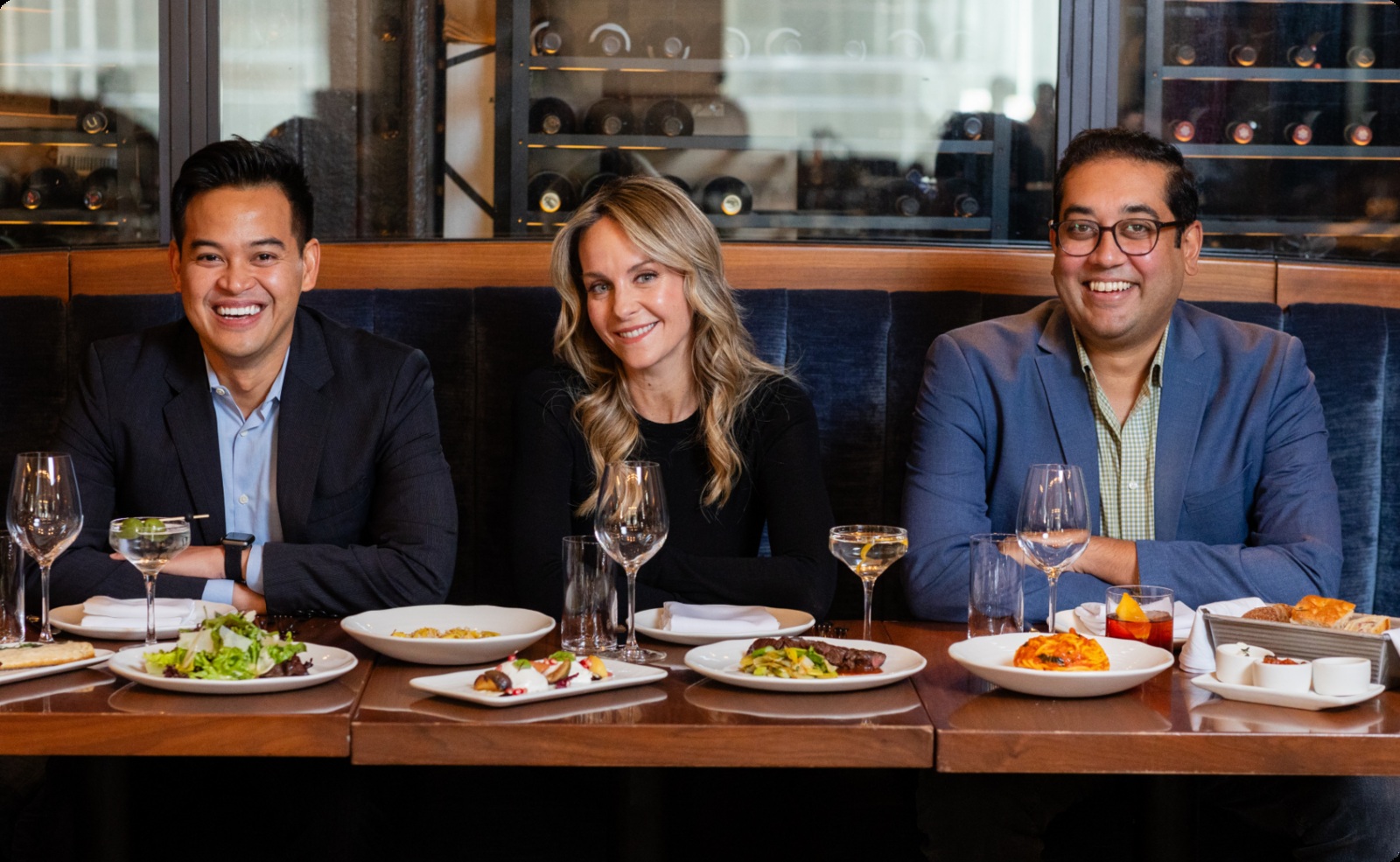
In a 2019 letter, Montaniel explained the decision to concentrate on operator tools rather than a dedicated consumer booking portal. Building both would split resources and raise an uncomfortable question: should a returning guest belong to the restaurant’s relationship or to the booking platform’s? SevenRooms put direct reservations and guest information at the center. Distribution could come through other channels.
02 / A memory the next shift can use
SevenRooms is cloud software for CRM, marketing and operations. CRM means customer relationship management, an expression with all the romance of a filing cabinet. In a dining room, it can mean remembering a preference, spotting a returning guest or seeing what someone ordered last time. The company advertises profiles with more than 100 data points, drawing on visits, notes, occasions, preferences and connected point-of-sale spending.
Profiles can be shared across a group’s locations. Rules-based tags sort guests by behavior or spending. The host need not personally remember every diner; the next shift can inherit useful information. For a restaurant group, the same person can be recognized beyond the room where the relationship began. A notebook can do some of this. It travels poorly between properties.
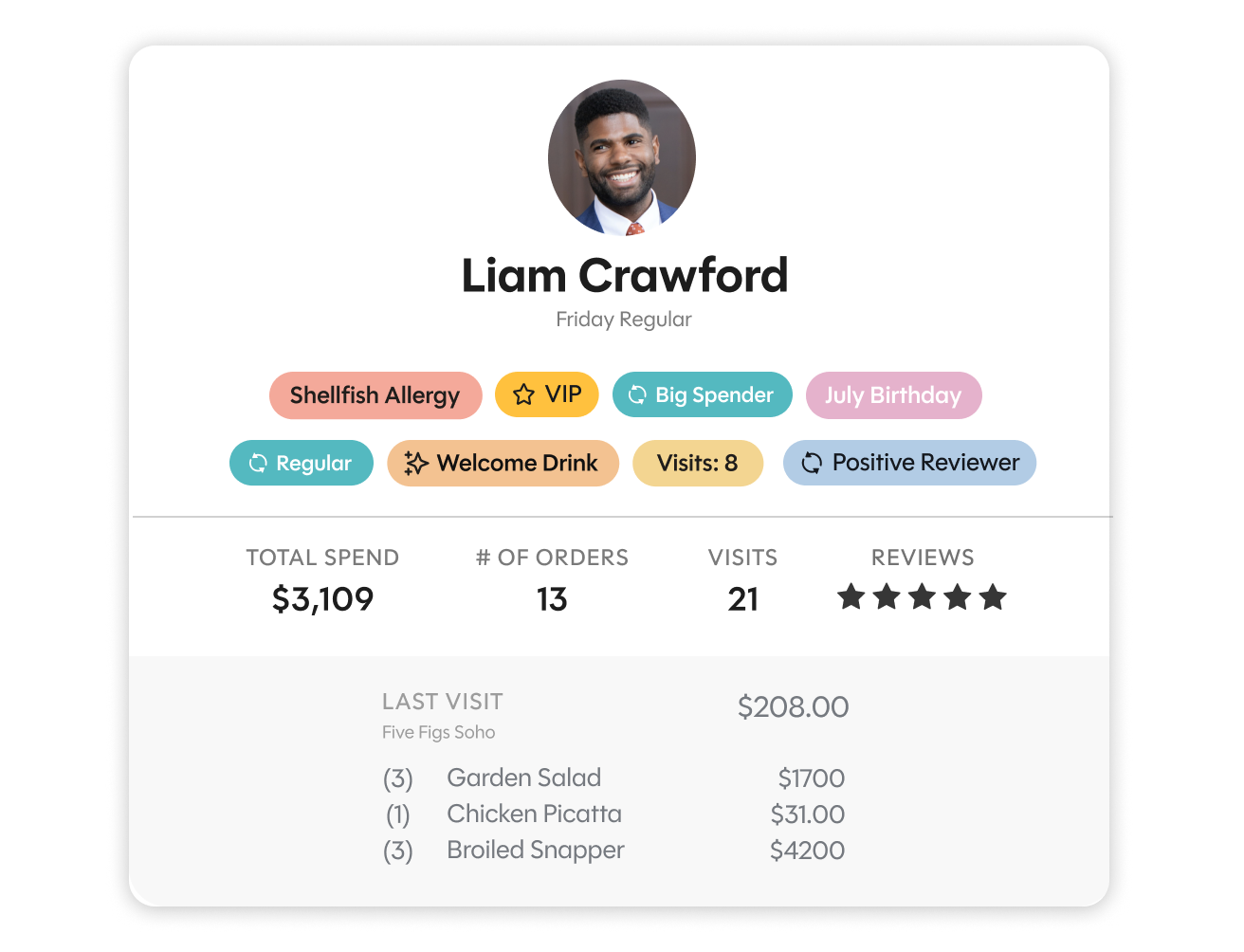
The operating tools work closer to the dinner rush: reservations, waitlists, floor plans, seating and pre-shift reports. Marketing tools handle the quieter interval between visits, using guest segments and behavior-triggered outreach. Other products cover private events, booking upgrades, online ordering, reputation management and direct messaging. Voice AI is offered for answering calls and booking reservations.
The integration directory lists more than 100 connections, including booking channels such as Google and Instagram and POS providers such as Toast, Square and MICROS Simphony. This matters because a reservation and a receipt describe different parts of one visit. Connecting them lets an operator ask a more useful question than whether Friday was busy: who came, what did they buy, and what might bring them back?
03 / The £15 view
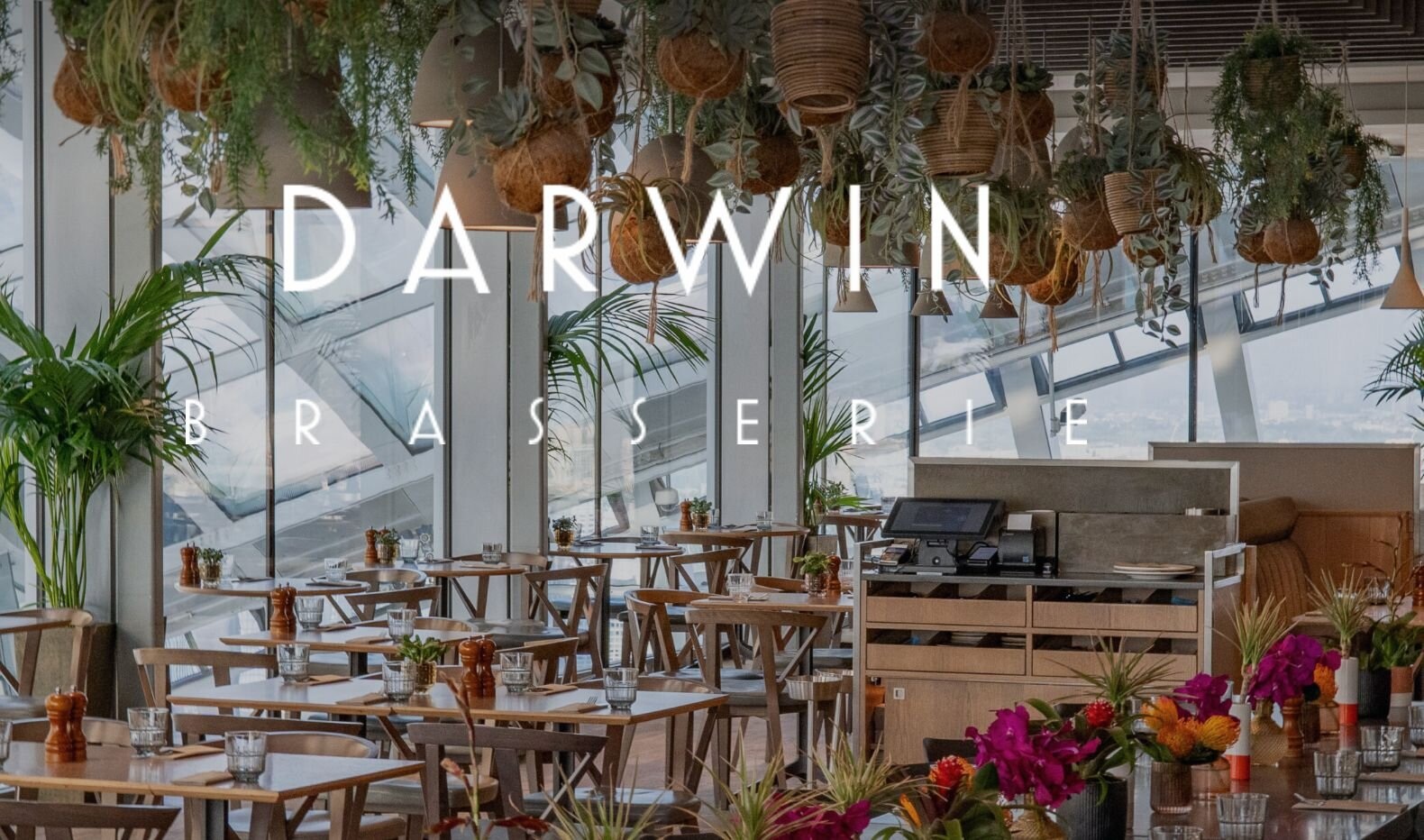
Darwin’s January 2025 case study describes a move from ResDiary to SevenRooms to support a multi-venue operation. Its premium window-seat option cost £10-£15 per person, with higher charges at peak times. The team tested it on Valentine’s Day and New Year’s Eve before offering it year-round. Only 60% of window tables went into the paid inventory, leaving staff flexibility during service.
Increase in window-seat digital sales within two months.A specific sales category, not total restaurant revenue. Company-published case study.
SevenRooms reported a 626% increase in window-seat digital sales within two months. Read that carefully. It is a narrow result, and the case study does not establish how much the software alone caused. The portable lesson is the sequence: identify a scarce preference, describe the promise clearly, test willingness to pay, then preserve some discretion.
“The better you set up the system, the better it works in your favour.”
Joao Santos / Darwin Brasserie
An operator can copy those decisions without copying the fee. A tasting experience or a private dining offer might make a better test elsewhere. The essential condition is a benefit people actually want. Charging extra for an ordinary table in a room with weak demand would be an excellent way to discover how quickly guests can develop other plans.
04 / Pay for the software, count the visits
SevenRooms sells monthly subscriptions. Its current pricing page presents Starter, Growth and Premium packages and directs operators to request a quote. Add-ons include email marketing, event management, Voice AI and other capabilities. Commission-free booking is part of the pitch, including no cover fees for the listed DoorDash and Deliveroo reservation marketplace access. It still leaves a software bill to evaluate.
The alternatives have real overlap. OpenTable sells reservation, guest and operating tools alongside its diner network; it says Core and Pro plans do not charge cover fees for direct website bookings, while network-sourced seated guests attract fees. Resy advertises a monthly subscription without per-cover fees. A buyer should compare the booking channels, group controls, integrations and marketing features they will actually use.
SevenRooms’ distinctive emphasis is the connected guest record and what follows from it. Its customers span independent restaurants, groups, hotel food-and-beverage operations, nightlife and entertainment. Nobu, Union Square Hospitality Group, Marriott International and MGM Resorts International appear among named customers. The current pricing page says more than 15,000 restaurants use it worldwide. The economics will differ enormously across that assortment.
A useful buying exercise is to name the first operating change before signing: fewer manual booking tasks, better cross-venue recognition, or a follow-up campaign to a defined guest segment. Then measure it. An enormous feature menu can otherwise become an expensive collection of things nobody has time to learn.
05 / The delivery company wants a table
The capital arrived in stages: an $8 million Series A led by Comcast Ventures in 2017, an Amazon Alexa Fund investment in 2018, and a $50 million Series B led by PSG in 2020. In January 2024, SevenRooms acquired AI messaging company HeyPluto. In June 2025, DoorDash completed its acquisition after agreeing to approximately $1.2 billion in cash.
Approximate announced acquisition consideration
Closed / 13 June 2025DoorDash launched Going Out in September 2025, adding restaurant reservations and in-store rewards to its app. The commercial logic is easy to follow: a company that helps diners order in can also introduce them to a dining room. SevenRooms brings tools for managing what happens once that introduction becomes a visit.
On September 30, 2026, DoorDash announced DashOS, connecting its marketplace, direct ordering, reservations, loyalty, guest management and marketing. The announcement also sets out further integrations planned for 2027. Those are plans, not completed rollouts. The direction is nevertheless clear: the business wants different ways of buying dinner to contribute to a continuing restaurant relationship.
06 / Leave room for the host
There is a pleasing historical detail in SevenRooms’ own workplace policy. In 2022 it introduced Fresh Start, giving new hires their first two weeks of employment as paid time off. Its January 2023 announcement also described required stretches of consecutive leave. A company selling attention to hospitality operators was spending money on giving its own people a pause.
Attention remains the practical constraint on the product. A guest record helps when the information is accurate, integrations deliver what staff need, and somebody uses the notes. Automated outreach needs judgment about relevance. A remembered preference should make service easier for the guest, not require them to admire the database.
Darwin’s unsold share of window tables is the detail worth carrying away. It leaves room for a host to solve an awkward situation, accommodate a request or do someone a kindness. SevenRooms can organize the memory and sell the promise. The restaurant still has to decide what being remembered should feel like.