There is a moment in every enterprise-software demonstration when the nouns begin breeding. A platform becomes an ecosystem; an automated task becomes an intelligent workflow; several bots, properly introduced, become agents. Somewhere between the slide and the sales call sits Saurabh Sharma, a marketer whose unusual qualification is that he remembers what the machinery was called before the latest name arrived.
Sharma is the Chief Marketing Officer of OneReach.ai, working from Bengaluru for a company headquartered in Denver. His remit is global marketing and demand generation for an AI automation and orchestration platform. That description is current. The education behind it is nearly two decades long, and much of it took place far from a marketing department.
He studied mechanical engineering at the National Institute of Technology Rourkela from 2002 to 2006, then began in software development at Aricent. It is an origin that gives his later career a satisfying structural logic. Before he learned to position a system, he learned to build one. Before he had to make a category sound clear, he had encountered the stubborn specificity of code.
The plumbing years
After development came consulting, including work at Gartner. Then came Ovum, where Sharma spent more than eight years studying the layer of technology that makes other technology cooperate: integration middleware, platform-as-a-service, API management, business process management, robotic process automation, blockchain and cloud platforms. These are not cocktail-party subjects. They are, however, the things that stop a modern company from becoming a collection of expensive islands.
His research appeared in decision matrices used by technology buyers to compare platforms. In 2013, he authored a case study of Novartis adopting Dell Boomi AtomSphere. The reported proof of concept took 25 hours; the case put cost savings at roughly 73 percent against the existing on-premises approach. The numbers belonged to the implementation, but Sharma's task was equally revealing: turn architectural change into an argument a company could evaluate.
“Integration is no longer a luxury.”Saurabh Sharma, on the demands of digital business
That line, offered while he was an Ovum analyst, has aged well. Integration was once sold as technical housekeeping. Sharma described it as a condition of doing business at digital speed. His work anticipated a truth now rediscovered in conversations about AI agents: intelligence stranded from applications, permissions and data is an impressive guest with no keys.
He also resisted the neat funeral notices technology markets enjoy writing for older systems. Cloud integration did not make complex enterprise integration disappear. Low-code did not remove the need for process discipline. In discussing business process management, he argued that processes were being designed to adapt to change and to serve customer-facing, cross-channel work. Flexibility mattered, but so did the existing organization. Software, unlike fashion, cannot discard last season's infrastructure merely because the vocabulary has moved on.
Crossing to the other side of the briefing
In 2019, Sharma moved from observing vendors to operating inside one, leading product marketing for Automation Anywhere across India, the Middle East and Africa. The move had a pleasing tension. An analyst is paid to separate signal from salesmanship. A product marketer is paid to make the signal travel. The former asks whether the claim survives comparison; the latter must help it survive a buying committee.
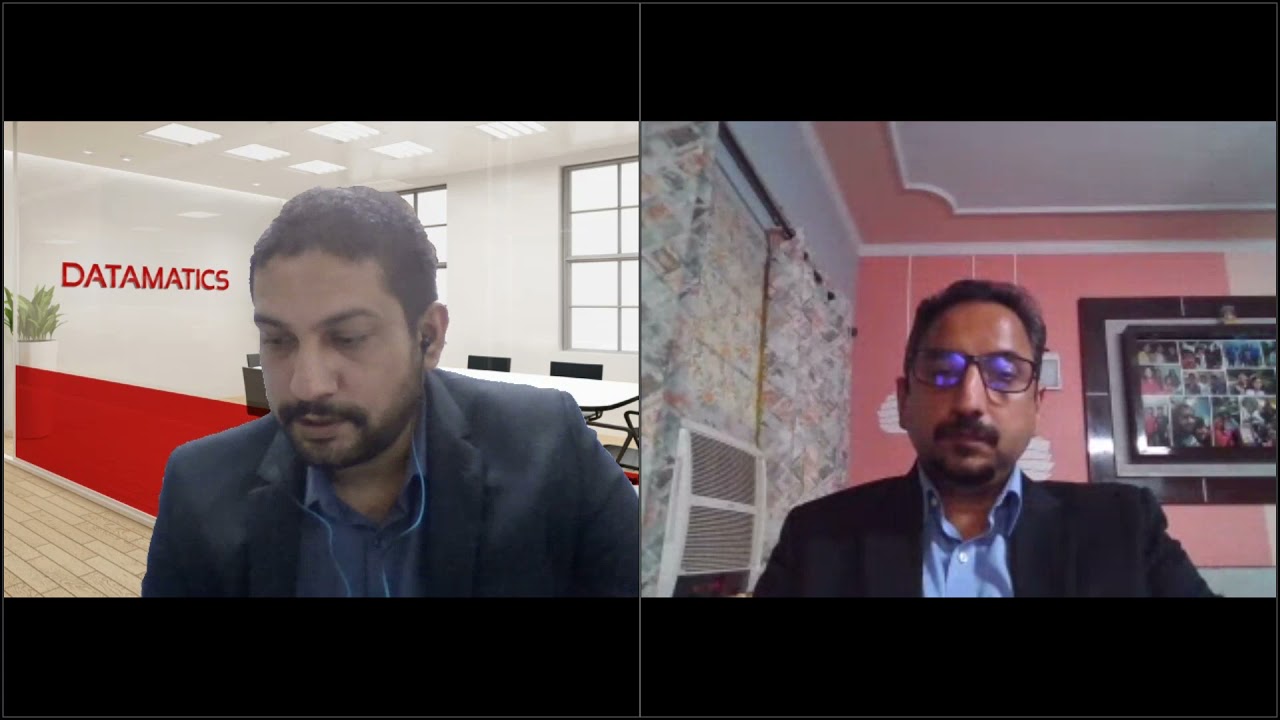
At Datamatics, he led product marketing for intelligent automation. His public webinars carried titles that read like a glossary becoming impatient with itself: RPA, IDP, AI/ML, analytics process automation, hyperautomation. Yet the argument beneath them was sober. Isolated task automation catches the easy work. End-to-end value requires a platform that can handle rules, documents, unstructured data and whole processes.
The phrase “low-hanging opportunity” appears in his writing about RPA, and it is useful because it refuses magic. Repetitive, rules-based tasks are the obvious fruit. The difficult work sits higher: exceptions, unstructured documents, old systems, anxious owners, security controls and processes that cross departmental borders. The robot is often the smallest character in the story.
Later roles widened the commercial responsibility. At Zycus, Sharma worked on marketing a cognitive procurement suite. At Disprz, he built the marketing function for a learning platform incorporating generative AI. As Managing Director of Affinare AI, he served as a fractional CMO and strategic adviser to B2B SaaS companies. Each position moved him farther from the analyst's desk, but none moved him far from the analyst's central concern: how a technical proposition becomes a credible market decision.
There is a quiet advantage in having sat through years of product briefings. You learn that a road map is not a railway timetable. You notice when a category is larger than its use case, and when a supposedly new problem is an old integration problem wearing a brighter badge. That memory is valuable in AI, a market with considerable invention and an equally considerable appetite for renaming things before lunch.
Now the software has agency
At OneReach.ai, Sharma's subject is agentic AI: systems designed not merely to answer, but to coordinate steps, use tools and complete work across voice, chat, SMS, email and enterprise applications. The word “orchestration” matters more than the theatrical imagery suggests. One agent acting alone is a demo. Many agents working across a business become a question of permissions, process ownership, monitoring, governance and return on investment.
The marketing operation itself offers a compact example of his preference for systems over isolated moves. OneReach.ai assembled an eight-person marketing and growth team in India in under six months. The hires covered SEO, digital marketing, business development, product marketing, content and go-to-market work, and shared a working time zone. It is not a glamorous metric, which is precisely why it is useful. A global growth strategy eventually becomes a hiring sequence, an operating rhythm and eight calendars that must agree on when the meeting begins.
In a recent webinar on scaling agentic AI, Sharma appeared with technology and operations leaders Ben Houghton and Mark Melvin. The frame was not simply model capability. It was the alignment of people, process and technology, with security and governance treated as operating requirements. This is the old Sharma territory in new clothes: coordination, architecture and the long distance between promising automation and dependable automation.
His professional biography describes experience scaling B2B SaaS companies at both early and later revenue stages. But the more revealing pattern is intellectual, not numerical. He has followed the unit of automation as it expanded. First applications had to connect. Then processes had to adapt. Then bots handled tasks. Now agents are expected to collaborate. At every stage, the market announces freedom from complexity; at every stage, somebody still has to explain the dependencies.
The durable product is not a slogan about intelligence. It is a system an organization can understand well enough to trust.
That may be why the engineer-to-analyst-to-marketer route feels coherent rather than accidental. Engineering trains attention on constraints. Analysis trains attention on comparison. Marketing trains attention on choice. An enterprise buyer needs all three: what works, what is different and why the decision should be made now.
Sharma added a formal Marketing Strategy certificate from IE Business School in 2019, the same year he moved into product marketing at Automation Anywhere. The timing reads almost like a hinge. Technical fluency had already given him a map of the market. Marketing study gave him another language for moving through it.
A category translator, not a category tourist
B2B technology marketing often rewards the person who can make complexity briefly disappear. Sharma's record suggests a harder discipline: make complexity navigable without pretending it has vanished. His public writing about automation distinguishes a tool from a platform, a task from a process and enthusiasm from a scalable implementation. Those distinctions are not glamorous. They are expensive to ignore.
The same sensibility is visible in the arc from Bengaluru to global markets. He has worked across the United States and Asia-Pacific, spoken at industry and vendor events, advised start-ups and established software companies, and now runs marketing for a Denver business from a major technology center in India. His career is distributed, but its subject is connection.
In August 2026, he joined a Bengaluru CMO roundtable about AI in marketing, brand discovery and AI-ready go-to-market strategy. The gathering put him among leaders debating how customers will find and trust brands as search itself changes. It is a fitting next problem. Once machines help people choose software, the marketer is no longer translating only for humans. The explanation must also be structured enough for systems to find, parse and repeat.
The machines are becoming more conversational, more autonomous and, occasionally, more theatrical. Sharma's career offers a useful counterweight. Learn the plumbing. Inspect the promise. Respect the process. Then find the sentence that lets a buyer see the whole system without requiring them to admire every pipe.