Annette Broner Dehler’s first recorded job in technology communications involved the sort of work that rarely survives into an executive biography: helping an analyst-relations team and supporting live webcasts for company leaders. The company was Lawson Software. The years were 2006 and 2007. She was still a student at Gustavus Adolphus College, and the assignment placed her close to two demanding audiences at once - industry experts trained to detect fluff, and executives expected to sound composed while a camera was running.
That is a useful place to begin. In March 2026, Incident IQ named Dehler its chief marketing officer. The promotion put a C-suite title on a career whose central craft had been visible from those early internships: taking dense technology, institutional priorities and competing professional dialects, then finding language that could travel between them.
The software changed. The translation problem did not. At Infor and Anaplan, she worked with analysts and other market influencers. At Rescale and OmniSci, later renamed HEAVY.AI, she moved deeper into corporate communications and marketing leadership for highly technical products. At Planful, her responsibilities widened across corporate marketing, product marketing and finally the CEO’s office. Incident IQ now gives that accumulated experience a new setting: the hidden operating machinery of K-12 schools.
The apprenticeship in other people’s questions
Dehler graduated from Gustavus in 2008 with honors in communication studies and a minor in political science. Days in political science are spent watching institutions struggle to turn interests into action. Days in communications are spent noticing why one account of that struggle persuades while another lands with a thud. Enterprise software, where products are complicated and buying committees abundant, is a natural laboratory for both.
Her first post-college position was in Weber Shandwick’s Minneapolis technology practice. She joined as an assistant account executive and worked on public relations and analyst programs. The agency desk offered an early education in compression: a client might have years of engineering behind a product, while an analyst, reporter or buyer had minutes to decide whether its difference mattered.
From there she moved to marketing project work at OppSource, then spent more than three years managing analyst relations at Infor. In 2015 she joined Anaplan, initially as senior manager of analyst relations and later as head of influencer relations across analysts, public relations and social media. The titles describe a widening aperture. A message no longer had to satisfy one gatekeeper. It had to hold together while passing through an ecosystem.
A widening circle of responsibility
A detour through the technical deep end
In 2018, Dehler left Anaplan for a brief term leading corporate communications at Rescale, whose software helps organizations manage high-performance computing. Later that year she joined OmniSci, a data analytics company built around accelerated computing, as senior director of corporate marketing. By September 2019 she was head of marketing.
These were products with intimidating nouns and sophisticated buyers. They also exposed a useful paradox. The more technically capable a product becomes, the greater the temptation to market the mechanism rather than the consequence. Customers rarely wake longing for “accelerated analytics.” They want the answer to arrive before the decision expires. The marketer’s work is to respect the machinery without making the machinery the entire show.
A designer who collaborated with Dehler after OmniSci’s rebrand later described working with her on brand positioning and Converge, the company’s first user conference. That combination - the architecture of a brand and the choreography of a room - fits her trajectory. A market story must function at several distances: on a website, in an analyst briefing, from a conference stage and inside the company that has to deliver it.
At Planful, the borders became the job
Dehler joined Planful in January 2020 as vice president of corporate marketing. Over five years, her remit kept expanding. Corporate marketing became corporate and product marketing. The vice-president title became senior vice president. In February 2025, she moved into a chief-of-staff role in the CEO’s office.
The progression matters because the chief of staff’s vantage point differs from the marketer’s. Marketing asks how a company should meet its market. The CEO’s office must ask how the company meets itself: where priorities collide, which decisions stall, how information moves and whether a declared strategy survives contact with a calendar. A year near that machinery can turn a fluent storyteller into a more complete operator.
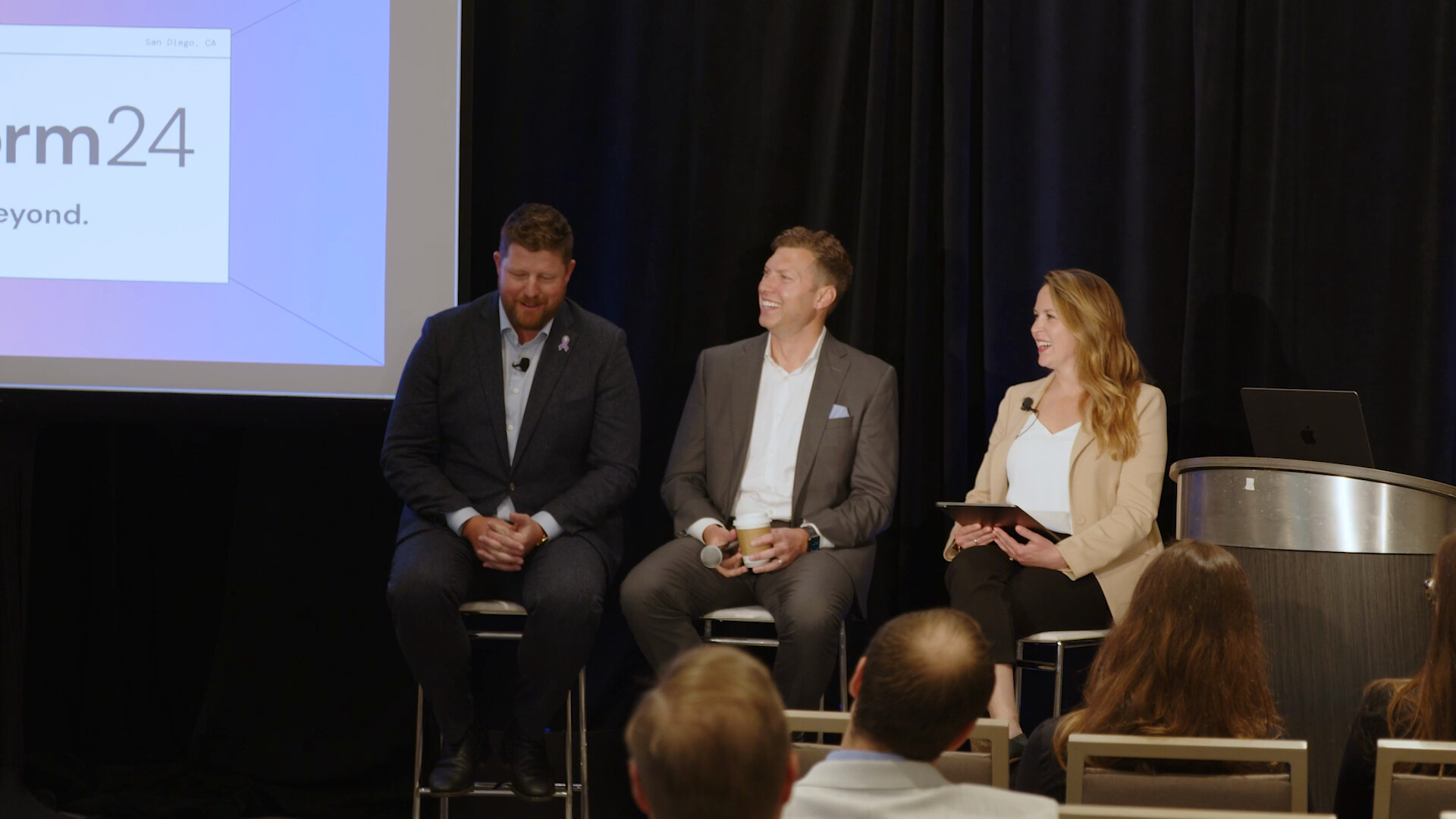
Planful itself made that cross-functional work unusually visible. Its software joins planning with financial performance, so marketers cannot hide from budget owners for long. At the company’s 2024 Perform conference, Dehler sat onstage with CFO Dan Fletcher and CMO Rowan Tonkin for a session about the relationship between marketing and finance. The premise was cheeky but accurate: the two functions speak different languages and nevertheless meet every month.
Two years earlier, when Planful acquired marketing-planning software company Plannuh, Dehler described the promise as closer collaboration between marketing and finance and better visibility into the value of marketing activity. It was less a campaign slogan than a statement of professional habitat. Her work had moved steadily toward the seams between functions.
“Annette’s deep corporate and product marketing roots and proven ability to translate complex technology into compelling narratives will help us build a world-class marketing function.”R.T. Collins, Incident IQ CEO
The school day behind the software
Incident IQ announced Dehler’s appointment on March 26, 2026, alongside Jesse LaJoye’s arrival as chief sales officer. CEO R.T. Collins pointed to her ability to translate complex technology into compelling narratives. The phrase could double as the one-line version of her résumé.
The new subject is deceptively ordinary. Incident IQ manages workflows for school districts: technology support, devices, assets, facilities and other operational requests. Much of this work is invisible on a good day. A laptop reaches the right student. A ticket finds the right technician. A room is ready. An inventory count agrees with reality. Nobody applauds the database.
When the system fails, however, the consequence walks into a classroom. A teacher loses time. A student waits. An administrator starts hunting through disconnected records. That gives Dehler a clearer human endpoint than many enterprise platforms can offer. The job is still to make complicated software legible, but the final unit of value is no longer merely efficiency on a dashboard. It is attention returned to teaching and learning.
Her own announcement dwelled on exactly that sequence: keeping classrooms running, keeping support requests moving and freeing educators to focus on teaching. In the formal company statement, she cited Incident IQ’s investment in its platform, sustained growth and commitment to districts and students. She said she wanted to help write the company’s next chapter.
The Dehler through-line
What kept expanding while the craft stayed put
- From explaining products to analysts to aligning whole groups of market influencers.
- From corporate reputation to the details of product positioning.
- From a marketing function to the operating view of the CEO’s office.
- From enterprise abstractions to minutes returned to a school day.
Listening is part of the machinery
Executive appointments arrive wrapped in approved adjectives. The more revealing evidence often comes from the people who worked one level closer. In a public recommendation, former colleague Jason Stevens described Dehler as a manager who challenged him, listened to him and trusted him in his role. The three verbs form a compact management philosophy. Challenge without listening becomes theater. Listening without trust becomes surveillance. Trust without challenge turns pleasantly inert.
That account also makes sense of the career’s long relationship with translation. Translation requires the humility to discover what another person means before polishing what you want to say. Analyst relations demands it. Product marketing demands it. A chief of staff who cannot listen becomes an expensive forwarding address. A CMO who cannot listen eventually mistakes volume for resonance.
Dehler enters Incident IQ with an unusual stack of perspectives: agency and in-house, external influence and internal operations, corporate story and product detail, marketing ambition and financial discipline. None guarantees success. Together they explain why a company serving school operations might choose her now. Incident IQ does not merely need attention. It needs a narrative sturdy enough to connect a support ticket in a district office with the larger promise of an uninterrupted classroom.
The career began with webcasts and analyst questions. It has reached the C-suite without losing the original assignment. Make the complex clear. Make the clear useful. Then make sure the organization can keep the promise after the sentence ends.
Continue