Angela Singhal Whiteford has a habit that sounds almost too modest for an executive operating in markets full of acronyms. She tries to end meetings by asking, “How can I help you?” The question arrives after a career spent near systems that are anything but modest: citywide wireless networks, virtualized mobile infrastructure, machine-learning fraud detection, warehouse robots, cyber insurance, and now a platform intended to connect the insurance ecosystem.
It is tempting to read that list as serial reinvention. A closer look reveals continuity. Whiteford trained as an electrical engineer, began in sales engineering, and kept choosing products that required translation before they could earn trust. Her work sits where technical architecture meets a purchasing decision. The vocabulary changes. The assignment does not: understand the machinery, find the human consequence, and give a market a reason to move.
The engineer in the marketing meeting
Whiteford earned a Bachelor of Science in electrical engineering from Queen’s University and an MBA from MIT Sloan. Her early work included sales engineering at Newbridge Networks, followed by a long stretch at Nortel. By the middle of the 2000s, she was speaking publicly as Nortel’s director of municipal wireless solutions, during the hopeful and unruly period when cities were trying to decide who should build public networks, who should pay for them, and what they were for.
She could talk about wireless mesh and WiMAX. She could also explain why Greenville, North Carolina, cared: economic development, a relationship with East Carolina University, and a downtown that wanted to be more attractive to students and businesses. Even then, her instinct was to connect infrastructure to a civic or commercial outcome. She also understood the operational mess. An end-to-end municipal network, she said at the time, required applications to work on top of the mesh. The difficulty was not hidden inside a brochure. It was part of the proposition.
That technical grounding later became a point of resistance. In a 2023 conversation about women in leadership, Whiteford recalled being mistaken for someone who was not technical enough and left out of technology-strategy discussions. A marketing title, she observed, can encourage people to imagine that the job stops at press releases. Her answer was not a claim to borrowed expertise. She pointed back to electrical engineering and to what she actually enjoys: digging into products and technology, solving problems, and launching products into markets.
“Having been trained as an Electrical engineer - I really enjoy digging deep into products and technology and launching products to market.”Angela Whiteford
A career built in unfinished categories
After Nortel came product and solutions marketing at Starent Networks, then a vice president role at Iron Mountain. At Affirmed Networks, where she led marketing and product management, the acronyms grew denser. She appeared in industry programs about software-defined networking, network-functions virtualization, and 5G network slicing. These technologies promised to change how operators built mobile networks. They also needed someone to describe a new architecture without losing the business case inside it.
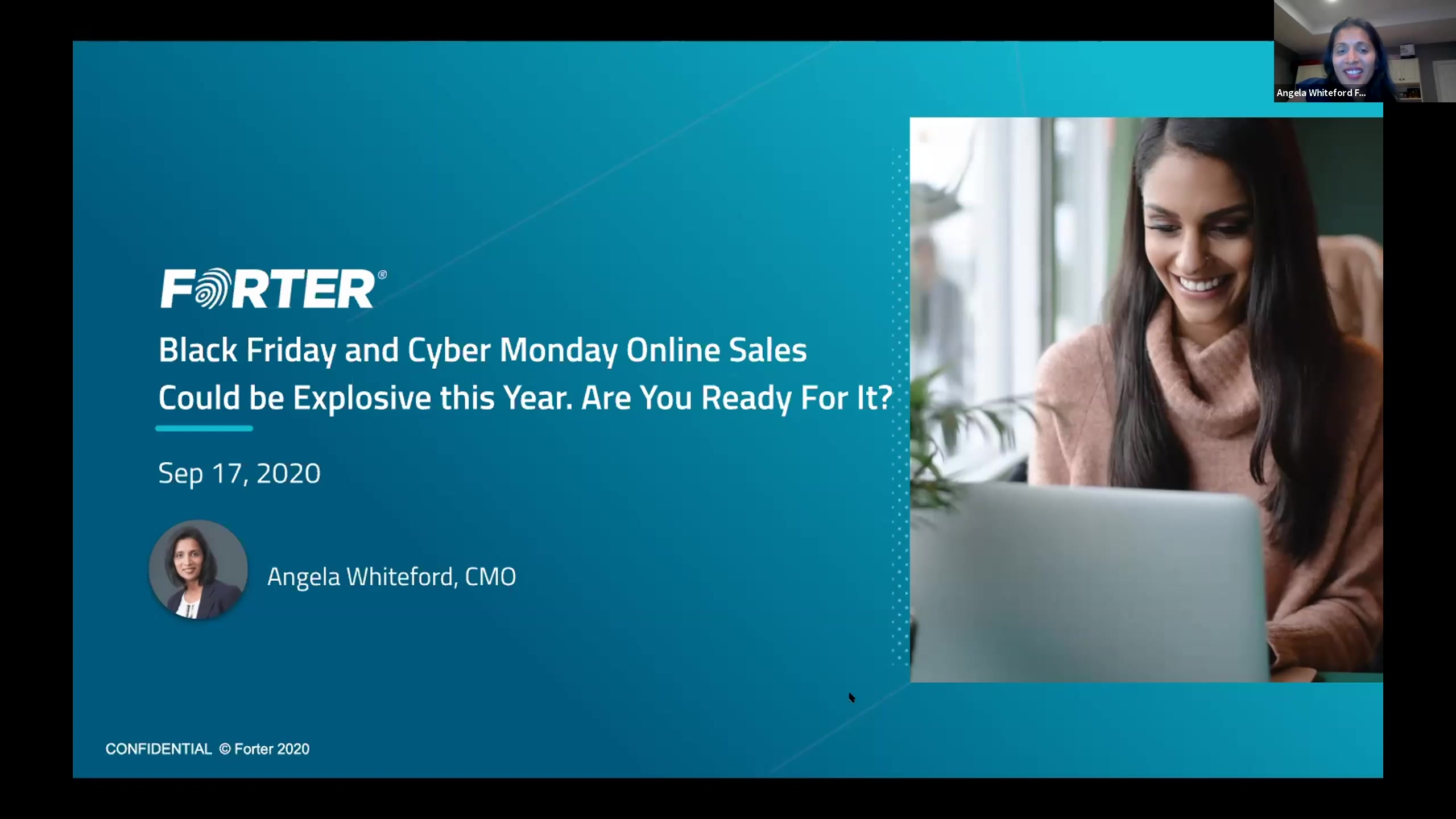
In 2019, Whiteford joined Forter as chief marketing officer. The category was fraud prevention, but her public argument usually began with the customer. During the e-commerce surge, retailers had more digital doors through which bad actors could enter. Overprotect those doors, though, and good customers would be turned away too. Whiteford framed the problem around false declines, lifetime value, and the awkward truth that security systems can injure the experience they are meant to protect.
Travel made the tradeoff vivid. People buy tickets while moving, switch devices, use different cards, and behave in ways a rigid rules engine might consider suspicious. Whiteford once illustrated the point with her own behavior: she had booked a train ticket ten minutes before boarding. She had also checked three sites before selecting a New York hotel. The anecdotes worked because they turned an abstract data problem into a familiar minute of indecision.
Her more consequential argument was about access. If fraud tools overreact to geography, legitimate buyers in a supposedly high-risk country may be blocked. Better prevention, she said, could “equalize” the experience. This is the engineer-marketer’s dual lens: accuracy in the system and dignity for the person trying to use it.
Robots, risk, and the attraction of build mode
When she left Forter for Berkshire Grey in 2021, Whiteford announced that she had found her next calling: robots. The joke quickly gave way to the operating logic. Forter had worked on the purchasing side of e-commerce. Berkshire Grey’s AI-enabled robotic systems worked on fulfillment and warehouse automation. She was following the customer journey downstream, from deciding whether an order was legitimate to helping move that order through a physical system.
The move also exposed a preference that her current biography makes explicit. Whiteford thrives in build mode: creating teams, launching products, and opening markets. Those are environments where a polished campaign cannot compensate for a fuzzy position. Product, sales, marketing, and customer evidence must agree well enough to give a young category a shape.
On the Standout Startup Brands podcast in 2024, Whiteford discussed the importance of a strong point of view and of partnerships that make a company’s claims more credible. One example came from working with Intel to validate technology claims. The move is revealing. A brand in a complex market is not merely a voice saying something confidently. It is a structure of proof, assembled from the product, its customers, and institutions willing to stand beside it.
That same year, her role at Corvus Insurance placed her inside a consequential transition. She had joined the cyber insurer in late 2022, bringing experience from telecommunications, identity management, and robotics. Corvus used data and technology to assess cyber risk and help policyholders reduce it. Travelers completed its acquisition of Corvus in 2024, and Whiteford’s bolt biography says she led the marketing team through the deal. It was another moment when category language, customer confidence, and corporate change had to coexist.
Relationship first, task second
Whiteford’s most memorable management line is not about positioning. “Relationship first, task second” is the best career advice she says she has received. Before advancing the work in a meeting, build the relationship. Support what the other person needs. Make it clear that you have their back. Her closing question, “How can I help you?”, turns the sentiment into a repeatable practice.
There is a practical intelligence in the order. Technical companies are full of dependencies disguised as boxes on a chart. Marketing needs product truth. Product needs customer context. Sales needs a story it can use without translating it again. Communications needs claims that can survive scrutiny. A relationship-first leader is not avoiding the task. She is tending to the network through which the task gets done.
“Relationship first, task second.”Angela Whiteford’s guiding career advice
People who have worked around Whiteford describe the same combination from another angle. A recommendation on her LinkedIn profile praises her technical knowledge alongside her command of marketing, and credits her with helping put a company on analysts’ radar. Whiteford, in turn, speaks warmly about collaborators who accelerate her teams. The pattern is less lone genius than well-built coalition: understand what each party can contribute, then make the combined claim stronger.
Crossing to the other side of insurance
Whiteford joined bolt as chief marketing officer in October 2025. She described the move with a neat reversal. After years of selling insurance, she had crossed over to helping carriers, independent agencies, and distribution partners sell insurance better. bolt brings those parties together on one platform and uses AI to simplify distribution, reduce manual work, and find growth in a market constrained by volatility, staffing, and capacity.
Her remit is broad: go-to-market strategy, product marketing, brand, communications, and demand generation. More telling is the institutional work underneath those labels. She is building a marketing foundation, sharpening the company’s market position, and carrying its platform story to customers, partners, and the insurance industry. In September 2026, she amplified a search for a product marketing manager who could work comfortably amid ambiguity and help establish the function. Build mode, again.
The insurance ecosystem is an apt destination for a career spent making networks legible. The nodes are now carriers, agencies, distributors, and customers rather than routers or shoppers. The friction is paperwork and fragmented systems rather than a dropped connection or a false decline. Yet the central problem is familiar: many moving parts must produce an experience that feels simple to the person at the edge.
The decision inside the details
Whiteford’s career does not make an argument against complexity. She seems to like complexity, provided it leads somewhere. The electrical engineer’s appetite is to open the machine and understand the pieces. The product leader’s job is to decide what should be built. The marketer’s obligation is to show why any of it matters to someone outside the building.
Across two decades, she has kept returning to markets before their vocabulary settles. Municipal broadband needed a civic purpose. Network virtualization needed a business case. Fraud prevention needed to care about good customers. Robotics needed a human problem. Cyber insurance needed prevention alongside protection. Insurance distribution now needs its many parties to work as one system.
The through-line is a kind of disciplined translation. Learn enough to resist the easy simplification. Find partners who can lend proof. Build the team while the category is still taking shape. Then end the meeting with a question that keeps the work human: How can I help you?