A penthouse is an unusual place to begin a story about enterprise software. It suggests better views than balance sheets. Yet a small penthouse overlooking Hyderabad’s Hi-Tec City is where Satya Sagi began Techsol in 2010. The address makes a pleasing opening image. The more revealing detail is what he chose to build there: a business concerned with the awkward distance between buying technology and getting it to work.
That distance has room for an entire company. Software needs configuring. Existing information needs moving. Different systems need to exchange it. People need to understand the new arrangement well enough to use it on an ordinary Tuesday. A purchase order can be signed in a moment; the consequences tend to keep office hours for considerably longer.
Sagi’s career has unfolded inside that practical territory. Today he is the founder and chief executive of Techsol Life Sciences, based in Princeton, New Jersey, with a business that connects software, consulting and operations across countries. The interesting question in his story is how a specialist services company becomes a product builder while keeping its attention on the work customers actually need done.
The education before the penthouse
Before Techsol, Sagi worked at Siemens and Oracle. His roles included consulting at Siemens and senior product management and sales consulting at Oracle. Those jobs placed him at different points in the relationship between a software maker and its customers: developing a product, explaining its usefulness and understanding the circumstances in which someone might buy it.
It is a useful background for the kind of founder he became. A product manager has to think about what a system should do. A consultant has to think about the particular organization in front of them. A sales conversation tests whether those two accounts of usefulness meet. Sagi’s subsequent business brought these functions into the same enterprise.
The distinction matters because enterprise software has several audiences. The person approving expenditure, the person configuring the application and the person using it may have quite different definitions of success. A founder working among them has to translate. The job rewards familiarity with the customer’s routines as much as familiarity with the software itself.
Four years before the first product
Techsol began in March 2010 with technology and professional services. In 2014, it started engineering MedInquirer, its first flagship product. That sequence gives the company’s early history its shape: services came first, followed by an application designed for a particular information-management task. Product development grew alongside the consulting business.
Four years is an interval worth pausing over. Startup stories often hurry from an idea to a launch, as though the intervening work were a mildly inconvenient commercial break. Here, the interval helps explain the business. Techsol was already operating in a specialist market before it began building a named product of its own.
A configurable product also raises an interesting entrepreneurial question. How much should be common to every customer, and how much should change? Too little flexibility makes adoption difficult. Too much can turn each implementation into a new invention. Techsol’s emphasis on configurable systems sits directly in that tension, where a repeatable product must accommodate the untidy variety of real organizations.
in Hyderabad
development starts
partnership moves
in Hyderabad
In 2020, the company opened two doors
On February 25, 2020, Techsol announced a strategic partnership with Tech Mahindra. The arrangement paired Techsol’s specialist knowledge and software platforms with Tech Mahindra’s international presence and delivery experience. Sagi described an ambition to apply digital processes and practical automation to customers’ business challenges.
The adjective “practical” deserves its place. Automation is easy to admire in a presentation. Its value becomes more demanding when it has to fit established responsibilities, existing applications and the people who will depend on it. The partnership proposed bringing complementary capabilities together around that implementation problem.
Then, on August 3, Techsol and EndPoint Technologies announced SciMax Global. This was a different arrangement, a new subsidiary combining Techsol’s technology with EndPoint’s consulting expertise. Joe Pierce, EndPoint’s founder and president, became SciMax’s chief executive. Saad Rahman took the chief product officer role. Sagi remained Techsol’s CEO and joined SciMax as a founding board member.
Those appointments make the story more interesting than a simple tale of expansion. The new organization had its own leadership and a product remit. The announcement described MedInquirer as part of its core platform. A product developed within Techsol was becoming part of a larger proposition, with another company’s experience and relationships brought into the room.
For a founder, partnerships create a particular form of ambition: growth that requires room for other people’s judgment. These two announcements show Sagi using different organizational structures for different purposes. One widened the delivery partnership. The other established a separate company. Neither required pretending that one organization already possessed every useful skill.
The cloud still has to earn its keep
Sagi’s connection with Oracle continued on the customer and partner side of the software business. Techsol runs its Accel Safety platform on Oracle Cloud Infrastructure, with Oracle Argus as a central application. Before adopting that infrastructure, it had used several providers, including Amazon Web Services.
When Sagi describes the change, his emphasis is on service commitments, cost efficiency, compliance and quality. These are measures a customer can take into a procurement discussion. They also reveal the vocabulary of his business: the underlying technology matters through the arrangement it makes possible for the organization using it.
Cloud infrastructure can sound wonderfully abstract. A service agreement is reassuringly specific. It asks what a supplier will actually provide and under what conditions. Seen through that lens, Sagi’s work occupies a meeting point between engineering and accountability. The software needs to function, and the commercial relationship needs a credible description of how it will function over time.
“we have learned to thrive with agility”
Satya Sagi, discussing changing technology requirements, 2019
The phrase has a concrete setting in Techsol’s earlier expansion. By 2019, the business was describing projects in Thailand, Singapore and Australia, alongside its presence in India and the United States. Working across markets added another dimension to the task of fitting technology to organizations. Geography widened the range of requirements the business had to accommodate.
A 2024 Oracle CloudWorld presentation listed Sagi as a founder and chief executive speaking about an integrated approach to industry cloud. The setting placed him in a wider conversation about the infrastructure behind specialist applications. For a company building on another vendor’s platform, that relationship is part of the business architecture too. A customer sees a finished service; behind it sit choices about what to develop, what to adopt and which partner will support the underlying system.
A dinner makes the feed
There is a smaller scene in Sagi’s public record that deserves space alongside the partnerships. In a LinkedIn post about spending time with Techsol’s Quality and CM technology team in Pune, he thanked his colleagues for dinner. “Thanks for the dinner folks!” is refreshingly free of the language that usually makes a company outing sound like an international treaty.
The post also looked forward to their continued commitment. Appreciation and expectation appeared together in a few lines. It offers a modest glimpse of the working relationships behind the organization chart, without requiring a grand theory about the founder’s private personality. A team had spent an evening together, and its CEO wanted to acknowledge it.
The leadership around him includes co-founders Sriram Varma and Dr. Laxman Jakkala, alongside quality and compliance leader Richard Lipman. Varma’s remit covers technology and data services. The range of responsibilities makes visible the specialized work behind an integrated business. Customers may buy a combined offering; delivering it involves people with distinct expertise.
Back in Hyderabad, with a larger conversation
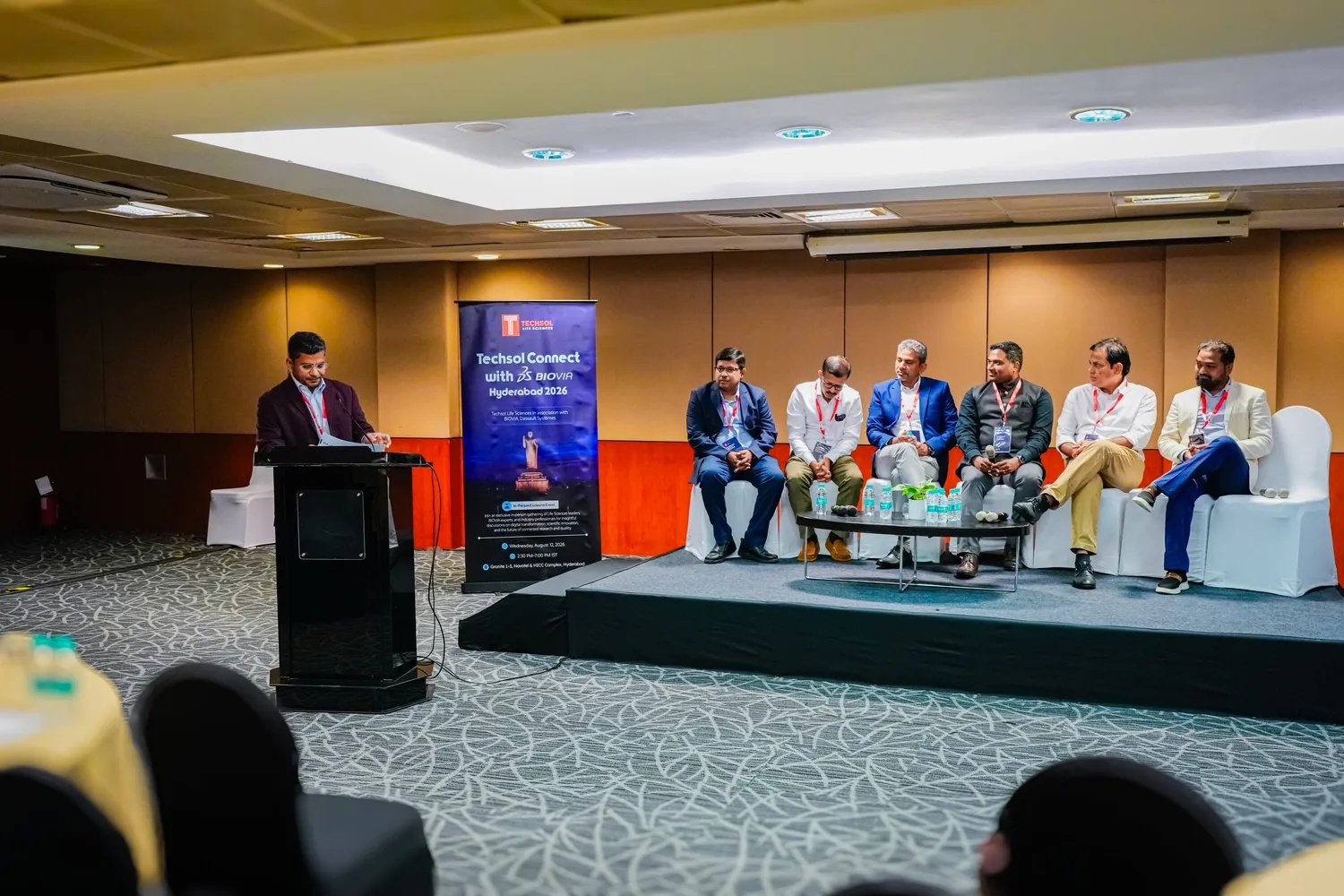
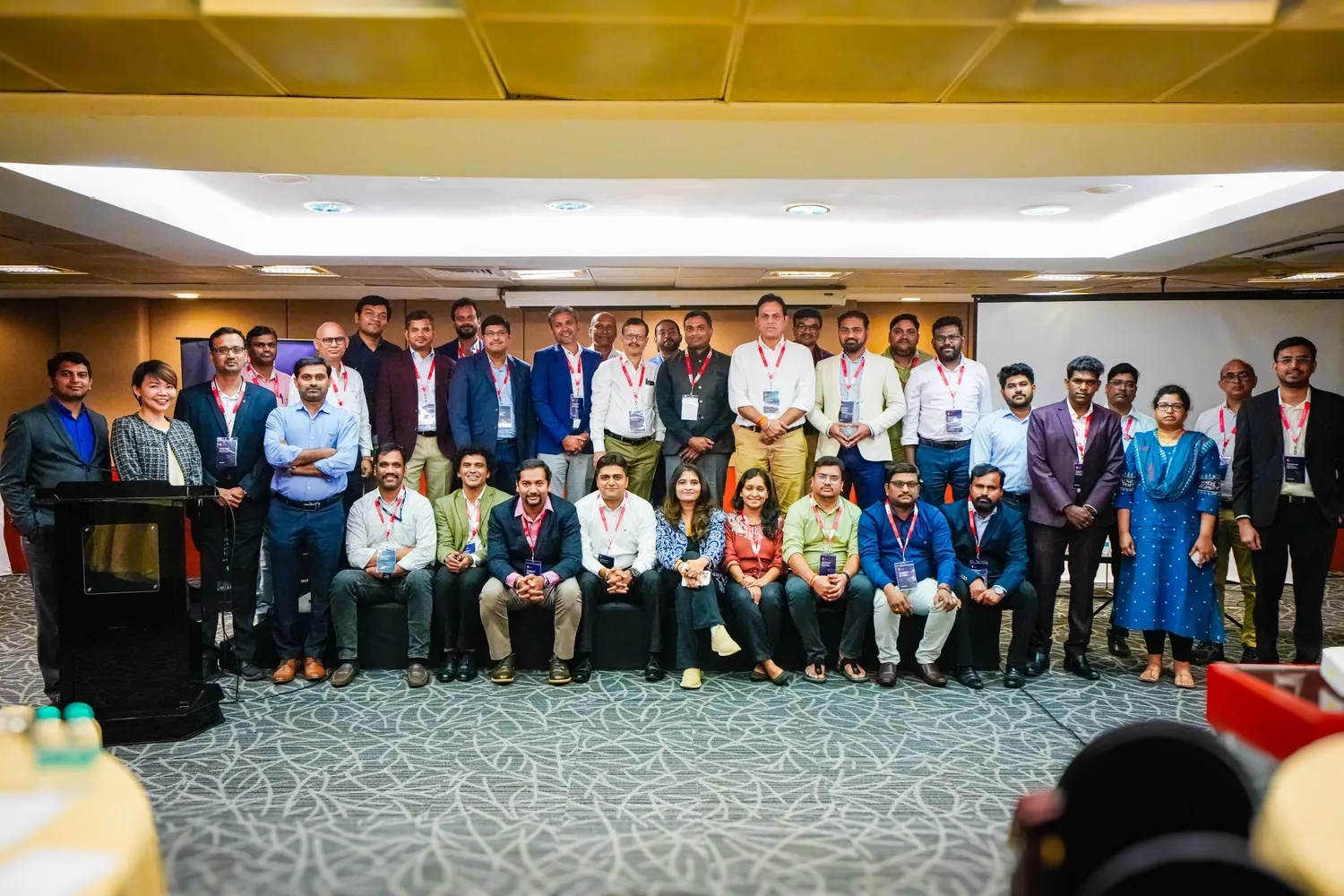
On August 12, 2026, Techsol Connect with BIOVIA brought more than 45 professionals together at Hyderabad’s Novotel and HICC complex. Sagi delivered opening remarks on connecting research, quality and manufacturing, then moderated a panel about collaboration between sponsors and technology vendors.
The location gives his story a satisfying return. Sixteen years after the company’s beginnings in Hyderabad, he was again there discussing how organizational parts fit together. This time the setting was a gathering of industry peers, with an agenda that included enterprise quality, digital operations and shared approaches to innovation.
His public reflections on an Oracle summit in 2025 had also emphasized peer discussions, partnership opportunities and the movement of AI into everyday business processes. The technologies in those conversations keep changing. The work of connecting them to a customer’s organization remains a recognizable thread.
His account of that summit gave space to the less formal parts of the event: knowledge sharing, conversations with peers and opportunities for future collaboration. It also mentioned strategic investments in software and AI. Put beside the 2020 announcements, the post shows a continuing interest in the partnership ecosystem around the technology. For someone who began as a consultant and later built products, those conversations connect familiar parts of the job: understanding the available tools, meeting the people behind them and considering what customers might need next.
That thread makes Sagi’s career worth examining. The milestones are products, partnerships and new settings for collaboration. Between them lies the less photogenic work of implementation: explaining requirements, coordinating specialists, and making an arrangement useful after the announcement has been filed away. A penthouse supplied the opening scene. The continuing story belongs to what happens when the software arrives and everyone has to get back to work.