There is a particular kind of career that looks untidy on paper and coherent in motion. Sahil Dhar Hakim's begins with mechanical engineering, passes through the innards of automobiles, stops in a consumer-goods sales territory, spends nine years building product marketing at a fintech software company, and arrives in the complicated economics of streaming subscriptions. The titles change. The recurring job does not: understand what one group has built, understand what another group needs, and make the handoff work.
A product can be correct and still fail at the border between teams. Hakim has spent his working life near those borders.
Today he is Chief Business Officer at Evergent, responsible for partnerships, sales and marketing. He works from Hyderabad while the company is headquartered in Sunnyvale, serving media, entertainment and telecommunications businesses. The domain comes with an impressive supply of nouns: billing, entitlements, churn, bundles, payments, rights, catalogs, loyalty, retention. Behind every noun is a subscriber who simply wants the service to recognize who they are and what they paid for.
First, learn the machine
Hakim studied mechanical engineering at Punjab Engineering College. His early roles kept him close to literal machines. At Maruti Suzuki he worked in product strategy and research and development; at Toyota Kirloskar Motor he worked in product strategy on the marketing side. It was an early tour of the same object from two rooms. Engineering asks what can be made. Marketing asks what the thing means to a buyer. The useful operator learns to speak to both.
engineering
product
sales
SaaS
economy
In 2012 he entered the Post Graduate Programme in Management at the Indian School of Business. His campus life mixed the orderly and the expressive: the Marketing & Communication Council, the Marketing Club, Photography Club and Music Club. He also joined a Wharton Global Consulting Practicum project on an India market-entry plan for a large American healthcare client. In December that year, his integrated campaign for the teen film Mere Dad Ki Maruti won a Yash Raj Films movie-marketing challenge.
Then came the sort of education no slide deck can quite reproduce. As an area sales manager for ITC's personal-care products in Northeast India, Hakim worked where positioning meets shelf space and a tidy national strategy encounters the daily facts of distribution. Field sales has a sharp editorial instinct. It removes every sentence the customer, retailer or distributor does not find useful.
The product changes. The commercial question remains: can the value survive the handoff?The operating thread across Hakim's career
Nine years in the SaaS engine room
Hakim joined HighRadius in November 2014 as a product marketing manager. He stayed until October 2023, progressing through director, associate vice president and vice president roles before leading product marketing and strategic initiatives. The tenure matters because product marketing compounds through repetition. One launch teaches positioning. Ten teach pattern recognition. Years of working alongside product, sales and customers teach where a good narrative breaks under scrutiny.
During those nine years, Evergent's executive biography credits him with helping HighRadius grow its go-to-market organization to 300 people while revenue moved from $20 million to more than $200 million. Those figures describe the company's expansion, not a solo performance. They also locate Hakim inside a demanding scale-up: more markets, more sellers, more customer segments, more chances for language and process to fragment.
His public voice from that period already carried two signatures: systems thinking and a refusal to sound like a committee. Celebrating HighRadius at a valuation above $3 billion in 2021, he framed the ambition as building a business that could outlast its people. The sentence is about durability, but it also reveals the scale at which product marketers eventually have to think. A campaign lasts weeks. A category position may need to survive years.
The window table
Hakim moved to Evergent in November 2023 as Vice President of Marketing and go-to-market operations. The company already had deep subscription infrastructure and customers across streaming, sports, media and telecom. What it did not have was a marketing team. Hakim built the first one.
The memorable scene in his promotion announcement is not a boardroom. It is a window table in Evergent's Hyderabad office. CEO Vijay Sajja described colleagues naturally gathering near the marketing team there. Offices contain many accidental maps of power. People go where they must for approval, and where they choose for energy. A table that attracts people suggests accessibility, momentum and the possibility that a meeting may produce something more interesting than another meeting.
The brief widened quickly. Hakim took on partnerships and applied a data-driven analysis to Evergent's ecosystem. He then assumed responsibility for sales across APAC and EMEA. By 2025, less than two years after joining, he had become Chief Business Officer for partnerships, sales and marketing.
He doesn't just generate ideas - he builds them into reality.Vijay Sajja on Hakim's promotion to Chief Business Officer
Colleagues filled in the human margins. One praised his humility. Another divided professional life into “before Sahil” and “after Sahil.” A former report called him a first mentor and manager whose “Sahil-o-sophies” remained a compass. One colleague described comic timing that appeared in meetings, hard days and spreadsheets. Spreadsheets are a severe venue for comedy, which may be why the detail feels credible.
Hakim supplies evidence of the playfulness himself. Before the 2025 IBC conference, he posted about assembling a booth at speed and offered a 19-step framework to anyone commenting “thanks booth no thanks.” He also requested jazz hands and suggested FaceTiming one's dog. Behind the routine sat a useful artifact: a repeatable process for a complicated, deadline-bound piece of work.
From records to action
In 2026, Hakim's writing moved across the practical anxieties of the subscription economy. He wrote about broadcasters expanding into the Gulf, Southeast Asia and Brazil without rebuilding their platforms from scratch. He examined how telecom operators can modernize business-support systems without detonating the legacy core. He explored hybrid billing for AI infrastructure, where a single customer relationship may combine subscriptions, usage and prepaid credits on one invoice.
The common enemy is fragmentation. A customer sees one brand. Inside the company, that relationship may be divided among a billing platform, product catalog, support desk, payment gateway and campaign system. When those parts fail to share context, the subscriber supplies it manually, usually while irritated.
The operator's loop
Hakim calls the next phase agentic revenue orchestration. The idea is to move subscription platforms from systems of record to systems of action. Instead of merely storing what a subscriber did, software agents analyze behavior, predict likely outcomes and coordinate a response across retention, operations and support. The ambition is practical: notice churn risk before cancellation, help teams construct an offer faster, give support an answer informed by the customer's actual history.
His August 2026 account of Evergent's work with AWS offers a concrete version. The companies built a context-aware support platform that brought scattered customer interactions into one interface. Evergent reported roughly 40 percent faster handling, up to 50 percent faster resolution and six systems consolidated into one. The point of the AI was not to decorate a workflow. It was to return context to the person trying to solve a problem.
A career made of useful adjacencies
Product strategy across Maruti Suzuki and Toyota, moving from R&D toward marketing.
Management study at ISB, a movie-marketing win, consulting work and consumer-goods field sales.
Nine years of progression through HighRadius product marketing and strategic initiatives.
Evergent's first marketing team, followed by partnerships and regional sales leadership.
Chief Business Officer across partnerships, sales and marketing, with a public focus on AI-enabled subscription operations.
It is tempting to call Hakim's path nonlinear. That understates its internal order. Each role added a neighboring discipline: engineering beside product, product beside marketing, marketing beside sales, sales beside partnerships, and all of them beside the customer. The adjacency is the curriculum.
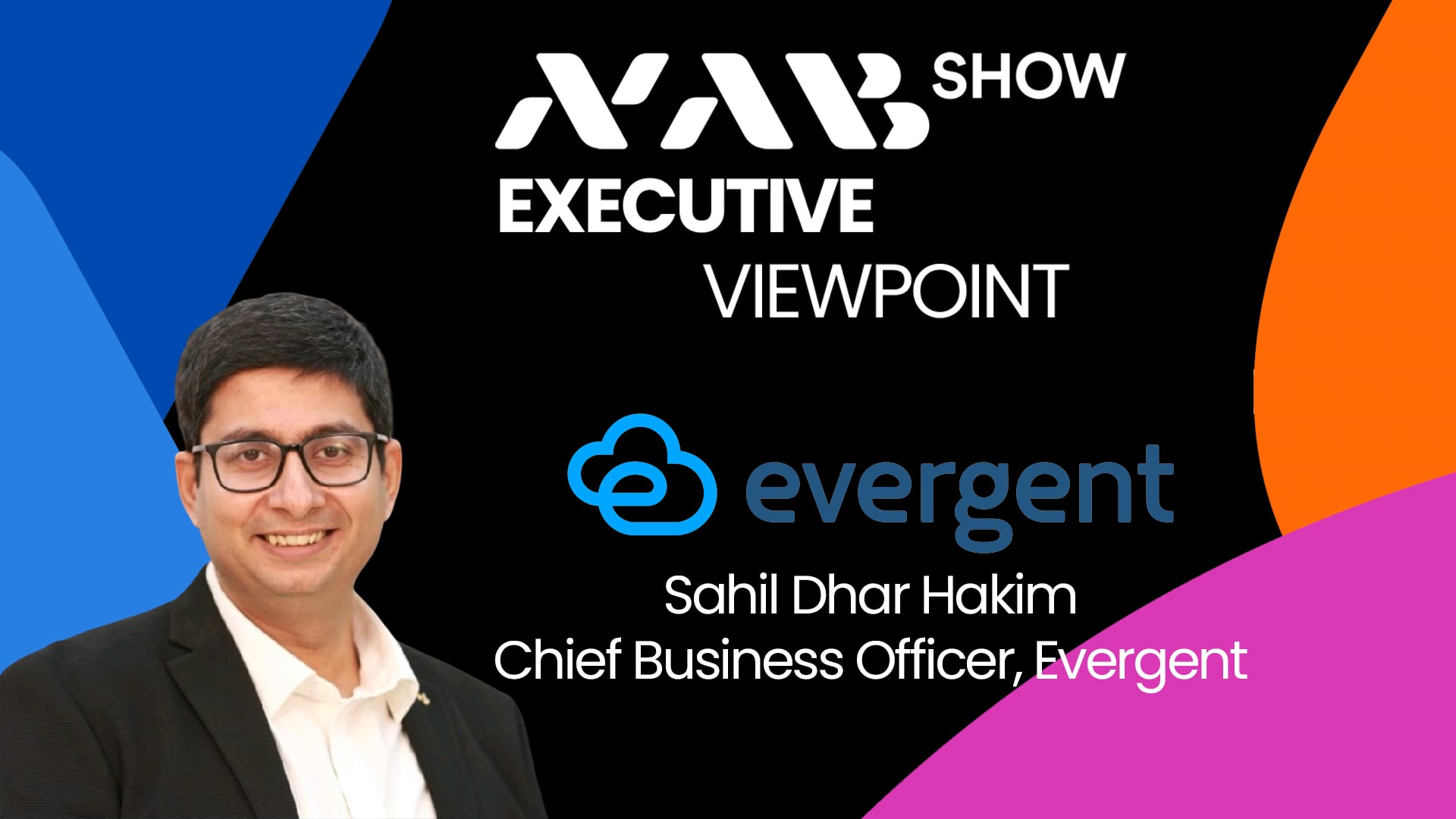
His latest public appearances place him where those disciplines converge. At the NAB Show, he discussed sports streaming, product launches and agentic AI. At APOS 2026, he joined a roster of media, technology and entertainment leaders. In his articles, he keeps returning to the operational moment when a strategy must become a price, a bundle, an answer or an intervention.
The charming part is that the grand language of transformation keeps meeting ordinary particulars: a single invoice, a support screen, a conference booth, a table by a window. This may be Hakim's most transferable operating lesson. Complexity becomes manageable only after someone cares about the seam. He has built a career by making those seams visible, then inviting the right people to sit down and work on them.