A customer wants to stop paying for television when the season ends. An entirely reasonable ambition. The basketball has finished; the bill has not. Somewhere between the two sits an opportunity that Vijay Sajja has spent years trying to explain: let the customer pause. Make returning easy. A business might preserve a relationship by collecting less money today.
For the founder and chief executive of Evergent Technologies, this is a practical question about how software should behave. His company supplies subscription and customer management systems to media and telecommunications businesses. Much of his working life concerns what happens between wanting to watch something and successfully paying for it. The programme gets the applause. The billing system gets a complaint.
Sajja’s account of his beginnings is refreshingly concrete. He grew up in a small village, made his own toys and became interested in computers at school. He described himself simply: “At heart, I’m a problem solver.” Later came a garage in Menlo Park and a company that, he recalled, was self-funded for its first five years. The setting changed. The habit of making a useful thing persisted.
What if an easier exit
made a better relationship?
An education in other people’s frustrations
Sajja earned a Master of Technology degree at the Indian Institute of Technology, Kharagpur. Before Evergent, he founded and led Infotech Solutions, which delivered subscriber billing and customer care work for companies including EchoStar, Lucent Technologies, TCI and Qwest. These were businesses with substantial operations and equally substantial dependencies on the systems recording their customers.
He had a good view of the mismatch. Operators wanted to change offers by price and market. Their back offices made those changes difficult. His description of the relationship was economical: they “loved to hate their back office.” Evergent grew out of his exposure to that frustration. Streaming provided a place to apply what he had learned, with partners including Ericsson, Quickplay and Brightcove.
There is a particular advantage to having worked on a problem before it becomes fashionable. You have already met the inconvenient details. Sajja’s early customers had taught him that selling entertainment involves far more than delivering a picture. Someone has to recognise the account, understand the offer and keep the commercial arrangement working when the offer changes. Each improvement has to survive contact with the rest of the system.
The commercial journey Sajja works on
- 01Recognise
the customer - 02Match
the offer - 03Process
payment - 04Adapt as
needs change
A conceptual map of subscription management, not a product specification.
The garage was only the beginning
One early project he remembered with particular satisfaction was launching Totalmovie in Latin America while Netflix was entering the region. Speed mattered. So did working through the complications of a new market. The relationship subsequently extended into business advice. In his telling, the achievement belonged to the customer’s launch rather than to a financing announcement.
External capital eventually became part of the story. In May 2020, Evergent announced a strategic investment from TZP Group. Sajja described choosing a partner that could help expand operations and develop the product. The stated purpose was to help digital service providers bring consumer services to market faster, including carriers working around the limitations of their existing systems.
By January 2021, he was discussing cloud adoption with AWS executive Shweta Jain. Media and telecom customers shared a desire to launch quickly and change efficiently. SonyLIV was one example: Evergent had helped move registered users onto a new platform. The cloud mattered because a commercial opportunity could arrive before a traditional infrastructure project was ready. Viewers were unlikely to postpone their evening until the servers had been ordered.
He also made a concession that a software salesman might be tempted to avoid. Good content remained essential. However neatly the subscription worked, people still needed something worth watching. His job was to remove obstacles around that experience. A perfectly processed payment buys remarkably little goodwill if the customer regrets the programme.
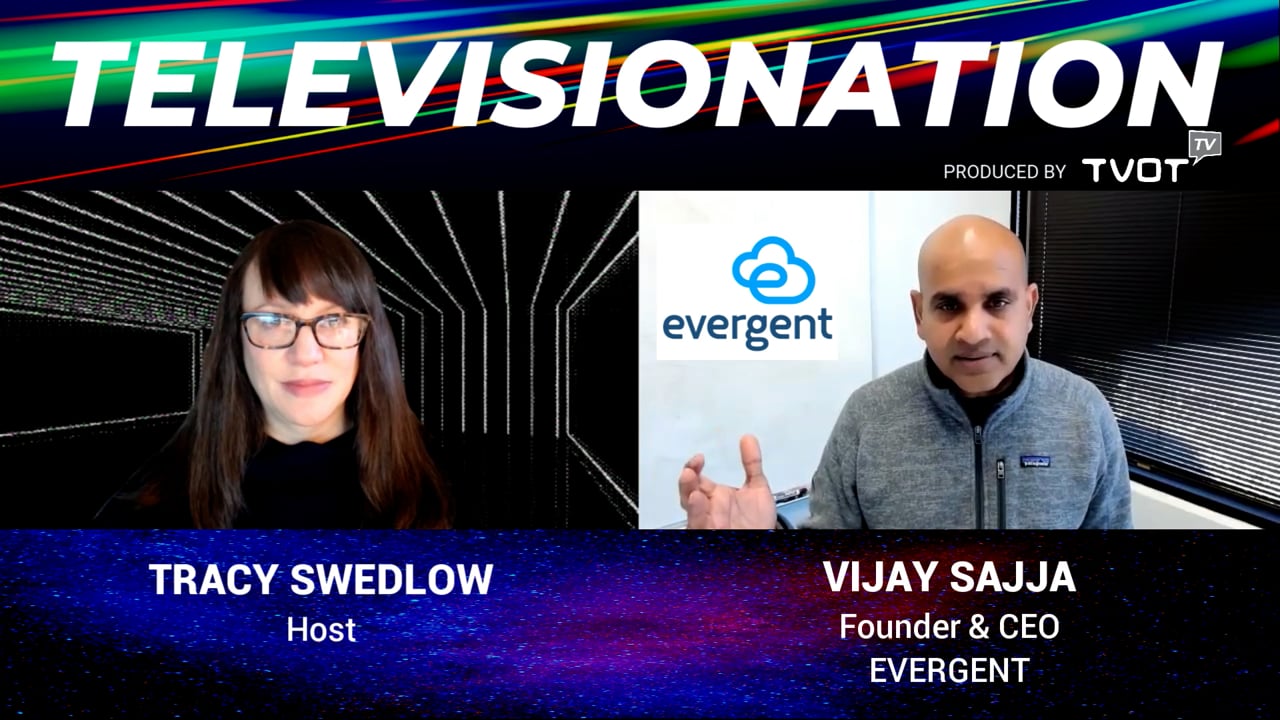
The customer who became an investor
The NBA began working with Evergent in 2022. League Pass needed to serve basketball viewers across devices and borders, and the partnership developed around the subscriber’s journey. In January 2026, the league made a strategic investment in Evergent and extended the relationship for multiple years. The announcement described a League Pass rollout reaching more than 185 countries.
David Lee, the NBA’s head of investments, identified personalisation as a priority. For Sajja, the deal connected his interest in flexible subscription systems with a customer that experiences demand in a very visible rhythm. Games happen on particular nights. Seasons end. Supporters keep their loyalties while changing how much basketball they can watch, and how much they want to spend.
He described the wider approach as “dancing with the consumer.” The phrase is unexpectedly sociable for enterprise software. It means allowing plans to move with people: upgrades, downgrades, seasonal offers and pauses. Reacquiring somebody who has cancelled takes effort, and may fail. An accommodating subscription can leave a door open. A bill that refuses to acknowledge an empty sporting calendar is a rather poor dance partner.
NBA League Pass rollout described in the January 2026 partnership announcement.
A working relationship you can hear
Sajja’s customer relationships also appear in his podcast, The Monetization Show. An episode with Astro Group CEO Euan Smith brings a long collaboration into conversation. Sajja recalls meeting Smith in 2017. They discuss the Malaysian entertainment company’s transition from older systems, starting with its Sooka streaming service before tackling more complicated operations.
One of the revealing moments concerns memory. Smith recalls speaking with Evergent colleagues in India about Astro’s business and later finding that people remembered details he himself had forgotten saying. His appreciation is directed at their attention to the customer’s circumstances. That is a specific measure of partnership beyond the word itself, which can otherwise cover almost any arrangement involving an invoice.
Sajja’s official responsibilities include personally overseeing customer relationships. In the podcast, that becomes a habit of asking what worked, what made a decision possible and what other executives should learn. He leaves room for the customer’s account. The product is present throughout, but the conversation keeps returning to the work of getting people and systems through a change.
Other conversations widen the circle. In May 2025, he joined Accedo co-founder and CEO Michael Lantz to discuss streaming revenue, user experience and the uses of analytics. On his own show, Microsoft’s Simon Crownshaw has discussed AI in media. Sajja’s public work increasingly includes comparing experiences with people who see different parts of the same industry.
“They all loved to hate their back office.”
Vijay Sajja, recalling cable and telecom customers, 2018
The engineers who stay in the story
A company’s history is also the history of the people a founder keeps mentioning. In a public tribute to Kalpana Vaka, Sajja described an engineer who joined his team as a graduate in 2004, left for a larger company and returned in 2008. He celebrated her progress to Chief Engineering Officer, crediting her with more than 50 solution implementations and hundreds of product innovations.
Vaka’s response supplied another side of the relationship. She thanked him for early trust and continuing mentorship, and credited the colleagues who shared the work. The exchange gives some substance to the otherwise rather elastic claim that a founder invests in people. Here was a named colleague, a return, years of responsibility and a record of deployments.
The geographical scale has changed as well. In June 2025, Evergent inaugurated a Global Value Centre in Hyderabad, with Telangana IT and Industries Minister Duddilla Sridhar Babu attending. Sajja spoke about using India’s engineering talent to build predictive and personalised tools for customers. It placed product development in the foreground of the company’s expansion, alongside its international commercial relationships.
He makes time to look beyond that immediate work. Reflecting on CES 2025, Sajja said he had attended for nearly a decade and a half. He described the January event as a chance to step back, absorb industry analysis and form his own view of the year ahead. Among his interests were the movement of advertising toward streaming and the possibilities for advertising revenue management. Curiosity had acquired a conference badge.
- 2020TZP investment supports expansion.
- 2022NBA League Pass partnership begins.
- 2025Hyderabad Global Value Centre opens.
- 2026NBA invests and extends the collaboration.
A new tool, the same practical question
By 2026, Sajja’s writing was turning toward AI systems that take action within a subscription business. In a February article, he discussed automating partner onboarding, responding to changing engagement and supporting more flexible access. His argument extended beyond attracting new subscribers to the value of keeping existing ones engaged. Day passes and short upgrades suit a world in which interest often gathers around an event.
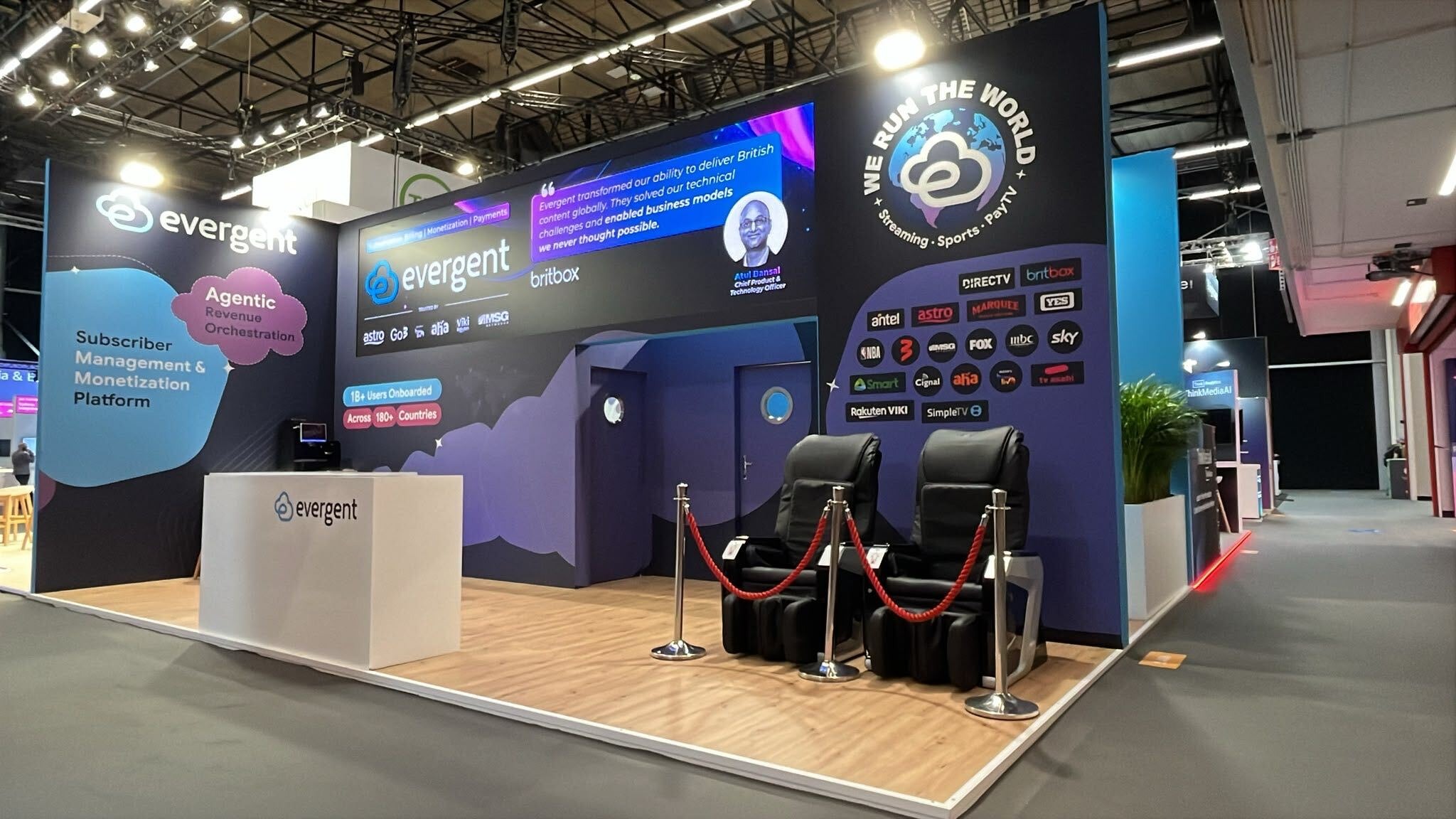
At IBC 2026, Evergent’s Chief AI and Product Officer Ria Kapila demonstrated its Agentic Revenue Orchestration Platform. The company reported a TVBEurope Best of Show award. Its description of the demonstration put six specialised agents to work across pricing, acquisition, payment recovery, personalisation, retention and support. The proposed advantage was moving from a warning about customer behaviour to a response.
In his own IBC interview with David Bloom, Sajja discussed profitable growth and where AI could help conversion and retention. The emphasis fits the older preoccupation: what can the operator actually change, and how soon? An accurate prediction has limited commercial use if the business cannot act before the customer has gone.
That leaves Sajja with an aspiration less theatrical than much of the language surrounding new technology. Build systems that can adapt as people change their minds. A sports fan can need a pause. A viewer can need a cheaper plan. A company can need to revise an offer without beginning another lengthy project. After years spent behind the subscription screen, he keeps returning to an ordinary courtesy: make the arrangement easier to live with.
Keep the conversation going
- Evergent · company website
- Vijay Sajja · LinkedIn
- Vijay Sajja · X
- Vijay Sajja · Medium
- His writing · The Fast Mode
- Early career and founder interview
- Product philosophy · 2018 interview
- Education and career · executive biography
- The NBA investment announcement
- With Euan Smith · The Monetization Show
- With Michael Lantz · Accedo Playback
- With David Bloom · IBC2026 on YouTube
- With Simon Crownshaw · YouTube