A toothbrush package is an unlikely place to look for a chief executive. Yet there is Robbert E. Rietbroek, listed among the inventors on three Procter & Gamble design patents granted in 2010 and 2011. Two are titled “Toothbrush package.” The third concerns a portion of one. Before packaging became his business, it was already something he had helped put his name on.
The detail suits the job he took on January 1, 2026. As president and chief executive of Atlanta-based Graphic Packaging Holding Company, Rietbroek now leads a business whose products tend to disappear behind somebody else’s brand. The cereal gets the television advertisement. The carton gets opened. A useful package can spend its entire working life being taken for granted.
Rietbroek arrived with experience of that arrangement from the customer’s side. He had spent years at companies buying, filling and selling packages, including PepsiCo, Kimberly-Clark and P&G. His teams had worked with Graphic Packaging on Quaker products. The new assignment put a former buyer in charge of the supplier, with a rather consequential question: how much can knowing the customer change the factory?
D611809 · D616302 · D634626
Granted 2010–2011 · Assigned to Procter & Gamble
From table football to Caracas
His professional route began in Maastricht. Rietbroek earned his master’s degree in economics and business administration there in 1996, then entered P&G. He stayed until 2012, working in management and marketing across multiple regions. That is a substantial apprenticeship in the distance between a product idea and a product someone actually chooses.
There was a more local education, too. As a student living in Maastricht’s Wittevrouwenveld neighborhood, he played table football with regulars at the pub. Lunch meant sandwiches at Café Tribunal. The future international executive was also a teenager learning his way around a university city close to his family home in Geleen.
His first posting was in Rotterdam, followed by Venezuela. He arrived without speaking Spanish, attracted by the adventure. He later recalled having to leave the country amid the attempted coup of April 2002. Caracas gave his account of working across borders an experience considerably less orderly than the usual sequence of transfers and promotions.
The geography kept changing. At Kimberly-Clark, from 2012 to 2015, his responsibilities included global baby and child care and leadership in Australia, New Zealand and the Pacific Islands. He then ran PepsiCo’s Australia and New Zealand business from 2015 to 2018. The next posting took him to Quaker Foods North America, which he led from 2018 through 2023.
Each move changed the things that could go wrong. A regional business demands attention to local customers and production. A global category requires decisions that travel across borders. A North American food division has its own retailers, pricing pressures and familiar brands. His record brings those assignments together without suggesting that one market is simply another market with different weather.
The same thread runs through the toothbrush patents. Rietbroek’s name appears alongside other inventors, including Casey Joseph Gustafson and Lee Anne Hilsabeck. These were shared designs assigned to P&G. The modest specificity is appealing: a corporate career can be told through grand titles, but here it can also be traced through a particular object, worked on with particular colleagues.
- 1996–2012Procter & Gamble
- 2012–2015Kimberly-Clark
- 2015–2018PepsiCo · Australia & New Zealand
- 2018–2023Quaker Foods · North America
- 2024–2025Primo Water → Primo Brands
- 2026–Graphic Packaging
The bell, and what came afterward
On January 1, 2024, Rietbroek became chief executive of Primo Water. Before the year was over, the company had combined with BlueTriton to create Primo Brands. The transaction closed on November 8. He became the combined company’s first chief executive, responsible for bringing together businesses with established brands and substantial manufacturing and distribution operations.
The combination linked names such as Poland Spring, Pure Life and Primo Water within a company serving customers through retail and direct delivery. It brought an integration problem with very physical dimensions. Water still had to be produced, loaded, routed and delivered while the organization behind those jobs was being rearranged.
On February 27, 2025, Rietbroek and chairman Dean Metropoulos joined the opening-bell ceremony at the New York Stock Exchange. Primo Brands held its inaugural investor day there that day. The setting offered a neat public marker for a newly combined business: a bell, a ticker symbol, a management team and a roomful of expectations.
By August, the operating picture was more difficult. Rietbroek acknowledged that accelerated integration had disrupted product supply, delivery and service. Some customers faced repeated delivery changes, substitutions and longer waits for help. Facilities, delivery routes and technology were being combined at a pace the organization struggled to absorb.
Those problems matter in any account of his career. A merger can be completed on a date; getting the resulting business to work is a longer undertaking. On November 5, 2025, Primo Brands’ board appointed Eric Foss executive chairman and CEO, ending Rietbroek’s tenure. The change was announced publicly the following day. His next appointment would come in December.
Hiring a customer
Graphic Packaging announced Rietbroek’s appointment on December 8, 2025, with a January start. He succeeded Michael Doss, who had been CEO since 2016. The incoming executive was joining a company that had invested heavily in its manufacturing network and was under pressure to turn that spending into better results.
The board was unusually direct about the circumstances. In a shareholder letter, its independent directors pointed to a nearly 50 percent share-price decline over the preceding year and explained that a change in leadership was needed. A confidential search led by Korn Ferry had produced Rietbroek as their preferred candidate.
Their reasoning centered partly on his understanding of buyers: packaging specifications, sustainability requirements and the speed at which customers wanted new products brought to market. Graphic Packaging had also engaged AlixPartners to identify performance improvements. Rietbroek was arriving with a customer’s perspective and a mandate to improve the economics of supplying that customer.
He could describe the connection with household specificity. Quaker oatmeal packets, Chewy bars, Life and Cap’n Crunch cereals had all figured in businesses he led. “I have been deeply involved in packaging decisions in these roles,” he said. The sentence is more useful than a ceremonial expression of enthusiasm. He had sat on the side of the table that asks what a package costs and whether it will work.
“I have been deeply involved in packaging decisions in these roles.”
Robbert Rietbroek · January 2026
The implication is practical. A supplier can be pleased with its technical capabilities while its customer is worrying about a launch date, a retailer’s requirements or the economics of a different pack size. Having bought packaging gives Rietbroek a reference point for those conversations. The challenge is to translate that familiarity into decisions across a manufacturing business.
The mill has to earn its keep
Graphic Packaging’s investments in Kalamazoo, Michigan, and Waco, Texas, were central to the business he inherited. The board saw those facilities as a foundation for its next phase. With the major investment program completed, its priorities included generating cash, improving costs and putting the expanded capabilities to productive use.
For Rietbroek, that means balancing two kinds of attention. Customers want ideas and responsiveness. Investors want evidence that spending on production can yield returns. The two concerns meet in the same package, which has to satisfy the buyer and make economic sense for the company producing it.
The second-quarter figures released on August 4, 2026, showed the pressure plainly. Net sales were $2.188 billion, compared with $2.204 billion a year earlier. Net income was $24 million, down from $104 million. Adjusted EBITDA was $247 million. The company also reported $40 million of innovation sales growth, a useful counterpoint to the softer overall sales figure.
Quarter ended June 30, 2026. Reported August 4, 2026. Company figures; innovation sales growth is a separately reported measure.
Management expected approximately $85 million in savings during 2026 from structural cost actions, against anticipated inflation of $150 million. Those were expectations, rather than completed results. Their relationship illustrates the job’s difficulty: internal improvements can be substantial while external costs continue to consume part of the benefit.
There is little room for a picturesque turnaround in those numbers. Rietbroek’s task is measured in customer orders, costs and cash over successive quarters. An understanding of brands may help explain where demand comes from. It still has to survive the less glamorous arithmetic of running plants.
Paper needs more than a good argument
In January 2026, Rietbroek joined the American Forest & Paper Association’s board. His stated priorities included improving recycling outcomes, supporting sustainable forestry and maintaining the competitiveness of American manufacturing. The appointment extended his work beyond Graphic Packaging’s own customers and operations into the industry’s shared practical concerns.
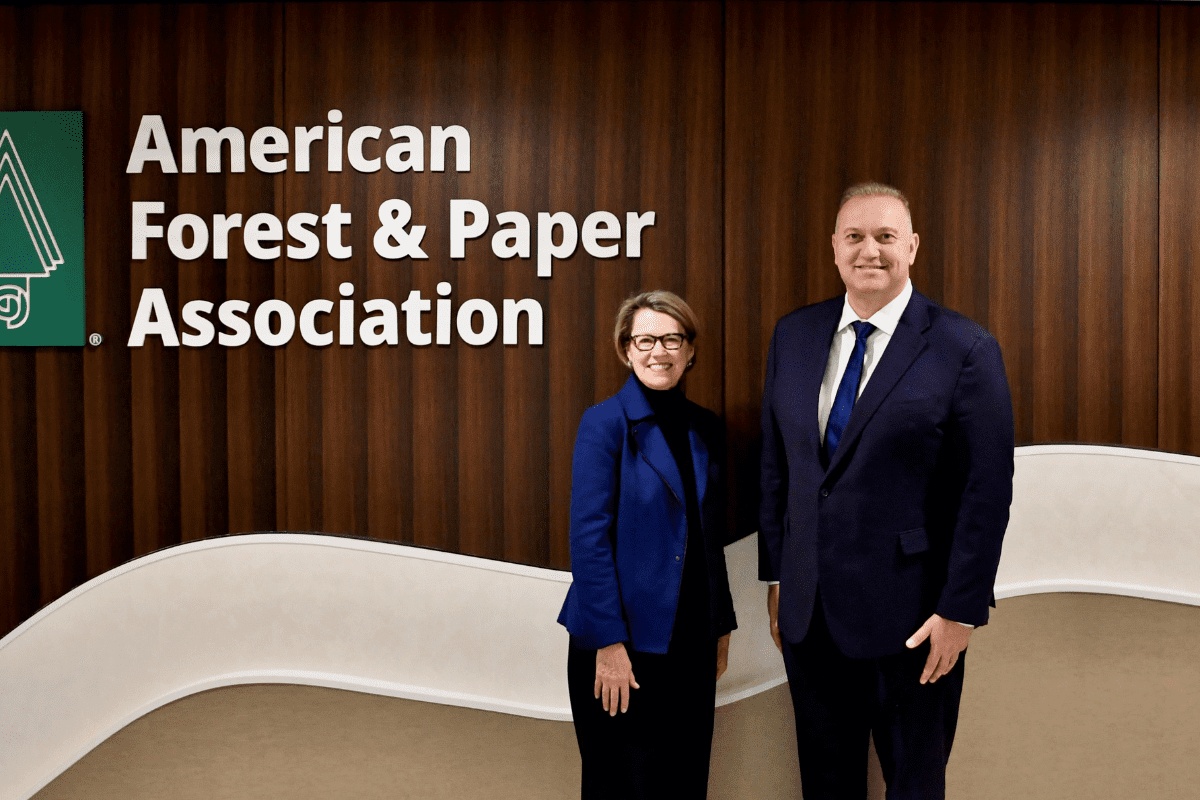
The association’s work includes recycling criteria, collection access and input on packaging rules. These subjects lack the immediate appeal of a new design, but they determine what happens after a consumer has finished with it. A package’s circular future depends on systems outside the company that made it.
That gives his current role another connection to his earlier work. Consumer businesses live with the consequences of packaging decisions at several stages: on the shelf, in distribution and after use. The supplier has to understand those stages while manufacturing something a customer can afford to buy. The carton has a surprisingly crowded job description.
The assignment after the assignment
Rietbroek’s public career also includes returning to the institution where it began. In September 2026, Maastricht recognized him as a Notable Alumnus. He has supported University Fund Limburg and shared experience with students and alumni. A career spent moving between organizations has retained that connection to one place.
His advice to younger professionals is brief enough to remember: “Embrace risk, accept opportunity, stay curious, and prioritize learning.” It is an attractive principle with an uncomfortable clause hidden inside it. Taking on demanding assignments means accepting that the results may resist the plan, and that the next decision will be judged against the last one.
At Graphic Packaging, the former customer now has responsibility for the business behind the box. His experience offers reasons for the appointment; the operating results will determine what follows. Somewhere in that larger story sit three old design patents, reminders that his acquaintance with packaging began at a much smaller scale, with the problem of how to present a toothbrush.