At 15, Kirk Tanner worked in an Italian sandwich restaurant in Salt Lake City. The job eventually included closing up and leading other people. He had also entertained a rather different ambition: becoming a national park ranger. Colorado and Utah were his childhood landscape; Yellowstone, Yosemite and Arches helped furnish the alternative career. The outdoors had an excellent recruitment campaign.
The food business kept him. An accounting degree from the University of Utah followed in 1992, then a sales job at Frito-Lay. By August 18, 2025, he was president and chief executive of The Hershey Company. Between those points lay three decades at PepsiCo and a brief, conspicuous turn running Wendy’s.
His present assignment concerns a deceptively ordinary act: someone reaches for a snack. The company behind that choice contains chocolate, sweets, popcorn and pretzels. Tanner wants it to behave more coherently when it meets the retailer. A corporate structure can be complicated. A shopper rarely agrees to do the homework.
Sales associate
North America CEO
CEO
President & CEO
A long apprenticeship in familiar things
Tanner’s PepsiCo years gave him experience across sales, operations, distribution, customer marketing and channel development. He worked in 11 domestic and international locations. Those moves matter to his story because they took him through the mechanics behind familiar products: the route, the customer relationship, the store and the people responsible for each.
He held regional leadership roles at Frito-Lay and ran sales for PepsiCo in the United Kingdom and Ireland. Later came global foodservice, with its restaurants, workplaces, hotels, recreation venues, colleges and theaters. Selling a beverage in a restaurant and selling a bag of snacks in a shop are different exercises. Both require somebody else’s business to want yours.
In 2019 he became CEO of PepsiCo Beverages North America. A PepsiCo biography puts that operation’s 2021 revenue at $25 billion, with 55,000 associates and 400 locations in the United States and Canada. Such figures describe the responsibility he carried then; they are not a description of Hershey today.
There is a temptation to read a career like this backward, treating every early job as a coded prediction of the last one. His record offers a less magical explanation. He accumulated experience in the unglamorous work that allows a recognizable name to become a repeat purchase. The brand gets the attention. Distribution makes the appointment.
The coach who arrived prepared
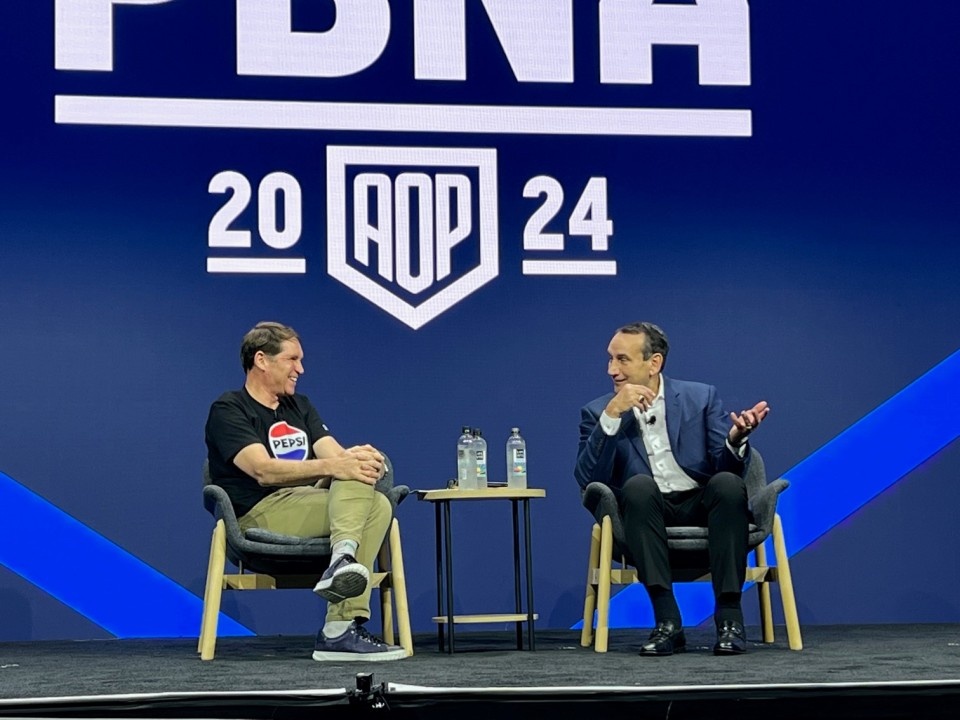
One evening in 2023, Mike Krzyzewski called Tanner around 10:30 to say his plane had landed. The following day they were due to talk about leadership before 800 Pepsi executives and franchise bottlers. Coach K wanted to arrive early and hear Tanner’s team leaders present. Even the guest was studying the room.
Tanner made the episode the opening of an essay about preparation. The lesson he drew was short enough to survive a meeting: “leadership is habit.” Listening and responsibility appeared alongside preparation in his account. The coach’s attention to an unfamiliar business audience impressed him as much as the basketball credentials.
The useful detail is the early arrival. An audience of executives could easily have been given a polished talk that had worked somewhere else. Krzyzewski wanted to know what mattered to this particular group. Tanner noticed that effort, and chose to write about it. It offers a glimpse of what he values in leadership: preparation that includes other people.
Wendy’s, and two words that traveled badly
Tanner became Wendy’s CEO in February 2024, succeeding Todd Penegor. After a career inside PepsiCo, he was now responsible for an entire publicly traded restaurant company. The change also put him in a business where a chief executive’s language can become part of the customer experience almost immediately.
That February, discussion of planned digital menu boards and “dynamic pricing” produced a backlash. Customers heard the possibility of paying more when restaurants were busy. Wendy’s clarified that it had no plans to introduce surge pricing and said the boards could make discounts and changing offers easier. A technical description had acquired a much less appetizing public meaning.
The episode belongs in his profile because consumer businesses are judged through the words people repeat. The distinction between two pricing terms may occupy a lengthy presentation. A customer deciding whether lunch feels fair can reach a verdict considerably faster. The clarification was necessary even though the company said peak-demand price increases were never its plan.
His Wendy’s tenure ended in July 2025. The company announced that he was leaving for Hershey and appointed finance chief Ken Cook as interim CEO. It was a short chapter, and its brevity makes it difficult to assign a whole company’s trajectory to one person. It did, however, place Tanner’s decisions and explanations in a brighter public light.
A chocolate company with a longer shopping list
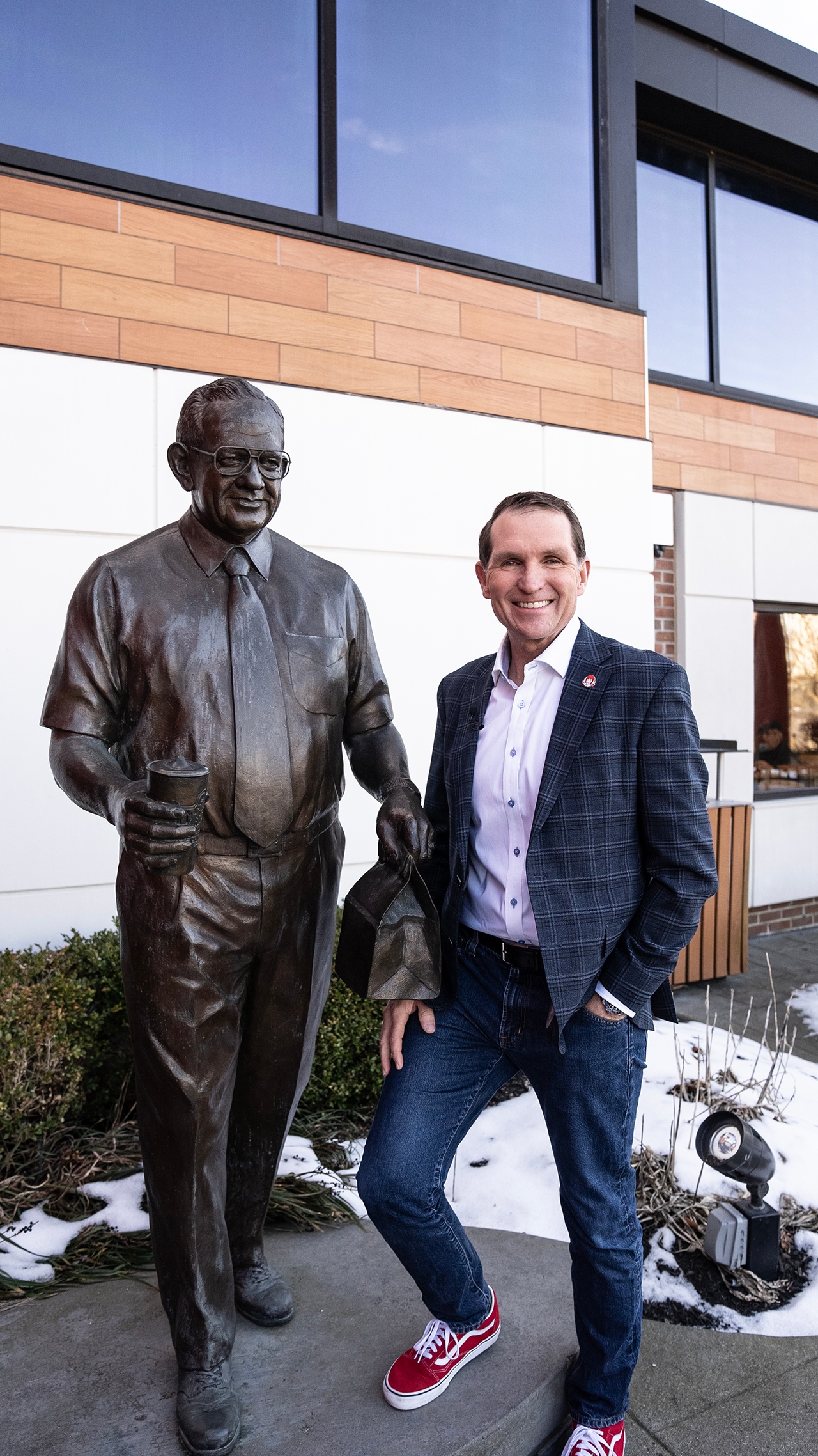
Hershey announced Tanner’s appointment on July 8, 2025, with an August start. He succeeded Michele Buck, who was to help the transition in an advisory capacity. The choice brought an executive familiar with both snacks and beverages into a company already extending beyond its chocolate identity.
He inherited that expansion rather than inventing it. Hershey’s portfolio already included SkinnyPop, Pirate’s Booty and Dot’s Homestyle Pretzels. The LesserEvil deal had been announced before his arrival; its completion was announced in November 2025. The popcorn and puffed-snack business added another set of products and manufacturing capacity to the company’s salty-snack ambitions.
That distinction matters. A new chief executive often becomes the face of everything happening on arrival. Acquisitions have histories, and so do the teams that integrate them. Tanner’s work involves making an existing collection of businesses function together, while deciding where the next investments should go.
At the March 2026 Investor Day, Hershey set out a strategy covering its core confection brands, expansion in other snack categories, a unified commercial approach and supply-chain productivity. Automation, technology and a longer innovation pipeline were part of the plan. The headline promise was growth; the practical question was how the parts would cooperate.
A confection business also carries a calendar. Holidays turn ordinary products into deadline-sensitive purchases. A good idea has to become something a factory can produce, a retailer can stock and a customer can find at the right moment. Easter is an unforgiving date for an impressive presentation that arrives in May.
One company at the retailer’s door
Tanner calls the commercial approach One Hershey. In a September 2026 conversation, he explained that the supply chain had already been brought together, while the customer-facing businesses remained separate. He wanted the company’s different snack portfolios to meet retail customers as a coordinated supplier. He said conversations with those customers supported the change.
There is a recognizable connection to his foodservice years. A large customer has its own objectives, space constraints and reasons for saying no. Presenting a wider portfolio through a more coordinated relationship is an attempt to make that customer’s decisions easier. The underlying argument is about how Hershey sells, as well as what it sells.
Tanner also described AI tools that identify sales opportunities and help route representatives toward particular stores. Here the technology has a concrete destination: a person walking into a retail location with a clearer idea of the task. Its usefulness depends on what happens after the recommendation reaches the sales representative.
The same interview brought up Hershey’s unusual ownership structure. The trust that supports Milton Hershey School is a central shareholder. Tanner described that relationship as supportive of building for the long term. That adds another constituency to a job already involving customers, employees and public-market investors.
It also gives the familiar debate about quarterly performance a particular setting. A company can have patient ownership and still compete every day for a shopper’s money. Long-term purpose does not stock a shelf by itself. Tanner’s challenge is to connect the institution’s staying power with the daily work that finances it.
“It’s really important to control what you can control.”
Kirk Tanner · September 2026
The numbers still have to add up
By July 30, 2026, Hershey was reporting evidence of progress. Second-quarter net sales rose 6.6% to about $2.79 billion. North America Salty Snacks sales grew 22.9%, while North America Confectionery grew 4.2%. The businesses were moving at different speeds, which helps explain why the company’s broader snack portfolio occupies so much of Tanner’s attention.
Hershey’s second quarter, 2026
Those numbers require context. Higher prices helped sales while overall volumes fell. The company also had an acquisition contributing to its portfolio. Revenue growth is useful evidence, but it cannot tell the whole story of customer demand or prove that an organizational change caused a result. A serious assessment leaves room for those distinctions.
At a September investor conference, Tanner returned to delivery in 2026 and 2027, alongside a pipeline intended to support later growth. That is the balancing act of this stage in his career: improve present performance while spending enough attention and money on what follows. The horizon has several dates on it.
His continuing connections also reach beyond Hershey. He serves on VF Corporation’s board and on the advisory board of the University of Utah’s David Eccles School of Business. The accounting graduate remains connected to his university while working across another collection of consumer brands in the boardroom.
For a teenager considering the national parks, this would have been an elaborate detour. Yet the distance from a sandwich counter to a candy aisle is smaller than the job titles suggest. Somebody still has to choose, somebody has to deliver, and somebody has to make the people doing the work effective. Tanner now gets to test those lessons at Hershey’s scale.