Consider an engineering drawing. It may contain the number of a valve, a revision date and a warning someone will need years later. To a person, it is a document. To a computer, it can be a picture of information. The distance between those two things is where Rihal found work.
- Rihal makes scattered enterprise records usable, then automates the work around them.
- Its products cover shared data, document extraction and privately deployed AI.
- The business combines software with the engineering needed to make it work.
The trouble with a useful document
Founded in Oman in 2018, Rihal began with data management for oil-and-gas engineering. Azzan Al Kindi, its chief executive, described consolidating documents, databases and Excel files, then improving their contents. The attraction was automation: finding ways to repeat the work through software rather than processing each record by hand.
The company’s data-management service still reveals that inheritance. Its examples include extracting equipment tags from engineering drawings and revision dates from controlled documents. These are small details with large administrative lives. A record that cannot be found, compared or checked remains an expensive thing to own.
Rihal’s Data Engine handles extraction, verification and transformation. Its rule builder records intended changes, and each transformation run produces a report. That audit trail is part of the product’s practical appeal. Moving a million records is one task. Explaining precisely what happened to them is another.
- 01ExtractRead the record
- 02VerifyCheck the quality
- 03TransformTrack the changes
- 04UseSearch. Analyze. Act.
A product hiding inside a service
There is a familiar tension in this sort of business. A customer wants something specific. A software company wants something repeatable. Rihal has been trying to satisfy both. In a 2023 interview, Al Kindi made the direction explicit:
“We want to move from a service-based company to a product-based company.”
Azzan Al Kindi / CEO & co-founder
Today, the main website presents three products. Iqraa extracts fields from scanned and digital documents, using ready-made or customized models. Users can review and correct the results. That last capability matters: automation still needs a way to catch the awkward document that refuses to resemble the others.
Jadawel tackles a different office habit: keeping shared information in tables. It provides a centralized workspace with access roles and a history of changes to individual cells. The spreadsheet survives, but gains a memory. Teams can see who changed a value, what changed and when.
Its published pricing offers a concrete starting point. Starter is free; Professional costs 6 Omani rials per seat per month, billed annually, and Business costs 12. Enterprise is custom-priced. Those are software subscription prices. A migration or integration project brings its own scope and commercial discussion.
Paid prices per seat / month, billed annually. Enterprise: custom.
An AI assistant with an address
The third product, Siraaj, moves Rihal into enterprise AI. Its proposition joins internal search, document-based chat, meeting assistance and workflow automation. A worker might search company knowledge, summarize a discussion or organize a document task without treating each activity as a separate software purchase.
The deployment choice is consequential. Rihal offers Siraaj on premises or in a private cloud, with Arabic and English support and role-based access. For a government department or an energy company, where information lives and who can reach it can determine whether a tool is usable at all.
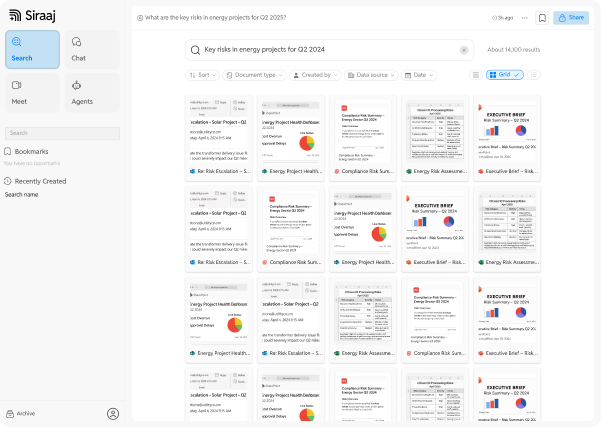
In a May 2025 product essay, technology director Ahmed Al Hasani emphasized the ability to choose different language models and keep deployment private. This is Rihal’s positioning against tools such as Microsoft Copilot. It establishes a buying argument around control; buyers still need to test performance on their own documents.
That is also the condition attached to the promise. A private installation cannot settle contradictory records or decide who ought to read a confidential file. The useful starting questions concern data ownership, permissions and a measurable task. A prettier chat window does little for an archive nobody trusts.
The people behind the permissions
Rihal occupies the space between a software vendor and an implementation company. Its services include custom applications, legacy-system upgrades, automation and technical staffing. It can sell a tool and supply the people who connect it to an organization’s existing work. That combination makes the services business relevant even as products receive more attention.
Its website lists customers including Omantel, Bank Muscat, bp, PDO, OQ and Omran. One particularly useful detail sits in the OutSystems partner directory: a 2024 PDO application for approving small-field contract variations, listed with two developers and four weeks. It gives enterprise transformation a comprehensible unit of work.
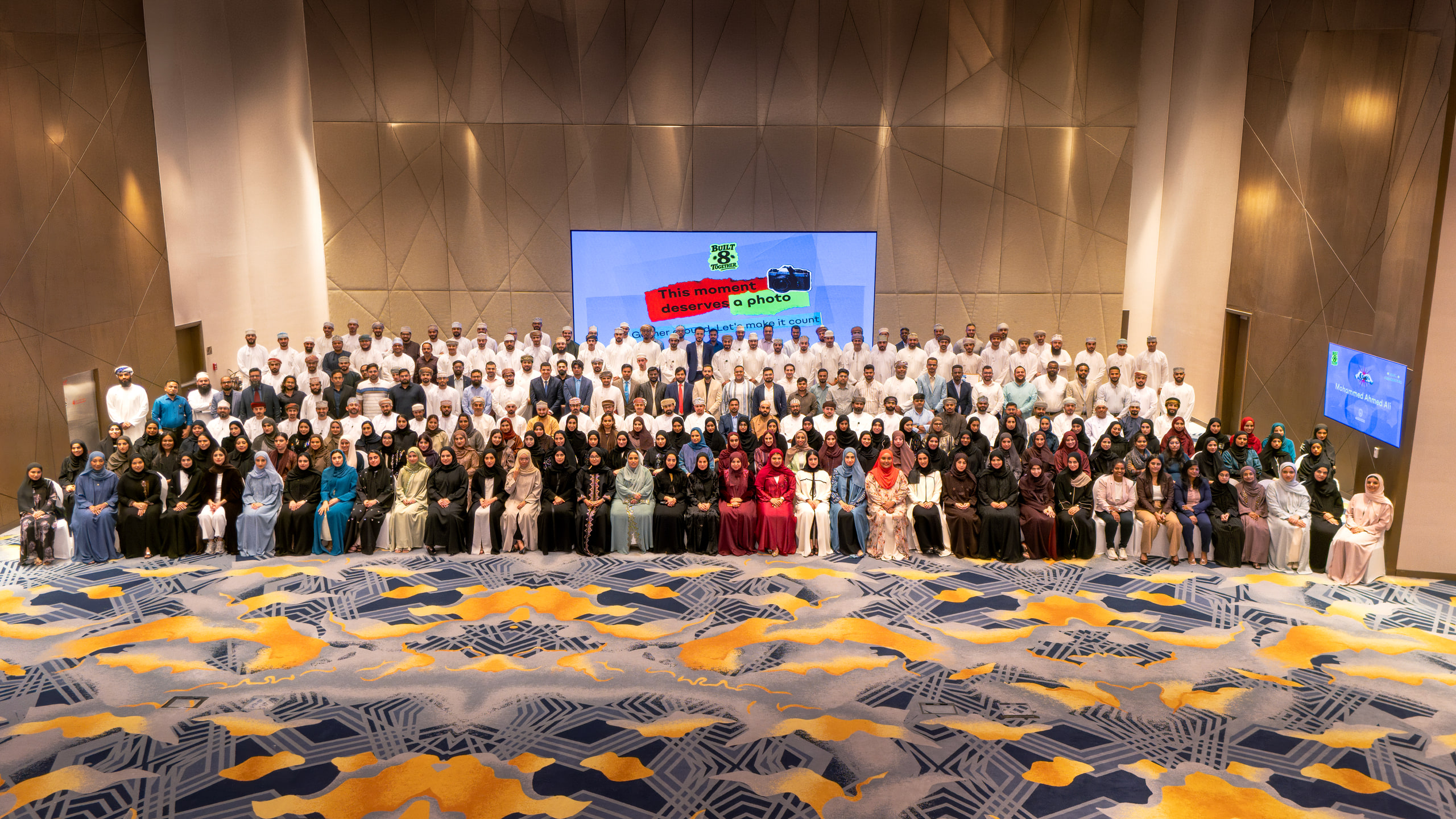
The founding team divides responsibilities among Al Kindi as CEO, Asim Al Shabibi as COO and Waleed Al Harthi as CTO. Technical recruiting has a public face, too: Rihal posts engineering challenges on GitHub. Its 2026 CodeStacker repository offers another small, inspectable detail about how it engages technical talent.
What the next cheque buys
In 2024, Deloitte ranked Rihal third in its Middle East Technology Fast 50, reporting 2,441% revenue growth across the ranking’s four-year period. That is historical growth, rather than a promise about the next four years.
of a $15m target
Led by ITHCA Group. The announced first close covered 50% of the target.
The following September brought a $7.5 million Series A first close led by ITHCA Group. The stated plan was to scale proprietary platforms and expand regionally and internationally. The total round target was $15 million. Keeping those numbers separate makes the size of the next assignment clearer.
For another company, the useful lesson is the sequence. Choose a recurring information problem. Make the records usable. Preserve the change history. Measure one workflow before expanding it. Rihal’s route suggests that an enterprise product can begin with a close look at the administrative work everyone would rather skip.