Maran Nagarajan had a perfectly good reason to stay abroad: life was going well. He had a corporate career, international experience and three college friends whose own careers had carried them far from Tamil Nadu. The difficulty was the perfectly good life itself. There was an unfinished project inside it. The friends wanted to come home and create jobs. A comfortable position could supply a salary; it could hardly supply the company they had been discussing since college.
Coming back made their ambition tangible. It also exposed it to invoices, contracts and customers, which have a useful habit of ignoring ambition. KaarTech would grow around enterprise software, particularly SAP, and find an early opening in the Middle East. Then, in 2015, falling oil prices would reveal how much of the business depended on one regional engine. Homecoming was the beginning. Learning to survive was the education that followed.
Today Nagarajan leads a business that has reported annual revenue above ₹1,000 crore and employs more than 3,000 professionals. The scale is striking, but the more revealing part of his story is his choice of destination. He wants an institution. That word commits a founder to a rather lengthy assignment: create something other people can keep running.
The friends before the firm
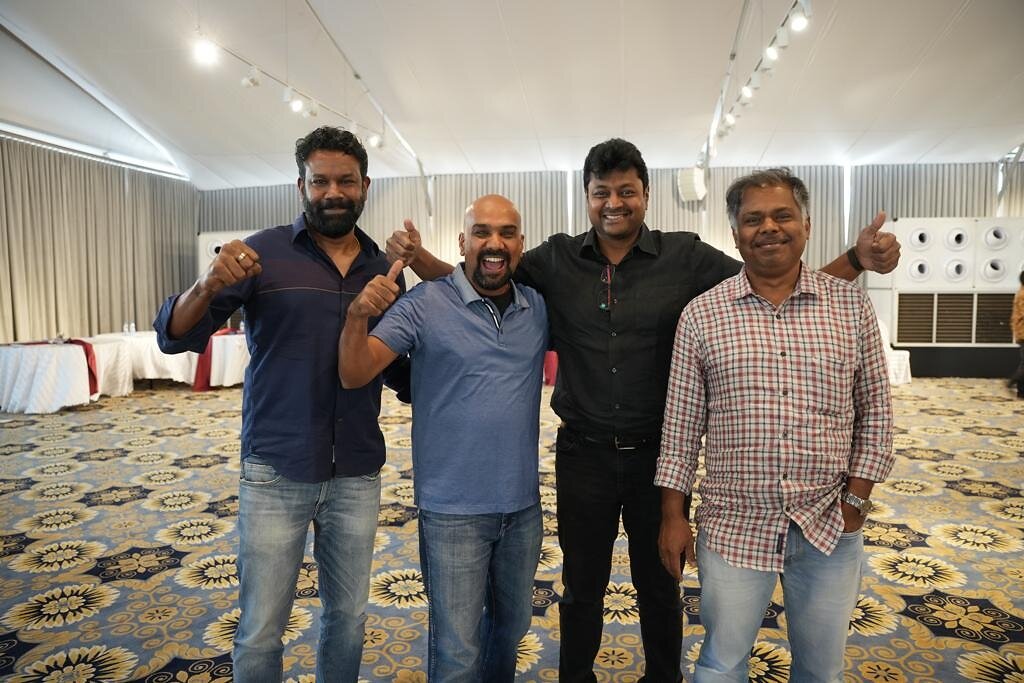
The friendship began at PSG College of Technology in Coimbatore. Nagarajan studied production engineering, graduating with the class of 1994. Ratnakumar Nagarajan, Selvakumaran Manickam and Gaurdian George would become his co-founders. The four did not move straight from graduation into a shared office. Work took them into different countries, and the idea of starting a company survived the intervening years.
Nagarajan’s own route included two years at Crompton Greaves in Ahmedabad, two at Zubair Group in Oman and seven as an SAP professional at AkzoNobel in the Netherlands. That is a useful apprenticeship for someone proposing to help large businesses change their systems. He had worked inside established organisations before asking established organisations to trust a new one.
His education has an unexpected second line: a B.Lit. in Tamil from the University of Madras. Production engineering and Tamil literature make a more interesting pairing than the standard executive biography allows. One attends to how things are made; the other gives language its own claim on attention. Both belong in the account of a founder whose business would acquire a deliberately Tamil name.
Kaar comes from Kaar Megham, a rain cloud. The company uses the image of raindrops nourishing growth to explain its name. Even as the business sells services across continents, the word carries a connection to the place its founders wanted to return to. The geography of customers and the geography of belonging were never required to match.
A small company chooses a large problem
KaarTech traces its beginnings to 2005. Nagarajan’s return and the firm’s early operating story unfolded from 2006, with the founders coming back to Chennai over the following years. Their plan was deliberately specific. India already had plenty of companies selling general IT services. They chose business applications, where their experience could give a young firm a recognisable purpose.
SAP sits inside the everyday workings of large enterprises: finance, stock, manufacturing, distribution and the movement of goods. Consulting around those systems involves making business processes and software work together. It is the kind of work whose consequences appear far from a presentation room. A manufacturer needs its operations to agree with its numbers. The elegance of a slide provides limited consolation when they do not.
Aramco became an early major customer, opening the way to more business in the Middle East. Specialisation made the small company legible to large clients. Its founders knew what they were offering and had experience of the organisations buying it. For a new firm, that clarity mattered. A narrow technical focus could still address a very broad set of operational problems.
When the orders stopped arriving
The Middle East opportunity brought a dangerous companion: concentration. When oil prices fell in 2015, KaarTech found itself short of orders and with cash tied up. Nagarajan has acknowledged the mistake. The company had been occupied with delivering the work coming in and had failed to spread its customer exposure sufficiently. The market changed faster than the business had prepared for.
The strain lasted beyond a bad quarter. In 2018, operating profitability remained below the levels reached in 2014 and 2015, while receivables stretched the company’s working capital. Estimated turnover had grown, but cash generation remained under pressure. More revenue could coexist with a very awkward bank balance. Anyone who has waited for an invoice to be paid will recognise the plot.
The repair was organisational. Contracts, hiring, management and financial controls needed firmer rules. Nagarajan’s account of this period includes employees who stayed through salary backlogs, with many of the early team supporting the rebuilding. It is a consequential detail in a founder story: people whose names rarely appear in the company origin paragraph helped determine whether that origin would have a future.
By 2020, the business had cleared its debt and financial commitments. The experience supplies context for Nagarajan’s present emphasis on governance. Procedures can sound dreary beside entrepreneurship. After a cash crisis, their appeal becomes easier to understand. A business that depends on everybody improvising brilliantly has given everybody an exhausting job.
- 1994PSG engineering graduate
- 2005-06KaarTech’s beginning
- 2015Oil downturn, cash crisis
- 2020Debt and commitments cleared
- 2023First external investment
- 2026New capital, DACH expansion
Seventeen years, then outside money
In July 2023, KaarTech announced a $30 million investment from A91 Partners, its first external funding round. The sequence matters. Outside money arrived after years of building and repairing the business, rather than furnishing the opening scene. The founders had already established customer relationships and a specialised operation before inviting an investor into the next stage.
Nagarajan had also begun widening the offering. From 2022, KaarTech added services in areas including data engineering, cloud engineering, product engineering and business process management. Large customers had needs extending beyond the enterprise software core. The company’s expansion followed those needs, and acquisitions offered a way to add skills and market presence more quickly.
The North American push became personal as well as corporate. Nagarajan relocated to the United States to oversee growth there; his public professional profile now lists Greater Houston. The founder who had returned to India went abroad again for the business he had helped build. This time the international assignment belonged to his own company. The route home had acquired a return ticket.
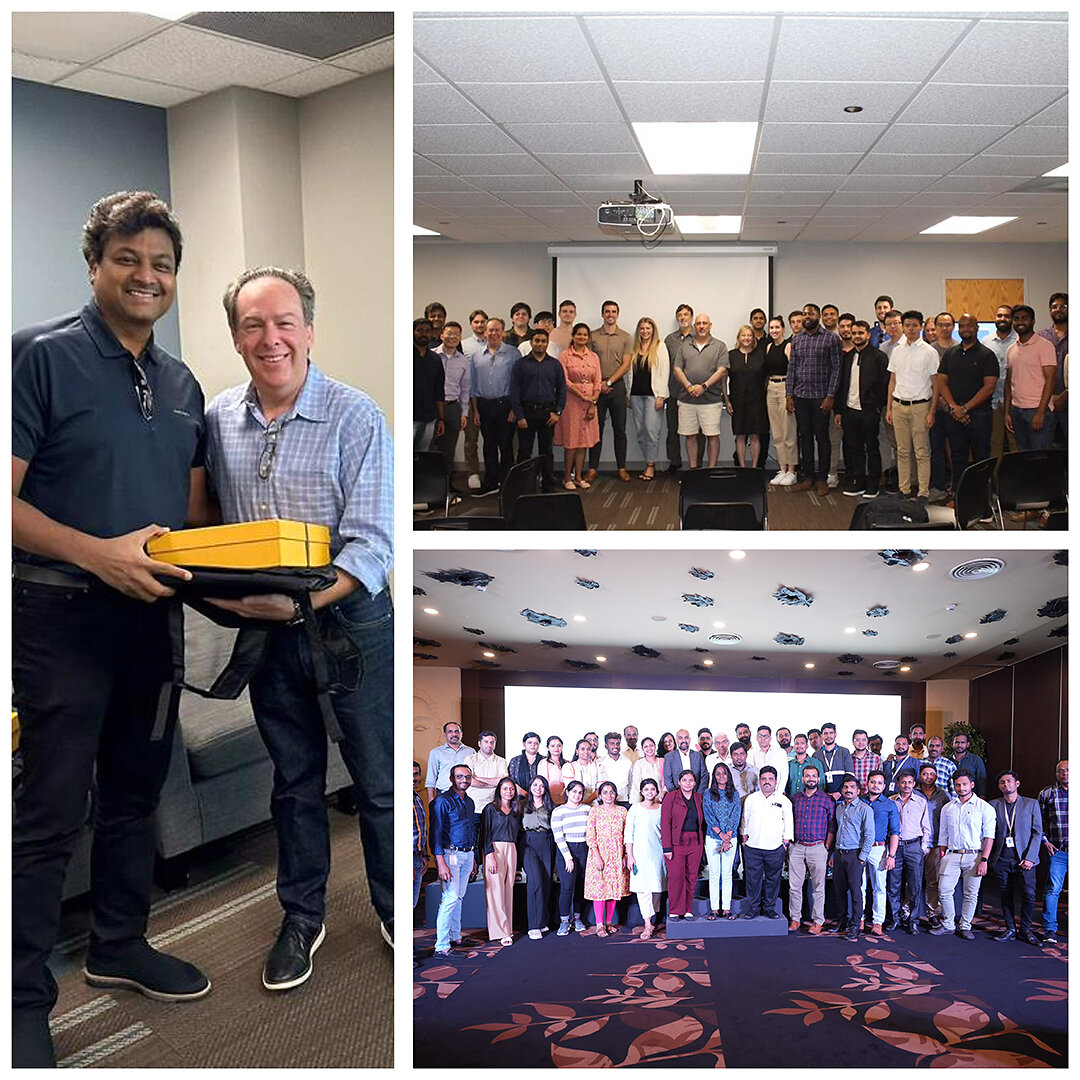
In September 2023, KaarTech acquired Dunn Solutions Group, the Chicago-area consultancy founded in 1988. Dunn brought digital commerce and customer experience capabilities, with offices in Minneapolis and Bengaluru as well as its Chicago base. The combination widened both the service offering and the map. Expansion now meant bringing another established team into the organisation, with its own history and relationships.
The next cheque has a different job
By March 2026, KaarTech was reporting more than ₹1,000 crore in annual revenue and a five-year revenue compound annual growth rate of 44 per cent. Its next investment was $11 million, approximately ₹100 crore, in a primary funding round led by Playbook Partners. The announced uses included deeper data engineering and analytics capabilities, acquisitions and the global expansion of its AI-led enterprise operating system approach.
The company also reported a workforce above 3,000 and more than 3,300 completed projects. These are company figures, useful as dated measures of the operation Nagarajan leads. They change the nature of the founder’s work. At that size, building a durable business means helping many people make decisions consistently, including decisions that will never arrive on the CEO’s desk.
In August 2026, KaarTech announced a Germany, Austria and Switzerland business unit headquartered in Mannheim. Aseem Gaur was appointed to lead it. The location puts the firm in the Rhine-Neckar region, close to SAP’s headquarters in Walldorf. Nagarajan connected the move to the company’s preparation for a public listing. The IPO remains a stated ambition; the new regional operation is a concrete step already announced.
Giving the software a business assignment
The newer language around KaarTech includes artificial intelligence and an Enterprise Operating System, or EOS. Nagarajan describes the latter as an approach that connects strategy, architecture, intelligent agents and delivery. His argument is practical: enterprise transformation needs an agreed business outcome, prepared data and people able to use the changed system. Merely upgrading the technology leaves much of the assignment unfinished.
KTern.AI gives that argument a product dimension. KaarTech announced its generative AI approach to SAP S/4HANA transformations in February 2024, describing a platform with digital streams spanning projects, processes, testing and other transformation work. The company presents its platform as a way to bring governance and visibility into complex programmes. It carries a familiar concern from Nagarajan’s own operating history: how to keep a large piece of work intelligible while it changes.
His view of the workforce is similarly tied to execution. In 2026, he described structured learning programmes intended to prepare employees for roles closer to client problems, including forward deployed engineers. He expects AI to support decisions in areas such as planning and forecasting while human judgment remains part of management. The promised results still have to be delivered. Enterprise customers are unlikely to accept an acronym as payment.
A founder makes room for other people
Nagarajan’s public life also contains quieter measures of accomplishment. He reads, reflects on entrepreneurship and mentors young professionals. Through Kaar Arakattalai, he participates in education and development programmes for underprivileged children. In a recent public post, he celebrated his daughter Ilanila’s graduation with an MFA in cinematography from Chapman University. The pride was plainly a father’s, beyond the company scorecard.
The institution he imagines has room for that broader view of achievement. At KaarTech’s twentieth-anniversary leadership gathering in 2025, more than 200 leaders from six countries came together. Employees were recognised, cultural performances opened the programme and an IPO pitching game was named Flight 2027. Even a public-market ambition, apparently, can benefit from a little theatre.
His advice to prospective founders puts endurance ahead of a sale. The practical demands of that sentence run through his career: choosing partners, building specialist knowledge, admitting a concentration mistake, repairing cash discipline and adding leadership as the organisation grows. Lasting is an everyday verb in this story. Nagarajan came home to start a company with his friends. He is still working on what that company might become after the founding friends.
“Don’t build to sell,
Maran Nagarajan
build to last.”