On June 26, 2026, Rick Galán left BILL and found a tidy coincidence waiting in his phone. Six years earlier, to the day, he had finished his last job at Qualtrics. Marketing leaders spend much of their lives trying to distinguish a pattern from an accident. Here was a pattern with no obvious business value, which may be why Galán enjoyed it. He wondered aloud what job he might leave on June 26 a few years hence.
The joke carried the tone of his public writing: dry, alert to absurdity, unwilling to turn every ordinary event into executive scripture. When he got reading glasses, he declined the ritual LinkedIn lesson about focus and declared that he was going to lie down. When an artificial-intelligence assistant seemed sluggish, he allowed that it might simply be having an off day. Behind the comic relief sits a career built on the opposite habit - asking what an event actually means, then stripping away the decorative answer.
His departure closed a six-year run that began at Divvy in 2020 and continued through BILL's acquisition and integration of the spend-management company. Galán described the period as a procession of campaigns, launches, brand changes and growth. In April 2026 he had moved from senior vice president of growth marketing to senior vice president of marketing. By late June, he was off the org chart and, briefly, off the grid with his family. He had irons in the fire, he wrote, but no polished announcement ready to go. Roles, advisory work, boards, projects and learning were all possible. So were lunches.
First, learn where the money goes
Long before the senior titles, Galán worked close to the auction. At Overstock.com he held search and online marketing roles. At Mercent he directed paid search, helped shape a platform designed for retailers and managed the team delivering agency services. At 1-800 Contacts, from early 2012 to early 2014, he oversaw paid search, natural search and affiliate marketing. These were jobs with nowhere for vague language to hide. Bids cost money. Search positions move. Conversion rates answer back.
A federal administrative record from that period preserves an unusually unvarnished fragment of the work: Galán telling colleagues that paid-search performance was down year over year and connecting the decline to competitive pressure and price transparency in search engines. It is not a glamorous artifact. That is precisely its value. The later executive can be seen inside the operator, diagnosing the market without asking the spreadsheet to flatter him.
Mercent1-800
ContactsBlendtecQualtricsDivvy
BILL
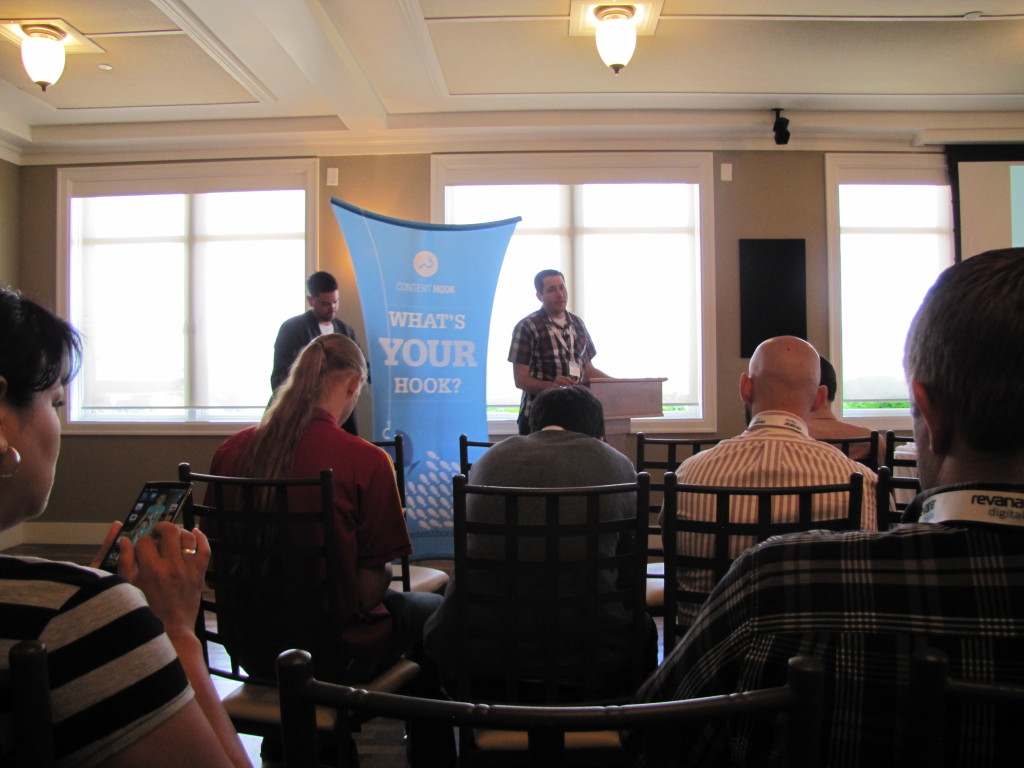
That apprenticeship helps explain a line he used at a Utah digital-marketing conference in 2015: “Your job is not what you do; your job is the results of what you do.” Keyword research, in his example, was an activity. Nobody hired a person merely to perform it. They hired someone to produce a result. The distinction sounds obvious until one considers how many corporate reports are catalogs of motion: campaigns launched, meetings held, impressions gathered, decks sent.
“Be prepared to answer ‘Why?’ up to 5 times on any dataset you send.”Rick Galán on useful reporting, 2015
Galán argued that reporting is entirely about relationships. A good report is built like a product: establish strategy, decide scope, give the information a structure, choose the components and only then polish the surface. The audience is not an abstraction. What matters is what the person receiving the report needs to understand and decide. That makes commentary essential. Anyone can transmit numbers. The marketer earns a place in the room by explaining what those numbers mean.
Virality meets the correct audience
At Blendtec, where Galán served as director of digital marketing, the company already possessed an enviable piece of internet folklore. “Will It Blend?” had turned a founder, a blender and a succession of doomed objects into hundreds of millions of video views. Galán called it a wonderfully successful experiment. He also recognized the strategic problem concealed inside all that attention: many viewers had arrived for destruction, not nutrition, and certainly not to buy a premium kitchen appliance.
The answer was not to disown the viral hit. It was to add depth. Blendtec developed relationships with creators whose audiences were closer to the lives in which the product belonged. Its team attended blogger gatherings and fitness events, handed out smoothies and behaved like participants rather than visiting royalty. “The biggest tactic is just to be one of them,” Galán said at the time. Awareness had done its broad work. Relevance now had to do the patient work.
The same progression appeared at Qualtrics, where he led digital marketing for roughly four and a half years before joining Divvy. The business had changed from ecommerce and appliances to experience-management software, and the audience from consumers to business buyers. Galán discussed the difference between B2C and B2B marketing in interviews, but his underlying interests remained recognizable: the system, the data and the translation between a marketing action and the result it was meant to produce.
A clean system requires useful subtraction
There is a charming counterexample to Galán's reputation as a systems person. While at Qualtrics, his Getting Things Done practice became so full of neglected projects and optimistic recurring tasks that he stopped trusting it. Items moved from day to day. Weekly reviews fell behind. The list meant to remove mental noise had become a finely indexed source of it.
His solution was “to-do list bankruptcy.” He archived every project and task, preserving them without leaving them in view, then rebuilt his system around current objectives. Nothing cosmically bad happened. “The important stuff comes back or it's already in my head anyway,” he said afterward. The reset made him less optimistic about imaginary future capacity and more realistic about what belonged on the list.
The anecdote is funny because it turns a high priest of organization into a humane apostate. It is useful because the logic scales. A marketing stack can become a to-do list with licensing fees. Galán has warned that companies expect too much from technology, pile overlapping tools onto dirty data and then look for a return that no software can manufacture. Strategy comes first. Clean inputs matter. Most of all, the right people must be present to operate the system.
The wake belongs to the leader
By the time Galán reached Divvy, the work was as much about people as channels. Sterling Snow, announcing the hire, said the company had considered 377 candidates and singled out Galán's grit, communication and leadership. Former colleagues describe a manager who made time to teach, valued junior team members and told people they were not their mistakes. One recommendation calls him both a cultivator of loyalty and “a handful,” a compact description of a leader whose standards and humor apparently arrived together.
His own phrase for the obligation is “mind your wake.” A leader moves through an organization like a boat across water, leaving effects behind each interaction. The difficult part is that private intention does not cancel public impact. A leader may authentically feel frustration and still be responsible for the signal that frustration sends. Galán has applied the same demand to direct communication. He objects when managers use “my team is saying” as a shield for an opinion they are unwilling to own.
“Leadership is not just about what you do; it's about the impact you leave behind.”Rick Galán on the ripples leaders create
There is continuity here with the young search marketer staring at conversion pressure. Own the number. Own the interpretation. Own the effect. At Divvy and BILL, that habit had to survive product launches, a $2.5 billion acquisition, integration and brand change. The scope widened, but accountability did not become more abstract. It became more social.
The honest blank in the plan
Galan's résumé contains a small intellectual joke. He earned a bachelor's degree in neuroscience at Brigham Young University, with minors in philosophy and business management, then built a career in digital marketing. The fields are not as unrelated as they first appear. His work keeps returning to perception, explanation and choice: what people notice, what they believe a number means, and what they do next.
Now the choice is his. The public description of what follows BILL is deliberately wider than a title: a role, perhaps; advisory or board work; a project; something to learn. First came family, gear and time beyond reliable signal. The seasoned marketer left without forcing the transition into a campaign.
A career organized around measurement can make uncertainty look like a defect. Galán's version looks more like an interval for choosing the right measure. He has already demonstrated the discipline to archive a system that no longer serves its purpose. He has taught rooms full of marketers to ask why until a dataset yields meaning. The next dashboard is blank. For once, that may be the point.