The ticket was the problem. Dener Lippert was fourteen, wanted to see Charlie Brown Jr. at Planeta Atlântida, and lacked the money for the admission and the journey. The festival was roughly a hundred kilometres away. He solved the difficulty by finding other people who wanted to go, too. A bus excursion, promoted through Orkut and MSN, paid his way and left a surplus. A music fan had discovered a margin.1
It is a pleasantly ungrand beginning for a career in marketing. No manifesto was required. There was a destination, an audience and an offer. Lippert would later build V4 Company around helping businesses sell. The teenager had already encountered the central pleasure of the trade: arranging a transaction that made something possible for everyone involved, including himself.
A bus ride, then a bill
Lippert grew up in Canoas, in Rio Grande do Sul, with his mother and three siblings. Commerce was close at hand. His mother resold goods bought in Paraguay; his brother worked with transport and events. The suggestion to promote the excursion online came from that brother. Before Lippert acquired a professional vocabulary, he had people around him making a living by finding customers.2
Excursions led to parties, and parties grew into events for as many as a thousand people. At seventeen, he and his sister opened a nightclub. Because he was underage, the property arrangement went through her. The enterprise failed, leaving debt. Selling the evening and sustaining the venue had turned out to require different kinds of competence. A full dance floor offered limited instruction in the less glamorous parts of management.
His mother suggested employment. He took jobs, and one employer encouraged him to study and helped with the cost. He began in business administration, then moved toward marketing after securing a ProUni scholarship. At La Salle in Canoas, Philip Kotler’s four Ps gave him a framework for questions his earlier business had already made painfully practical.3
The kitchen with a telephone directory
In 2012, Lippert began V4 in his mother’s kitchen. The equipment belonged to an earlier phase of internet entrepreneurship: a computer, a telephone directory and enough persistence to keep calling. Digital marketing still needed an analogue introduction. A prospective customer had to answer the telephone before anyone could discuss what the internet might do for the business.4
About a month of prospecting preceded an early contract. The household had reasons to prefer a dependable wage. Lippert’s answer was to think about the position he might occupy after ten years of learning the business. Starting later would mean competing with people who had spent that decade practising. It was a young person’s argument for impatience, built around an unusually patient timescale.
The first spaces followed the customers. V4 entered the university incubator, rented an office in central Canoas and eventually moved its headquarters operation to the Unisinos technology hub in São Leopoldo in 2020. Each address made the company easier to picture. The harder question was how to make the work travel without keeping every decision within Lippert’s reach.
An agency that could leave home
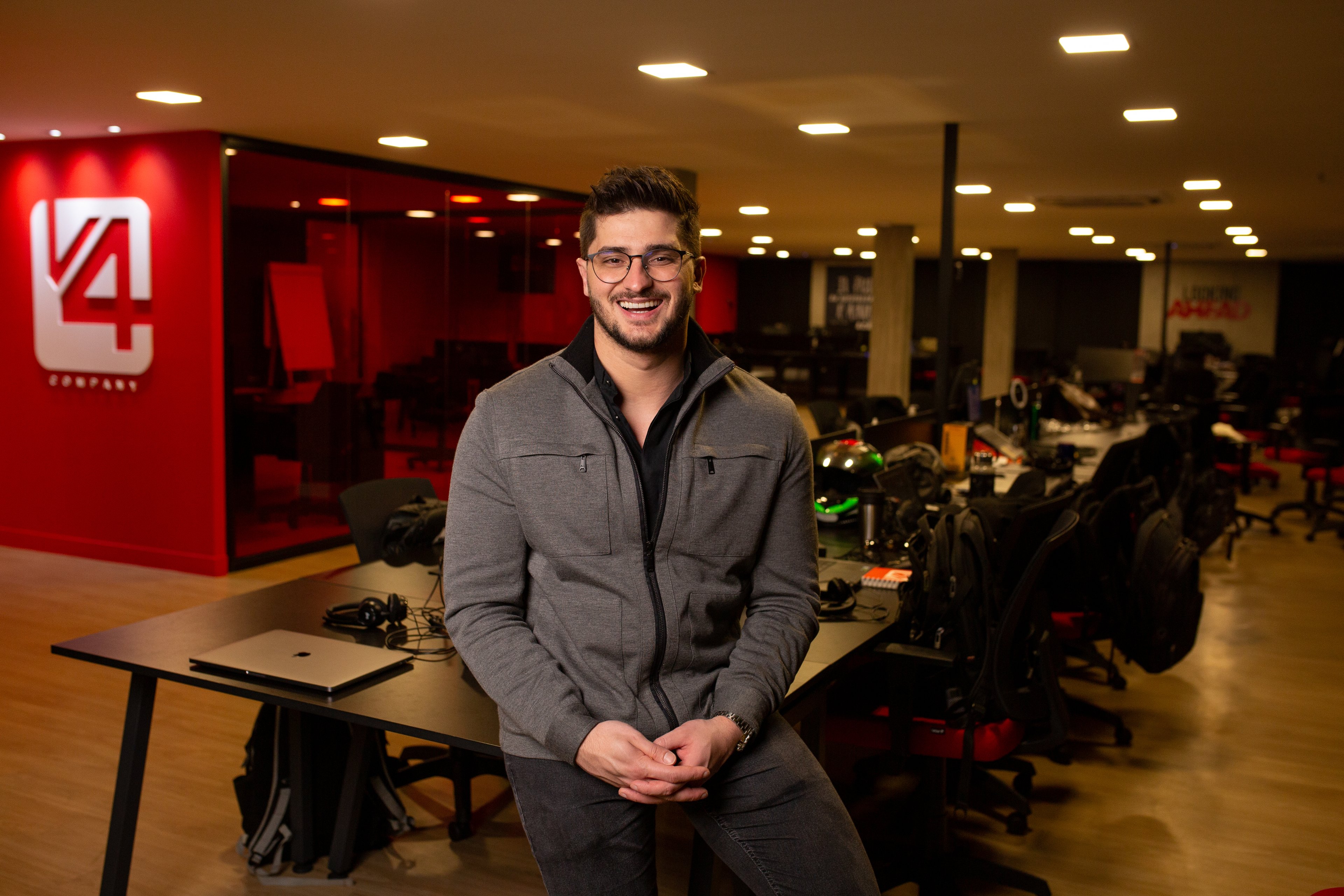
The consequential structural change came in 2017, when V4 adopted franchising. At that point, it had about thirty employees and eighty clients. By the end of 2021, it reported two hundred franchised offices and sixteen hundred people across the network. Dreamers Group, whose brands included Artplan and Rock in Rio, had taken a ten percent stake. Lippert also appeared in Forbes Brazil’s Under 30 selection for marketing and advertising that year.5
The contrast is useful: the kitchen story explains where he started; the franchise decision explains how the enterprise could become larger than his own working day. Local operators could carry the method into their businesses. Headquarters could concentrate parts of the commercial system. The founder’s challenge expanded from winning a customer’s confidence to making that confidence survive a handoff.
By July 2019, V4 already had ninety franchise units. Lippert was appearing in business interviews, including a conversation with Adnews chief Antonio Rosa. The public role grew alongside the operating one. The founder who had begun with outbound calls now had a company story other business owners wanted to hear.6
V4 begins in Canoas
Franchising begins
Dreamers takes a stake
Franchising creates a particular kind of homework. A founder can personally correct a small team. Across many offices, training and incentives must do more of the correcting. Growth makes the promise visible in more places, and gives it more opportunities to be misunderstood. The organizational achievement lies in getting people to repeat good judgment without requiring them to become copies of the founder.
A scientist with a microphone
Lippert’s preferred professional identity is the marketing scientist. His book, Cientista do Marketing, appeared in an Editora Gente edition in April 2021. Its 192 pages organize the work around traffic, engagement, conversion and retention. The commercial ambition sits inside the company name: sell the product, sell more often, reach more people and sell at greater value.7
The vocabulary sounds tidy. Client work supplies the untidiness. Lippert has described V4’s route to Spotify as a chain beginning with a small gym project, extending through other fitness businesses and gym-management software, and ending in a referral. V4 then helped operate a Spotify project across six Latin American countries for a quarter. The account makes room for the smaller job that opened the larger door.8
THE BOOK’S FOUR-PART LENS
- 01TrafficBring people in
- 02EngagementBuild interest
- 03ConversionEarn the sale
- 04RetentionGive them a reason to return
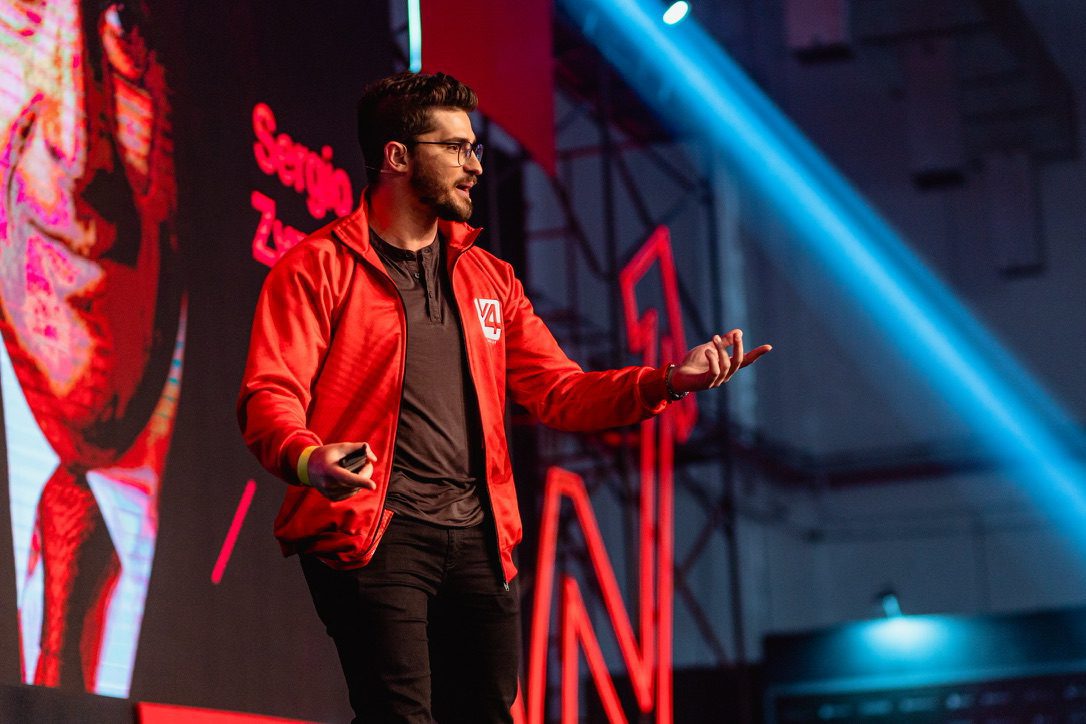
He also hosts ROI Hunters, writes business commentary and mentors growth programmes at G4. These roles put him in several versions of the same conversation: the operator explains a decision, the writer makes an argument, the teacher has to make it usable. A marketing founder with a microphone is hardly unusual. The interesting test is whether the explanation survives a listener trying it at work.9
His own writing is often practical. In a 2022 column on inside sales, he described separating lead capture, qualification and closing, then connecting that work with marketing. That is recognizably the concern of someone who once needed the next telephone call to become a contract. The tools have multiplied; the gap between interest and a signed agreement still requires attention.10
There is also a broader conviction behind the sales language. In another 2022 column, he argued for entrepreneurship as a route to jobs and social mobility, returning to his own beginning in Canoas. He sees the business owner as an economic actor worth defending. That belief helps explain why the small and midsize company remains central to his public pitch.11
Buying the missing pieces
In April 2024, V4 announced its acquisition of Staage’s brand and content from Grupo Primo. The combined educational offering brought together more than eighty courses and four hundred lessons, with Fernando Miranda taking the CEO role at Staage. Lippert wanted the business to train marketing leaders whose work would concentrate on commercial performance. Teaching had become an asset the company could buy and develop.12
Thiago Nigro joined V4 as a shareholder and advisory council member in 2025. Lippert connected the relationship to financial-market expertise and an eventual public offering. The stated target was an IPO by 2030, alongside expansion in the United States. In February 2025, V4 reported 170 US clients and set a goal of a thousand by year-end. Those numbers describe a starting point and an ambition; the ambition still had to be earned.13
Another addition reached closer to the moment money changes hands. V4 announced a joint venture with Easyflow in September 2025, keeping the technology company’s operation and leadership independent. V4 and selected clients had already used the platform. The combination brought checkout, charging and sales technology into the network’s orbit. For a founder preoccupied with conversion, the payment step was a natural place to look.
“We always start with the right partners.”
Dener Lippert, on the Easyflow partnership
Translated from Portuguese
Lippert’s explanation emphasized the people behind the product. He also pointed to control, margin and efficiency. The move fits a recurring feature of his career: when a missing piece starts to constrain the sale, the boundaries of the business become negotiable. Education, finance and checkout arrive through different relationships, each carrying a fresh set of operating responsibilities.14
The group chat changes its name
In an April 2026 essay, Lippert described renaming a partners’ WhatsApp group he had created in February 2017. “Equity Partners” became “V4MOS AI Agents for Revenue Growth.” The change served as a small announcement of a larger proposed shift: use AI agents to expand what the service organization could deliver, with people coordinating the work. Even a strategy document now begins in a group chat.15
In June 2026, V4 announced that Wise Up founder Flávio Augusto had joined its council. Lippert tied his arrival to improving client delivery; the company connected the appointment to international expansion and preparation for a public offering. The concerns sound more institutional now: service quality, processes, scale. The customer still needs the promised result when the founder is somewhere else.16
There is a satisfying continuity between the boy arranging a festival trip and the executive assembling partners, teaching materials and technology. Both have to make an offer work for other people. Lippert’s career gives that simple idea a succession of complications. A bus needs passengers. A service network needs customers who return. The concert ticket was paid for long ago; the work of making the next transaction worthwhile continues.