Before Anik Singal began selling the idea of an AI version of yourself, he discovered a less elaborate way of being in several places at once: write down what you know and charge people to read it. A lesson could travel while its teacher stayed put. For a college student answering questions on internet forums, that was a business hiding in the replies.
At the University of Maryland, Singal found people willing to pay for help with online advertising. Consulting made sense, but it came with an obvious inconvenience. Every new customer wanted some of the same person's time. Packaging the instruction into an online course offered a way around that problem. Affiliate Classroom, which he started in 2004, turned the conversation into a product.
More than twenty years later, he is founder and CEO of UgenticAI. The company now promotes tools for reproducing an expert's knowledge, image, voice and video presence. The technology has changed considerably. The commercial question has a familiar shape: how much of a person's work can be useful to somebody else without requiring that person to show up again?
Singal's career supplies both the attraction of that question and some uncomfortable limits. He has built education businesses, helped found an email software company, written books and backed student entrepreneurs. He also settled a Federal Trade Commission case over unsubstantiated earnings claims at Lurn. Any account of the latest reinvention has to make room for both the enterprise and the bill.
How far can expertise travel
without its owner?
A finance degree, a very different classroom
The student who wanted hands-on work did finish his degree. Singal graduated from Maryland's Robert H. Smith School of Business in 2005 with a B.S. in finance. He was part of Hinman CEOs, a program that put student founders in a setting where entrepreneurship was something to practise alongside coursework.
He has repeatedly described a difficult apprenticeship online. In his own account, eighteen months passed before he made money. His personal biography gives the eventual breakthrough a precise amount: $330. It is a compact origin story, with an appealingly modest first prize. The figure matters here as his recollection, rather than a promise about what another beginner might earn.
In a later interview with Ryan Alford, Singal said his first Maryland football game was homecoming after graduation. During college, he said, he had been occupied with study, a part-time job and his business. This is the sort of detail entrepreneurs enjoy telling about themselves. The campus had a football schedule; he apparently had a launch schedule.
Recognition followed. BusinessWeek included him in its 2008 selection of U.S. entrepreneurs aged 25 and under. A young founder was becoming an example that a university could point to: someone who had taken the entrepreneurship program literally.
- 2004Affiliate Classroom
- 2013Sendlane
- 2023Lurn settlement
- 2025UgenticAI CEO
The $50,000 return visit
In 2008, Singal committed $50,000 to launch the Hinman CEOs Alumni Fund. Three years after graduating, he was helping finance the students behind him. The proposed awards were small enough to fit an undergraduate venture: $500 to $5,000, allocated after applicants submitted a business plan.
That scale is revealing. A student experimenting with a first product may need a little working capital and a serious conversation more urgently than a grand speech about disruption. Singal planned to take a lead role on the fund's advisory board and challenge other alumni to contribute. He had received help; here was an attempt to make help repeatable.
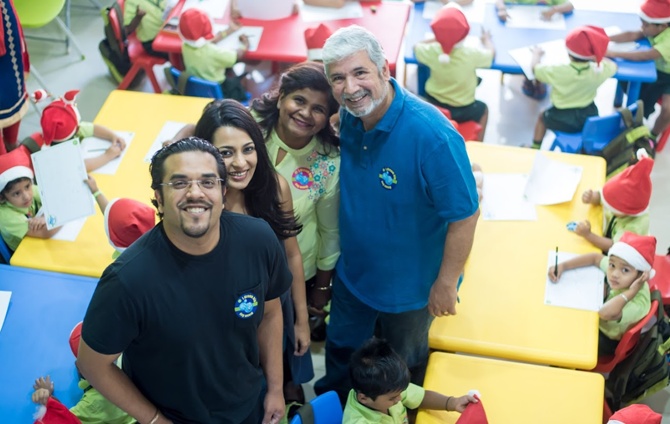
His later philanthropy followed a related idea. The Singal Foundation, founded with Andrea Singal, describes education and entrepreneurship as connected activities. Its account of its school work begins with a partnership in Mumbai in 2014 and says it subsequently funded the development of eight schools across India.
The foundation also reports a $25,000 partnership with Village Enterprise in East Africa in 2017. Its stated results included training 150 entrepreneurs and starting 50 businesses. In Rockville, it sponsored children's business fairs in 2018 and 2019. The younger participants could make a product, set up shop and discover that customers have opinions. Few business lessons arrive more promptly.
When marketers build the plumbing
Teaching online business led Singal into the machinery beneath it. Singal co-founded Sendlane with Jimmy Kim and Zak Meftah. Kim describes a group of email marketers who wanted software built around problems they knew from using it themselves. He dates his involvement in creating the company to 2013.
For Singal, that adds a useful dimension to the career. A course explains how to reach an audience. Email software handles part of the reaching. Both sit close to the same transaction, but software asks a different set of questions about reliability, delivery and everyday use. A compelling introduction cannot deliver the next email on its own.
His books made another version of the argument for entrepreneurship. In 2018, he was discussing eSCAPE, a book organised around four stages of becoming an entrepreneur. Daymond John wrote its foreword. Podcast conversations about it moved between product launches, sales letters, personal habits and the difficulties of running a company.
In one interview that year, Singal described Sundays with family and friends and a habit of reading a book a week. He also stressed the value of maintaining relationships. His public work is often about expanding reach. Those habits, as he described them, depended on giving particular people and particular books some undivided time.
“I’m a dreamer. I’m a fighter. I’m an entrepreneur.”
Anik Singal
The promise meets the paperwork
The hard turn in the story came in 2023. The FTC alleged that Lurn, its CEO Singal and two spokespeople had made unfounded claims about what customers could earn through online business coaching. Lurn and Singal agreed to an order requiring them to turn over $2.5 million for consumer refunds.
The settlement also imposed restrictions on unsubstantiated earnings claims and misleading representations. In June 2024, the agency announced more than $2.4 million in refunds to 1,922 consumers. These were concrete consequences for customers and for the company, rather than a difference of opinion about an enthusiastic sales pitch.
In his subsequent conversation with Alford, Singal spoke publicly about the case and his move into compliance education. He described the investigation as a reset and said a planned sale of his business had fallen through. That last detail is his account of what the episode cost him. The order and the refunds establish what it required for consumers.
There is a distinction here that matters throughout his career: a seller's revenue measures what people bought. It does not establish what buyers earned afterward. Teaching business places those two numbers temptingly close together. The settlement made the need for evidence explicit. A persuasive testimonial cannot carry every customer's expectations on its back.
Now the lesson has a voice
UgenticAI's disclosures identify Singal as CEO from January 2025. Early descriptions emphasised an agentic AI incubator and plans to acquire startups. Its current public presentation puts personal branding and digital cloning at the centre: capturing an expert's knowledge, producing images, reproducing a voice and generating video.
The company describes these as parts of a connected system. An expert supplies the perspective and material; software is intended to turn them into content across several formats. For someone whose first business packaged answers into lessons, a talking digital counterpart is a recognisable next experiment. The lesson can now appear to deliver itself.
Singal uses his own experience as part of the pitch. On the Clone to Close event page, he says that generating content and views with his clone initially outpaced his ability to capture leads. He describes adding research, engagement and email sequences to connect the output to sales opportunities. Those are his reported experiences, not established results for every participant.
The detail is more interesting than a blanket claim about automation. Even in the founder's telling, more content did not automatically finish the job. Attention still had to become an inquiry, and an inquiry had to become a customer. His new subject keeps returning him to the old disciplines of publishing and distribution.
An original is still required
The 2026 RiseAI initiative brings the education thread forward again. Presented as a Singal Foundation project, it proposes practical AI education for young people, with paid places helping fund scholarships. Its published ambitions include a progression from a 10,000-student pilot target toward much larger enrolment. Those figures are goals, with outcomes still to be demonstrated.
That distinction gives this chapter its unfinished quality. Singal is selling businesses a way to multiply their presence while proposing another education model built around the same technology. A growing audience, a functioning tool and a student who can do something useful afterward are different accomplishments. Each needs its own evidence.
One of his more telling remarks in the Alford interview was a change of mind. He said his younger self had believed everyone should become an entrepreneur; he now regarded that path as unsuitable for most people. The career advocate had become more selective about his own advice. It is a useful complication in a field where certainty usually gets the larger type.
The young man answering forum questions and the executive promoting AI clones share an enduring preoccupation: getting useful knowledge beyond the person who possesses it. His career also shows how much responsibility travels with the knowledge. A copy can repeat a lesson, a sales pitch or a mistake. Singal's next chapter will be measured by what the people receiving those copies can actually do.
Follow the conversation
His work, his interviews, and the public record.