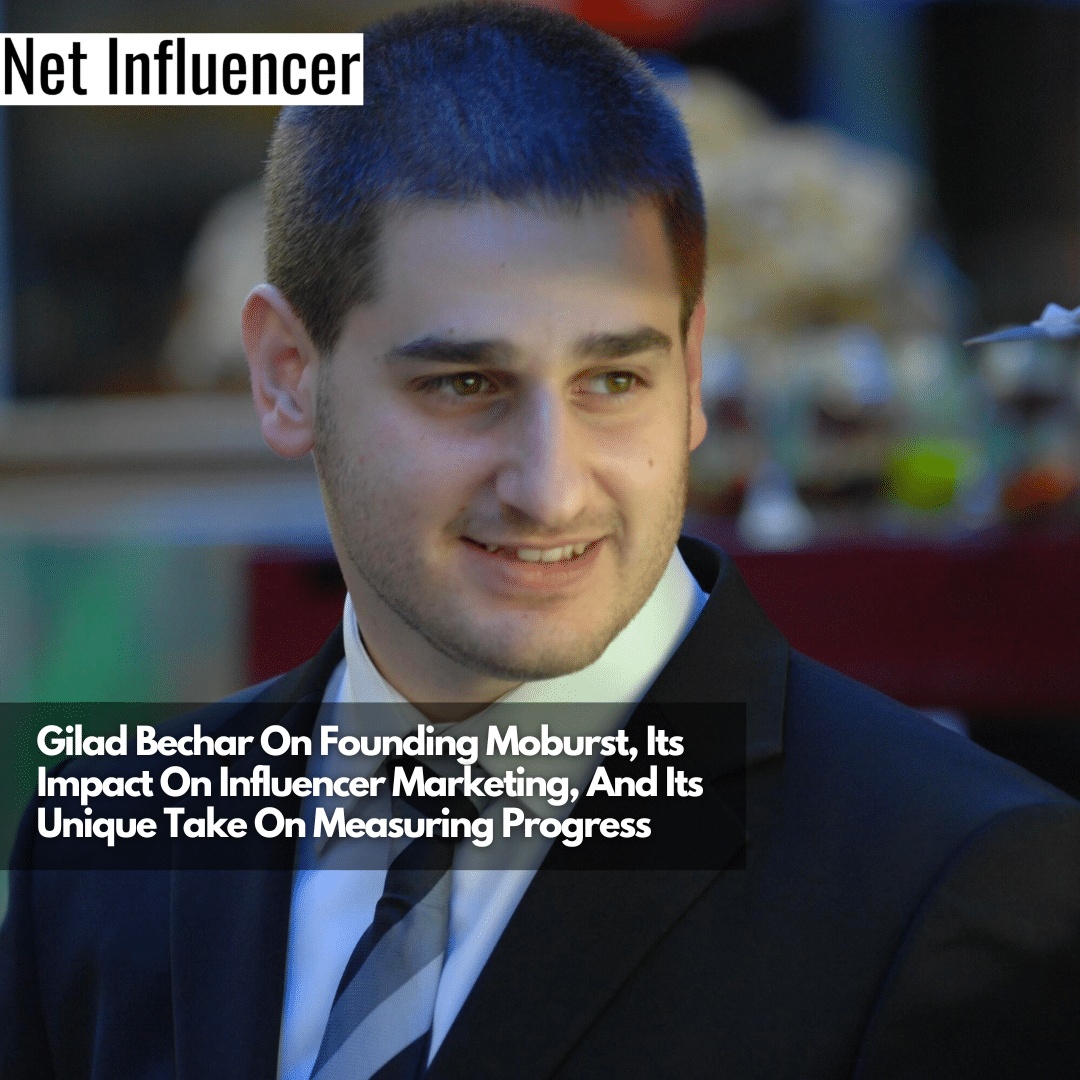
Gilad Bechar discovered that growth could require a smaller client list. In 2017, four years after co-founding Moburst, he moved from New Jersey back to Israel for nine months. The agency needed rebuilding: its team, its processes, and its understanding of which work actually paid. Some clients had to go. So did some employees. For someone selling growth, subtraction was an awkward item to put on the menu.
The episode gives his career a useful hinge. Before it came the excitement of finding an underserved market and opening American offices. After it came a company willing to expand through acquisitions, eventually attracting an $11.8 million investment. Between those chapters sits the less photogenic work of making an agency function. Bechar's story gets interesting where the sales pitch runs into the timesheet.
A phone was never just a smaller screen
Before Moburst, Bechar worked on several sides of the mobile business. He was VP of Media at OnTheMob, founded Mobilano, and served as chief marketing officer at CallApp. He also directed mobile marketing education at Tel Aviv University and mentored companies through the Microsoft Accelerator. His professional world included the people making products, the people buying attention, and the people learning to connect the two.
He and Lior Eldan founded Moburst in Israel in 2013. Their opening was specific: mobile apps needed more careful treatment than they were getting from agencies that had added mobile to an existing list of services. A phone brought its own constraints, discovery mechanisms and habits. Declaring competence was easy. Finding where an actual user lost interest required rather more work.
Bechar later recalled the unglamorous purchases that made the venture real: they funded it themselves and bought computers for the first office. Eldan remembered starting with one client. There was no need to invent an elaborate founding scene. Buying equipment with your own money has a way of supplying sufficient drama.
“The early days were about bootstrap and belief.”
Gilad Bechar, recalling Moburst's beginnings
The partnership also supplied a useful difference in temperament. Bechar described himself as moving quickly and his business partner as the balancing influence. Two founders can agree about the destination while arguing productively about the speed. His early advice to other entrepreneurs was to find someone whose perspective differed, rather than simply choosing a companion for the adventure.
The expensive art of refusing work
In an essay published on Moburst's site in 2015, Bechar laid out a series of refusals. Don't attempt everything alone. Don't price work so cheaply that the discount becomes your reputation. Don't recruit on talent alone. Don't accept a project when the product is poor or the agency cannot contribute enough. These were fairly stern instructions from a young business with bills of its own.
Leaving an executive job had already changed his arithmetic. He wrote about losing the comfort of expenses being covered and finding himself calculating costs he had previously ignored. Entrepreneurship can sound splendid in a biography. It becomes more particular when the receipts belong to you.
There was a commercial logic to those boundaries. An agency that takes work it cannot improve still has to deliver something, explain something, and eventually defend something. A fee buys obligations along with revenue. Bechar was learning to evaluate both.
When the client list stopped adding up
The 2017 reset made those principles concrete. Bechar said the agency's early systems could not adequately reveal how much work individual accounts consumed. A client receiving fifty hours and one receiving five hundred could disappear into the same reporting fog. Without enough detail by project and task, a busy agency could struggle to understand its own economics.
He returned to Israel to rebuild. Ending unprofitable relationships and changing the team were painful decisions, described without much romance in his later account. The company's own chronology records the strategic turn toward profitability in 2017 and its first profitable year in 2018. That sequence matters more than a smooth upward arrow would.
Moburst had already opened its New York office in 2014, become a Google growth agency in 2015, and expanded to San Francisco in 2016. The reset therefore came after visible progress. External signs of success had arrived before the underlying business was sufficiently sound. A distinguished client list could get you into a meeting; it could not do the accounting.
- 2013One client. An agency in Israel.
- 2014A New York office.
- 2017A reset around profitability.
- 2018The first profitable year.
- 2025Kitcaster joins the group.
- 2026Hyperzon adds Amazon expertise.
Look past the download button
Bechar's account of app marketing begins with a familiar disagreement. An agency buys traffic. The app fails to convert. The agency points to the product, and the client goes looking for another agency. Moburst's response was to examine the onboarding flow and the places where people dropped out. Buying more visits to a disappointing experience merely made the disappointment more expensive.
In a 2022 interview, he described the work through a sequence of measures: impressions, clicks, downloads, registered users and paying users. Each stage creates a separate question. Did someone notice? Did they act? Did they stay long enough to matter to the business? The download is an event along the way, with plenty of opportunities for trouble afterward.
An editorial diagram of the user journey Bechar asks marketers to examine.
He has also described the changing problem for app owners. Early clients needed help understanding mobile itself. Later clients faced crowded marketplaces where a competent product could still go unnoticed. His recurring answer is to work on both discovery and the experience that follows it. The story told about a product and the product encountered by a customer have to survive being compared.
Thirteen approvals, one small experiment
Bechar becomes particularly animated when discussing the different clocks of startups and large companies. In a conversation with Adrian Tennant, he described enterprise creative passing through thirteen decision makers and taking months to reach an app store. A startup might implement new assets the next day and begin learning from results within a week or two.
That difference has become a practical arrangement. Faster clients allow the agency to test emerging features, gather evidence and bring the useful findings to more cautious organizations. Some experiments fail. Others become reliable performers. The small company gets speed; the large company gets a better reason to approve the next experiment.
His advice about localization is similarly concrete. An app available in the United States can miss Spanish-speaking customers if its store presence speaks only English. In another country, familiar local imagery can make more sense than an American landmark. The detail is almost comically modest beside the vocabulary of global growth: sometimes the grand strategy involves choosing a different screenshot.
Buying skills, then making them work together
Expansion eventually changed the agency's shape. Clutch brought creative capabilities in 2019; Layer followed in 2022. Uproar PR joined in 2024. The company that began with mobile app work was adding the people needed to handle more of a client's business. Each acquisition widened the range of problems Bechar could agree to take on.
In April 2025, Moburst announced its purchase of Kitcaster, the podcast booking agency founded by Brandy Whalen and Ryan Estes. Kitcaster brought 52 active clients and was to be integrated into Uproar by Moburst. The deal added conversations to an organization already buying media, building digital products and producing creative work. An executive could now enter a podcast studio through the same group handling other parts of the marketing plan.
That creates a management task as well as a sales opportunity. Bechar has spoken about building shared culture across offices deliberately, using company meetings, communication and cross-office work. New services arrive with people, routines and professional loyalties. Putting businesses under one roof, figuratively or otherwise, is the opening move.
The next search box may answer back
The newer chapter involves capital and artificial intelligence. Chrysalis Holdings invested $11.8 million in Moburst in 2026, taking an equity position while expanding the relationship around its portfolio company NewDay USA. Bechar said the funding would help accelerate acquisitions and investment in AI technology. A commercial relationship had become a financial commitment.
Chrysalis Holdings' investment in Moburst, supporting acquisitions and AI development.
In July, Moburst announced the acquisition of Hyperzon, adding dedicated Amazon marketing expertise. Bechar framed the marketplace as a place where people discover and evaluate brands as well as buy them. The concern was recognizably his old one: understand the environment in which the customer decides, then build enough expertise to improve that decision's outcome.
August brought Answerburst, a practice devoted to visibility in AI-generated answers. Eldan, his co-founder and COO, took charge of the unit. Bechar was again backing a specialist response to a change in how people find things. The storefront had moved from an app marketplace toward a conversation with software; the commercial question remained who gets found.
By September 2026, his public conversations were also examining pricing when technology reduces production time. Selling hours becomes a peculiar proposition when the work takes fewer of them. His discussion with Mark Perkins explored outcomes, acquisition culture and systems that learn from mistakes. Those concerns connect the newer technology to the older experience of rebuilding an agency.
There is a pleasing continuity here. Bechar began by asking agencies to take responsibility for what happened after an advertisement. He now faces the same demand inside a larger company, across more services and unfamiliar interfaces. The next opportunity can be enormous. Someone still has to decide whether accepting it is a good idea.