Before there was an agency, there was the time before the show. Angelo Frisina was a working drummer, traveling with a laptop as well as a reason to be somewhere that evening. Airports, hotels and the wait for soundcheck left him with hours to fill. He began making websites. A touring schedule, generally an elaborate way of making a person wait, had acquired an unexpected second use.
The first jobs came from a world he already knew. A band needed a site. Another musician noticed. Studios and entertainment businesses followed. The equipment was portable, the work could travel, and the next request usually arrived through somebody who knew somebody. In Los Angeles, where he now runs Sunlight Media, those small jobs eventually became a different working life.
It is tempting to make the drums and the websites compete for the ending. Frisina has kept both. His story is more interesting when the two careers share the bill: the professional musician who learned another trade, then had to learn the rather different business of giving work to other people.
A drummer with a very particular cymbal
Frisina was born in Perth, Western Australia. His musical training included jazz studies at Edith Cowan University, and his Sabian artist profile dates his drumming to 1989. The names on his list of influences belong to players with distinct musical voices: Jeff Porcaro, Omar Hakim, Dave Weckl, Steve Gadd and Vinnie Colaiuta. This is somebody who has given the rhythm section some thought.
His tastes get satisfyingly specific. His favorite album he did not play on is John Scofield’s Still Warm. His preferred Sabian cymbal is a 17-inch Signature Fierce Crash. Asked for a career highlight, he picks his Sabian endorsement. A whole professional life, briefly reduced to the pleasing fact that a cymbal maker wants you playing its cymbals.
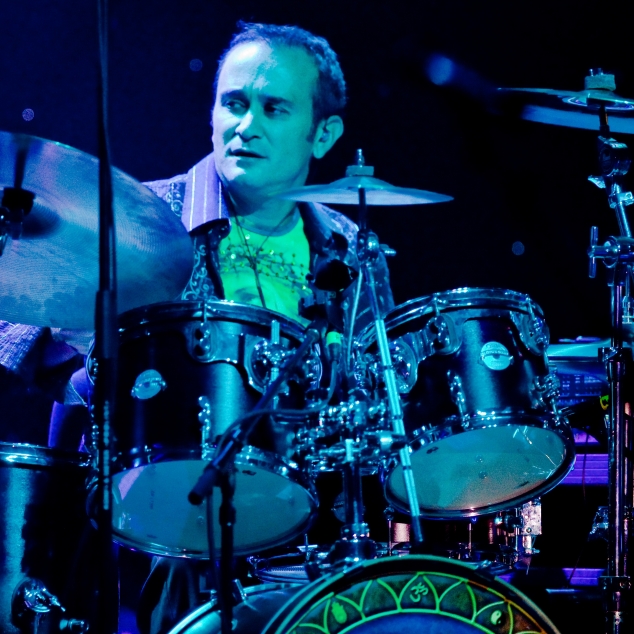
His music has taken him across six continents and more than 40 countries. He worked as the original house drummer on Melbourne’s Noise TV, and his performing history includes Liquid Blue. In November 2009, aboard the Star Princess, he stepped in for two shows with Matthew and Gunnar Nelson, the twin sons of Ricky Nelson. For a working drummer, another evening’s employment can come with a rather recognizable surname.
The itinerary includes big venues and local rooms. There are collaborations with bassist Kevin Cooper and saxophonist Rick Rossi, as well as a Los Angeles jazz-funk band of his own. PhunkYard began in 2013; its album Live at Molly Malones arrived in 2018. His current musical biography describes the group reuniting after its initial seven-year run.
When one laptop became a bottleneck
The web work began with curiosity. Friends were experimenting with Flash and Dreamweaver, and Frisina wanted to understand what the software could do. The first site dates to 1998. Photoshop joined the toolkit. For someone already making music, interactive pages with animation, sound and video offered another place to put creative ideas.
He was largely teaching himself, with courses, tutorials and repeated attempts helping him along. A website for the band he was touring with led to requests from fellow musicians. The internet supplied a useful piece of geography: a job could be waiting back home while the person doing it was sitting in a hotel elsewhere.
Eventually the arithmetic stopped working. Alone, he could handle only one or two projects at a time. A prospective client would call; he would explain when he expected to be free. When he came back, the client had often hired somebody else. Being busy had begun to cost him business.
Sunlight Media, founded in 2011, grew from that problem. Bringing in freelance designers, developers and marketers let him accept overlapping projects. The change sounds straightforward until you consider the new obligation: he now had to organize work that would carry his reputation even when his own hands were elsewhere.
- 1989Begins drumming
- 1998First website
- 2011Sunlight Media
- 2013PhunkYard
- 2018Live album
Learning to hand over the sticks
Frisina describes the agency as an accomplishment built without formal business training. His education had included broadcasting, music and internet webmastering. Running a company brought another syllabus: finances, sales, operations, staffing and decisions whose consequences could not be solved by refreshing the page.
As the team expanded, he took more responsibility for project management and quality assurance. Then additional project managers made room for him to concentrate on business development. The founder’s job kept changing because the business had acquired people who could take on parts of his previous job.
That movement is easy to overlook in a story about learning to code. Knowing how to build a website got Frisina started. Allowing other people to build websites helped him create an agency. By his 2025 podcast appearance, his attention was mainly on contracts, proposals and bringing in work, with much of the daily project management delegated.
He is unusually candid about a less polished professional skill: patience. He has described getting frustrated when people delay important decisions, worrying about opportunities passing while they hesitate. It is a recognizable concern for somebody whose agency grew partly because prospective customers could not wait for him.
“Be a professional in all of your endeavours.”
Angelo Frisina
The principle has a plain administrative side. In the agency’s early years, he tracked fees and expenses, reinvested earnings, managed taxes and kept business documentation current. A freelancer can spend a day thinking about the thing being made. A founder also has to think about the invoice, the agreement and whether the paperwork is in order.
The logo is still missing
Ask Frisina about the challenges of web development and the answer can be wonderfully unglamorous. Sometimes it is difficult to get the client’s logo. Sometimes the photographs and written material have not arrived. Before a designer can arrange the page, someone has to find the things that belong on it.
He starts projects by understanding the business model, the intended outcome and the available material. A proposal follows the scope. The approach makes room for a simple truth about commissioned creative work: the people hiring the agency know things about their business that the agency needs to learn.
Delegation applies inside the company, too. In a 2024 conversation, Frisina left questions about design trends largely with his developers. His own attention was on search, sales and the tools that could improve the agency’s work. The team exists partly so that each person can concentrate on the decisions they are equipped to make.
Design and build the site.
Bring a team around the project.
Find clients. Agree the work.
A search engine is a moving target
The first customers came through relationships. Growing beyond those relationships meant learning how to be found. Search engine optimization became an important part of Sunlight Media’s own client acquisition, alongside business directories and reviews. Frisina had acquired a service he could use on his own company.
There is a practical appeal to that loop. An agency selling visibility also needs visibility. Its website becomes a place to practice, observe the results and make changes. In his account, referrals and repeat customers provided the early base; search helped bring more people to the door.
He is drawn to the fact that the subject refuses to stay learned. Algorithms change, rankings move and yesterday’s method requires another look. In a 2020 discussion, he described following updates, monitoring performance and comparing what happened over time. The challenge itself appeared to be part of the attraction.
His reading and viewing include marketing practitioners such as Brian Dean, Matt Diggity and Neil Patel. His toolkit has included WebCEO, Google Search Console, Ahrefs and Surfer AI. The collection is less revealing than the habit behind it: the musician who learned software between shows continues to make room for another technical subject.
For clients, he puts weight on clear agreements and expectations. Some relationships, he has said, began during his freelance years and continued with the agency. That is a quietly consequential kind of continuity. The client does not have to follow every change in the founder’s job description to keep working with the business.
The next thing on the desk
His current biography adds another small project to the calendar: Hush Sort, a color-sorting mobile puzzle game built in Unity during nights and weekends. It puts him back in the position of making something himself, with a new set of practical decisions to solve.
At Sunlight Media, his stated interests include AI search optimization and design systems that remain manageable after a launch. An AI-assisted website builder now sits alongside custom agency services. The assortment suggests a founder still willing to examine which tools fit a particular job, even after years spent building a business around earlier ones.
Los Angeles keeps him there for reasons that reach beyond the agency. Music originally brought him to the city. He talks about its live scene, its food, the beach and the mountains within reach. He has considered leaving, then counted the things he would miss.
There is still a drum kit in this story. There is also a proposal to finish, a game taking shape and another piece of software to understand. The hours between shows once held the beginnings of an agency. Frisina has made a career out of finding something useful to do before the next thing starts.
Keep listening. Keep reading.
Music, conversations and places to follow the work.
- Sunlight Media
- Angelo on LinkedIn
- Music & PhunkYard
- Instagram · Sunlight Media
- X · @designerLA
- Facebook · Sunlight Media
- YouTube · Sunlight Media
- Pinterest · Sunlight Media
- Fully Managed conversation
- Performance Delivered conversation
- The 2024 agency interview
- Founder Stories conversation
- Angelo’s articles
- Sabian artist profile