At Companion Baking in St. Louis, the question was whether the bakers would know how their day was going before it was over. Operations manager Suman Shekar saw Redzone’s software and thought, “Why don’t we have this already?” Then she waited. Processes needed documenting first. When the system arrived, workers found data entry complicated. Two lead mixers helped simplify it. Adoption followed. The useful detail is that the people making the bread helped change the software routine.
- Live production data, messaging, quality checks and maintenance in one platform.
- Shop-floor coaches help teams build daily problem-solving habits.
- Plant-based subscriptions; AI guidance costs extra.
That little sequence explains much of Redzone’s appeal. A manager can buy visibility. Getting the workforce to use it requires another kind of work. The company sells both, combining a connected workforce platform with a structured coaching program. Its proposition is practical: let the people closest to a production problem see it, discuss it and do something while there is still time.

A coach belongs in the purchase order
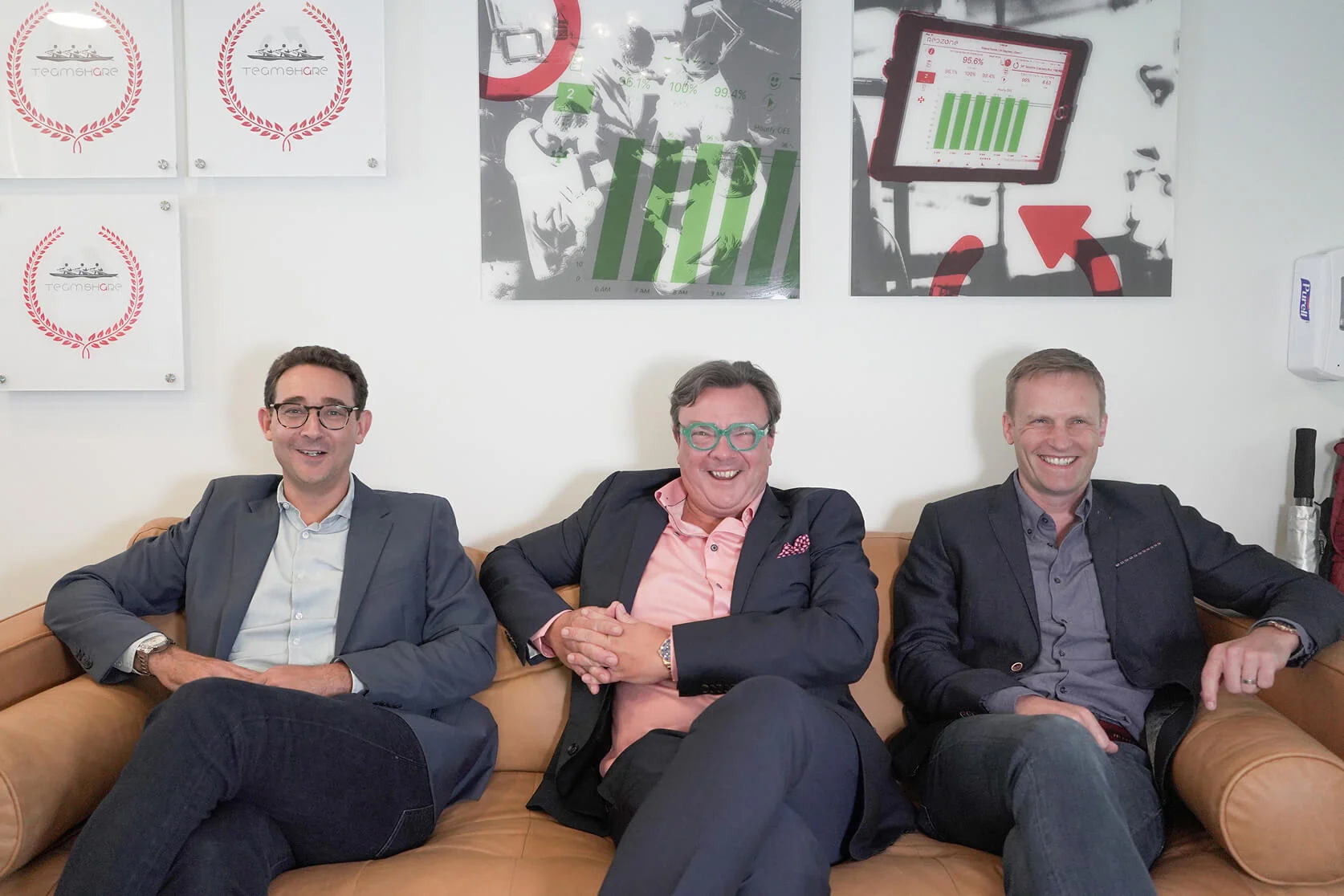
Redzone began in 2013. Founders Mark Sutcliffe, Richard Tester and Jon Clement built a business around manufacturing’s frontline. The name borrows football’s final twenty yards, where execution determines whether a promising drive produces points. It is a revealing choice for software: the plan has already travelled a long way by the time it reaches the operator.
Its coaches have worked as operators, supervisors and plant managers. During a 90-day program, they help establish a baseline, introduce huddles and work through recurring problems. There are kaizen events and “five whys” sessions, a method of repeatedly questioning a problem’s cause. The program ends with a town hall where operators present their improvements. Recognition gets a place beside measurement.
The approach makes demands on the buyer. Supervisors need time to discuss problems. Leaders need to respond when the discussion reveals something inconvenient. A plant that installs tablets but keeps every decision upstairs has left a central part of this model unused. The coaching makes that dependency unusually visible.
The people making the bread helped change the software routine.
The adoption lesson at Companion Baking
There is an operational background behind the pitch. Redzone president Ken Fisher joined the company in 2016 as a continuous improvement coach, after two decades in manufacturing operations and lean transformation. That experience helps explain why the service concerns itself with meetings, configuration and accountability. The expertise being sold includes how a shift actually runs: how information passes between people, how a small loss becomes routine, and how supervisors turn a recurring complaint into a problem the team can tackle.
One shift, several jobs
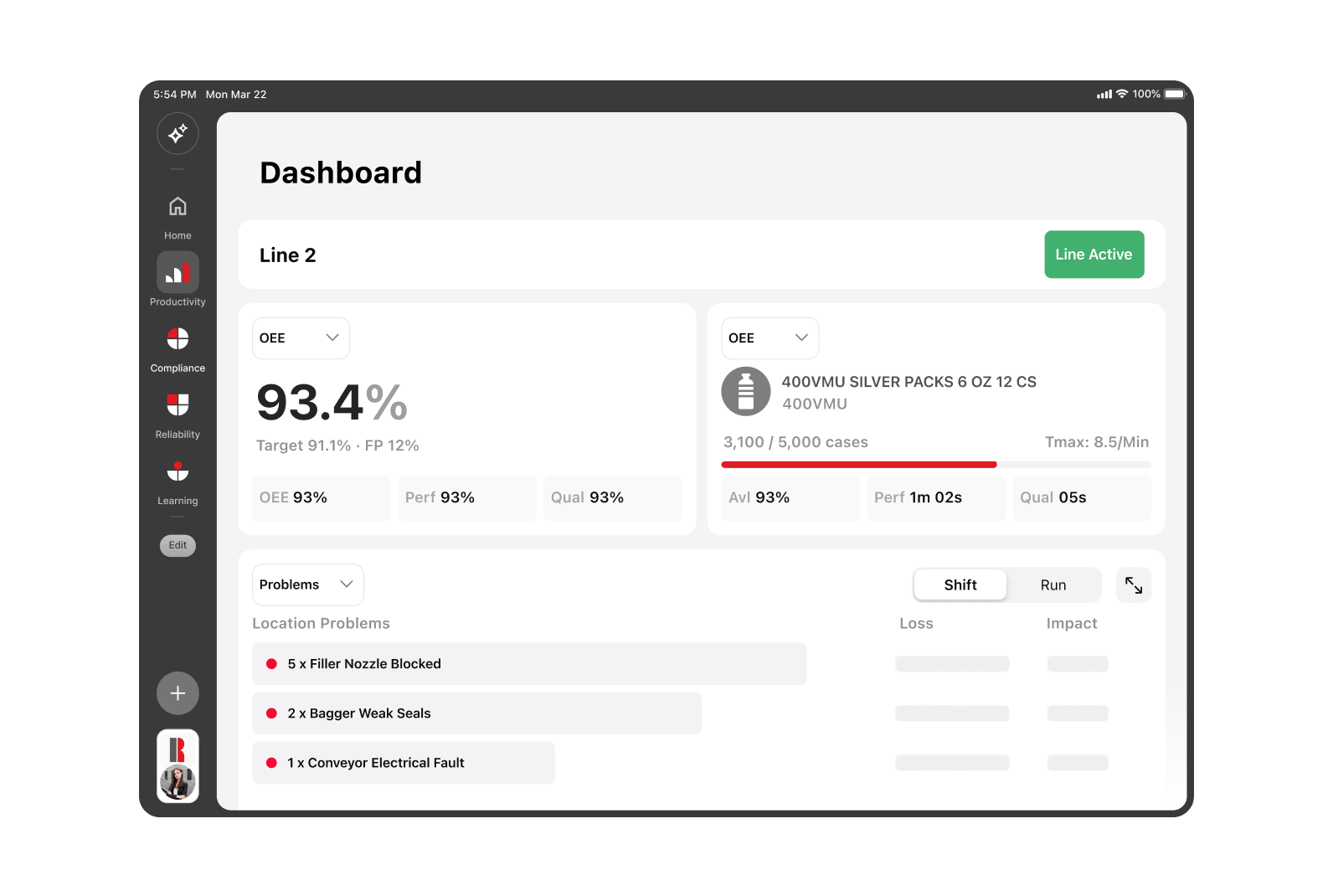
The product range follows the work. Productivity tracks output, stoppages and overall equipment effectiveness, or OEE. Compliance digitizes quality and safety checks, with alerts and statistical process control. Reliability handles work orders, preventive maintenance and equipment-care routines. Learning captures instructions and expertise, delivers training and tracks qualifications. A scheduling product addresses production plans and their constraints.
Consider the ordinary journey of a recurring stoppage. Production sees lost time; maintenance needs a useful description; quality may need to check affected output; a new operator may need an instruction. That is an illustration of the coordination problem these modules address. Messaging, shared data and workflows give those separate responsibilities somewhere to meet.
Customers include food and beverage and consumer-goods manufacturers, alongside automotive, industrial and life-sciences businesses. Nestlé, Tyson and Post Holdings appeared in QAD’s acquisition announcement. Redzone now reports more than 2,000 factories and 600,000 users across 39 countries. The breadth matters because a bakery and an automotive supplier share coordination problems even when their machines and regulatory obligations differ.
The denominator does the work
Redzone’s 2025 benchmark reports an average twelve-point OEE increase, equivalent to roughly 26% greater productivity in ninety days. Its dataset covers 1,500 factories that completed the deployment program between 2013 and 2024. The distinction between points and percentages deserves a pause: a relatively modest movement on a percentage scale can represent substantial growth from a low starting point.
This is company research on completed deployments. Software, coaching and leadership support arrive together, so the result cannot tell us what the application alone contributed. Nor does an average predict a particular factory’s outcome. A separate 2026 engagement study follows 150 plants and reports an 81% increase in engagement scores and a 35% reduction in turnover. Those findings make the people argument worth investigating, without settling causation.
A subscription for the whole plant
Redzone licenses Productivity by site without per-user fees. Quotes depend on the facility and selected solutions; ChampionAI is a premium add-on. This structure gives management a reason to include the whole workforce without counting every additional login as another licence purchase. The financial calculation still needs equipment, implementation effort and staff time alongside the subscription.
A useful purchasing exercise is to pick one repeated loss and map who needs to respond. Ask the vendor to demonstrate that sequence, including the handoff between departments and the record left afterwards. Then ask who will teach the routine on the night shift. A successful demonstration should make the work easier to understand, as well as easier to count.
Summit Partners became the first outside investor in 2020. QAD acquired Redzone in February 2023. Terms were undisclosed; trade coverage, citing Reuters, put the price near $1 billion. For QAD, already supplying enterprise manufacturing software, Redzone brought a direct connection to the workers executing production plans.
The market has other answers. Poka combines work instructions, skills and daily management. Augmentir connects workforce information with AI-assisted execution. Tulip offers a platform for building frontline applications. Redzone’s particular package puts production measurement beside a defined coaching program. Buyers should compare the implementation they need as carefully as the features they can tick.
The next recommendation comes from AI
ChampionAI extends the idea with role-specific guidance and agents that can initiate workflows. Redzone describes human review unless a customer authorizes automation, along with configured boundaries and action logs. Its integration options include REST APIs, Boomi-powered workflows, Snowflake and file imports, allowing it to sit beside existing systems.
The test remains familiar. Is the information trustworthy? Does it reach someone who understands the work? Can that person act? Readers can borrow the sequence without buying anything: document a recurring task, ask operators where the record misrepresents reality, then review one actionable measure during the shift. At Companion Baking, progress began when two mixers helped make the system fit the work.