Julian Senoner’s company has an origin story with handles, miniature footballers and a problem that refused to stay at work. During a table-football game at ETH Zurich, he and Bernhard Kratzwald found their way toward a solution to a difficult manufacturing problem. A friendship and an idea for a startup followed. Table football has absorbed countless hours that might otherwise have been productive. On this occasion, it appears to have made a contribution.
Senoner was a doctoral student of production-management professor Torbjørn Netland. Kratzwald was pursuing his doctorate with Stefan Feuerriegel, later becoming a postdoctoral researcher in Netland’s group. Their respective worlds overlapped where industrial operations met machine learning. The university supplied both the research setting and the opportunity to talk across it. The company they co-founded in 2021, alongside Netland, would carry those conversations onto factory floors.
The question at the centre of that work sounds almost too ordinary for a technology company: why did production go wrong? A factory can record what happened and still struggle to explain it. An inspection catches a faulty product. A manager sees a disappointing result. Somewhere upstream, something changed. Finding that change is where Senoner has chosen to spend his working life.
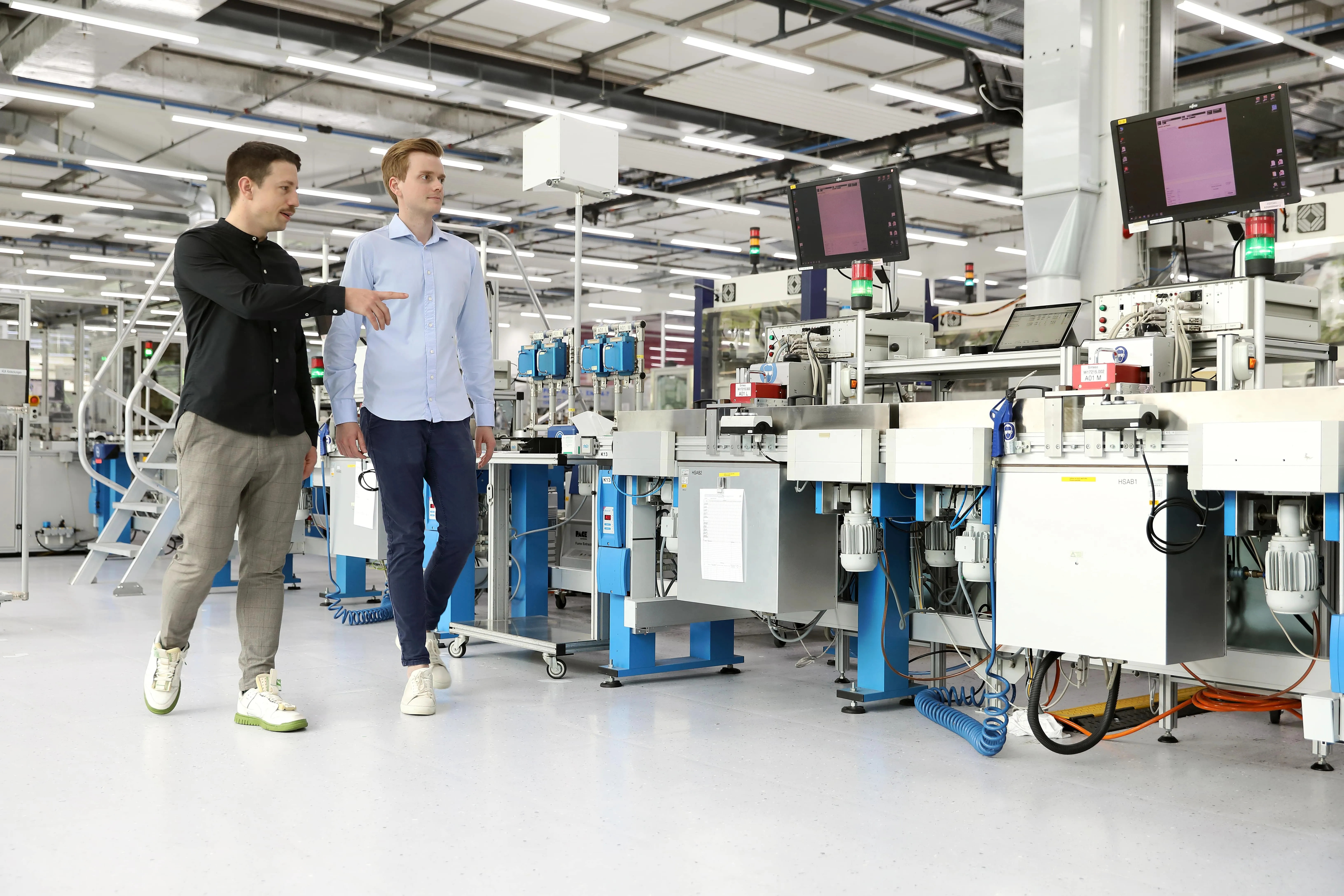
An engineer before an AI founder
He grew up in the Austrian mountains and worked as a ski instructor. His interest in engineering arrived early: as a five-year-old, he wanted to become a ship engineer. Watching things being made appealed to him. That attraction took him to a bachelor’s degree at TU Wien, then to Zurich for his master’s. The machinery came before the machine learning.
At ETH, exposure to statistics and AI gave him another way to think about production. He became interested in the intersection of the two fields. His route into entrepreneurship followed that research rather than a sudden conversion to the fashionable vocabulary of the moment. There is something pleasingly concrete about a founder whose childhood ambition involved a ship: somewhere, eventually, the thing has to work.
His master’s thesis, “Productivity gains through data science in manufacturing”, earned an ETH Medal in 2019. Netland supervised the work. The title already contained the bargain that would shape his later career: data science would have to earn its place by improving production. Productivity is a demanding audience. It does not applaud a clever model merely for being clever.
On November 26, 2021, Senoner defended his doctorate, “Artificial intelligence in manufacturing: Augmenting humans at work”. It examined how AI could support operators, managers and engineers with planning, scheduling, quality management and problem solving. By then, the next step was already taking shape in EthonAI. The thesis and the business belonged to the same line of enquiry.
A number with a factory behind it
One strand of his research took that enquiry into semiconductor manufacturing. Working with Netland and Feuerriegel, Senoner developed a decision model for identifying where quality-improvement efforts should go. Their paper appeared in Management Science. The difficulty was that production data could contain many interacting measurements and relationships that simpler methods failed to capture.
They tested the approach at Hitachi ABB Power Grids. A field experiment on a transistor chip product reduced yield loss by 21.7% relative to the sample’s average yield. A subsequent rollout to a different product reduced yield loss by 51.3%. These were separate results in separate settings, with different comparisons. Keeping them separate preserves what makes the research useful: a method was tested, then carried into another production setting.
The human task remained consequential. The model helped identify promising improvement actions; the factory provided the place to test them. For Senoner, this was evidence that an explanation could have operational value. A prediction that a product might fail is useful. An engineer also needs somewhere to direct the next investigation.
His doctoral work earned another ETH Medal, presented in January 2023. That May, he received the Seghezzi Prize for contributions to quality-management theory and practice. The jury’s interest in practical relevance fits the trajectory. Academic recognition followed work concerned with decisions people actually had to make, amid production constraints that could not be tidied away in a presentation.
Chocolate is a serious engineering problem
EthonAI’s customer list brought that research into a rather more appetising setting. Lindt & Sprüngli used the company’s technology to connect production-process data with quality-control information. Chocolate offers a friendly way into an unfriendly analytical problem: quality can be good one week and slip the next. The product is familiar; the explanation may be buried among dozens of measurements.
The company’s early tools covered visual inspection, monitoring and root cause analysis. Engineers and quality managers could use them without writing code. That design decision matters in Senoner’s story because the intended user is already responsible for something difficult. Asking a production specialist to acquire a second profession before improving the first would make for a rather expensive user manual.
By February 2023, the business had reported CHF 6.27 million in seed funding, led by Earlybird and La Famiglia, with existing investors also participating. Its team had grown beyond twenty people. Siemens and Lindt were among its customers. Senoner said the funding would help bring the tools to more manufacturers and support new features, including simulation using causal machine learning.
Forbes included him in its 2022 Under 30 selection. The profile described a company already putting its software into use at large manufacturers. Recognition arrived alongside commercial adoption. For a researcher becoming a founder, those are different tests: one recognises the work, while the other asks whether somebody will put it into the daily running of a business.
- 01 / ObserveA product fails inspection.
- 02 / InvestigateConnect quality and process data.
- 03 / DecideChoose an improvement to test.
The founder learns to build a system
In May 2024, EthonAI raised a CHF 15 million Series A, equivalent to $16.5 million at the announcement, led by Index Ventures. General Catalyst, Earlybird and Founderful participated. The ambition had expanded into the Manufacturing Analytics System, or MAS: a collection of tools working across existing factory information rather than treating each quality problem as a separate software purchase.
Senoner’s public reaction to launching MAS was unusually candid. He recalled the difficulty of recruiting the people needed to build a multi-product platform, and the doubts surrounding the original plan. The arrival of the product and the financing felt emotional to him. His acknowledgements included investors Katharina Wilhelm and Carlos Gonzalez-Cadenas. The moment exposed the distance between a research idea and an organisation capable of delivering it.
The platform combined information such as sensor readings, orders and inspection images. Its purpose was to help engineers and managers understand production, investigate problems and decide what to improve. That breadth also explains why the founding partnership matters. Senoner’s manufacturing background and Kratzwald’s AI expertise had to become a working product used by people beyond their own research group.
When Senoner returned to ETH for a Founderful Campus event, he spoke about the passage from student to founder and CEO, and about successive fundraising rounds. It was a return to the place where the business began, with a different job to explain. A university can help someone learn how to investigate a problem. Running a company adds the obligation to get other people working on it together.
A factory has little patience for theatre
In 2025, Senoner was in New York helping establish a company outpost. He described a difference in how American and European manufacturers approached software spending: a stronger focus on return on investment in the United States, and more attention to cost in Europe. It was his assessment of the markets, drawn from the work of selling into them.
His concise judgement of the industry was sharper: “manufacturing has a very low threshold for bullshit”. It is a useful sentence to carry into an AI sales meeting. Production teams have immediate problems, and an elegant description of the future cannot repair the present. Senoner’s business has to meet the same practical standard as the research from which it grew.
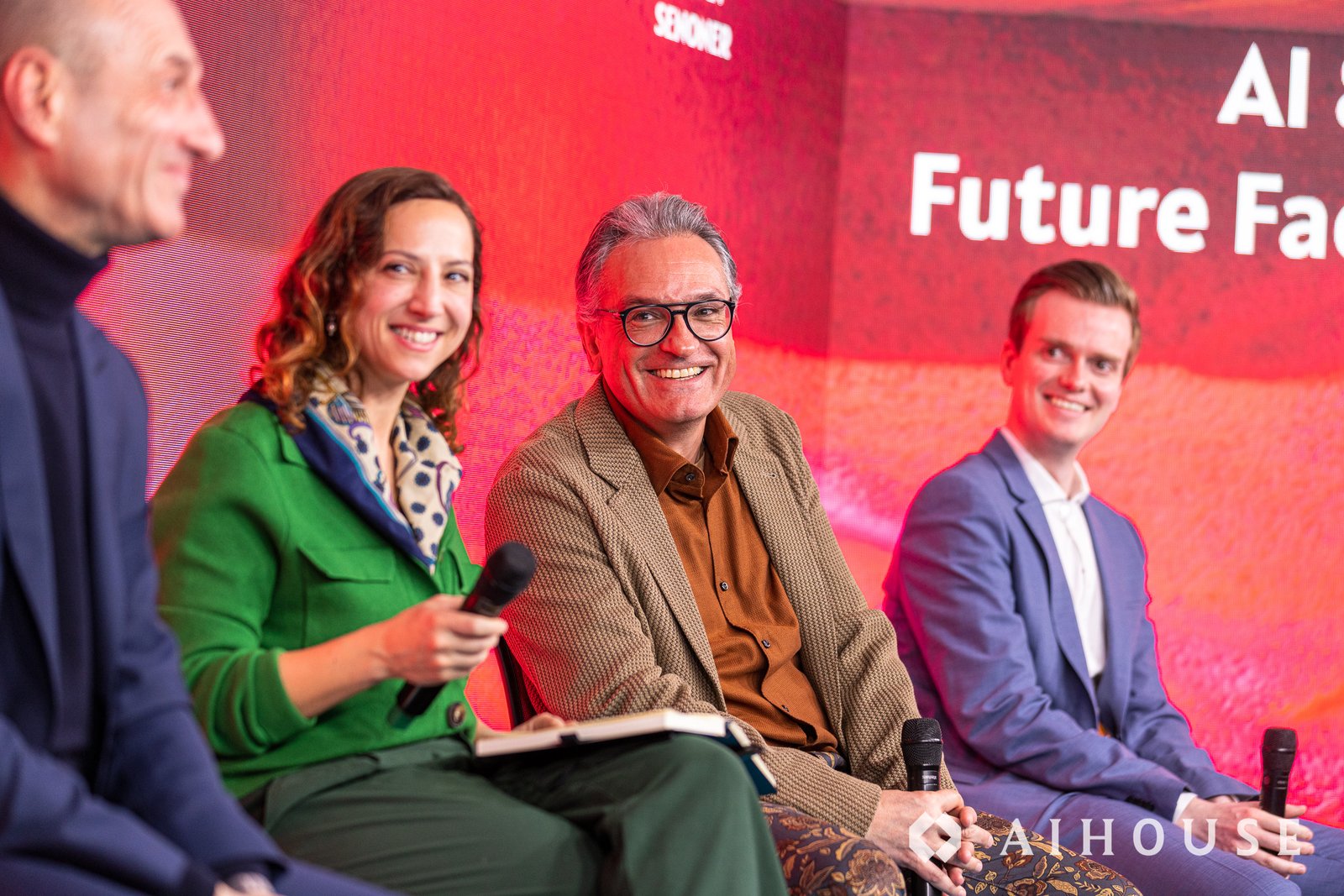
He also took part in the AI and the Future Factory panel at AI House Davos in 2024, alongside Alexandra Brintrup, Gunter Beitinger and Eric Enselme. Netland later described Senoner’s emphasis on software that helps human experts. The discussion included the risk of losing skills through excessive dependence on AI. For a founder whose doctorate put humans in its title, those questions belong inside the product conversation.
Siemens named Senoner and Kratzwald Inventors of the Year 2025 in the Open Innovation category. The relationship had come full circle: collaboration during their doctorates helped generate the company, and the industrial partner later recognised its work. “You need courageous decisions,” Senoner said of Siemens becoming an early customer. A first customer provides something a laboratory cannot supply alone: permission to test a new approach against everyday production.
“manufacturing has a very low threshold for bullshit”Julian Senoner, 2025
Twenty factories, and the next question
By January 2026, the EthonAI and Siemens collaboration had been selected for the World Economic Forum’s first MINDS cohort. The programme recognised deployed AI applications. The company described inspections and analysis running across Europe, North America and Asia, with projected overall savings above $10 million. That January projection should be read as a projection.
In its February 2026 rebrand announcement, the business reported use across twenty Siemens factories and more than $10 million in savings. It introduced the Ethon identity after entering the US market in 2025. A new name and visual language accompanied the more substantial change: the technology was being discussed across factory networks, beyond the individual installation.
The present management page lists Senoner and Kratzwald as founder and co-CEO, a development from their earlier CEO and CTO titles. The company has continued adding industrial experience around them. Ed Ballina, formerly vice president of manufacturing and warehousing at PepsiCo, joined the advisory board in August 2026. Four decades of plant experience bring another perspective to a business born in university research.
Senoner’s aspiration remains tied to manufacturing waste and the ability of people to improve production. The scale has changed since the table-football game. The underlying question has survived the funding rounds, awards and new branding. Somewhere, a line is producing less well than it did yesterday. Someone has to work out why. Senoner is building a company around making that person’s next decision better.