Megan Buntain entered the software business because Microsoft opened an office in Halifax at exactly the right moment. Two weeks after graduating from the University of King's College in April 1997, she landed a summer internship. The summer job became a 15-year education in how technology moves, how companies explain it, and how customers decide to trust it. Buntain later compressed the era into one excellent line: seven versions of Windows and five cities.
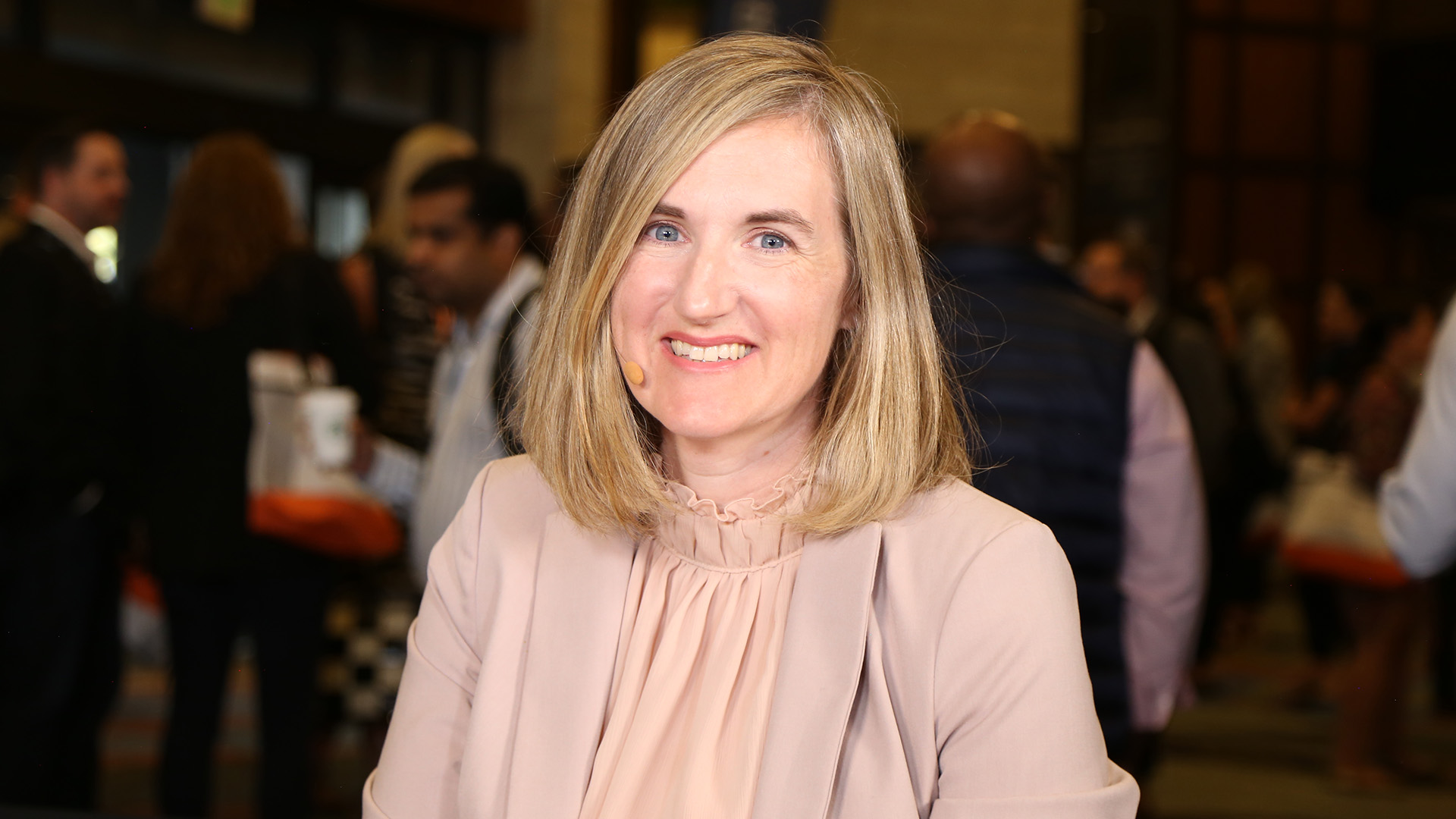
That arithmetic is funny because it is precise, and revealing because it is not about titles. Versions changed. Addresses changed. The work kept asking the same question: how do you turn a technical possibility into something another person can understand and act upon? Nearly three decades later, Buntain is Chief Marketing and Strategy Officer at Seeq, the industrial analytics and AI company. She leads its go-to-market strategy and sits on the board of industrial data software company HighByte. Her subject has become more complicated. Her method has become simpler.
A nonlinear beginning that kept paying dividends
Buntain did not study computer science. Her honours degree combined Contemporary Studies and International Development Studies. At King's, the Foundation Year Program required students to wrestle with a daunting volume of difficult texts. She later credited that discipline with teaching her to think critically, remain open to ideas, and seek peers who raised her game. Her favorite seminar was the History of Science and Technology. She called the choice prophetic.
It was also useful preparation for a career in enterprise software, where every promising invention arrives wrapped in history, incentives, budgets, language, and institutional habit. The code may be rational. The buying committee is human. Buntain's career has unfolded at that junction.
A summer internship in Microsoft's Halifax office becomes a 15-year career.
She launches buntain+partners, a consultancy she describes as “marketing for geeks.”
She joins Seeq and begins building its cloud partnership and marketplace motion.
Cloud leadership expands into the global partner ecosystem, then marketing and strategy.
HighByte announces her appointment to its board of directors.
After leaving Microsoft in 2012, Buntain consulted with software companies and then launched buntain+partners in the summer of 2015. Within a year, its three-person team represented 10 clients. The agency helped technology companies build brands, market applications, and grow. Buntain called the offer “marketing for geeks,” a label with just enough mischief to make the positioning memorable. It also described the bridge she was learning to build: technical enough to respect the product, plainspoken enough to reach the buyer.
She spoke candidly about the young firm's uncertainty. The team was learning quickly, failing fast, earning clients' trust, and still somewhat shocked that the small dream was working. The bravado so often attached to entrepreneurship was absent. Optimism shared the room with pragmatism, which is exactly how Buntain said she liked her colleagues.
The five-month lesson
When Buntain joined Seeq in 2019, industrial software was taking a peculiar trip to the cloud. Many Seeq customers worked outside traditional IT departments. Their operational technology stacks, process historians, and data lived on premises. Their engineers and subject-matter experts could see the value of faster analytics, but moving an entire industrial estate was neither simple nor required. The useful path was hybrid: connect securely to data where it lived, make software available as a service, and let value appear before a grand migration finished.
Buying was part of the technical architecture. Seeq spent five months trying to publish its first cloud marketplace listing. Limited engineering capacity met a channel that was still unfamiliar to many manufacturing software vendors. The company eventually worked with Tackle, then launched in both AWS Marketplace and Microsoft's commercial marketplace in the fall of 2019. The first marketplace transaction arrived within 30 days.
The sequence mattered. Once a listing existed, the sales team needed enablement, co-selling habits, and confidence that the channel could carry serious business. A seven-figure, multi-year marketplace deal after the first year changed the internal mood. By 2021, about 20 percent of Seeq's annual recurring revenue transacted through AWS and Microsoft marketplaces, up 215 percent year over year.
The stealable insight is not that a marketplace magically creates demand. It is that procurement can be product design. Enterprise customers may already have cloud commitments, approved contracts, security reviews, and purchasing relationships. A marketplace can reuse that infrastructure. The buyer reaches value sooner because the seller has removed paperwork masquerading as inevitability.
Buntain's own summary was even shorter. In a partner summit, she advised companies to make the customer and Microsoft value proposition fit in a Dixie cup. Complex partnerships need a small, sturdy sentence. If the sentence leaks, the strategy probably will too.
Remote before remote became a category
There is another line running through Buntain's career. In 2016, she said her next goal was to create a “work anytime, anywhere” company where people, parents or not, could have both a serious career and a life. Years later, Seeq offered an unusually literal version of that ambition. The company was fully virtual before the pandemic made distributed work a compulsory experiment.
In a 2020 conversation about selling enterprise software remotely, Buntain described virtual work as more than the absence of an office. It extended through partnerships, training, customer communities, and the product itself, which let manufacturing engineers collaborate away from the plant. The distinction is important. Remote work is a location policy. Virtual work, done properly, is a system of access.
At Seeq's 2025 company kickoff, Buntain wrote that a fully virtual company could still make gathering feel like coming home. She framed the week around gratitude and the idea that enabling people and teams sat at the core of the product and the company. It was a softer description of the same operating thesis behind cloud marketplaces: give capable people a cleaner route to one another and to the work.
From partnerships to the strategy office
Buntain's remit widened as the cloud work proved itself. She moved from Director of Cloud Partnerships to VP of Cloud, then became VP of Global Partnerships and Ecosystem in 2023. The new portfolio included reseller, services, and technology partners. In 2024, she moved into the chief marketing and strategy role, responsible for Seeq's broader go-to-market plan.
This progression makes intuitive sense. Partnerships reveal a company in cross-section. They expose how the product integrates, where the sales motion sticks, what customers misunderstand, which promises survive implementation, and which adjacent companies make the offer more useful. Done closely enough, partner work becomes strategy work.
Seeq's collaborations trace that widening map. A sustainability solution with Microsoft helped process manufacturers prepare operational emissions data for corporate reporting. An integration with Databricks aimed to narrow the communication gap between information technology and operational technology teams. The 2025 launch of Seeq for CONNECT built a dedicated route between Seeq's analytics and AI tools and AVEVA's industrial intelligence platform. In early 2026, Seeq introduced Seeq Intelligence, focused on combining AI-driven decision support with human expertise and operational context.
Buntain's appointment to HighByte's board adds another perspective. HighByte works on the industrial data architecture and integration problems that sit upstream of analytics. The board role places her beside people thinking about how plant data is modeled, moved, governed, and made ready for use. It is the same neighborhood, seen from a different porch.
The career plan hiding inside the career
Buntain once said the first career step after a liberal arts degree could be tough because it was not linear, but later steps made the preparation easier to appreciate. Her own route supplies the evidence. The internship, corporate apprenticeship, consultancy, startup agency, cloud channel, partner ecosystem, strategy office, and board seat look varied on paper. In practice, each required critical reading of a system and translation across its borders.
Her definition of professional success was not rank or certainty. It was having options, earned by building a reputation for doing the work well. That is less a ladder than a garden: cultivate judgment, relationships, and range, then notice how many paths appear.
Her father's advice supplied a warmer scorecard. Before she began the Foundation Year Program, he wrote that happiness required loving what you do, loving where you live, and loving who you are with, though two out of three was not bad. In 2016, Buntain said she was three for three. She now lives in Burlington, Vermont, with her husband and son, enjoying every New England season, even winter.
The cloud, after all, is only weather until someone gives it structure. Buntain's work has been to turn it into routes: for software, for buyers, for partners, and for people who want a career capacious enough to contain a life.