The robot has shelves. That is the detail to notice. In RAVV’s product photographs, the machine looks less like a science-fiction companion than a serving trolley that has acquired a screen and somewhere to go. Its assignment is familiar: move things from one place to another. Around that modest job, however, sits a surprisingly expansive business.
- The offer: startup incubation, venture connections, hardware and media under one roof.
- The evidence: a SkyDeck partnership, shared CES booths and an in-house delivery robot.
- The lesson: identify the missing step between a working idea and a customer.
RAVV is a technology group in Silicon Valley whose interests run from artificial intelligence to physical products. Its name expands to Reliability, Action, Vision and Value. Pronounce it “Rave,” says its LinkedIn profile. The spelling is slightly cryptic. The underlying proposition is easier to grasp: assembling a company takes several kinds of help, and those helpers rarely arrive together.
A robot with a business plan
Take the delivery machine. RAVV’s CES 2020 account describes a food-service robot using laser navigation and automatic obstacle avoidance. The RAV-Bot 2.0 page pitches deliveries across restaurants, hotels, offices and hospitals. Those are intended applications. A product-viewing form invites prospective buyers to meet a consultant, making the next step a conversation about a particular operation.
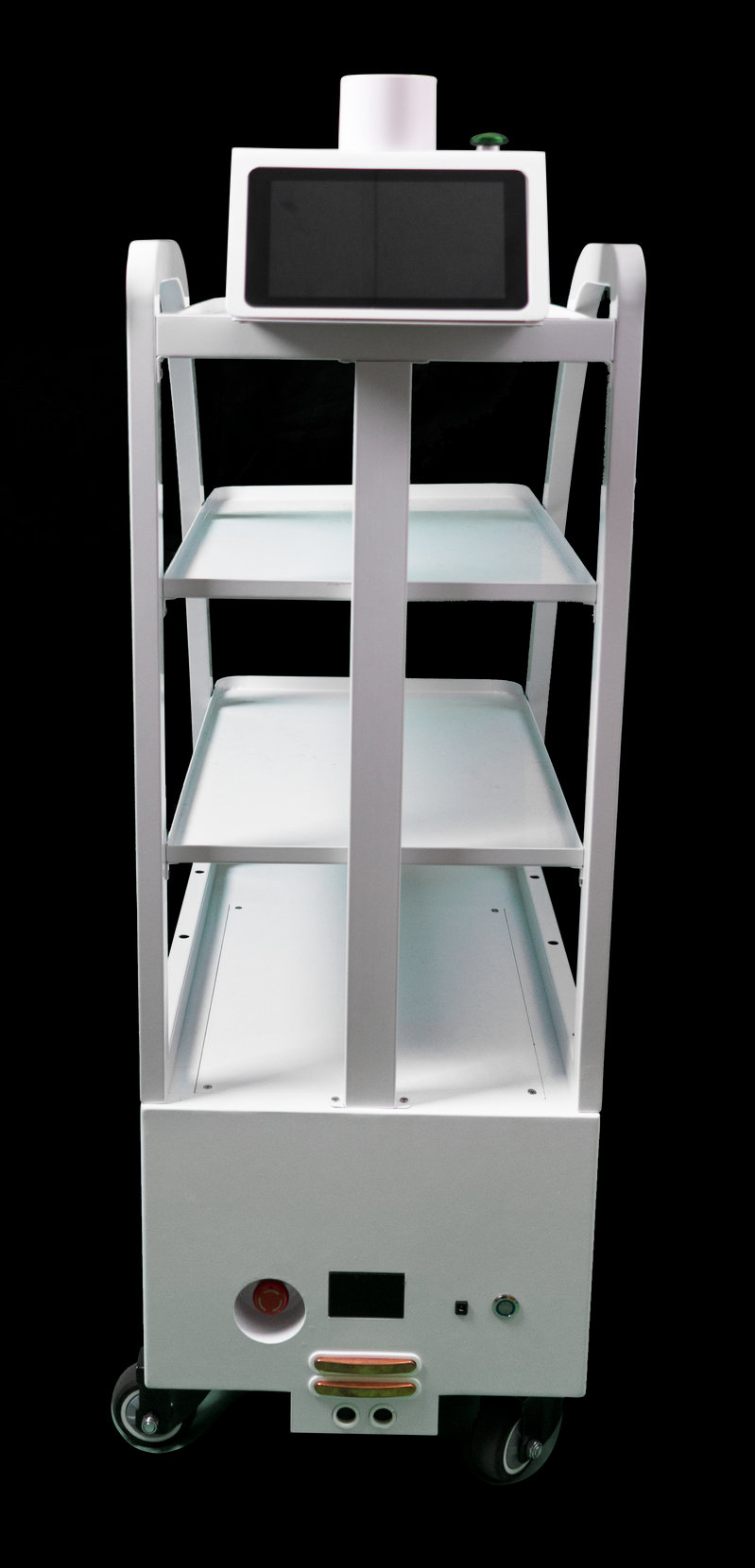
For an operator, the useful question is specific: which repetitive journey could this machine take over? A hotel delivery and a restaurant run may look similar on a brochure. In practice, the route, handoff and surrounding workflow determine whether automation helps. RAVV’s choice of product puts its technology ambitions beside a task a potential customer already understands.
That makes the robot a helpful introduction to the company. Incubation can sound like an arrangement of abstract nouns. A trolley with navigation forces the discussion back to engineering, demonstration and use. Someone must build the thing. Someone else must understand where it belongs.
Booth 53130 was part of the product
In January 2019, RAVV gathered startup teams associated with Berkeley SkyDeck, Carnegie Mellon and MIT Angels at CES. Its recap identifies booth 53130 in Eureka Park. Berkeley’s own announcement confirms eight SkyDeck cohort companies were going to the show, bringing a spread of AI, connected devices and robotics.
A year later, RAVV reported more than 15 teams joining its fourth CES appearance, including participants associated with Berkeley, Harvard and MIT. Its own robot appeared too. SkyDeck separately announced seven of its current and alumni startups for CES 2020. These are different counts covering different groups, and together they show the mechanics of a shared showcase.
RAVV’s reported group size. A historical event count, rather than a measure of paying customers.
Consider what sharing a booth does. A small team gets a place to demonstrate alongside other companies. Visitors have several reasons to stop. The organiser provides a common point of entry. RAVV’s event account describes access to media, business owners and technology-company representatives. The arrangement suggests that getting seen can be treated as part of startup support.
The people between the pieces
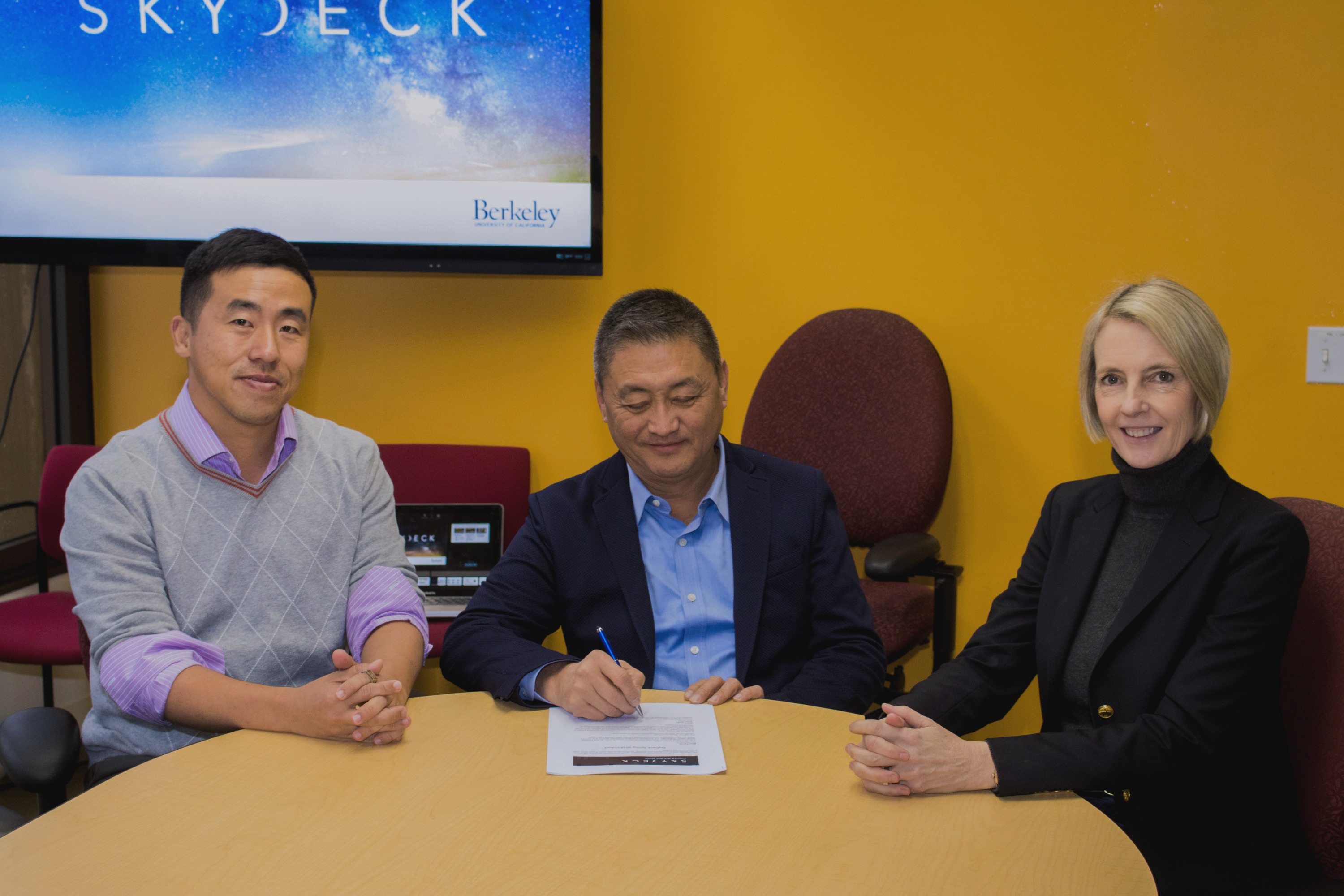
The partnership has a paper trail. RAVV-authored coverage dated January 26, 2018 documents its formal SkyDeck agreement. Its English website identifies the signing participants as SkyDeck Fund founding partner Chon Tang, executive director Caroline Winnett and RAVV president Eric Sun. Subsequent exhibitions give that relationship an observable setting beyond the ceremony.
Sun’s company biography describes an entrepreneur and angel investor with experience across continental markets. The team page also lists education executive Anthemius Xiao Li, who joined in 2019, and property manager Tom Weng. RAVV’s adviser roster reaches from venture investment into fire protection and property. The mix suits an organisation concerned with physical businesses as well as software.

There is a family resemblance to the wider group. Mil-Techs identifies RAVV as one of its businesses and describes Bay Area property development. RAVV’s own property portfolio includes Skydorm, housing intended for SkyDeck students. Accommodation is an unusually literal interpretation of supporting an entrepreneur. It also explains why a property manager belongs in this story.
Follow the money carefully
The technology portfolio groups together companies RAVV says it partnered with, invested in or incubated. Those relationships differ. Its page says the incubation centre helped fund $10 million for RealWear and funded $500,000 for battery company Ampcera. It describes Fontal Cloud as a US-market venture partnership. These are RAVV’s accounts of involvement, not interchangeable ownership claims.
The range extends to Easterly, a Hunan restaurant business for which RAVV reports a $2 million investment. Media has its own place: Ding Ding TV is listed as a partner, while RAVV promotes commercial and social video production. Its catalog also includes a portable UV product. The organisation spans investing, services and products, with several possible commercial relationships for founders and operators.
“We connect you to the right resources to manufacture, sell and grow.”
RAVV / ABOUT
The unglamorous part is the useful part
For a hardware founder, the attraction is the combination. RAVV describes access to manufacturing opportunities in China, office rentals through RAVV Space and market-strategy advice alongside its investment arm, Highway Venture. The practical inference is that a founder might coordinate several jobs through one network. That depends on needing those particular jobs done.
- 01Develop
- 02Demonstrate
- 03Connect
- 04Deliver
A founder who only needs a desk has a simpler shopping list. Someone building for overseas manufacturing, public demonstrations and institutional buyers faces a longer one. The useful move to copy is to write down the next obstacle, then seek the person who can remove it. RAVV’s shelves offer a reminder: eventually, the thing you made has to carry something for somebody.
Meet the machinery
Explore RAVV, see RAV-Bot 2.0, or browse the company’s media and product demos.
▶ Watch the CES 2020 video▶ Visit RAVV’s YouTube channel