She wrote a million-dollar check to a founder who was eight months pregnant. That founder later became one of Baukunst's LPs. This is what conviction looks like when it compounds.
"Each investment is a vote for the world I want to live in."
Kate McAndrew doesn't wait until a company looks inevitable. She shows up when everything is still uncertain - when the deck is rough, the market map is hand-drawn, and the founder can't quite articulate what they're building without talking about what they feel. That's the window. That's where Baukunst lives.
As Co-Founder and General Partner of Baukunst, Kate runs a concentrated pre-seed strategy from the firm's $100M inaugural fund. The approach is deliberate and high-conviction: lead every round, write a check large enough to matter, and target ownership north of 15% before anyone else is paying attention. It's an investor's version of buying the land before the neighborhood forms.
Baukunst - German for "the art of building" - is less a fund and more a thesis made physical. The firm describes itself as a collective of creative technologists, and the architecture reflects that: a product studio, a venture vehicle, and a community of builders who think at the intersection of technology and design. In 2025, they opened a new studio in Bernal Heights with a McLuhan Reading Room - a nod to the idea that the medium really is the message.
"Pick the smartest person that you don't think you can get."
Kate McAndrew, on founder selectionThe founder profile Kate hunts is specific: top 1% mid-career operators who have spent years developing domain expertise that feels almost impossibly narrow - and then figured out how to point it at a large, structurally underserved problem. She's not looking for first-time entrepreneurs fumbling through their first pitch. She wants the person who knows too much about a problem to ignore it any longer.
Her four equal partners at Baukunst - Axel Bichara, Matt Thoms, Tyler Mincey, and Kate herself - share a background in what the firm calls "creative technology": the conviction that the most interesting companies at the frontier of tech aren't pure software plays, but physical-digital hybrids. Advanced manufacturing. Robotics. Materials science. Augmented reality as industrial tooling. The places where atoms meet bits, and expertise becomes moat.
The $100M fund was raised during one of the more hostile fundraising climates in recent memory - 2022, when the venture bubble was visibly deflating and first-time fund managers were watching doors close. Kate raised two-thirds of Baukunst's capital from personal relationships and board connections built over a decade. Family offices. Former founders she'd backed. People who had watched her work close-up and decided that was enough.
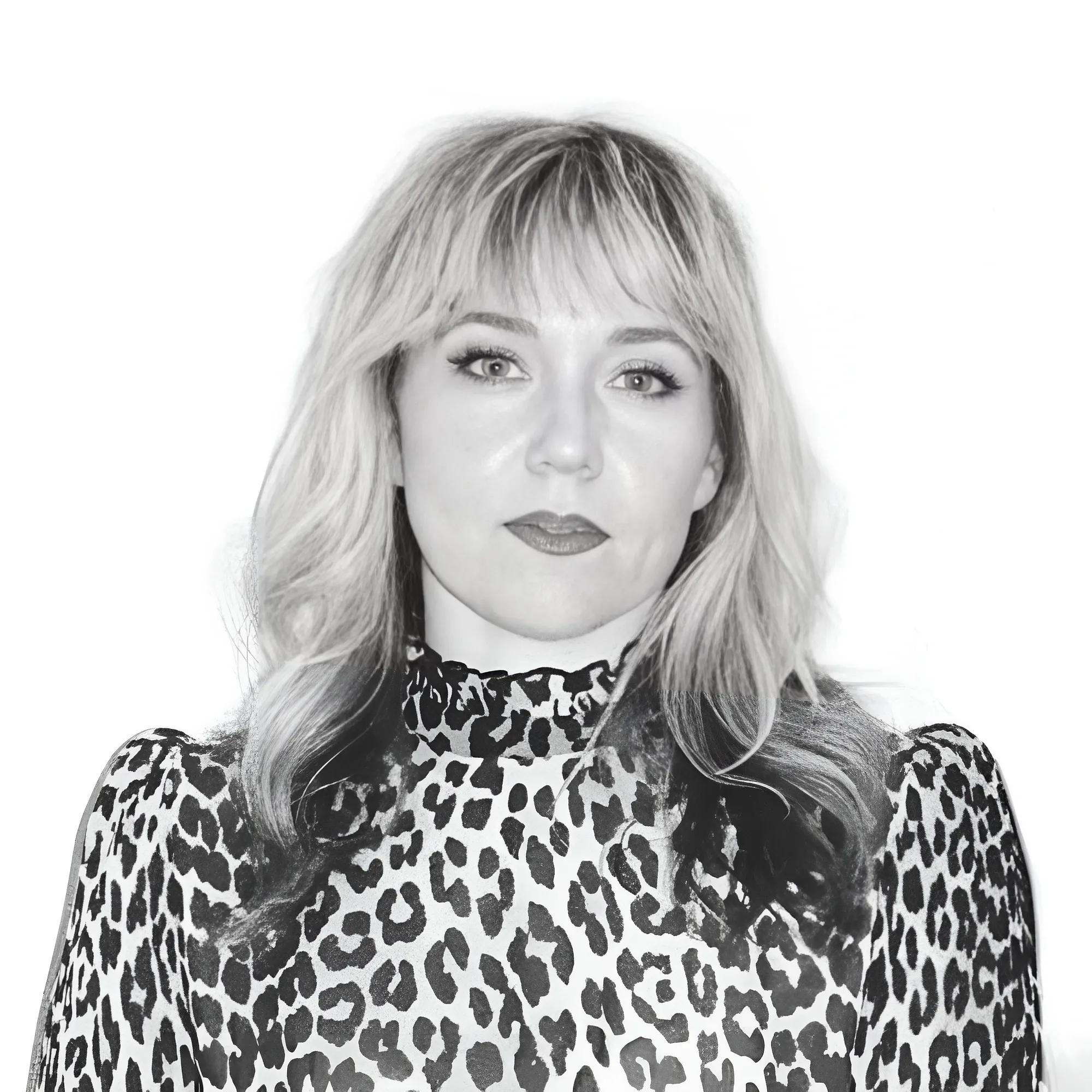
After Kate makes an investment in a female founder, she gives them a tarot card reading. Not as theater - as ritual. A way of marking the beginning of something, and setting intention. The founders who have experienced it describe it as unexpectedly moving.
Kate spent a year with Habitat for Humanity before she ever wrote a venture check. She built houses with her hands. The experience recalibrated her relationship to effort, and - accidentally - introduced her to the angel investors who brought her into VC.
Her McGill degree is in Cultural Studies and Art History. She later studied at ArtCenter College of Design. At a hardware-focused pre-seed fund, this background shapes everything: how she evaluates design, narrative, brand, and whether a founder can tell the right story about a difficult product.
Co-authored "The Goddess Guide to Branding" with her sister, brand strategist Jane McCarthy. A book about building an authentic, abundant brand identity - with feminist framing. Not a typical VC publication, which is precisely the point.
Kate founded Women in Hardware before it was fashionable to build communities. It became the largest and longest-running network for technical women in the hardware ecosystem - thousands of members across the industry who found each other because she created the room.
Most pre-seed funds spray capital across 50+ companies and hope a few stick. Baukunst targets 30-35 investments and writes checks large enough to fund entire rounds. Kate's typical ownership target at entry is 15%+. Conviction as strategy, not hedging as habit.
The Baukunst model is contrarian in a specific way. While most emerging pre-seed funds mitigate risk through diversification - 60 companies, small checks, broad exposure - Kate and her partners made the opposite structural choice. Thirty to thirty-five companies. Check sizes that can fund an entire round. Ownership targets that look more like Series A terms applied at pre-seed valuations.
The founders she's looking for aren't twenty-three-year-olds with a pitch deck and a vision. They're mid-career operators who have spent years or decades developing knowledge so deep in a vertical that they can see problems nobody else can articulate. When those people finally decide to build, they tend to build with the kind of clarity that makes early investor selection easier.
"The early days are messy and magical, and they are what we live for."
Baukunst on the pre-seed momentHer thesis on founder-investor relationships is similarly specific. Kate isn't interested in passive capital deployment. She leads rounds, takes board seats, and describes her role as something between a first-call advisor and a professional fairy godmother - "when I wave my magic wand, a million dollars rains down on you." The irreverence is intentional. So is the accountability it implies.
The Bobbie story captures the philosophy well. In 2018, Kate led a pre-seed investment in Bobbie Baby when founder Laura Modi was eight months pregnant. The conventional wisdom said it was the wrong time - wrong market window, wrong founder signal, too much personal complexity. Kate saw a founder with the right problem and the kind of investment in her own experience that makes for a compelling company. Years later, Laura Modi became a Baukunst LP. The relationship ran in both directions.
Baukunst's LP base reflects the same philosophy. Family offices founded by entrepreneurs. Former founders Kate had backed who came back around when she launched her own fund. Individuals and institutions behind landmark technology and design products. The capital came from people with pattern recognition - who had seen Kate operate up close and made a thesis based on what they observed.
"Recognize that we are the ones we've been waited for. No one's going to solve our problems for us."
"Lemons ripen faster than pearls." On why long-term venture investing requires patience that most funds don't have the structure to sustain.
"I like to think of myself as a professional fairy godmother and when I wave my magic wand, a million dollars rains down on you."
"Investing is kind of like voting for what you want to see in the world. If you win, a lot of people win, and I love it when that happens."