Before Lior Susan had a fund to manage, he had a tractor to drive. He was a teenager working on a banana farm in an Israeli kibbutz, young enough for the responsibility to mean something. People trusted him with the machine. Years later, when asked what connected the unlikely stages of his career, he returned to that experience: a small group, useful work, and confidence in the person doing it.
The banana farm makes a charming opening line for a venture capitalist. It also raises a less decorative question. What does someone learn about building a company when his first workplace is a community that works together? Susan’s answer has followed him through military service, telecommunications, electronics manufacturing, and investing. Give a capable team responsibility. Let it get close to the problem.
The tractor came before the term sheet
Susan left high school and worked on the farm. University did not follow. He served for eight years in the Israeli military’s special forces, then joined his younger brother to help build Intucell in 2008. His current job, founder and CEO of Eclipse, would have been difficult to predict from any one of those chapters.
He resists turning the sequence into a childhood master plan. In conversation, he describes concentrating on the immediate move and putting his energy there. “I never think five steps ahead,” he said. There is something refreshing about a person in the prediction business declining to pretend that he predicted himself.
His background nevertheless gave him recurring subjects: agriculture, defense, communications, manufacturing. These are systems with equipment, people, and consequences. They also became areas in which he wanted to build companies. The connection became clearer with experience. A career can acquire a pattern without having begun with a diagram.
“I never think five steps ahead.”
Lior Susan, on making career moves
Software finds the machinery
Intucell worked on making mobile networks more responsive. Its software allowed carriers to adjust their networks to changing demand, improving the use of existing infrastructure. Susan helped build the company alongside his brother. The problem joined two worlds that would keep appearing in his work: software that could change quickly, and physical infrastructure that was expensive to replace.
In January 2013, Cisco announced plans to acquire Intucell for approximately $475 million in cash and retention-based incentives. That figure described an acquisition of the business and its operations. The practical attraction was network intelligence: helping service providers manage coverage, capacity, and spectrum as mobile traffic grew.
Susan’s move to the Bay Area brought him into contact with Mike McNamara, then CEO of Flextronics, now Flex. McNamara invited him into a manufacturing company with an enormous operating footprint. Susan led its hardware investment platform, Lab IX, helping develop technology businesses inside an established corporation.
Flex supplied an education with factory floors attached. Susan gained exposure to customers, board meetings, earnings calls, and the layers of a large organization. He saw businesses across industrial sectors wrestling with technology needs. The customers wanted more than somebody to manufacture their products. They wanted help changing the way their businesses worked.
One contradiction stayed with him. Advanced electronics were being assembled manually. The finished object could be a feat of engineering; the production process could still require many people repeating individual tasks. The future, it turned out, had a remarkably busy pair of hands.
A career thread, rather than a forecast: software, equipment, and execution keep meeting.
Fifteen months to persuade the money
Seeing the need was easier than finding investors who shared his enthusiasm. Susan recalls pitching physical industries to friends in venture capital and finding a preference for consumer products, financial technology, and software subscriptions. Industrial complexity was a reason to pass. For him, it was part of the opportunity.
He began building Eclipse in late 2014 and launched it in April 2015. Jerry Yang, the Yahoo co-founder, encouraged him to establish a venture firm. Pierre Lamond, whose career included Sequoia Capital and Khosla Ventures, became a partner in the effort. Susan brought experience inside the systems he wanted to change; Lamond brought experience financing technology companies.
The first fund was $125 million. Susan says it took five attempts at closing and 15 months to complete. He credits Washington University’s endowment with making an early commitment. A number that now fits neatly into a company history once required a succession of conversations, explanations, and people willing to take the risk.
His hiring approach reflected the original problem. Eclipse recruited people with operating experience and taught them investing. Susan described partners who had worked in production, devices, and cloud infrastructure. They could help founders review products, establish supply chains, and build factories. Those tasks gave the investment relationship substance between board meetings.
15 months and five closing attempts, in Susan’s account.
The investor takes a shift
Bright Machines made the manufacturing argument concrete. Susan co-founded the company in 2018, pursuing software-driven automation for electronics assembly. Its history grew out of work inside Flex; the independent company gave that work a different setting, its own customers, and its own financing needs.
In December 2021, co-founder Amar Hanspal stepped down as CEO and Susan became interim CEO. He was already a board member and an investor through Eclipse. Now he had an operating job inside a company whose progress also mattered to his firm. It put his preference for company building into a particularly literal form.
There were difficult decisions along the way. In 2024, Bright Machines closed its Israeli development center, with layoffs and some staff relocating to San Francisco. Susan described the move as an effort to improve efficiency and work closer to customers. The consequences belonged to employees as well as to the company’s plans.
That June, the company announced $126 million in financing: $106 million in equity led by BlackRock-managed funds and accounts, plus $20 million in venture debt from J.P. Morgan. NVIDIA and Microsoft participated. The financing supported further development of its manufacturing approach. It also underscored how much an industrial company can need beyond a clever prototype.
Bright Machines now lists Susan as co-founder and chairman, with Sviat Dulianinov as CEO. The titles have changed. His involvement still links the fund’s industrial thesis to a business that has to deliver equipment and production capability.
AI has a loading dock
Susan’s interest in manufacturing became increasingly relevant to artificial intelligence. The software experience is immediate: a question typed, an answer returned. Delivering the computing behind that exchange requires servers, networking equipment, power, and production. The interface has an industrial supply chain behind it.
In a December 2023 essay, he focused on assembly as a constraint on the hardware supporting AI. Equipment built for a single task can be awkward when products change rapidly. He argued for manufacturing systems that combine standardization with flexibility, able to accommodate variations rather than requiring a fresh custom solution for every change.
“AI hardware needs a standardized, yet flexible approach to manufacturing its backbone,” he wrote. For Susan, the expanding demand for computing led back to a familiar question: how can software make physical production more adaptable? The AI discussion had arrived at territory he had already spent years examining.
His thinking about location follows the same logic. In 2022, he argued for production closer to demand, supported by automation and worker training. A nearby factory still needs the skills and economics to function. Moving the building on a map does not automatically solve the work happening inside it.
He described a transition that includes people working with intelligent machines, more flexible assembly lines, and opportunities to train workers for new tasks. The ambition depends on several changes occurring together. Robots make an arresting photograph. Training, procurement, and production planning have less photogenic but equally demanding schedules.
An industrial customer remembers
Susan’s expectations of founders reflect the size of the commitments their customers make. In a 2025 leadership interview, he emphasized commercial understanding and the ability to attract capital. Engineering matters, but technical talent alone cannot explain how a company wins a customer’s trust or finances its own expansion.
He described founders who have already spent years inside businesses such as SpaceX, NVIDIA, and Amazon. Starting a company may be new to them; managing complicated work is familiar. Experience gives them a view of what needs changing. They must also be willing to depart from the methods they inherited.
Government relationships belong in that operating picture, too. Energy, infrastructure, aerospace, and defense involve regulation and public priorities. Susan regards understanding government as a requirement for industrial leaders. A company’s progress can depend on financing arrangements, rules, and purchasing decisions alongside its engineering.
His broader aspiration is to strengthen physical industries and the economic security they support. That is an ambitious agenda, but his preferred contribution is tangible: work with founders on the companies that can carry it out. The customer eventually needs a functioning system. Persuasion has a delivery date.
A larger fund, the same practical question
In April 2026, Eclipse announced $1.3 billion across two funds: $720 million for Fund VI and $591 million for Early Growth III. It reported approximately $10 billion in assets under management at that announcement. These were firm figures, and they marked a substantial expansion from the first fund Susan struggled to close.
Committed capital announced by Eclipse. Bar lengths use the same scale.
The firm described a network of companies sharing infrastructure, customers, talent, and experience. Susan’s work includes relationships with Cerebras, Ursa Major, VulcanForms, Bright Machines, and Augury. The portfolio extends across different technologies, held together by an interest in changing how physical industries operate.
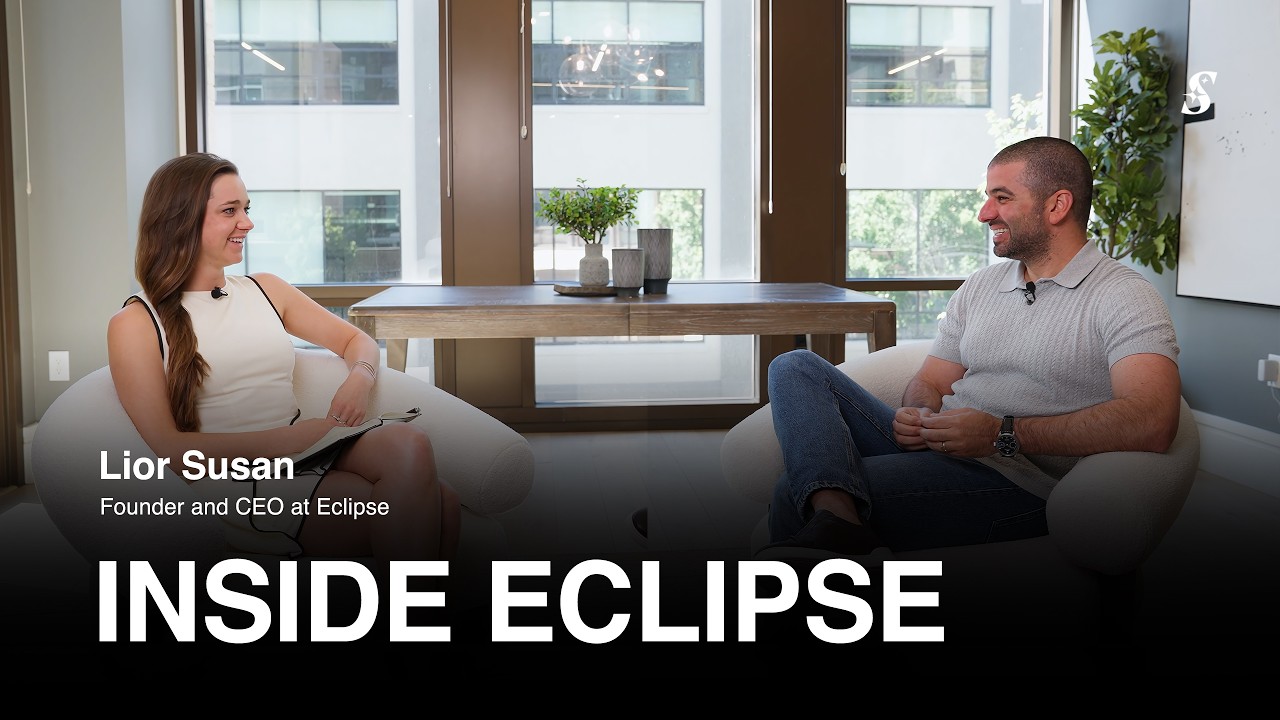
His public conversations continue to follow that interest. In September 2026, he spoke with Molly O’Shea on Sourcery about Eclipse’s industrial focus. On October 9, he appeared on Metis Strategy’s Technoventure to discuss AI, robotics, and industrial company building. The subject has more company than it did when he began explaining the first fund.
Susan also leaves room for chance. “Luck is a big portion of this business,” he said in another interview. It is a useful admission from someone whose work involves placing bets on what comes next. The farm did not contain a secret route to venture capital. It offered work, responsibility, and people who trusted him. He has found new places to put those ingredients ever since.
Keep the conversation going
Read, listen, and watch.
- Lior Susan at Eclipse ↗
- Lior Susan on LinkedIn ↗
- Bright Machines: the company and its leadership ↗
- The banana farm and the beginnings of Eclipse: EVCA interview ↗
- Cisco’s January 2013 Intucell announcement ↗
- Susan on the first fund and the operator’s role ↗
- Susan’s factory-floor recollections and Bright Machines financing ↗
- CTech on Bright Machines’ 2024 financing and restructuring ↗
- Bright Machines’ December 2021 leadership transition ↗
- Susan’s essay on manufacturing the AI backbone ↗
- Susan on moving production closer to demand ↗
- The 2025 leadership interview ↗
- The Product Market Fit Show: investing, operating, and luck ↗
- Eclipse’s April 2026 fund announcement ↗
- Watch: Susan with Molly O’Shea on Sourcery ↗
- Watch: Technoventure with Peter High, October 2026 ↗