An enterprise AI founder recommending a blank sheet of paper is an agreeable complication. Ravi Apte has software to sell, yet his advice for working with artificial intelligence begins with a pen. Before asking a model anything, he suggests putting your own thoughts down. The page can be untidy. You can discard it afterward. Its job is to give your thinking a head start.
That small prescription offers a way into the larger career. Apte founded Left Right Mind in 2013, after working as a software engineer. The company grew through design and development assignments and now offers an enterprise AI platform. Across those changes, he has kept an interest in the awkward meeting between technical capability and human behavior. A machine may supply an answer. Somebody still has to decide what question deserved asking.
His August 2026 advice ends with five words: “Paper first. Prompt second.” There is something nicely economical about an AI workflow whose first dependency can be purchased at a stationery shop. It also makes a serious demand of the user: bring a point of view. An empty prompt box should not become an excuse for arriving empty-handed.
“Paper first. Prompt second.”
Ravi Apte · August 2026
A software engineer with an eye for the interface
Apte studied computer science at the University of Texas at Dallas, earning a bachelor’s degree and then a master’s. His early employers included John Deere and KLA-Tencor. By the time he started Left Right Mind, he had experience in engineering environments well removed from the cheerful fiction that software becomes useful merely by being released.
His technical background includes distributed computing in Java and mobile development for iOS. That combination spans two different distances from the user: the machinery that coordinates work behind the scenes, and the screen someone actually touches. Both matter. A thoughtful interface cannot rescue an unreliable system; reliable machinery can still make an ordinary task maddening.
The name Left Right Mind makes room for creative and analytical work in the same conversation. The company explicitly asks prospective colleagues to move between the two. Its history begins with mobile experiences and expands into enterprise search, integration and workflows. The common assignment is practical: arrange complicated technology so that a person can accomplish something with it.
The client who wanted another co-founder
One early test involved nail art. Preemadonna needed help developing an iOS application under a tight deadline in November 2014. Its founder, Pree Walia, wanted a development partner who could get up to speed quickly. The work eventually included augmented reality, image processing and printing capabilities. A decorative result concealed a fairly crowded engineering brief.
Walia described Apte as personable, technically experienced and attentive to design. Her account emphasized the team’s willingness to absorb changing requirements and help train the client’s own staff. She also identified Android development as an area for improvement at the time. The combination is useful: praise attached to an actual assignment, with the edges still visible.
For Apte, the episode illustrates the founder’s job in a consulting business. The customer is buying more than hours of programming. They need someone who can understand a deadline, recognize what a demonstration must prove, and make choices when the brief changes. The polished screen is the visible result of many less photogenic decisions.
Preemadonna’s first project with Left Right Mind: an iOS app for custom nail art. The relationship grew across successive versions.
A racing grid becomes an organizational chart
Apte has another language for those decisions: Formula One. In a March 2025 reflection, he treated the sport as a collection of businesses with conspicuously fast products. His attention went to brand identity, internal competition, team hierarchy and the complications of deciding who gets priority. The stopwatch was only part of the story.
He contrasted Ferrari’s attachment to its institutional identity with Mercedes’ relationship to a star driver, and considered Red Bull’s priorities. These were his readings of the teams, offered as analogies for organizational behavior. He was interested in how declared values survive contact with a difficult decision. A racing team gives that question an unusually public examination.
“Culture drives action, action drives results,” he wrote. It is a compact description of what he watches for: the route from a belief to a choice. In an office, that route can disappear into meetings and approval chains. A pit wall has less time for such concealment. Indecision acquires a lap number.
The hobby supplies a revealing editorial lens on his work. Software businesses also have rival priorities, scarce resources and people who want different outcomes. A dashboard can display their performance. Designing a useful one requires some understanding of the organization that will argue over it.
Giving uncertainty a place at work
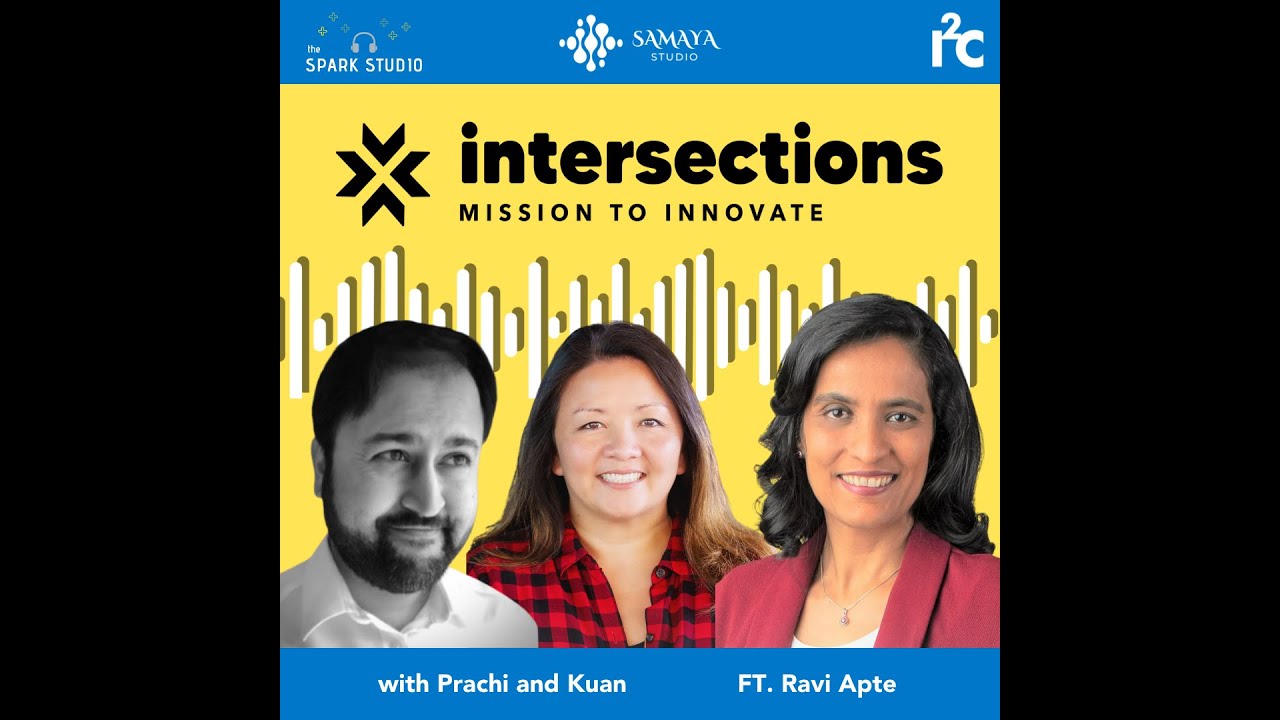
His public conversations extend beyond the engineering brief. He appeared on Intersections, the interview series hosted by Kuan Collins and Prachi Sukhatankar, to discuss innovation culture and barriers within technology organizations. The setting suits a founder whose work repeatedly puts people from different disciplines around the same problem. Technical vocabulary alone cannot settle every disagreement at that table.
Left Right Mind’s hiring language gives that interest a concrete form. It welcomes people who ask questions aloud, change course without ego and can be wrong in front of others. It values emotional intelligence alongside technical ability. It also invites applicants to describe work that energizes them, with the possibility of shaping a role around a fit.
These are stated working principles. Their practical test comes when a client’s requested feature makes little sense, a deadline forces a compromise, or an engineer sees a problem the brief has missed. A culture that invites questions must make room for inconvenient answers. Otherwise, curiosity becomes a recruitment adjective with nowhere to sit.
Apte’s own education continued beyond the computer science degrees. In 2020 he attended BJ Fogg’s Behavior Design Boot Camp. The subject fits the questions his company now asks about adoption and use: what makes a behavior possible, what helps it happen, and how much friction an interface adds. Learning to program a system and learning how someone approaches it are related pursuits, with different kinds of homework.
That willingness to challenge an assumption connects the people questions to the product questions. If the brief is allowed to be imperfect, discovery becomes part of delivery. The team needs enough confidence to examine what it has been asked to build, and enough care to explain the finding without turning the conversation into a contest.
When the filing cabinet belongs to NASA
As Left Right Mind’s assignments expanded, the information became more complicated. Its staff contributed to NASA’s Science Discovery Engine, which brings resources across five science divisions into a unified search experience. NASA publications name contributors from the company alongside university and agency collaborators. It is team infrastructure, built across institutional boundaries.
The work includes a problem familiar to anyone who has searched an organization’s files: material can exist in abundance and still be difficult to find. Scientific disciplines carry different vocabularies and conventions. Curating resources, connecting metadata and preserving context help make a single search meaningful. The neat search box sits above a great deal of patient organization.
For a founder trained in both systems and interfaces, this is a substantial extension of the original assignment. The user’s next useful action depends on what the system has understood beforehand. Design reaches backward into classification, permissions and integration. A pleasant screen is welcome; the material behind it must also make sense.
Different settings. A recurring question: what can the person using this do next?
The plan is allowed to be wrong
Left Right Mind’s current platform compares documented commitments with operational records. Its three named components divide the work: Detect finds discrepancies, Resolve routes them through controlled processes, and Explore lets users examine the underlying material. The company presents this as a way to connect evidence, explanation and action within an organization’s own rules.
Consider an illustrative purchasing case. A contract establishes a discount; an invoice records a different price. Finding the mismatch begins the job. Someone then needs the governing terms, an owner for the decision and a route to settle it. This example describes the platform’s advertised purpose, rather than a result claimed for a particular customer.
Apte added a useful wrinkle in an August 2026 post: a divergence from a plan can be evidence that the plan was unrealistic. He described a dashboard intended to let an executive follow an intuition through data and hand the investigation to a team. His concern was the difference between how leaders set direction and how operators carry it out.
That observation gives the software a more interesting responsibility. An organization should be able to correct its actions, revise an obsolete expectation or record why an exception is reasonable. Left Right Mind’s Resolve language makes room for those alternatives. The record becomes something people can examine together, with the decision attached.
The three possible resolutions also expose a choice that a simple pass-or-fail indicator can hide. A rule may still be right, while the transaction needs attention. A rule may have fallen behind the business. An unusual case may have a defensible explanation. Giving those outcomes a place in the workflow makes the decision visible to the next person who reviews it. It is a practical design concern, particularly when a finding has to travel beyond the person who first noticed it.
Apte’s public work keeps returning to that moment of judgment. The client needs a partner who can weigh a changing brief. The racing team needs priorities it can act on. The executive needs room to question a plan. Even the AI user needs an initial thought to compare against the answer. A sheet of paper is a modest starting point for all that. It leaves plenty of room.