A loan can be approved in a moment. Then the rest of the bank has to catch up. Someone must apply the right price, record the disbursement, reconcile the ledger and explain who approved a change to the lending rules. The customer sees a button. The institution inherits a chain of obligations. PrimeSoft Solutions works on that chain.
- Custom engineering for financial services, healthcare and networking businesses.
- Development, cloud operations, testing and Oracle ERP under one roof.
- A growing AI offering built around client ownership and operational control.
That is a useful starting point for understanding a company whose service list can otherwise resemble an entire IT department. PrimeSoft builds applications, moves infrastructure, tests releases and supports enterprise systems. Its current AI portfolio stretches from quality engineering to contract intelligence. The common problem is coordination: getting software, business rules and the people responsible for them to operate together.
One button. A bank behind it.
Consider its published pay-later case study for an unnamed private-sector bank. The work brings onboarding, approval rules, pricing and settlement into a connected platform. A configurable rule engine evaluates requests. A pricing engine handles fees and interest. Settlement connects with the bank’s general ledger. These are the details that determine whether a convenient customer experience becomes a manageable banking product.
The telling feature is the maker-checker workflow. A person proposing a rule change does not simply push it into production. The system includes testing, approval and a change trail. PrimeSoft describes scorecards and rule groups that bank teams can configure. The engineering ambition is to let a business change its behavior while retaining a record of who changed what.
Illustrative sequence based on PrimeSoft’s pay-later case study.
Its invoice-factoring example follows the same logic in another corner of finance. Small-business sellers, corporate buyers and financiers share a marketplace for accepted invoices. Competing bids replace a single financing negotiation; credit checks and settlement integrations connect the surrounding work. The company presents this as a route to faster working capital. The useful insight is structural: financing depends on agreement between several parties, so the software has to organize those relationships.
The pattern also appears outside finance. PrimeSoft’s broadcast-monitoring case study describes a console that brings equipment from different vendors into one operational view. Centralized alarms and root-cause analysis help operators trace problems across a facility. The appeal is easy to understand: a collection of individually visible devices can still leave the overall system difficult to read. Integration gives the operator a wider field of vision.
Buying the missing expertise
PrimeSoft dates its beginnings to 2006. Two later acquisitions help explain its present shape. In March 2020, it acquired Hyderabad-based iGenero, extending its web and mobile application capabilities. In November 2021, it announced the purchase of Mumbai-based Tejora, whose financial technology offerings included Saffron Pay and Saffron Square. The announcement described Tejora as having more than 150 engineers.
At the time, PrimeSoft president Prabhaker Ramakrishnan linked the Tejora deal to recent banking, financial services and insurance wins in North America and India. That gives the acquisition a practical rationale: build more capacity in a market already producing work. Read together, the deals suggest a company assembling adjacent skills around customers whose systems reach from the application screen to financial operations.
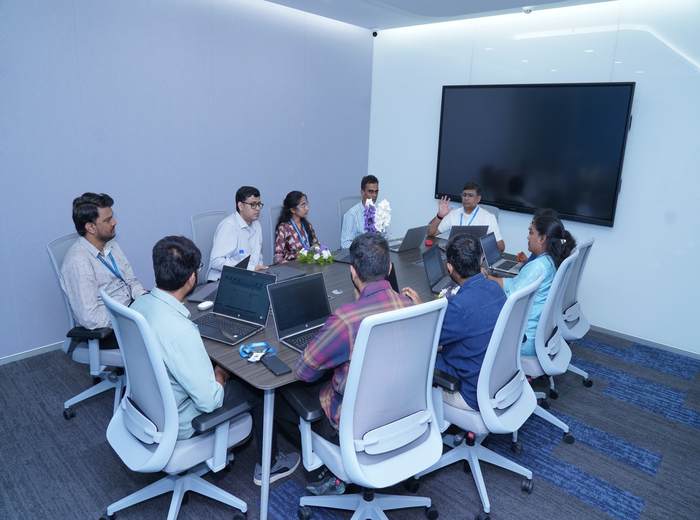
Today, the company reports more than 300 professionals and lists locations in the United States and India. Its customers span enterprise technology teams, banks, healthcare organizations and networking businesses. The breadth matters because these buyers already have working systems. A replacement must coexist with records, permissions, dependencies and people who cannot suspend operations while a new architecture arrives.
Now test the faster code
PrimeSoft’s AI push grows out of familiar engineering chores. QualNetics.AI is its quality-engineering offering: generate test assets, execute tests and maintain automation as applications change. It covers desktop, web and mobile environments, including visual recognition for interfaces where an object tree is unavailable. That detail gives the pitch a specific audience: enterprises whose software estate includes awkward older applications.
The surrounding services make the proposition broader than an AI testing tool. PrimeSoft also offers cloud migration and delivery pipelines across AWS, Azure and Google Cloud. Its Oracle ERP practice covers advisory work, implementation, integrations and managed support. ContractIQ addresses another document-heavy process, extracting obligations and surfacing renewal, spending and compliance issues. Each offering targets work that continues after the first demonstration.
An October 2026 company article argues that faster AI-assisted coding can leave testing teams with a growing queue. This is PrimeSoft’s own commercial argument, but it identifies a sensible buying question: which stage is actually limiting delivery? More code helps only if validation and release can absorb it. Automating the busiest stage is a more useful objective than scattering AI across every screen.
“Outcomes over hours.”PrimeSoft’s stated delivery principle
The ownership question
PrimeSoft sells engineering engagements and ongoing support, with bespoke AI solutions added to that service business. Its differentiating promise is client ownership of the developed code, models and workflows, running within the client’s infrastructure. It also describes named delivery accountability and shared milestones. Those are promises a prospective buyer can turn into concrete contractual and acceptance requirements.
This positions PrimeSoft among product-engineering and enterprise-transformation providers. A buyer might compare it with firms such as Persistent Systems or Cognizant, build internally, or choose a packaged application. Custom development becomes more attractive when a workflow needs distinctive rules or difficult integrations. A standard package may be the better purchase when the business can comfortably adopt its existing process.
The approach asks something of the client, too. Ownership requires people who can maintain the system and govern its use. PrimeSoft’s six-stage AI development lifecycle includes validation, release and governance, with review gates and auditability. A practical way to evaluate that approach is to choose one bounded workflow, establish its current turnaround and error rate, then test the integration, handover and operating costs alongside the interface. A pilot also needs access to representative data and someone authorized to resolve process questions. Without those conditions, a polished prototype can leave the hardest decisions untouched. The most useful demonstration ends with a system the customer can explain.