Seven minutes is an awkward amount of time for a smart lock to update its firmware. Long enough to notice. Short enough that a product team might file it under something to improve later. In Transcenda’s Yale and August case study, that wait becomes the useful clue: replace the Android software development kit, improve the connection between phone and device, and seven minutes becomes two minutes forty seconds.
The company behind this change sells something harder to photograph than a lock: the people who make complicated products work together. Its name usually stays behind the customer’s.
- Transcenda embeds strategy, design, and engineering specialists inside client teams.
- Its work spans connected homes, clinical software, buildings, and logistics.
- The useful lesson: measure a bottleneck, then fix the systems around it.
The four-minute clue
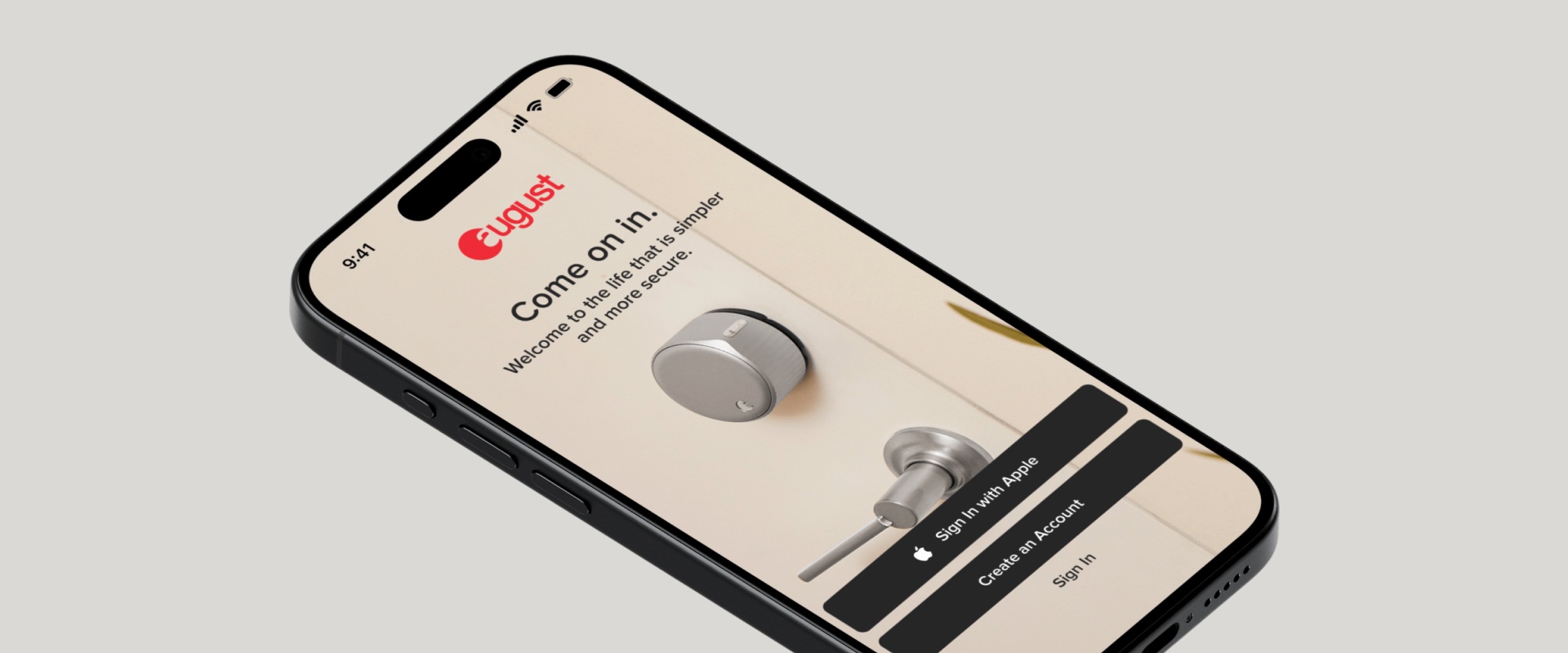
Yale and August needed capacity for an ambitious 2023 and 2024 product roadmap. Transcenda contributed native iOS and Android development, product and project management, and an updated Yale Access Android SDK. That last item sounds like plumbing. It was also where several improvements lived.
The replacement supported multiple simultaneous device connections and improved Bluetooth and Wi-Fi communication. For devices such as Pandora, the reported firmware update fell by four minutes twenty seconds. A unified communication SDK could serve the main application and partners, reducing duplicated development. The appeal is practical: customers experience the delay; engineers have to locate its cause across several layers of software.
A typewriter, an Ironman, and a company
CTO and co-founder Alexey Koval traces his interest in technology to a typewriter in his mother’s office at a Ukrainian nuclear power plant. His father worked in human resources there. In Koval’s account, one parent supplied the fascination with machines; the other demonstrated how consequential decisions affect people.
In 2019, Koval completed an Ironman in Copenhagen and co-founded Transcenda with CEO Megan Fales. He describes the race as the more predictable undertaking. A company introduces other people and unknowns that no training schedule can settle. His stated delivery principles include surfacing risks and speaking honestly about what needs to change.

That human emphasis has faced a serious test. Fales’s UXDX biography describes safeguarding staff and maintaining operations after Russia invaded Ukraine. Today the company reports more than 300 specialists across six countries, with teams in the United States, Brazil, Colombia, Poland, Ukraine, and Romania.
A million users need a common language
At Medidata, the problem was less about waiting for a device than navigating a portfolio. The clinical-development platform had more than one million registered users, many moving between products. Transcenda helped research their journeys, develop information architecture, build a design system, and implement it through React engineering and testing.
The revealing obstacle was adoption. Components alone would not unify an experience. Engineers needed training, support, and a self-service way to use the system while building features. This is where the engagement becomes organizational as well as technical: a shared system has value when separate teams can actually work with it.
“They take an ownership approach and act as a true partner to their clients.”
Ilya Sterin · VP of Engineering, Medidata Solutions
Centric Software offers a related example. Its product lifecycle management application serves designers and merchandisers with different information needs. Transcenda used interviews, usability testing, and prototypes to define configurable views and workspaces. The aim was faster access to the data each role needed. Here, the friction was the distance between a capable platform and a particular person’s working day.
Freight moves at the speed of trust
BNSF Logistics had never worked with an external engineering agency, according to Transcenda’s case study. It worried about quality, confidentiality, security, and whether outsiders would fit its existing team. Meanwhile, its roadmap included booking capabilities for nonstandard loads across rail, wind, and intermodal transport.
Transcenda supplied React and .NET engineering, integrations, data processing, quality assurance, and release management. One early move was an end-to-end automated testing framework. Legacy code and interconnected systems made each new feature a potential disturbance elsewhere. Tests gave the teams a way to check those connections while continuing development.
Daily conversations with product and logistics managers, plus executive sessions every two weeks, helped settle competing priorities. The published outcomes include annual savings above $500,000 and a 50 percent increase in load count per head. Those are company-published results from one engagement; the useful mechanism is the combination of regression protection and regular decisions.
BNSF Logistics outcomes reported in Transcenda’s case study.
The team inside the problem
Transcenda occupies the market for digital product engineering and design services, alongside large consultancies, specialist studios, and internal teams. Its proposition brings research, design, architecture, implementation, and delivery into the client’s working environment. Cloud engineering, test automation, technical due diligence, and product roadmapping extend that offer.
Customers buy services and delivery capacity. DesignRush lists a minimum budget of $50,000 and up, while The Manifest lists $250,000 and up. Treat those directory entries as rough planning signals. The work requires a scoped commercial proposal, and the case studies supply outcomes without project invoices.
Trust can expand the scope. ThoughtWire’s Jason O’Neill says successful engineering work led his company to add design, previously kept in house. For a buyer, a bounded first project with a visible result is a useful pattern to copy. Embedded work also needs access and available decision-makers. A team seeking a standard tool with little coordination may find a packaged product more suitable.
A practical way to structure that first assignment is to agree on the starting measurement, the systems the team can change, and who will decide when priorities conflict. For a connected device, measure update time and connection reliability. For enterprise software, observe how people reach the information needed for a task. These are lessons drawn from the published projects, rather than a promise that every client will reproduce their results.
AI still has to earn its place
The current Transcenda pitch centers on AI: readiness, agent adoption, intelligent products, and interfaces shaped around human intent. Its SOC 2 Type II examination, covering 2025-2026, addresses another prerequisite for working inside client systems: controls for security, availability, and confidentiality.
The older work supplies a useful question for that newer pitch. Which task becomes easier, and how will anyone know? For a smart-lock owner, the answer was unusually legible. A progress indicator finished four minutes and twenty seconds sooner.