A company can own the answer and still spend an afternoon looking for it. Somewhere, a document explains the product. Somewhere else, a conversation settles the question. The employee who needs either has work to finish. Itay Itzhaki built Unleash around the distance between those facts. In December 2025, Zendesk bought the company. One of the organizations using his software had decided to bring the people who made it inside.
For Itzhaki, this was a second acquisition. He had previously co-founded StuccoMedia, an ecommerce marketing business bought by Market Tech in 2015. The two companies served different customers and worked on different problems. Still, there is a family resemblance: both concerned the difficulty of connecting something valuable with someone who could use it. A product needed a buyer. A piece of knowledge needed a reader. Software could help arrange the meeting.
That is a useful place to begin a founder’s story. The sale gives it a date. The recurring problem gives it a shape. Much of working life involves an undignified amount of hunting: through catalogs, through files, through the conversation you are certain happened last Tuesday. Itzhaki’s career has repeatedly made a business out of shortening the hunt.
A head start, with his mother’s assistance
He grew up in Ramat Gan, where his parents ran an electrical contracting business. His early attempt to follow them into practical work did not reveal a hidden gift for it. Programming proved a better fit. After a childhood coding class, his mother persuaded a college to admit him to courses intended for adults. He went on to finish a computer science bachelor’s degree at 17.
It is an appealingly concrete origin. There is a child who enjoys a subject, an institution with an age expectation, and a parent willing to argue. Before there was a founder asking customers to try unfamiliar software, there was a mother asking a college to reconsider its usual admissions audience. The first door in this technology career required a conversation.
He later completed a master’s in computer science at Tel Aviv University. His background also included six years of cyber research in the Prime Minister’s Office. By the time he became a company founder, he had spent years working with technical problems. A research education offers useful habits for entrepreneurship, even if a promising algorithm and a business that pays its bills remain separate assignments.
The first business had customers to find
StuccoMedia paired Itzhaki with Guy Weiss, whom he had met during military service. Their company built technology for ecommerce advertising. Online merchants had large catalogs to promote; choosing products and placing advertising across them was a problem with enough repetition to reward automation. The founders put algorithms to work on that repetition.
The company’s appeal was measurable. Market Tech’s acquisition announcement described advertising selected according to previous online behavior. It also recorded audited 2014 revenue of $6.1 million and EBITDA of $820,000. Those figures give the early story some welcome solidity. There was a functioning commercial operation underneath the founder biographies.
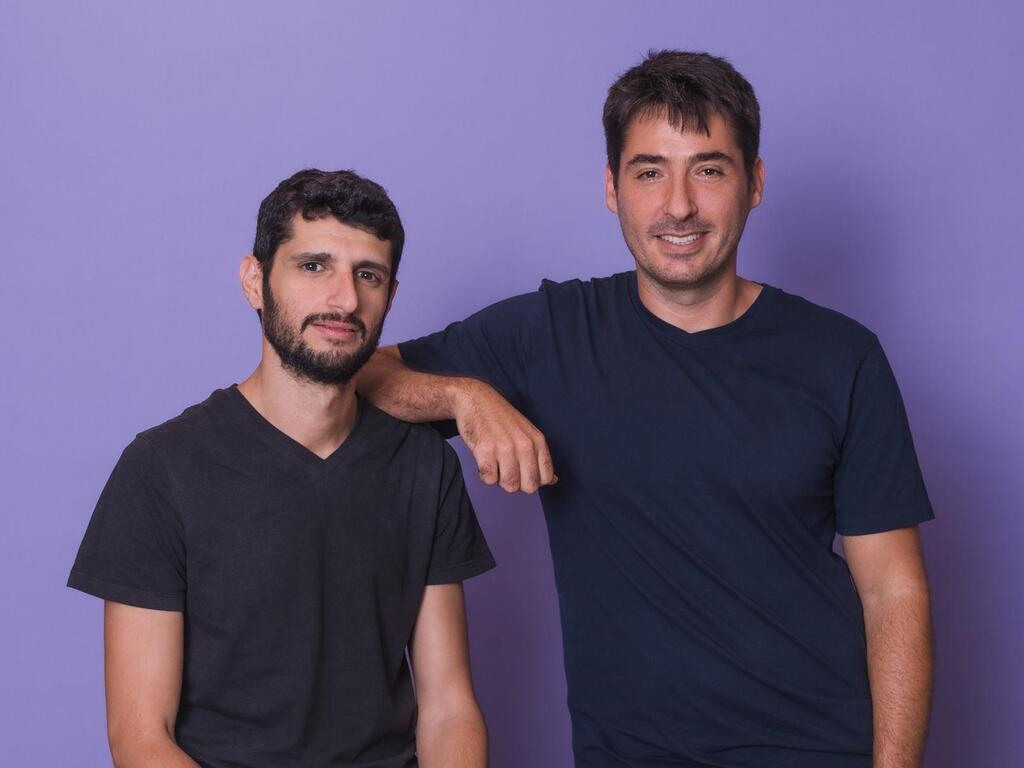
In May 2015, Market Tech announced terms of up to $34.5 million, alongside a further $8.5 million payment to the vendors. Cash, shares and conditions sat behind the headline number. That detail matters because an acquisition is an arrangement among owners and a buyer, with obligations attached. The photograph of the smiling founders is generally easier to fit on a page than the payment schedule.
The following year, Forbes Israel included both Itzhaki and Weiss in its inaugural Under 30 list. Recognition arrived after the business had already been sold. At 28, Itzhaki was being introduced publicly through a company he had helped create and was now working beyond. A first exit had become part of his biography. It did not have to become its final paragraph.
The next search was inside the office
For Unleash, Itzhaki’s co-founder was Omer Koren, a friend from high school who became the company’s CTO. The venture took shape around 2019–2020. Its problem was close to anyone who has opened several applications to answer one question: work information accumulates in separate places, while the person looking for it experiences the company as one organization.
The older ChaseApp description makes the original proposition easy to picture. A lightweight search bar brought together information from cloud services and computers. Emails, chats, files and tickets could be searched from one place. There is a small courtesy in that design. The user could spend less effort remembering which tool had been entrusted with which fragment of the working day.
As Unleash developed into an AI enterprise search business, the stakes expanded beyond retrieving a file. An employee could ask for an answer assembled from company knowledge. The difficulty of finding information now sat alongside the difficulty of using it correctly. Search had acquired another responsibility: the answer needed to respect the boundaries around the material it drew upon.
A conceptual view of the workflow described at the acquisition. No performance figures implied.
Useful software has to meet people somewhere
The partnership with Loopio shows how Itzhaki’s idea reached a specific task. Loopio helps teams respond to requests for proposals and questionnaires. Its Unleash connector allowed those teams to draw on information beyond the content already stored in their Loopio library. A sales response could benefit from knowledge elsewhere in the organization without requiring its writer to start a fresh search expedition.
The setup was ordinary in a revealing way. It required an Unleash subscription, an API key and enabled generative AI features. Administrators also granted users permission to use Unleash as an information source. The practical work happened through accounts, settings and access decisions. This is the portion of enterprise AI that tends to be absent from the stage demonstration and present in the administrator’s afternoon.
Inside a project, a user could select Unleash when generating an answer. Loopio’s instructions described an AI label on the resulting response. The distinction between finding information and putting it into a particular workflow becomes visible here. A capability earns its place by helping someone complete an existing assignment.
Itzhaki’s public discussion of the partnership emphasized building on an established platform and working closely with the people on both sides. The logic is easy to follow. A company already serving a customer’s task has a valuable place to offer new capabilities. For Unleash, that offered a route into work people were doing anyway.
The customer became the acquirer
By December 2025, Unleash had raised approximately $20 million, including backing from TLV Partners. Sienna Venture Capital, which invested in 2024, described the Zendesk transaction as the first exit for its Sienna Startup Nation fund. The company’s journey had become part of several organizations’ histories at once: the founders’, the employees’, the investors’ and the buyer’s.
On December 18, Zendesk announced the acquisition. Financial terms were undisclosed. The stated product fit was clear: enterprise search across more than 70 content sources, access controls applied when a question is asked, and knowledge agents in Slack and Microsoft Teams. Questions could also move onward to human experts. The software’s job included knowing how to continue a conversation.
“make information accessible and actionable right where work happens”
Itay Itzhaki · on Unleash’s mission, December 2025
That mission sounds modest when placed beside the grander promises regularly made for artificial intelligence. Its scope is still substantial. An organization’s information can be abundant and difficult to use at the same time. Connecting it to employee support turns an abstract search capability into an answer to a practical question, delivered during the working day.
Zendesk had already been an Unleash customer. For Itzhaki, the purchase offered a way to reach organizations more quickly than Unleash could on its own. The decision therefore belongs in a story about time as much as money. Founders face a calculation between the time needed to build distribution and the opportunity to use distribution that already exists.
What colleagues carried away
A transaction tells only part of what happens inside a company. Tal Cohen, reflecting on his time at Unleash, thanked Itzhaki for backing a student and providing room to grow. The account describes opportunity at an individual scale. Someone was allowed to attempt work before possessing a long record of having done it.
Dan Ghouila remembered a different scene: a company gathering, a seat at the bar, and a conversation with Itzhaki about entrepreneurship. He also recalled being treated as a partner. These are personal recollections, with the limits that individual recollections have. They nevertheless put a human encounter beside the product architecture and the acquisition date.
Mentoring rarely provides the neat arithmetic of a transaction. Its effects appear later, in another job or another decision. For a founder whose products concerned access to useful information, there is a pleasing connection in being remembered for sharing some of his own. The conversation required no connector, subscription or permission settings. Two people simply sat down.
The question that stays open
In January 2026, Itzhaki described leading Zendesk’s new Israeli development center. Integration lay ahead. Joining a buyer means turning the acquired team’s work into something that fits a larger organization, with existing products, colleagues and customers. The announcement changes the ownership. The next phase changes how the work reaches people.
Beyond that commitment, he left the possibility of another startup open. After two acquisitions, the next beginning need not arrive on cue. There is room in this story for a founder to finish the work in front of him before deciding what deserves another company. For now, a familiar task continues: help a useful answer reach the person who needs it.