Somewhere in a company there is a person who knows where everything is. The vacation policy. The explanation of a troublesome feature. The document that answers a customer’s question. Colleagues send this person messages because finding the answer themselves takes longer. That colleague has become a search engine with a calendar, a salary and an increasingly cold cup of coffee.
Unleash built software for this familiar situation. It connected workplace applications, searched their contents and generated answers from company knowledge. In December 2025, Zendesk acquired it to strengthen employee service. The attraction becomes easier to understand when you follow an ordinary question through an organization: from employee, to colleague, to support queue, to a document that existed all along.
- Unleash connected more than 70 enterprise content sources.
- Search and assistants lived inside existing work tools.
- Permissions, source selection and review shaped the answers.
- Zendesk bought the company on December 18, 2025.
A doorway in the apps already open
The basic problem was fragmentation. A company could have useful information in Google Drive, Confluence, Slack and Salesforce, yet ask employees to remember which application contained which answer. Each tool supplied a search box. The employee supplied the map.
Unleash offered keyword search and natural-language questions across connected sources. Its help guide used wonderfully ordinary examples: vacation policies, feature explanations and setting up a local development environment. Answers came with access to the underlying material, letting employees inspect context or update an outdated document. The promise was practical: spend less time reconstructing the company’s filing habits.
There were several doors into this system. A web app and desktop app served direct searches. A launch bar floated over the current window. A browser extension put search and chat in a side panel. Slack assistants answered in channels. The design observation is simple: a useful answer has more chances to be used when it arrives where the question was asked.
From finding a file to helping an agent
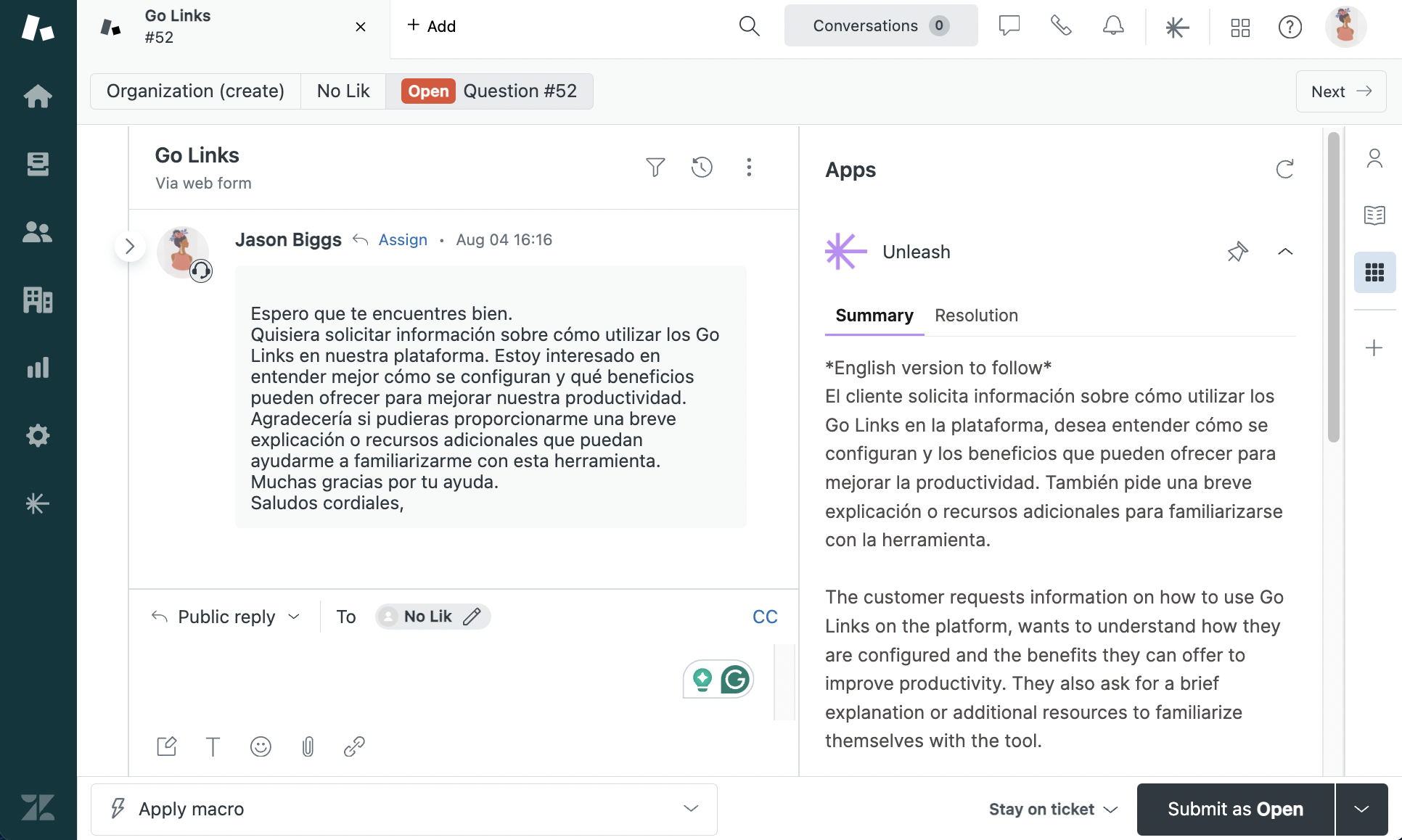
The support products gave that observation a commercial shape. The Zendesk Ticket Assistant summarized a ticket, suggested a resolution and surfaced relevant knowledge. It could also show similar tickets. Salesforce’s Case Assistant supplied summaries and proposed answers within cases. An agent could turn a resolution into a knowledge card, giving the next person something reusable.
This placed Unleash between enterprise search and knowledge management. It retrieved existing material while also providing wikis and cards for curated knowledge. Developers could use its REST API to embed search into a portal, build a departmental assistant or offer a branded experience within another product.
- 01ConnectCompany applications
- 02SelectSources + permissions
- 03RetrieveRelevant knowledge
- 04AnswerInside the workflow
Permission is part of the answer
Company knowledge has borders. An employee looking for an expense policy should not acquire access to confidential personnel files along the way. Zendesk’s acquisition announcement emphasized permission-based retrieval-augmented generation: finding relevant company material for an AI response within access rules. Unleash’s expertise lay in connecting that retrieval to enterprise systems and everyday interfaces.
The configuration details matter. Its Zendesk documentation describes an assistant identity that determines available sources, while answers to individual questions follow the questioner’s source permissions. Slack channel documentation also warns that private wikis and links configured as bot sources can appear in channel answers. Choosing what a bot can read therefore requires attention to where it will speak.
Unleash gave administrators controls over who could connect sources, create assistants and generate API keys. Those settings suggest a useful way to judge workplace AI: inspect the boundaries around the answer as carefully as the prose inside it.
The knowledge still needs a keeper
A search engine can find an obsolete policy with admirable efficiency. Unleash’s wikis offered optional verification, with designated verifiers and review intervals. Verification was disabled by default. Someone had to decide to use it, assign responsibility and keep the material current.
Slack assistants could require an expert to approve a generated answer before publication. They could also react with a shrug emoji when no suitable answer was found. There is a modest charm in software admitting that the cupboard is bare. More usefully, the reaction identified documentation gaps that people could repair.
The lesson readers can copy is to begin with a bounded collection of authoritative answers. Give those answers owners. Review what an assistant misses or gets wrong. Expanding access to every document is tempting; the documentation itself recommends narrowing and prioritizing sources to improve relevance.
The economics of fewer interruptions
Unleash sold enterprise software through negotiated contracts and offered single-tenant and self-hosted deployment options. Its pitch included consolidating knowledge tools and AI add-ons. The cost question for a buyer extends beyond a subscription: connections, hosting choices, source cleanup and ongoing review all belong in the calculation.
Its website promoted an AU10TIX customer result of a 94% reduction in mean time to resolution. Treat that as a vendor-reported outcome for one deployment. A sensible evaluation would measure a team’s recurring questions and handling time before and after introduction. Another team’s percentage cannot supply your baseline.
Reduction in mean time to resolution.
A specific customer claim, not a universal forecast.
The approach depends on usable source material and working connections. Unleash’s assistant guides note that full AI functionality for newly connected links may take up to 24 hours. A failed sync calls for reconnection. Missing documentation still leaves a missing answer. These are useful conditions to test before calculating savings.
Zendesk’s next question
Glean and Dashworks appear alongside Unleash in public enterprise search comparisons. Unleash’s combination of workflow assistants, knowledge cards, configurable deployment and APIs explains its positioning. Those features need evaluation against a buyer’s own requirements; they do not establish an automatic advantage over every alternative.
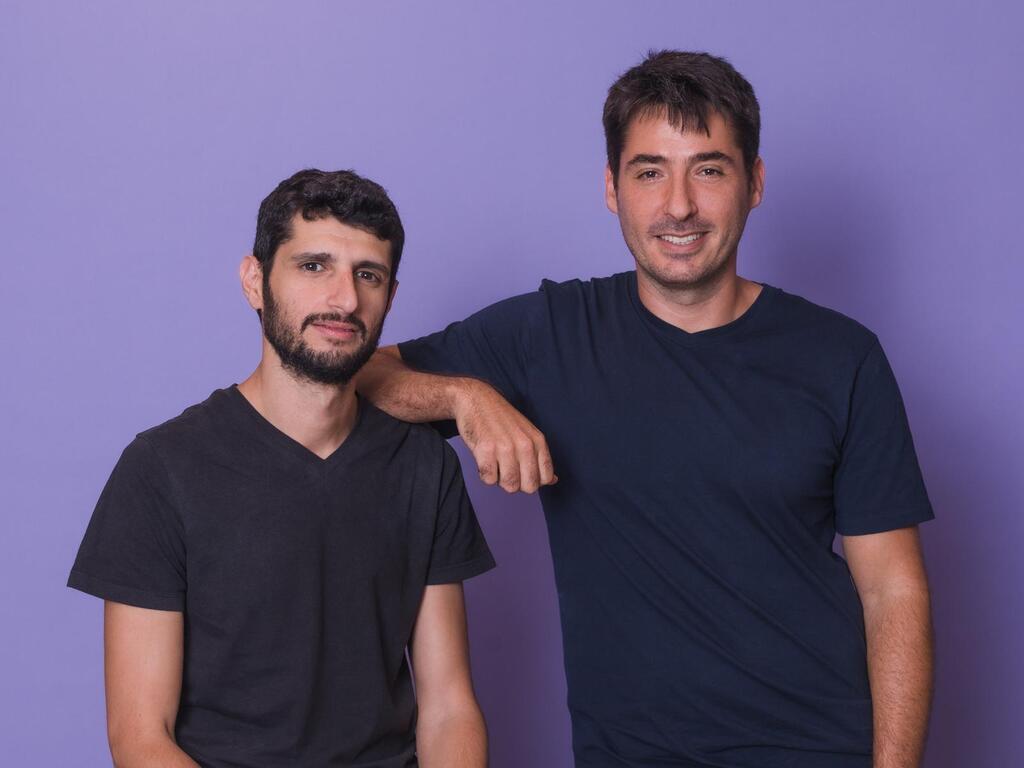
For Zendesk, the next step was to combine cross-system knowledge with case management, automation and analytics, helping employees serve themselves and reach human experts when necessary. Founder and CEO Itay Itzhaki described the mission as making information usable where work happens.
“make information accessible and actionable right where work happens”Itay Itzhaki / acquisition announcement, December 2025
The acquisition gives that mission a service context. An employee asks a routine question, gets an answer and continues working. A harder question reaches someone equipped to help. Unleash’s story offers a grounded ambition for company AI: shorten the journey between having knowledge and being able to use it.