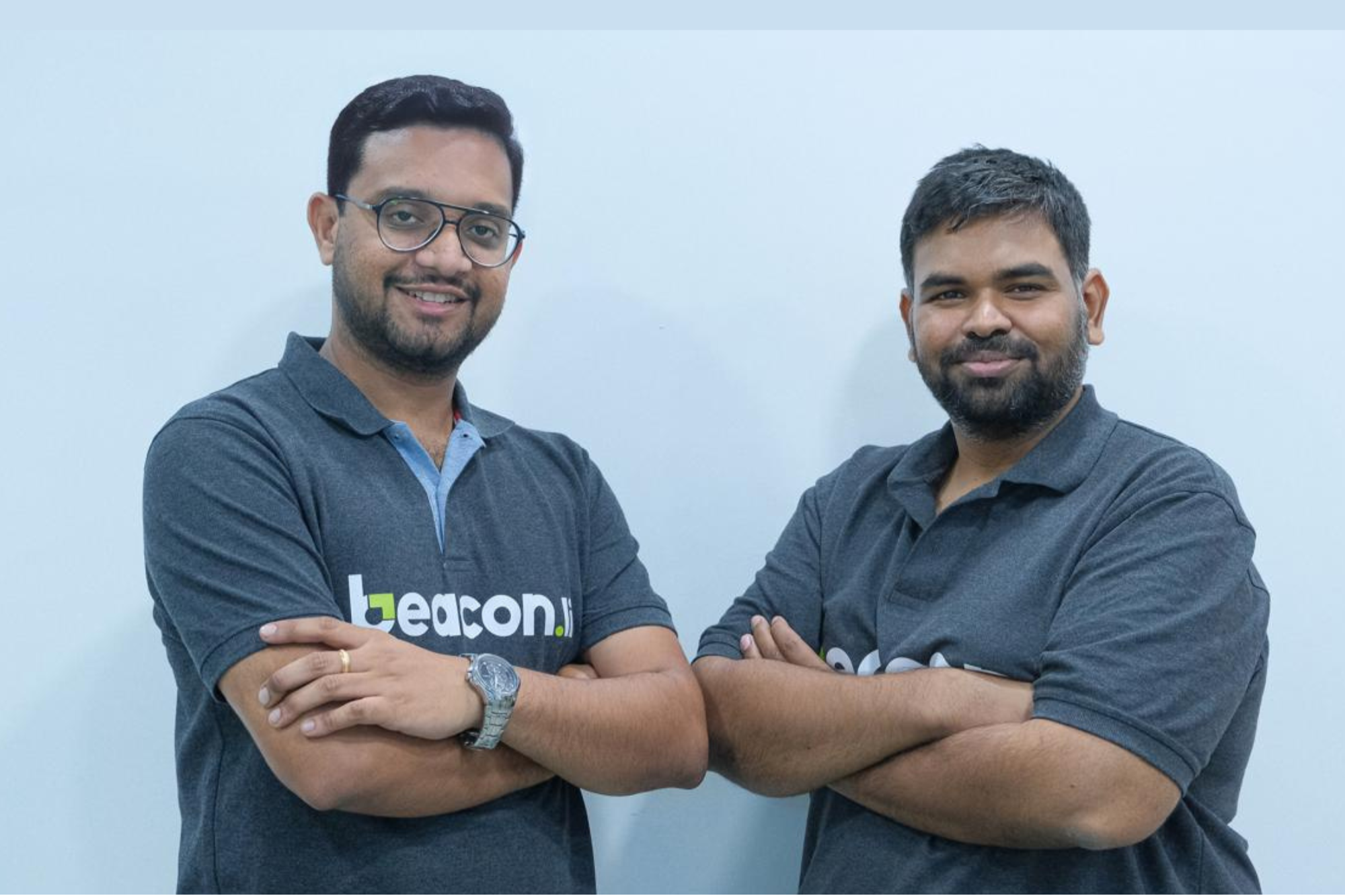
Somewhere between the signed contract and the first happy user, enterprise software goes quiet. Nobody talks about what happens in that gap - the months of configuration, the frantic consultants, the support tickets that pile up because nobody actually knows how to use the product they just bought. Rakesh Vaddadi noticed. And then he built something to fix it.
Beacon.li, the company Vaddadi co-founded in February 2023 out of Milpitas, California, does something most enterprise vendors assume someone else will handle: it automates the entire implementation journey. Configuration, user acceptance testing, deployment, post-launch support - all of it, without ever needing access to a database or backend system. The AI learns enterprise software the same way a new employee would: by looking at the interface.
"Enterprise software doesn't fail at selling... It fails at getting implemented."- Rakesh Vaddadi, Co-Founder & CEO, Beacon.li
That insight came the hard way. Vaddadi spent years inside companies like PharmEasy and Nestaway, watching engineering teams burn weeks on integrations that delivered marginal value while customers waited. As Engineering Manager at PharmEasy, he led teams building growth verticals and designing microservices architecture - work that gave him a precise read on where enterprise software actually breaks down.
Before Beacon.li, there was WINDO. Co-founded with Silus Reddy Chintapalli - the same partner who became Beacon.li's Chief Business Officer - WINDO built an Instagram-focused commerce platform that scaled to over 200,000 sellers across 144 countries. It raised $7.81M across multiple rounds. That run taught Vaddadi something worth knowing: product adoption at consumer scale and product adoption at enterprise scale are entirely different problems. Enterprise users don't just churn - they raise support tickets.
Beacon.li operates in zero backend access mode - meaning it functions inside highly regulated environments like banking, insurance, and healthcare without requiring any database credentials or API integrations. This wasn't a limitation. It turned out to be the whole point.
The zero-backend constraint was born from necessity. Enterprise IT security teams block most integrations. But Vaddadi's insight was that you don't need database access to automate implementation - you need to understand the software workflow, and that lives in the UI. Beacon.li's AI Action Orchestrator reads the interface the same way a consultant does, then replicates it, documents it, and guides users through it.
Clients like Darwinbox, Keka, Planful, and Zluri have become proof of the thesis. At Darwinbox, Beacon.li cut configuration time by 85%. At Keka, feature discovery jumped 4x. The hypercare period - traditionally a 90-day hand-holding exercise that costs implementation teams and delays customer value - dropped to 30 days under AI-guided self-service. Numbers like these converted investors in March 2025 when Beacon.li closed its $7M Series A.
"AI-driven automation is essential for enterprises to stay customer-centric. Our customers have reported up to an 80% reduction in support volume and a 4X increase in user adoption."- Rakesh Vaddadi, on the Beacon.li platform impact
The round was led by Sorin Investments, founded by Sanjay Nayar - the former head of KKR India - and included Athera Venture Partners, JAFCO Asia, and Unicorn India Ventures. Angel investors from the portfolio include Aneesh Reddy, CEO of Capillary Technologies, and Aravind Sanka, co-founder of Rapido. It is the kind of cap table that says: enterprise AI is not a side bet.
Vaddadi is a BITS Pilani computer science graduate, and the BITS alumni network has a reputation for producing operators rather than storytellers - people who build the boring, load-bearing infrastructure that other companies depend on. The first company he founded, Gear6, was a bike maintenance startup. Not glamorous. Exactly the kind of problem a BITS engineer identifies and solves methodically. That trait - find the friction, reduce it systematically - appears to be the through-line.
He also invests. His angel portfolio spans Aftershoot, Zapscale, DoTo, iTribe, and EsportsXO - a cross-section that shows range without pretension. At the 10th Product Summit in 2024, he spoke on agentic products and enterprise UX, framing AI agents not as chatbots bolted onto dashboards but as workflow participants that understand what a user is actually trying to do.
Forbes DGEMS included Beacon.li in its Select 200 high-potential global companies - a nod to the company's category ambition. With 64 employees and a $1M ARR base heading into the Series A, the runway now points at global expansion: more enterprise verticals, deeper AI capabilities, and the proof that Indian-origin enterprise software companies can own categories that Silicon Valley created.
"As AI reshapes industries, India must take the lead in global enterprise automation."- Rakesh Vaddadi
BFSI, HR tech, retail, logistics, insurance - Beacon.li is moving across verticals wherever implementation complexity creates drag. The ITC Vegas 2025 appearance, where the company unveiled its insurance operations AI orchestration layer, signaled the depth of the vertical ambition. Insurance is notoriously resistant to software change; if Beacon.li works there, it works everywhere.
Vaddadi writes on LinkedIn the way founders write when they've been through something real - about the specific loneliness of the founder's job, the things nobody warns you about when you start a company, the unlearning that comes with scaling. It reads like someone mid-run, not someone looking backward. Which is probably the right posture, given where Beacon.li is headed.