In July 2021, Rahul Shinghal faced a question with an uncomfortable symmetry. His new company, Tazapay, wanted to help businesses trust trading partners overseas. But why should those businesses trust Tazapay? A buyer could worry about a supplier, a supplier could worry about a buyer, and both could reasonably worry about the young company offering to stand between them. The intermediary had become another party requiring an introduction.
Shinghal acknowledged the problem directly. He described transparency about where funds were held, verification of shipping documents, accessible customer service and relationships with established institutions. The answer was practical and rather less glamorous than the word fintech. Trust required details. Someone had to explain where the money would sit and what would make it move.
“It can be hard to feel assured that either the goods or payment will arrive.”
Rahul Shinghal, 2021
He understood the unease on both sides. A payment can look admirably simple to the person clicking a button while remaining complicated for everyone responsible for delivering it. Shinghal had spent years inside that complication. Founding Tazapay would oblige him to see it again from the outside, with his own company’s reputation at stake.
Before Tazapay, the small merchant
His professional background crosses several versions of the same industry. An MBA from NMIMS in India followed a commerce degree from Delhi University. There were roles at SmartTrust, then responsibility for mobile and internet services at Singapore’s NETS. At PayPal, his work included mobile payments across Asia-Pacific and the particular requirements of businesses in digital content, travel and fashion.
Those responsibilities involved persuading developers, merchants, mobile operators and handset manufacturers to adopt new payment services. Later, as general manager for Southeast Asia, he oversaw regional strategy, partnerships, sales and merchant adoption. A payment product had to make sense to several different audiences before it could become an ordinary habit.
Small businesses kept appearing in that work. In 2016, while discussing PayPal’s regional business, he pointed to freelancers and small entrepreneurs reaching customers across borders. Designers and programmers in Southeast Asia could sell services far beyond their immediate surroundings. Protection against fraud mattered to people whose next payment might represent a substantial part of their income.
Shinghal subsequently led Asia-Pacific revenue and growth at Stripe. By 2020, he had experience inside companies whose names could precede him into a meeting. He then co-founded Tazapay with Arul Kumaravel and Saroj Mishra. Kumaravel brought engineering experience from Grab, Amazon and Microsoft. Mishra brought banking, treasury and trade-finance experience, including roles at Standard Chartered and Citi. The founding team understood the institutions around a payment as well as the software.
The paperwork behind a handshake
Tazapay’s early proposition began with a disagreement that can prevent a perfectly reasonable trade. A buyer wants to see the goods before paying. A seller wants payment before shipping. Both positions are sensible. Put an international border between the parties, add unfamiliar documents, and a potential order can become a prolonged exercise in mutual suspicion.
Shinghal’s early writing described the unequal resources available to solve this problem. Large companies have people and processes for managing international trade. Smaller businesses may rely much more heavily on personal confidence in a counterpart. Digitizing the transaction therefore meant dealing with the underlying commercial uncertainty, including when money should be released and how obligations would be checked.
The first Tazapay services included counterparty assessments and escrow. By March 2021, the company reported more than 500 assessments. It held money while the parties fulfilled the agreed obligations, with payment protection built around the terms of the deal. The aim was to make unfamiliar partners less of a gamble.
One early customer supplied a pleasingly tangible example: Kind Kones, the Singapore vegan ice cream business. Its chief executive described the reassurance of formalizing trade agreements in one place and releasing payment when sellers shipped. A financial platform’s usefulness could be measured in a business owner’s willingness to place an order. The ice cream was incidental; the supplier relationship was the point.
Partnerships helped make the arrangement concrete. A May 2021 memorandum with Standard Chartered concerned digital escrow for businesses trading through Proxtera. The bank would facilitate accounts for receiving and holding escrow capital, then enable funds to reach sellers after Tazapay received evidence of delivery. Each participant had a job. Confidence depended on those jobs fitting together.
- 01Agree terms
- 02Hold funds
- 03Verify conditions
- 04Release payment
A promise becomes a sequence of checks.
By September 2021, Tazapay was introducing escrow as a service through eight B2B marketplaces, with more integrations planned. Reaching businesses through the platforms where they already sought trading partners put the service closer to the moment it was needed. Distribution became part of the problem’s solution.
An unfamiliar name on the door
Even so, expertise did not spare Shinghal the difficulty of starting again. He has described missing the credibility of an established employer and considering a return to corporate work. Tazapay’s initial escrow product struggled to gain traction. Knowing that a problem existed had not guaranteed that customers would adopt his particular answer.
The company broadened into payment infrastructure: helping businesses collect, hold and pay across markets, with local payment systems connected underneath. The change expanded what Tazapay did for a customer. A business could use the infrastructure repeatedly as part of its operations, rather than encounter the company only around a protected trade.
There was an uncomfortable personal lesson inside that commercial adjustment. Years spent running an established operation could prepare a founder to understand the industry without preparing every assumption for contact with customers. Shinghal’s story has room for that distinction. His experience mattered, and his first proposition still required revision.
A company in local currencies
Infrastructure brings its own kind of specificity. Tazapay’s product spans checkout, payment links and escrow, with different services serving different parts of a business’s transaction. The ambition is to let companies operate internationally while reducing the effort of assembling payment arrangements market by market. The customer sees a way to get paid; the company behind it handles a collection of local requirements.
Building that company also meant turning a distributed workforce into colleagues who knew one another. In a public post about a Chennai visit, Shinghal described meeting many members of the engineering, product and HR teams in person for the first time. His attention went to their conviction in the infrastructure they were building and their pride in the work. A cross-border business can acquire its own internal geography rather quickly.
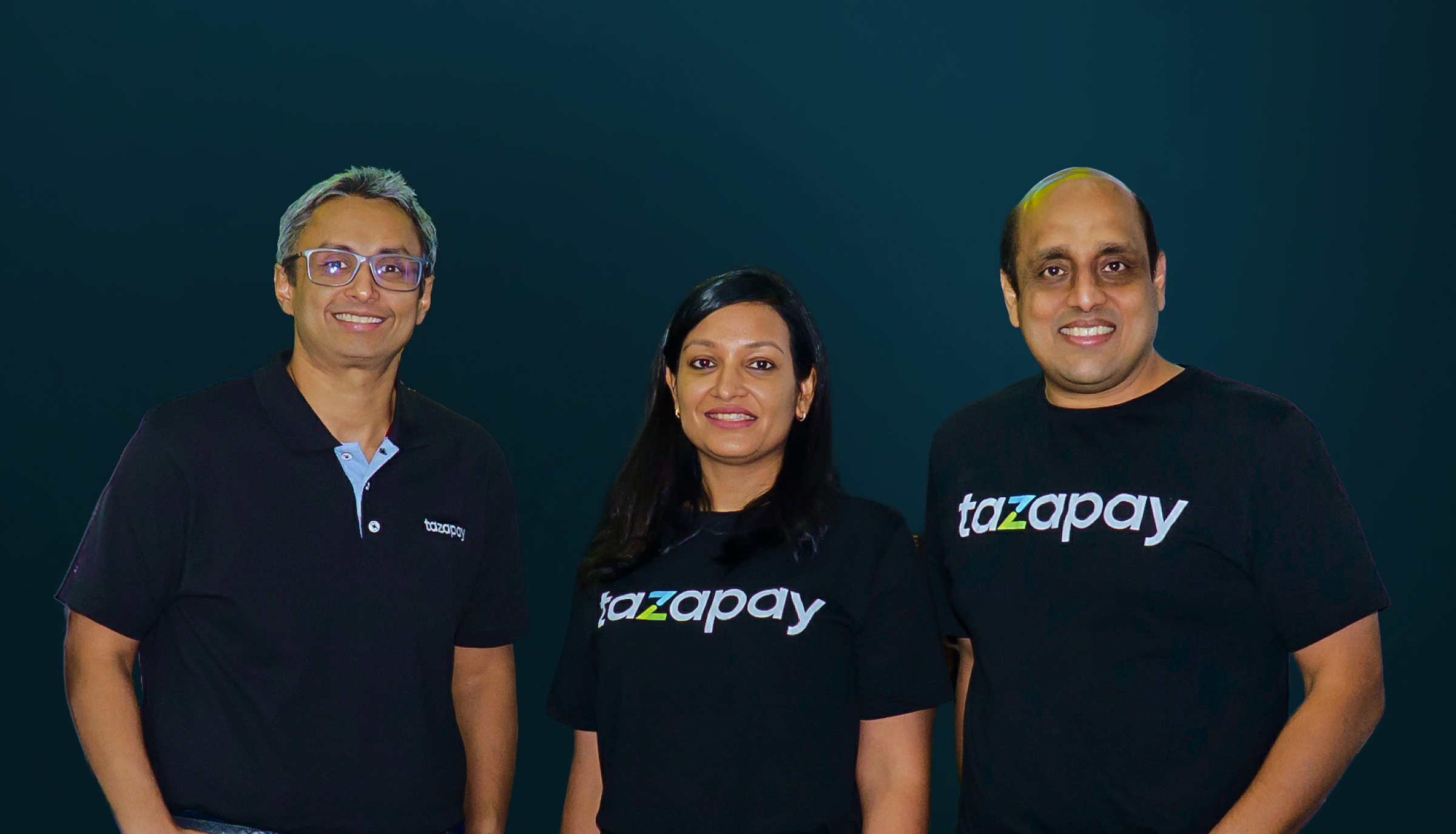
In March 2026, a Circle Ventures-led extension brought Tazapay’s total Series B financing to $36 million. CMT Digital and Coinbase Ventures joined the round. The company said it served more than 1,000 enterprises and fintechs across 30 countries, with local collections and payouts in more than 70 markets.
The intended uses of the money were revealing: licensing, expansion into more corridors and infrastructure for payments initiated by AI agents. These were operational commitments as much as product ambitions. A faster way of moving value still needed permissions, local connections and rules about how a payment could proceed.
When the investor becomes the buyer
On September 8, 2026, Circle announced a definitive agreement to acquire Tazapay. The two companies already had a relationship: Tazapay had been a design partner for Circle Payments Network since 2025. The proposed transaction brought the local payment business closer to the issuer of USDC.
Those figures describe the network Shinghal’s company had assembled. Circle also reported that approximately 60 percent of Tazapay’s transaction volume already included stablecoins. The connection between digital settlement and local money had become a substantial part of the business, rather than a distant possibility attached to it.
In his own announcement, Shinghal emphasized continuity. Tazapay would keep its brand, team, product and roadmap. Existing contracts and payment arrangements would continue. Over time, he expected wider coverage and more routes. For customers moving money, the immediate promise was reassuringly uneventful.
The deal is expected to close in 2027, subject to customary conditions and regulatory approvals, including from the Monetary Authority of Singapore. That leaves Shinghal in a familiar position: there is an agreement, there are conditions, and considerable work sits between the two.
Email could wait until bedtime
There is another picture of him, preserved in a 2016 conversation about fatherhood. He described waiting until his children were asleep before checking email at home and trying to do at least two activities with them on weekends. Asked to choose between Frozen’s Elsa and Anna, he chose Elsa for her independence, strength and maturity. Even the princess question received a considered answer.
It is a small, dated glimpse of a life outside payments, and it gives the career its proportions. Long before Tazapay’s financing rounds and acquisition agreement, he was describing the ordinary effort of giving his family his attention. The executive biography becomes easier to recognize as a person’s life.
His next public agenda includes a scheduled November 2026 Singapore FinTech Festival session on making agentic payments mainstream. The machinery keeps changing. The requirement beneath it has remained recognizable throughout his career: someone needs to know that an unfamiliar system will do what it promises. In 2021, a young company had to earn that belief. Shinghal has spent the years since building the arrangements that could sustain it.