In 2000, Raagulan Pathy had an opportunity and a problem. The opportunity was a trip to New York to train in Solaris Unix. The problem was paying for it. He was 20, studying economics, and his parents’ shop was struggling. The money came through. Years later, his father told him that his grandmother, living on a government pension, had paid for most of the ticket.
She had already helped him learn English after his move from Sri Lanka to Australia at five, and pushed him at school. Her generosity came with one household reservation: at four o’clock, the television belonged to The Bold and the Beautiful, followed by The Golden Girls. Even benefactors have programming requirements.
That first journey is a useful place to begin with Pathy, now co-founder and CEO of KAST. His company deals in the machinery of moving money. His own beginning involved the much older machinery of someone making an opportunity possible for somebody else. A training course required a flight; a flight required money; the money required a person willing to help.
The connection should not be made too neat. A grandmother’s gift does not explain a business model. It does, however, give a human scale to a career that would eventually fill up with cloud platforms, regional management jobs and digital dollars. Before the financial vocabulary, there was a ticket he could not afford.
An Australian passport, a longer answer
Pathy has described himself as “a Sri Lankan - Australian Tamil from Jaffna.” He had an Australian passport by eight. Later, living in London, he encountered the familiar supplementary question after saying he was Australian: where was he really from? A question small enough to fit into a pub conversation can still occupy rather a lot of someone’s life.
In his account, Singapore became home, while his identity accumulated several geographical answers. That experience gives substance to his interest in people who live across borders. The person who earns in one place, spends in another and keeps family connections elsewhere is already living a coherent life. Institutions may still insist on treating it as an administrative complication.
His public argument for crypto returns to that mismatch. In conversation with Jeremy Au, he described the internet as a force that opened access to information and communication, then asked why finance should remain so closely tied to birthplace and passport. This is his case for the technology: wider participation in an economy that already crosses national boundaries.
It is a more revealing starting point than a prediction about token prices. Pathy’s customer is a person trying to get something done. The question is whether the financial tools available to that person match the life they actually lead. His enthusiasm for stablecoins follows from the gap he sees between those two things.
“Seeks the unobvious, before it is”
Raagulan Pathy’s LinkedIn profile
A career beneath the interface
Before the stablecoin business came a series of jobs concerned with technology’s less glamorous underside. His career included banking technology, data centres and programme management. He co-founded the cloud business Lazu and founded OnShop, which helped small businesses establish an online presence. These were earlier encounters with the distance between having technology available and making it useful.
The corporate sequence then took him through Amazon Web Services, Facebook and Zoom. At AWS, his work covered financial services in Asia Pacific. At Facebook, he worked on enterprise adoption of Workplace. At Zoom, he led enterprise business in APAC. Cloud computing, workplace collaboration and video meetings each needed organisations to change how they worked.
A job history can look like a collection of logos when printed in a short biography. Here, the recurring problem matters more: persuading people to entrust an existing activity to a new system. A bank considering cloud infrastructure and a company considering a different collaboration tool have practical questions. Who operates it? How does it fit? What happens when something goes wrong?
Circle brought him into digital money in 2022 as vice president for Asia Pacific and CEO for Singapore. The company issued USDC, a dollar-linked stablecoin. His work now involved building a regional presence for a financial technology whose usefulness depended on partnerships, access and confidence as much as on the blockchain beneath it.
ONE CAREER / FIVE CHAPTERS
- 2013-17AWSFinancial services
- 2017-19FacebookWorkplace
- 2019-22ZoomEnterprise
- 2022-24CircleUSDC in APAC
- 2024 →KASTCo-founder & CEO
Regional enterprise roles led to digital dollars, then a company of his own.
The flight schedule behind digital money
At Circle, the regional work became visible in specific connections. In November 2022, StraitsX announced support allowing its personal and business users to deposit and receive USD and USDC. The practical point was access: another route between conventional money and digital dollars. Such connections make an abstract network available to people who already have accounts and habits.
In 2023, Circle and Coins.ph announced a partnership focused on USDC remittances in the Philippines. The plan began with education and community engagement. It addressed a familiar transaction with considerable emotional weight: sending money home. For the recipient, the interesting feature is the amount that arrives and when it becomes usable. The technical explanation can wait its turn.
Another 2023 development put the same question at a checkout. Australian wallet Stables launched a Mastercard virtual prepaid card using USDC. Pathy welcomed it publicly in his Circle role. A stablecoin balance could connect to a familiar payment network, giving people a way to spend digital dollars in ordinary transactions. The route from infrastructure to everyday use was becoming easier to see.
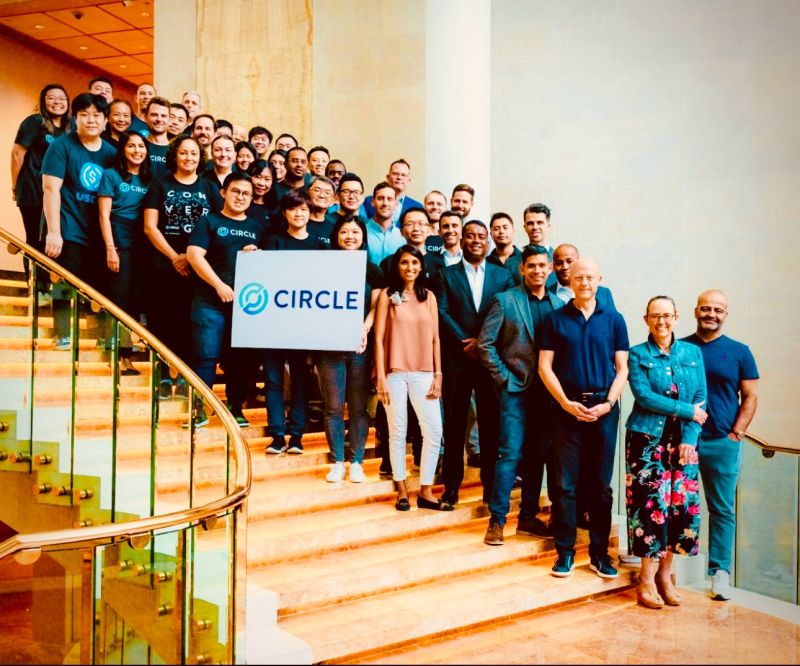
His farewell to Circle in 2024 included a less digital measurement of the job: 100 to 200 flights and 20 to 30 countries a year. He joked that the travel and media work had made him the company’s chief branding officer in Asia. For someone promoting internet money, there had been a considerable quantity of airport carpet.
He credited colleagues and regional leaders, including Payal Patel, Gajia Parsons and Yam Ki Chan. The account also recorded the office, banking arrangements and partnerships involved in establishing Circle’s presence. “Time is finite,” he wrote as he prepared to change direction. The next chapter would put his name closer to the centre of the business.
Making the unfamiliar spendable
KAST was founded in July 2024. Pathy’s co-founder, Daniel Bertoli, had been a partner at Quona Capital, the fintech investment firm. Together they combined experience of stablecoin infrastructure with experience of companies trying to improve financial services. Their opening proposition put payment cards and dollar-denominated accounts around digital money.
The distinction matters to Pathy’s story. At Circle, he helped expand the reach of a stablecoin issuer. At KAST, he took responsibility for the experience built around that infrastructure. A customer has to be able to hold a balance, send it, receive money and spend it. Each additional step can turn a promising technology into an unfinished errand.
In December 2024, KAST announced a $10 million seed round led by HSG and Peak XV Partners. Pathy’s explanation concentrated on the poor experience surrounding stablecoins. The technology could move value across borders; the customer still needed an approachable way to use it. The opening was in closing that distance.
The card made that ambition tangible. It joined a new form of money movement to a payment habit people already recognised. There is a certain courtesy in letting customers keep their existing habits. A successful transaction should not require them to develop a recreational interest in financial plumbing.
THE CUSTOMER’S JOURNEY
A familiar set of tasks, connected by stablecoin infrastructure. Schematic; availability varies by market and product.
By June 2026, Pathy was discussing tools shaped by requests from customers: cross-border payouts, converting digital earnings into local currency and business spending. He described KAST Pay and Global Payouts as responses to those requests. The direction of travel was from individual spending towards the needs of people running companies and paying teams.
In September, he described KAST Business as combining on-chain and fiat payments with virtual and physical cards for founders and global teams. His ambitions included payroll and cross-border spending in one platform. He also emphasised security and compliance. The service he wanted to build had to accommodate both new settlement technology and the practical obligations of handling customers’ money.
“Settlement doesn’t stop for bank holidays.”
Raagulan Pathy, September 2026
The numbers, and the work they buy
KAST announced an $80 million Series A on March 9, 2026, co-led by QED Investors and Left Lane Capital. The round brought established fintech investors into Pathy’s project alongside returning backers. Raising capital changed the resources available to him; building a dependable financial service remained the job.
That March announcement put KAST at more than one million users and nearly $5 billion in annualized transaction volume. The wording matters. Annualized volume expresses a pace of activity, rather than a completed year’s total, and it measures money moving through the platform rather than revenue. The figures describe the company’s reported scale at that moment.
KAST / MARCH 2026 SNAPSHOT
Company-reported figures at the March 9 announcement. Annualized volume is a pace of activity, not revenue.
The planned use of the funding was equally instructive: expansion across Latin America, North America and the Middle East, alongside licensing, compliance, product development and hiring. Those categories describe the less theatrical side of Pathy’s ambition. More customers and more countries create more work in the parts of a financial business that rarely appear on its opening screen.
The personal voice remains visible alongside the financing. In 2023, he offered mentoring and connections through short video submissions, promising to watch the first 500. In a June 2026 podcast, he cheerfully acknowledged choosing his own Stablecoin Guy nickname. The grand label had a modest complication: he had neglected to secure the matching domain.
By October 2026, he was still making the case publicly, appearing on Crypto in America to discuss KAST, global banking and access to dollar-based financial services. His proposition has stayed recognisable through the changing scale: people already work and live internationally, and he wants their financial tools to catch up.
The work ahead will be judged in transactions that customers can finish. A contractor receiving payment. A founder paying a team. Someone spending money earned elsewhere. Pathy has spent much of his career helping new infrastructure reach that ordinary moment. With KAST, he has made it his own company’s daily assignment.
CONTINUE THE CONVERSATION