A bank’s refusal can outlive the application. Caecilia Chu remembers being about five when her father, a postman, tried to borrow money to start a small business. The banks turned him down. For a child, the explanation was simpler than any credit model: her father wanted a chance, and the people who could give him one declined. Years later, she would build a financial company with that memory still very much in the room.
Chu grew up in Hong Kong, in a family where education mattered and money required attention. Her mother was a kindergarten teacher. Her parents taught her that studying could change the course of a life. Her father eventually built an accounting firm, despite limited savings and no formal business education. His example gave her two things to think about: the obstacles financial institutions put in someone’s way, and the courage required to proceed anyway.
Today she is the co-founder and CEO of YouTrip, the Singapore-based payments company she built with Arthur Mak. Its familiar use case is modest: help people pay in another currency without losing so much money in the conversion. Behind that everyday task sits a more personal ambition. Chu wants customers with small balances to receive the same care and value as customers with large ones. The size of an account should not decide the quality of the welcome.
The impressive CV meets an unimpressed market
Her route to entrepreneurship had the sort of credentials that make a family proud. She studied at Wharton, graduating summa cum laude, and earned an MBA at Harvard Business School. At McKinsey, she advised financial institutions on product and growth strategy. At Citi, she worked on growth investments in technology and consumer businesses. She had learned how established organisations made decisions, how markets worked, and how to present an argument that could survive a meeting.
Then she started an e-commerce business. It closed after two years. In later recollections, Chu has been frank about the embarrassment of watching former colleagues and classmates prosper while her own venture went nowhere. Education and corporate training had helped her get started; they could not supply customers on command. A business plan, it turns out, does not become more persuasive because the person holding it attended Harvard.
Her diagnosis was practical. She had entered a crowded field too late, where established players already had scale. The experience changed what she wanted from a second attempt. She would look for an opening early enough to matter and a problem difficult enough to give the company time to develop. Ease of entry had lost its charm. If a competitor could reproduce an idea almost immediately, the apparent opportunity came with an expiry date.
A Boston friendship finds its second act
Chu met Mak in Boston while she was at Harvard and he was studying engineering at MIT. Both had grown up in Hong Kong. The friendship continued through separate career moves and the disappointment of their earlier entrepreneurial effort. Their eventual partnership had time behind it: conversations, shared experience, and an understanding that the next business needed a better reason to exist.
Working in China brought that reason into focus. Chu was at Lufax, the online financial services platform; Mak worked on WeChat at Tencent. They saw people using phones to handle payments and other financial tasks as a matter of routine. For Chu, the experience made digital finance tangible. A useful product could become part of ordinary life, rather than something a customer visited only when a branch was open.
Southeast Asia offered a different problem. Countries close to one another still had different currencies, infrastructure, and financial habits. Travelling between them could make a well-served banking customer feel poorly served very quickly. Chu and Mak began developing their idea in 2017. They chose a multi-currency wallet for travellers, a narrow enough starting point to explain clearly and a sufficiently complicated job to require real work.

The year that fitted into 48 hours
YouTrip launched in Singapore in 2018. A partnership with EZ-Link helped make it happen: a mobile wallet paired with a prepaid Mastercard, built around overseas spending. The proposition did not require customers to develop a taste for financial technology. It required them to notice the cost and inconvenience of changing money. Anyone who had returned from a holiday with a wallet full of assorted notes could understand the nuisance.
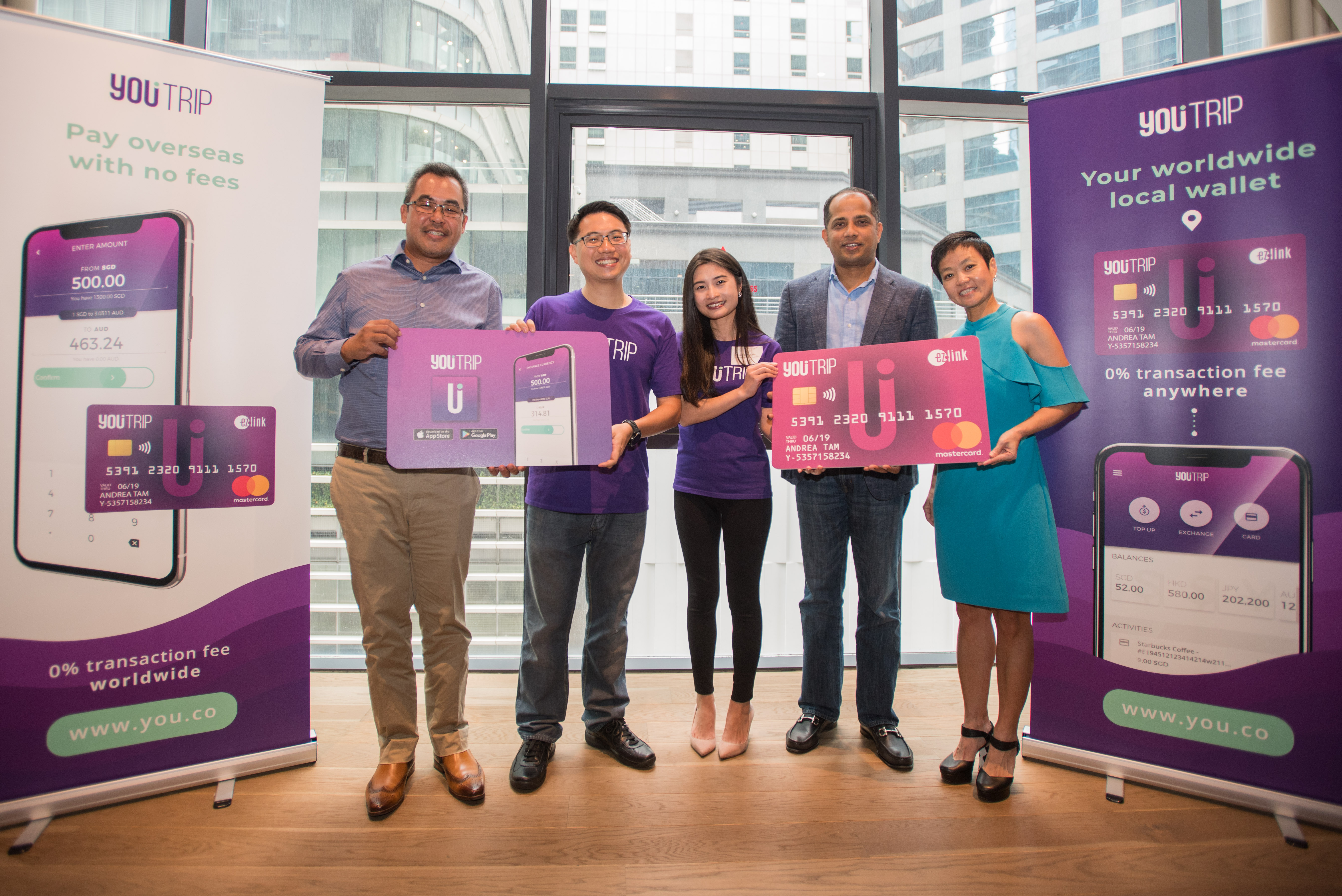
The founders’ target was 20,000 users in their first year. They reached it within 48 hours. That makes a pleasing launch story, but Chu has described the rush as an initial signal. Continued adoption and positive feedback supplied the stronger evidence. People signing up once and people continuing to use a product are different business questions. A crowded launch tells you that you have attracted attention. Returning customers tell you why it might last.
The geography widened in 2019, when YouTrip entered Thailand with Kasikornbank. June Kuvinichkul, Chu’s friend from Harvard Business School and YouTrip Thailand’s founding partner, helped that expansion. It was another reminder that payments travel through local relationships. A card can cross a border in a pocket; a company has to work through the institutions on the other side.
A signup milestone. Continued use supplied the next test.
When the traveller stayed home
The disruption to international travel exposed the limits of a business built around departures. YouTrip’s transaction volumes fell sharply. In 2021, the company reduced its Hong Kong workforce by a third as it consolidated resources in Singapore. Chu has spoken about the difficulty of letting colleagues go when they had done nothing wrong. The decision became part of the company’s financial education, with consequences that could not be tidied away in a slide deck.
The response began with examining how people were actually using the product. Some customers continued spending heavily, even without travelling. The team contacted them. Many were small business owners conducting more of their work online and using multi-currency cards to reduce foreign exchange costs. Some carried several cards, including competitors’ products, to meet their needs. They had assembled their own solution from the tools available.
That behaviour helped point YouTrip toward business payments. YouBiz launched in 2022, offering companies multi-currency accounts, transfers, corporate cards, and expense management. The original problem had acquired another setting: an owner paying an overseas supplier or managing spending across a team. Watching existing customers closely proved useful precisely because those customers were doing something the company’s original travel story did not fully describe.
Growth creates a new job for the founder
Chu had already discovered that expansion changes the work of leadership. Looking back on 2019, she described a team that had grown from 25 people at the Singapore launch to 120 across three countries. Methods that worked in one room left gaps in communication across offices. The founder had to change along with the company. Having more people did not simply mean having more hands; it meant having more decisions she could not personally supervise.
Her approach now places weight on local talent and autonomy. People who join a startup want to affect its direction, she says, so they need room to participate in decisions and experiment. That fits a company whose business depends on understanding individual markets. The ambition can be regional while the judgment remains close to the customer. A team knows more when its members are allowed to contribute what they see.
The financial milestones followed. YouTrip raised a US$50 million Series B led by Lightspeed in 2023. By that year, it had become operationally profitable. In late 2025, it reported more than US$15 billion in annual transaction volume. These figures measure different things: funding provides capital, payment volume describes activity, and profitability concerns the business underneath. Taken together, they show how far the company had moved beyond a promising launch weekend.
“As a founder, I need to dramatically reinvent myself at every stage of the business.”Caecilia Chu · reflecting on 2019
A founder without a borrowed voice
In the early days, Chu read about other entrepreneurs, trying to work out how a founder should speak and carry herself. Experience gradually relieved her of the need to perform a borrowed version of the role. “There’s no need to be somebody else,” she says. It is a particularly useful conclusion in an industry where a convincing stage manner can sometimes be mistaken for a convincing company.
People who knew her before YouTrip offer another view. Joe Ngai, who recruited her to McKinsey, remembers giving her the final case interview. Years later, he described her as positive and ready to roll up her sleeves, while acknowledging the lessons behind the smile. The relationship has lasted across a considerable change in job description. A former analyst became a founder; the person remained recognisable.
Her responsibilities also reach beyond her own company. She joined iFAST’s board as an independent director in May 2022 and was reappointed in April 2025. Her community work includes Cyber Youth Singapore and a Monetary Authority of Singapore working group on scams and fraud mitigation. Those roles sit beside a payments business where trust has to be earned repeatedly, including when a customer’s day goes badly.
The adapter in the handbag
There is a smaller, more cheerful portrait of Chu in her travel habits. In a 2019 packing interview, she described regular work trips around Asia and a bag organised for arrival: a wrinkle-free jacket, a laptop, wireless earphones, and an HDMI adapter. The adapter deserves its place in the story. Anyone can announce a regional strategy; someone still has to make the presentation appear on the screen.
Outside work, she talked about learning to ski in Niseko, with ambitions beyond the beginner slopes. She had once imagined becoming a National Geographic photographer. She preferred sharing leisure travel with family or friends after spending so much work travel alone. Those details make room for a person with tastes and interests, rather than a founder whose only leisure activity is apparently reading quarterly results.
The next border
Australia became YouTrip’s third market in December 2025. By March 2026, Chu was outlining plans to enter two more Asia-Pacific markets during the year and deepen the product in existing ones. That was an ambition stated at the time, with execution still the job ahead. Expansion gives the company new customers to understand, new partners to work with, and fresh opportunities to discover which assumptions travel well.
Recognition has arrived too: Singapore Computer Society’s Tech Leader of the Year in 2022, Her World’s Young Achiever award in 2023, and EY Singapore’s 2026 Financial Technology (Payment Solutions) entrepreneur category award. The honours make visible a career that includes both corporate experience and decisions made under pressure. The unfinished work remains closer to the original customer than to the awards ceremony.
Chu’s father took a risk with fewer advantages than she later possessed. Remembering that has helped her think about her own willingness to try. Remembering the banks’ response has helped her think about whom the business should serve. The result is a company built around an everyday request: let people use their money across borders with less expense and complication. A child’s memory has become an adult’s working brief.
- 2018Singapore launch
- 2019Thailand launch
- 2025Australia launch