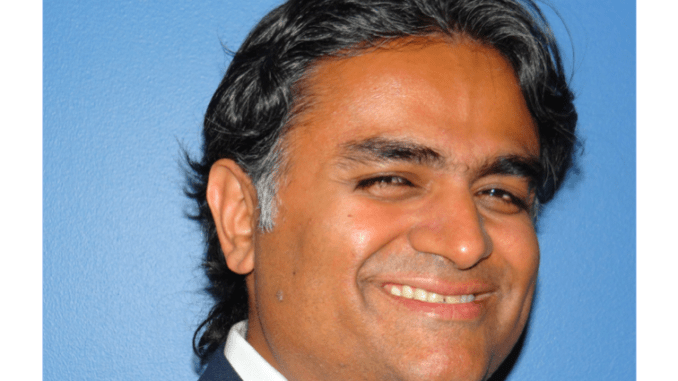
Contracts shouldn't be a black box
In 2001, Praful Saklani was in the middle of selling his first company. The deal required due diligence. Attorneys arrived and did what attorneys do when contract visibility is poor: they started reading everything, manually, one document at a time. Hundreds of contracts. No search. No structure. Pure friction.
Saklani did not file that away as an inconvenience. He filed it as a problem worth solving. Four years later, he incorporated Pramata Corporation. Not with venture capital - he was nowhere near ready for that conversation. With his own money, and consulting revenue from Invotech Systems, a firm he ran out of Minnesota.
The bootstrapping phase ran for nearly eight years. Eight years of building product, signing early beta customers in 2007, and proving the thesis before Volition Capital wrote a $10M Series A check in December 2015. By then, Pramata was already real. The funding was acceleration, not validation.
Saklani found the idea for Pramata while watching lawyers search through contracts by hand during a company sale in 2001. The attorneys didn't have tools. They had time. Most companies still operate that way.
Today, Pramata's pitch is surgical: contract intelligence for the agentic enterprise. The platform does not just store contracts. It reads them, extracts structured data, flags risk, tracks renewals, and - with the 2024 AI Design Studio launch - lets teams build their own generative AI workflows without needing an AI team. The word "radically simple" appears often in Pramata's materials, which is rare in enterprise software.
The customer list gives the pitch credibility: Hewlett Packard Enterprise, Comcast Business, McKesson, Callaway Golf, AbbVie, FICO. Companies that have thousands of contracts and limited visibility into what those contracts actually say. Pramata's AI reads them. Summarizes them. Compares them against playbooks. Red-flags the clauses that could cost money.
Nobody cares about who you are and what you do - they want to know 'what will you do for me?'
- Praful Saklani, Founder & CEO, Pramata
The long way around
Praful Saklani graduated from Swarthmore College in 1995 with a BA in Economics and Political Science - with high honors. Swarthmore is not a school known for producing venture-backed tech founders. It is known for producing people who think carefully before acting. That profile fits.
His first company, Yatra Corporation, co-founded around 1999, was an enterprise travel management platform that used artificial intelligence to optimize travel processes for large companies. He was 25. This was before AI was a marketing term. The company used consulting revenue to fund its R&D - a pattern Saklani would repeat with Pramata - and sold to a travel technology company in 2000 without taking VC money.
Between 1999 and 2005 he also ran Invotech Systems, a consulting firm with strong clients in Minnesota. The firm was not glamorous. It was cash. It let him keep building.
Then came the pivot that nobody would have predicted: a stint at WaterHealth International from 2003 to 2004, as VP of Market Development. WaterHealth built affordable water purification systems for developing countries. Saklani spent time outside the US setting up markets and partnership programs. A technology entrepreneur doing social enterprise work in places where clean water was not a given.
That detour shaped something in his approach to leadership. The practicality. The belief that solutions need to work in the real world, not just in pitch decks. By 2005, Pramata was underway.
Pramata bootstrapped from 2005
8 yrs Before Series APaid beta customers secured in early 2007
2007 Market proof, no VC$10M from Volition Capital
Dec '15 Larry Cheng joins boardCulture without quotas
In 2018, Comparably named Praful Saklani to its lists of Best CEOs for Diversity and Best CEOs for Women. The notable part is not the award. It is how Pramata got there. The company's workforce surpassed 50% female without setting any explicit quota. No mandate. No policy. Hiring and culture produced the result organically.
Saklani called that award "doubly meaningful" - because the judges were his own employees. In a company of several hundred people, that is not a trivial thing to earn.
On the question of mentorship, he is characteristically direct. He advises every founder to find an experienced fellow founder-CEO as a mentor: "It's a puzzling and somewhat lonely role that can only be fully understood by someone who has been there before." Two decades in, he is that mentor for others.
Pramata also runs three offices - San Francisco, Kansas City, and Bangalore - across time zones that require actual management, not just Slack pings. The India office is not a cost center. It is engineering. That operational reality shapes how Saklani thinks about distributed teams and asynchronous culture.
I strongly suggest that all founders find an experienced fellow Founder-CEO as a mentor if possible - it's a puzzling and somewhat lonely role that can only be fully understood by someone who has been there before.
- Praful Saklani, on the loneliness of founding
Contracts as intelligence
What Pramata sells in 2025 is not what it sold in 2007. The original pitch was contract repository and CLM - get your agreements in one place, track renewals, stop missing obligations. That problem still exists. But the opportunity has expanded.
Pramata's current flagship product line centers on what Saklani calls contract intelligence for the agentic enterprise. The AI Knowledge Engine reads your contract portfolio, extracts structured data, and makes that data queryable by AI agents. The AI Negotiator red-flags risky clauses and compares new agreements against historical negotiation outcomes. The AI Design Studio lets teams build custom generative AI workflows on top of contract data - without needing an AI team to do it.
In May 2025, Pramata launched a Contract Agent for Tariff Risk Analysis - timed precisely to a moment when supply chain disruptions and tariff uncertainty were front-page news for procurement teams. The product lets businesses interrogate their vendor contracts for exposure before disruption arrives, not after.
The Deloitte alliance, announced in October 2024, matters because it positions Pramata inside enterprise risk workflows that were previously handled by consulting hours. When Deloitte recommends a contract analytics platform to a client under regulatory scrutiny, that is a different kind of distribution than a SaaS sales motion.
Saklani's version of the future is a world where every enterprise AI agent - whether it is managing a renewal workflow, running due diligence, or flagging supplier risk - pulls from a reliable, structured contract intelligence layer. Pramata is that layer.
What he's built
Comparably Best CEO for Diversity 2018 - Named by his own employees. Also recognized for Best CEOs for Women.
8-year bootstrap - Built Pramata from 2005 to 2015 on founder and consulting capital before taking a single VC dollar.
$10M Series A, Volition Capital - December 2015, with Argosy Capital and Peninsula Ventures also participating.
Hackett Group "50 to Watch" 2026 - One of ~220 procurement technology vendors globally evaluated; Pramata made the list.
Deloitte Strategic Alliance - October 2024. Contract analytics integrated into Deloitte's Risk, Regulatory & Forensic advisory practice.
50%+ female workforce - Achieved organically without quotas. A culture result, not a policy result.
The long game
1991 - 1995
BA with High Honors in Economics & Political Science, Swarthmore College
1999
Co-founded Yatra Corporation - an AI-powered enterprise travel management platform. Built using consulting revenue; sold to travel tech company in 2000 without VC.
1999 - 2005
Co-founded and ran Invotech Systems, a consulting firm based in Minnesota that funded early R&D efforts.
2003 - 2004
VP Market Development at WaterHealth International - set up markets and partnerships in developing countries for affordable water purification systems.
2005
Incorporated Pramata Corporation. Fully operational by 2006. Bootstrapped entirely with founder investment.
2007
Signed first two paid beta customers for Pramata.
Dec 2015
Raised $10M Series A led by Volition Capital. Larry Cheng joins Pramata's Board of Directors.
2018
Named to Comparably's Best CEOs for Diversity and Best CEOs for Women lists.
Oct 2024
Announced strategic alliance with Deloitte for contract analytics in Risk & Regulatory advisory.
Nov 2024
Launched AI Design Studio - enabling enterprises to build generative AI contract workflows without AI expertise.
Mar 2025
Pramata named to The Hackett Group's 2026 "50 to Watch" procurement technology list.
May 2025
Launched Contract Agent for Tariff Risk Analysis. Partnership Program revenue has tripled since start of 2024.
The details
Saklani describes himself on Twitter as a meditator and optimist - and lists it before his professional credentials.
He identifies as Garhwali - from the Garhwal region of Uttarakhand, India - alongside being a proud Minnesotan and San Franciscan.
He co-founded his first AI company at 25, in 1999, when "artificial intelligence for enterprise" was not yet a pitch category.
Pramata was founded in 2005 - before the iPhone, before cloud SaaS was mainstream, before anyone called it "legal tech."
He worked in developing countries on water access at WaterHealth International before returning to enterprise software - a detour that lasted two years.
Pramata's name draws from Sanskrit roots suggesting knowledge and understanding - a fitting choice for a company whose core product is making the contents of contracts knowable.