The first thing that went wrong was the part that should have been routine. Three students at the American University in Cairo wanted to build a social commerce business. People would find things online, buy them, and pay. But the bank integrations came with cumbersome APIs and costly setup and maintenance. The shop idea had run into the machinery behind the shop.
- Paymob turns scattered payment methods into a merchant’s checkout.
- Its founders switched from selling goods to helping other people get paid.
- Payment links, terminals and APIs serve different kinds of sellers.
- The useful comparison is cost per sale, settlement speed and local coverage.
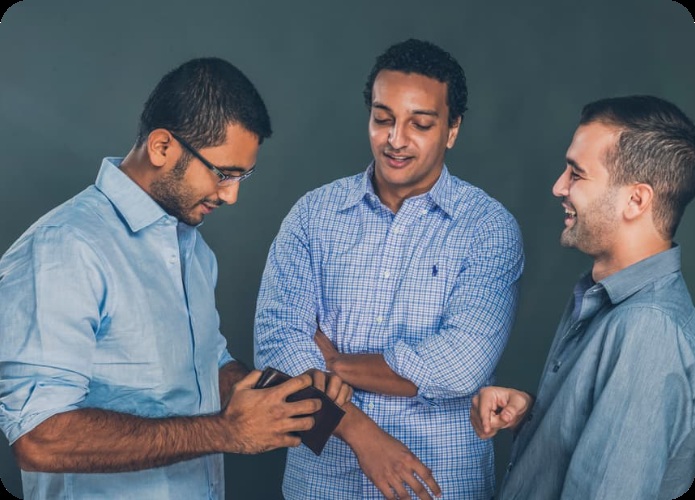
Islam Shawky, Alain El Hajj and Mostafa Menessy founded Paymob in 2015. Their early investor A15 describes the original project as a way to buy goods and services through Facebook. What changed their minds was wonderfully concrete: existing payment tools did not fit the business they were trying to build. Every independent seller attempting something similar would encounter the same obstacle.
Fifteen months for one yes
Spotting the gap did not grant permission to fill it. El Hajj later recalled banks declining to partner with inexperienced young founders. Fifteen months passed before a bank agreed in 2016, enabling their first transaction. They learned to explain a worthwhile service and engage with institutions whose confidence they needed.
“We had nothing to lose.”
Alain El Hajj · on starting as undergraduates
That is an appealing description of the founders’ position. A bank’s position was different. It would be trusting them with financial plumbing. El Hajj’s account makes the early work sound less like writing a clever app and more like learning how to become a credible counterparty. Their wallet infrastructure work brought them into partnerships with banks and telecom operators.
The merchant does not want seven integrations
Think of a checkout as a negotiation over how to pay. A shopper might have a card, money in a mobile wallet, or a preference for installments. The merchant wants the sale. Each additional provider can bring another integration and another operational relationship. Paymob’s proposition is to gather those choices into a system the merchant can actually run.
By September 2026, the company reported more than 60 payment methods. Its expertise sits between the merchant’s software and the payment institutions: connecting methods, processing transactions and giving businesses tools to monitor activity. A single contract and API are attractive because the underlying market remains fragmented.
Conceptual flow. Available methods depend on country and account.
That puts Paymob in merchant payments, alongside alternatives such as Fawry Accept and Kashier in Egypt. Broad acceptance is not unique to Paymob. Its positioning combines regional reach, local methods and tools spanning online and physical selling. A sensible buyer compares the methods customers use, the integration required and the settlement terms.
A shop can start with a link
The smallest useful Paymob product may be a payment link. A seller can send it through WhatsApp or another channel without building a website. An established online store can use ecommerce plugins, a hosted payment page or embedded checkout. Mobile SDKs bring payment acceptance into apps. These are different entrances to the same basic task.
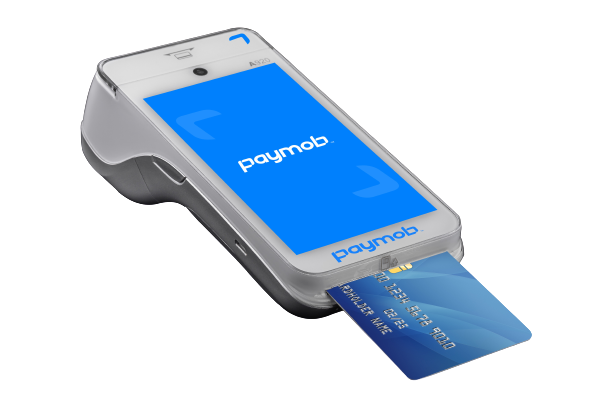
In a physical shop, Paymob offers POS terminals and supported phone-based acceptance. Subscriptions support authorized recurring charges through tokenized card details. Marketplace and payout tools address money moving to multiple recipients, including employees and suppliers. The dashboard helps merchants track payments and refunds. Product availability still depends on the market and merchant agreement.
The customer list is equally varied. PayPal’s 2022 investment announcement named Vodafone, Decathlon, Swvl, Breadfast and Homzmart among businesses using Paymob. A small social seller and a retail brand need different implementations, but both benefit when the customer’s preferred payment method is available at the decisive moment.
The three-pound wrinkle
Paymob earns transaction fees. Its published Egyptian standard rate is 2.75% plus 3 EGP per transaction, with no monthly or subscription fee and weekly bank settlement. Enterprise pricing is negotiated. That is a published plan, not a promise that every product or country follows identical terms.
The fixed component deserves attention. On a 100 EGP payment, that formula produces a 5.75 EGP fee, or 5.75% of the sale. On 1,000 EGP, the fee is 30.50 EGP, or 3.05%. A merchant selling inexpensive items needs to do this arithmetic before admiring the checkout.
Illustrative processing fee as a share of the sale, using 2.75% + 3 EGP. Merchant terms and other applicable charges may differ.
Settlement matters too. A business replenishing stock every day may care about the interval between an approved payment and usable funds. Paymob’s POS page advertises daily settlement, while the standard pricing page states weekly settlement. The practical lesson is to choose the product and confirm its terms before planning cash flow around it.
The money moved toward the Gulf
Expansion required capital and permissions. Paymob raised a $50 million Series B in 2022, followed by a $22 million extension in 2024. Its 2024 announcement reported profitability in Egypt and sixfold Egyptian revenue growth since the original round. A UAE retail payments license followed in January 2025.
In September 2026, Mubadala and EBRD co-led a $35 million pre-Series C. The announcement reported consolidated revenue tripling over 18 months, with Gulf revenue increasing sevenfold and approaching half of the total. Agentic commerce appears in the funding plans as a next ambition. Those plans should be read as plans.
The transferable idea is earlier and simpler. Investigate the obstacle that keeps your own customer from finishing the job. Paymob found a business there. But aggregation earns its keep only when it removes enough work to justify the fee. For a merchant, the test comes at checkout: can this customer pay, and will the resulting sale leave a sensible margin?
Keep exploring
Try the tools: Paymob · Developer portal · Egypt pricing · GitHub
Follow along: LinkedIn · X · Instagram · Facebook
Read & watch: The 2026 investment announcement · El Hajj’s founder interview · Paymob’s app video · Payment-link walkthrough in Arabic, by Arinee