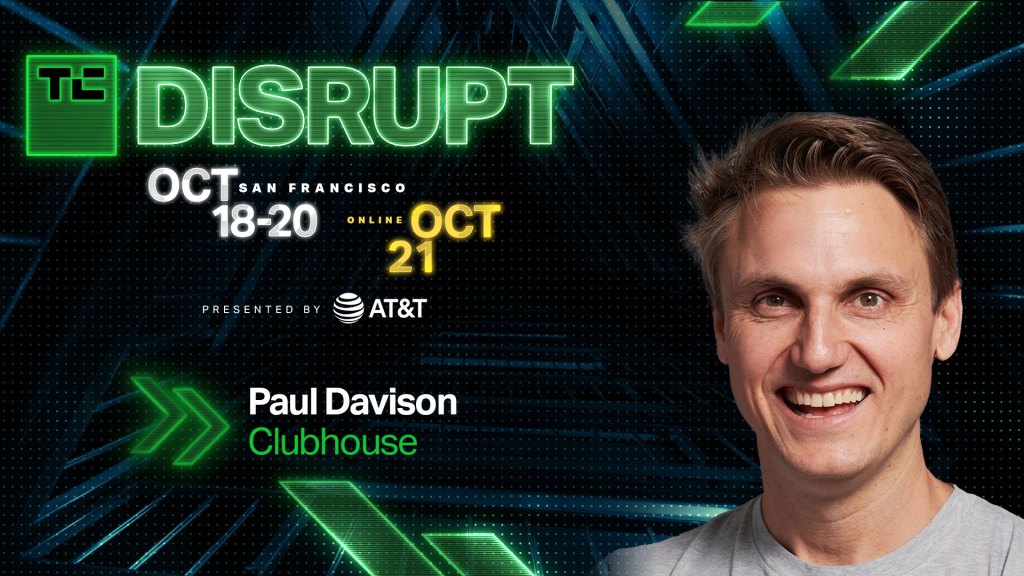
March 2020. The world shut down. Paul Davison launched an app. The timing looked accidental. It wasn't quite - Davison had spent nearly a decade building toward the moment where human voice, social graphs, and a world suddenly craving connection would intersect. Clubhouse was the result: an invite-only iOS app where strangers gathered in digital rooms and simply talked. No cameras. No scripts. No edits.
The idea came from a gap Davison had spotted long before COVID made it obvious. He was a devoted listener - podcasts, audiobooks, radio. He loved what voice could do that text couldn't: communicate warmth, irony, hesitation, wisdom. But all of that audio was one-directional. You could listen to someone for hours and never be in the room. Clubhouse flipped the equation. You could walk into any conversation, sit at the edge, raise your hand, get called up. The intimacy of a dinner party at the scale of the internet.
Within twelve months, Clubhouse reached a $4 billion valuation - a pace most founders spend entire careers chasing. Elon Musk dropped in. Mark Zuckerberg appeared. Every major social platform rushed to copy the format. Twitter built Spaces. Facebook launched Live Audio Rooms. Spotify acquired Locker Room. The whole industry pivoted, briefly, toward voice. All of it downstream from the app Davison and co-founder Rohan Seth had built in a pandemic.
"No matter where you live in the world, no matter how much money you have or what sort of networks you have access to, you can suddenly be in the room and meet people who are interested in the stuff you're interested in."- Paul Davison, on Clubhouse's mission
Bloomberg once described Davison as "a founder in perpetual motion." The phrase captures something real. He graduated Stanford with a degree in industrial engineering - not computer science, which matters - then did a stint at Bain & Company before arriving at Metaweb Technologies, a semantic graph search startup, years before knowledge graphs became industry vocabulary. Metaweb was acquired by Google in 2010. Davison moved on.
He landed at Benchmark Capital as an Entrepreneur in Residence, the role where VC firms park founders they believe in and wait for an idea to catch. Davison had ten ideas. He worked through them methodically - a very un-startup-bro approach to company formation - until he found the one worth pursuing: a location-aware mobile app that would help you discover people nearby who shared your interests. He called it Highlight.
Highlight launched in the spring of 2012, six weeks before SXSW. The conference was its detonation point. Tech press went wide. Investors lined up. The app was exactly the kind of idea that made sense on stage - your phone as a sixth sense for social proximity - and Davison, then 32, found himself suddenly famous in Silicon Valley circles. Highlight was eventually acquired by Pinterest in 2016. One exit logged. One partnership with co-founder Rohan Seth forged. That partnership would matter more than the app itself.
The years between Highlight and Clubhouse included a brief, telling detour: Davison served as CEO of CoinList, a blockchain fundraising platform, during crypto's 2018 surge. He stepped back to advisor once things were running. It suggests a pattern - identify a category before it peaks, insert yourself, build credibility, then focus elsewhere. His elsewhere, it turned out, was voice.
When Clubhouse's growth hit a wall in 2022 - post-pandemic life resumed, competitors multiplied, the hype faded - Davison didn't pivot to defensiveness. He said out loud what many founders won't: "I don't think hype is good, I don't think extreme hypergrowth is good for a company. The ideal is to grow at a steady pace." In April 2023, with years of runway still available, he and Seth cut more than half the Clubhouse staff. Not from desperation - from conviction that a smaller, faster team would build the better product. That's a harder decision than a forced layoff. Burning your own credibility to protect the product requires a particular kind of stubbornness.
Today Clubhouse is smaller, quieter, and still very much alive. The platform has launched Clubhouse Plus (a premium tier for creators), rolled out a creator donations feature that lets the platform's 60,000-plus creators collect from their audiences directly - with Clubhouse taking no cut - and opened "House" rooms to public audiences on both iOS and Android. The world that scrambled to copy Clubhouse has largely moved on. Davison is still building.