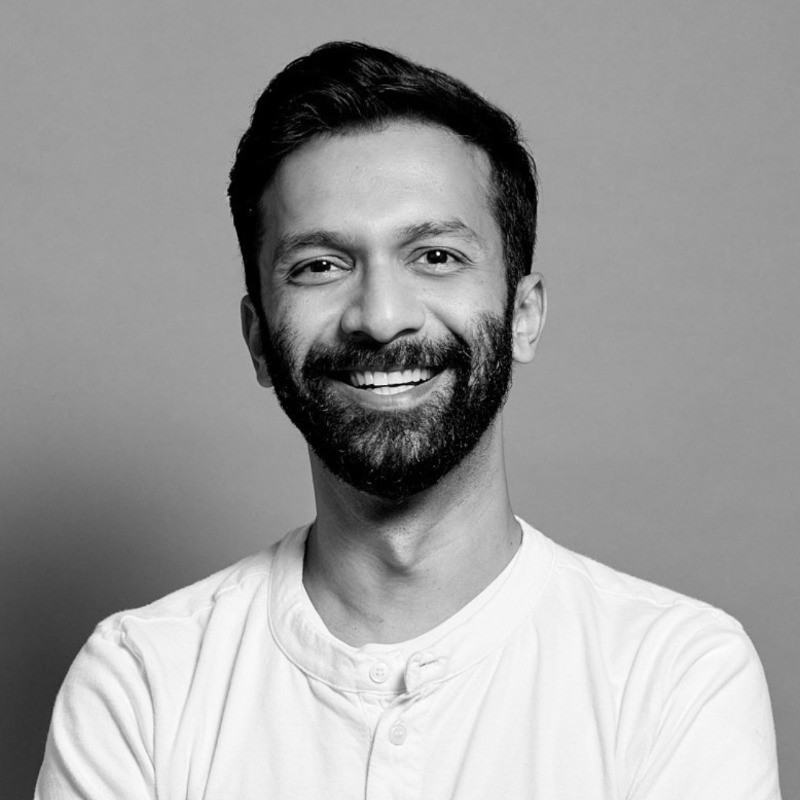
The Builder Behind the Room
At age 13, in Delhi, Rohan Seth got his first computer. He stayed up through the nights, navigating dial-up connections, creating fan sites for Jim Carrey and The X-Files - not because it was useful, but because suddenly he could talk to strangers in Ohio and Singapore and São Paulo. The internet felt like a cheat code for the human condition. He never really stopped building on that feeling.
Twenty years later, Seth co-founded Clubhouse - the app that in the span of about eighteen months went from a quiet beta experiment to a platform where Elon Musk wandered in to talk rocket ships, Oprah Winfrey held court on criminal justice reform, and 10 million people a week gathered to just... listen. Not tweet. Not scroll. Talk. The audio-first social network that Silicon Valley couldn't stop talking about was built by someone who, by design, avoids talking about himself.
Seth grew up in Patna before his family moved to Delhi. He moved to the United States at 18, enrolled at Stanford, and earned a BS in Computer Science followed by a Master's in Management Science and Engineering. In 2004, as a Stanford intern, he built a video bookmarking app for Stanford Online - an early hint of the product instinct that would define his career. After graduating in 2006, he joined Google directly, landing on the Android team in its early days. He worked on Google Maps, Google Latitude, and voice-access features - unglamorous foundational work that taught him how to build for scale before scale was a given.
"We want users to feel better when they close the app than when they open it - because they've deepened friendships, met new people, and learned something."- Rohan Seth
Six years at Google, then out. In 2014, Seth co-founded Memry Labs with Rohan Dang. Over three years, they shipped six social mobile apps - a messaging bot, a free-to-chat indicator app, a Chrome extension, a selfie-sharing tool. None of them caught. Each one was research with a release date. Memry Labs was acquired by Opendoor in 2017.
Seth had met Paul Davison through a mutual friend in 2011. They kept orbiting each other. Eventually they started building together. By conservative count, they had nine failed products before Clubhouse. What looks like a long shot in retrospect was, for them, a methodology.
Clubhouse started life as "Talkshow" - a podcast-style platform. The pivot to live, unscripted audio rooms happened as COVID closed every physical gathering on earth. The timing was almost absurdly good. Except timing is what you make of the moment: Seth was responsible for ensuring the infrastructure held as user numbers detonated. At its peak, Clubhouse hosted 700,000 rooms daily. The technical architecture held. The cultural moment was real.
What Seth built isn't just the code. It's the doctrine. He has described company culture the same way he talks about product - "build, test, iterate." The small daily habits are the real character of how an organization behaves under pressure, makes hard calls, and talks to each other honestly. This is not a philosophy for a press release. It's one he applies at a company that has, by his own account, deliberately avoided press.
Career at a Glance
Tags
Building the Room Where It Happens
In March 2020, Clubhouse launched on iOS. The world had just locked down. The app was invite-only, which - whether by design or serendipity - created the friction that made every invitation feel like access to something. Six hundred thousand users by December. Then Elon Musk tweeted. Then Oprah's appearance on criminal justice reform spread across every tech newsletter and podcast. By mid-2021, the platform had cleared 10 million weekly active users.
Seth's job during this period was unglamorous: don't let it break. The engineering challenge of scaling an audio-streaming infrastructure from a small beta to 700,000 daily rooms - without the app crashing under the weight of its own moment - is exactly the work he had trained for across nearly two decades of professional building. It held.
In January 2021, Clubhouse raised a Series B at a $1 billion valuation. Three months later, a Series C at $4 billion. Twitter reportedly came knocking with a $4 billion acquisition offer. The deal did not close. By 2023, Clubhouse trimmed its team by roughly half, and Seth and Davison reset their focus. The app remains live, operational, and evolving.
Clubhouse - Growth Story
What Rohan Seth Has Said
"We want users to feel better when they close the app than when they open it - because they've deepened friendships, met new people, and learned something."
- On Clubhouse's product philosophy"Culture is like a product: build, test, iterate. Small habits are the real DNA of how you communicate under pressure, make decisions, and handle challenges."
- On building company culture"We've never done a lot of press. We've been very focused on the product."
- On Clubhouse's operating philosophyThe Path That Led Here
- Fortune 40 Under 40 - 2021
- Gold House A100 recognition - leading Asian-American entrepreneur
- Scaled Clubhouse to 10M+ weekly active users and 700K daily rooms
- Led Memry Labs to acquisition by Opendoor (2017)
- Early Android team member at Google during platform's formative years
- Co-founded Lydian Accelerator - nonprofit funding genetic cures for rare pediatric diseases
- Raised $112M across Clubhouse's funding history (Series A, B, C)
Lydian Accelerator - The Work That Doesn't End at 5pm
In 2019, the same year Clubhouse was seeded, Rohan and Jen Seth co-founded Lydian Accelerator. The nonprofit is named after their daughter Lydia, who has a rare genetic condition. The organization's mission: fund and accelerate research toward genetic cures for children with rare pediatric diseases.
Seth has spoken about this work as deeply personal - it's the kind of cause that doesn't care about valuations or download counts. Lydian Accelerator operates at the intersection of personal urgency and scientific patience, attempting to compress timelines on research that usually moves in decades.
This dual identity - Silicon Valley CTO by day, rare-disease research backer by necessity - defines something about how Seth operates. He doesn't separate the projects. The same instinct that drives him to build things that make people feel less alone is the one that led him to fund research that might spare other families from the journey his own has taken.
The Details That Don't Make the Press Release
Springsteen devotee. Not a casual fan. The kind of Springsteen devotion that requires no further explanation to anyone who gets it.
Jim Carrey fan site, teenage era. Colleagues at Clubhouse discovered this in the archive. The ribbing continues.
X-Files superfan who also built a tribute site. The truth is out there, apparently, and at age 13, Seth was cataloguing it.
Did carpentry as a child in India. The hands-on instinct runs deep. Building things, physical or digital, is the throughline.
First computer at 13. In Delhi. Immediately fixated on the idea that someone in Kansas and someone in Korea could be in the same conversation.
Six apps in three years at Memry Labs. None of them worked. All of them informed the thing that did.
Oprah's Clubhouse room on criminal justice reform (June 2020) was the moment the app stopped being a beta and became a cultural event. Seth built the stage.
No press strategy. As a founder, Seth has been consistent: focus on product, not profile. This is not modesty. It's methodology.
Named his nonprofit after his daughter. Lydian Accelerator. The most personal kind of mission statement.