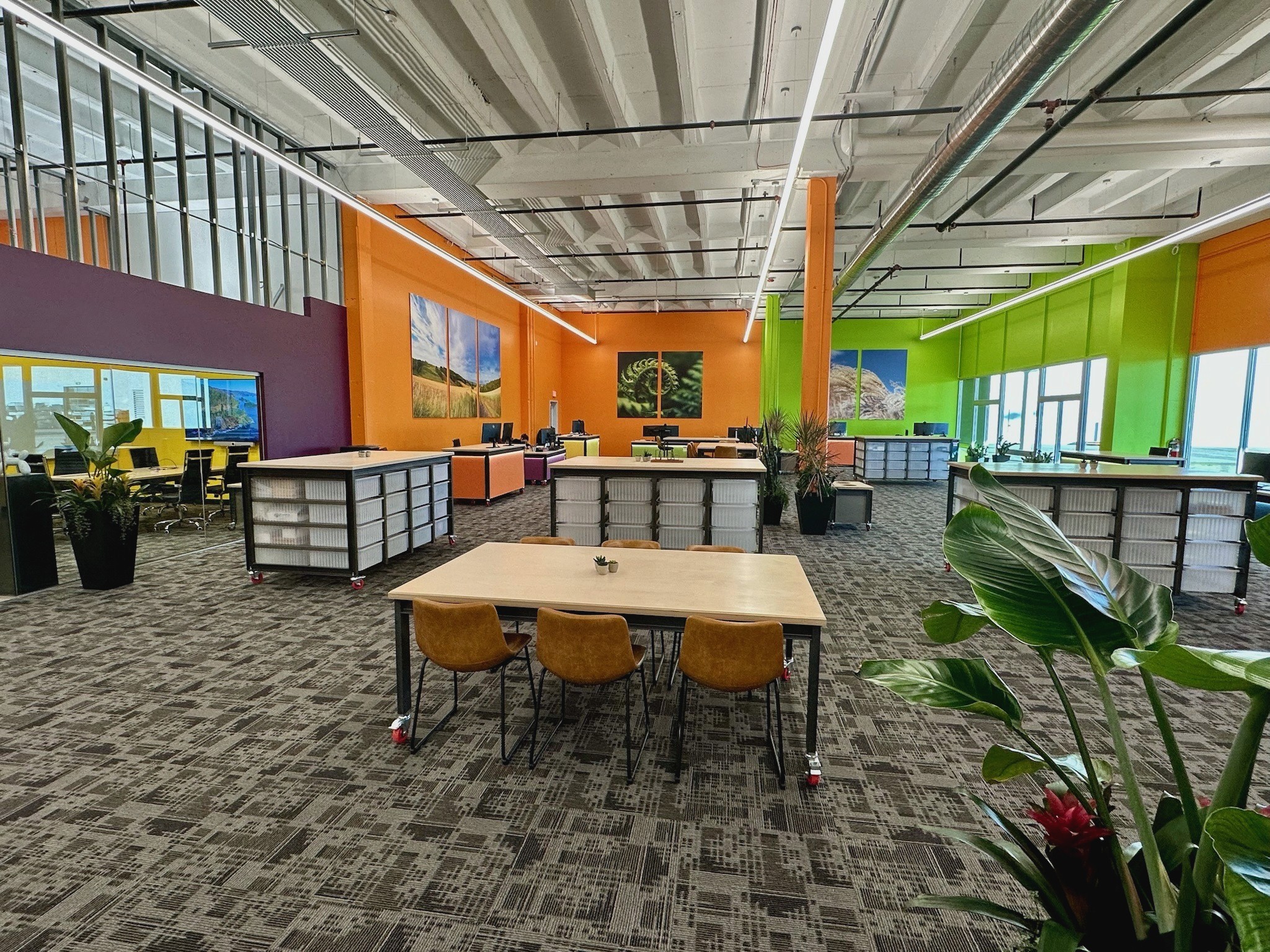
A shopping mall loses its shoppers. A company moves in to help other stores keep theirs. In Akron, Ohio, OnQ manufactures retail displays inside the former Chapel Hill Mall, a setting with a pleasing sense of irony. The sales floor has become a place to build sales floors. A preserved mural offers a reminder that this building has spent decades trying to catch somebody’s eye.
OnQ’s work begins with an ordinary retail predicament: a customer is interested, the product is right there, and something gets in the way. The explanation is inadequate. The security hardware makes trying it awkward. The screen promotes an item that is unavailable. A purchase can unravel without anything especially dramatic happening.
The company builds the physical displays and digital systems intended to close those gaps. For retailers, its appeal is the combination: someone has to make the fixture, protect the merchandise, explain the product and keep the installation working after opening day. OnQ puts those jobs inside one business.
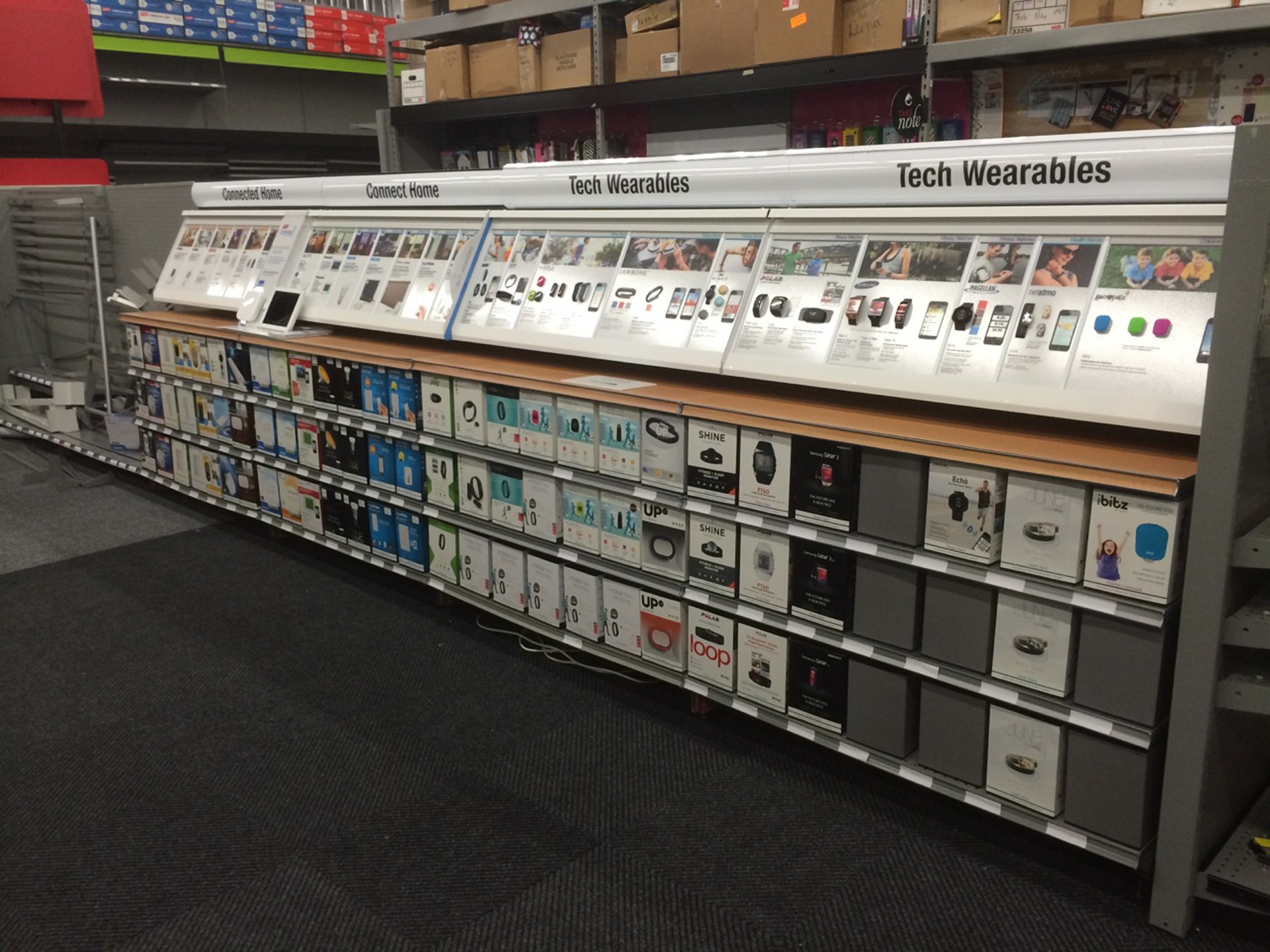
The shelf has an explanation problem
Founded by Paul Chapuis in 2004, OnQ grew around category displays: arrangements that let people compare related products across brands. It is an idea that sounds obvious until you consider the competing interests. A brand wants attention for its own product. A retailer wants the category to sell. A shopper wants to understand which item to take home.
Good category design has to negotiate all three. A display dominated by branding may do little to explain a meaningful difference. An exhaustive technical comparison may overwhelm someone who only wants a watch that works with their phone. The useful middle ground depends on understanding the decision taking place in front of the shelf.
That problem was explicit at Fred Meyer. A 2019 account of its collaboration with OnQ described an electronics department without dedicated consumer-electronics sales associates. The retailer also required the existing display structures to stay. OnQ fitted four sliding, rail-mounted tablets above the fixtures; moving a tablet in front of a product brought up information about it.
The physical gesture did some of the navigation. Shoppers could explore specifications and explanatory videos while looking at the actual merchandise. They could also transfer the experience to a personal phone. The interesting constraint was the old fixture: keeping it forced the new interface to make sense within an existing store.
“They can touch and try it.”
Paul Chapuis, founder and CEO, describing the shopper experience to News 5 Cleveland
There is a lesson here for anyone commissioning a display. Write down the question a customer needs answered before deciding what hardware belongs in the aisle. “Which one fits my needs?” is a stronger brief than “We need something interactive.” Interaction earns its space when it helps a person make a choice.
A bracket can spoil the demonstration
The other half of hands-on retail is making sure the product stays in the shop. Security equipment occupies the same scarce space as the merchandise and the customer’s hands. It can interfere with the very experience the display was commissioned to provide.
OnQ’s Dfi approach brings security into the design process early. That changes the discussion from where to attach a lock to how the whole display should work. The company reported producing its millionth retail security bracket in April 2022, ahead of its original second-half target, attributing the acceleration partly to pandemic-era demand.
Retail security brackets produced by April 2022, according to OnQ. An industrial milestone hiding beneath the merchandise.
At NRF 2023, OnQ announced adjustable brackets for devices including phones, tablets and smartwatches. Their practical promise was reuse when product dimensions change. A new assortment need not require replacing every holder.
That makes the refresh cycle part of the initial design problem. Someone will eventually have to remove the old product, fit its replacement and make the fixture presentable again. The easier that task is to repeat, the less the rollout depends on a heroic employee deciphering an awkward assembly in every store.
Security also deserves a test with the intended customer, not just an inspection of the mount. Can a person see the ports, read the controls and lift the device far enough to understand it? Those questions put the demonstration and the protection requirement in the same conversation. A fixture can hold a product perfectly and still make it frustrating to shop.
The screen meets the stockroom
Converge, introduced under the June20 name in 2017, added digital product information and interaction to the physical display. Its launch materials described videos, reviews, comparisons and ways to continue shopping on a personal device. The underlying ambition was to bring the depth of online information into a place where people could handle the goods.
By May 2026, the platform’s remit extended into inventory. OnQ announced integration with IBM AS/400-based systems and said the capability was deployed across 610 Costco clubs in the United States. Its stated functions included suppressing unavailable products and aligning the display with live stock information.
This is an operational improvement with a very visible consequence. A beautiful explanation of an unavailable item can produce a particularly well-informed, disappointed shopper. Connecting stock information to the display gives the retailer a chance to prevent that conversation before it starts.
- 01Inventory systemWhat can the store sell?
- 02Converge + displayShow the relevant assortment
- 03Shopper interactionCompare, explore, choose
- 04Engagement dataReview how the display is used
Conceptual workflow. Capabilities depend on the installation.
The distinction matters when assessing retail analytics, too. A screen can record engagement, but engagement alone does not establish an incremental sale. A useful evaluation would connect the specific task to an outcome: whether a shopper finds a suitable item, completes the purchase or needs less help. Counting touches is the beginning of an investigation.
In June 2026, OnQ described a further experiment: a prototype shelf with embedded weight sensors, connected over Wi-Fi to Converge. Comparing readings with expected product weights could flag changes in what is on display. It remains a prototype in the company’s account, but the direction is revealing. OnQ is investigating the condition of the shelf itself, as well as the information shown beside it.
Please take a ticket. A freshly printed one.
One of OnQ’s more revealing products ends with a piece of paper. Converge Take-a-Ticket pairs an interactive display with a compact printer. Shoppers select an item and print information to take to the register.
Epson’s October 2025 description of the collaboration explains the chore behind it. Preprinted fulfillment cards had to be produced, distributed and managed, including when stock changed. Digitizing the item information allows the kiosk to reflect availability and print tickets as needed. It is a small transaction with a substantial amount of backstage handling attached.
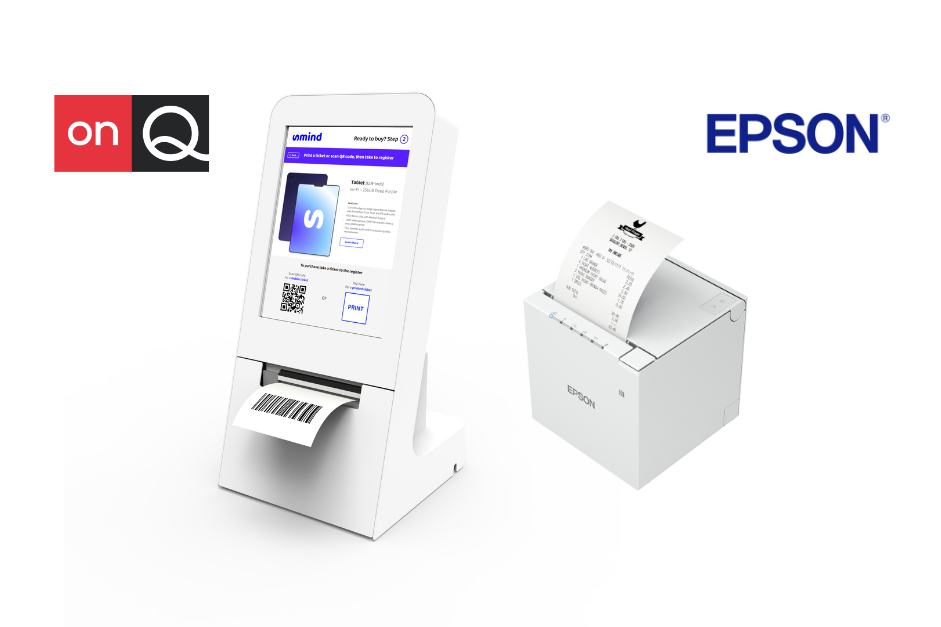
Elsewhere, Converge Display Control lets customers use their phones to control content on connected displays through a QR code. The two products offer different answers to the same question: what should the customer be able to do next? Sometimes the answer is explore a television demonstration. Sometimes it is carry a useful slip to the cashier.
Build the second product launch into the first
OnQ’s May 2026 discussion of club retail points to another design priority: preserving the structure while changing what it sells. The company described Nvidia gaming-laptop displays spanning multiple manufacturers and a PlayStation program across US Costco warehouses. Both were presented as modular systems intended to accommodate changing products.
For a buyer, the economic question is the full life of the fixture. Initial fabrication belongs in the budget, alongside installation, replacement components, content, support and the labor required for each refresh. A cheap opening-day display can become an expensive recurring task. A durable one can also be poor value if the campaign ends before its flexibility is used.
The reasonable test is specific: how many changes is this display likely to survive, and which parts can stay? High traffic and repeated product launches favor something adaptable. A brief promotion with little handling may justify a simpler temporary structure. The answer should follow the store’s actual workload.
The same discipline applies to the information layer. A comparison needs an owner when specifications change. A video needs replacing when the featured model disappears. Procurement teams can ask for a demonstration of that ordinary maintenance before approving the more entertaining customer demonstration. It is a useful way to see how much work the finished system will quietly hand back to the store.
A business with things to ship
OnQ sells to brands and retailers. Western Alliance Bank names Walmart, Costco, Samsung, Sony, Kroger and Lowe’s among its customers, and reports installations in more than 10,000 stores worldwide. The offering spans design and engineering, fabrication, technology, logistics, installation and support.
In February 2026, the bank announced a $7.5 million asset-based credit line and treasury services for OnQ. That is a financing facility, with a different meaning from an equity investment. It fits the practical demands of a business delivering physical programs across large store networks.
OnQ occupies the overlap between retail design agency, fixture manufacturer and technology provider. InVue offers overlapping merchandise-security and connected-store capabilities; specialist fabricators and signage integrators address other parts of the job. OnQ’s proposition is breadth and coordination. A buyer still needs to judge the quality of each component and the handoffs between them.
The breadth also affects how a project should be bought. A retailer can bring merchandising, operations and technology staff into the brief together, with a shared definition of a working installation. Otherwise, each team may accept its own piece while a gap remains between them. The prototype should answer both shopper questions and employee questions before the order grows to hundreds of locations.
The former mall makes a fitting home for that work. Retail is full of things that look convincing at presentation scale and become awkward at human scale. A fixture has to coexist with hands, carts, cables, changing products and the people who maintain it.
For a retailer considering OnQ, the useful starting point is a stubborn store problem, followed by a realistic pilot. Establish who will update the content, check the inventory connection and service the hardware. Then watch customers use it. The display has done its job when the next step becomes easier to understand.
Explore the aisles
Visit OnQ’s website, browse its project updates and retail commentary, or watch the executive interview series.
Follow OnQ on LinkedIn and Facebook. For a look inside the building, watch the Chapel Hill walkthrough. Explore Epson’s Take-a-Ticket overview and the Fred Meyer display story.