At a large American manufacturing campus, lunch had become a geography problem. Workers were spread across 1,200 acres. Food was concentrated in a few places. The facility wanted a round trip of roughly ten minutes, shorter queues, and something worth eating when employees got there. A cafeteria could be open and still be inconvenient.
- The buyer: operators running workplace food, vending, dining and hotel retail.
- The offer: self-checkout hardware, payments and software that connect the locations.
- The catch: a checkout can run itself. Stocking, spoilage and site economics still need people.
In a 2023 case study, 365 Retail Markets described a proposal for more than 220 devices serving up to 11,000 employees on that campus. Micro markets, dining kiosks and mobile ordering would distribute food access across the site. The operator won a multiyear contract. The ten-minute journey was a target, not a published before-and-after result. Even so, the diagnosis was useful: the distance to lunch mattered as much as the menu.
01 / A supplier leaves. A business begins.
Joe Hessling understood the buyer because he had been one. He provided food to Detroit-area corporations whose customers wanted lower costs without losing their food options. Self-checkout offered a way to keep serving them.
Then his technology partner decided to quit. Hessling’s account, published by 365, describes an awkward choice: buy the business or see it close. He collected the equipment and brought it home. The company dates its founding to 2008; by 2012, an employee recalled, operations had graduated to the back of an auto body shop.
“I was an operator.”
Joe Hessling, recalling the company’s beginnings
That origin explains the company better than a list of touchscreen specifications. Its first problem was keeping foodservice affordable for a customer. Owning the technology became the way to continue doing that. The threatened supplier exit changed who had to build the solution.

02 / The store gets smaller. The system gets bigger.
A micro market is a small self-service shop: open shelves, refrigerated food and a checkout. Operators choose and replenish the products. 365 supplies the technology underneath. Its MM6 kiosks handle self-checkout; PicoMarket fits smaller spaces. Dining configurations support menus and ordering. These are different tools for different traffic patterns.
The more interesting product is the connection between them. Global Market Account gives a consumer one funded account across enabled devices. The 365Pay app provides mobile access. ADM gives the operator a cloud management system for sales, inventory and promotions. Coffee, a snack and lunch can belong to the same account rather than three disconnected systems.
This puts 365 between the machine maker, the payment processor and the enterprise software supplier. Its expertise is making those jobs work together. The business earns from hardware, recurring software and payment processing. The operator earns from selling food. Those incentives overlap, but the operator still carries the daily burden of keeping a location worth visiting.
03 / The refrigerator learns to count.
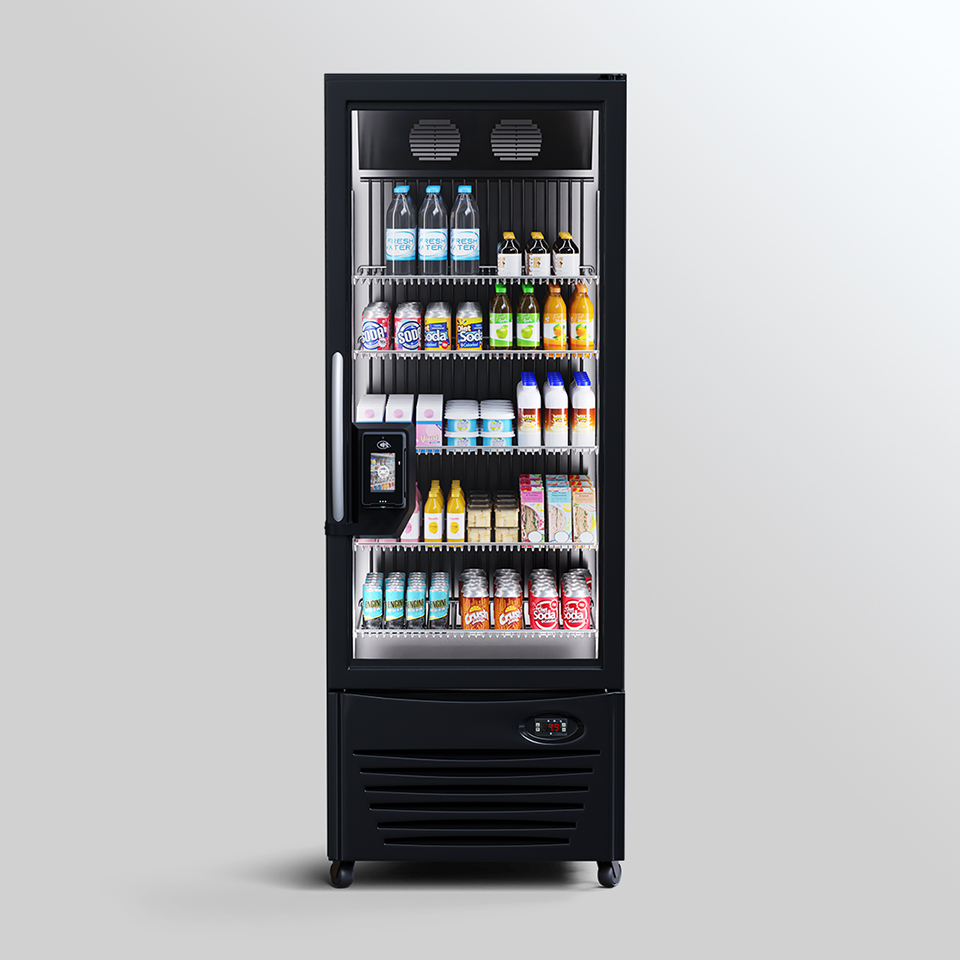
Traditional vending imposes a peculiar product-design rule: lunch must fit the mechanism. PicoCooler Vision, launched in May 2024, uses shelves and computer vision instead. A shopper presents a cashless payment method, receives preauthorization, opens the door and takes products. Cameras recognize the selection; checkout happens automatically. Returning an item adjusts the basket.
That changes which locations an operator can consider. A locked cabinet offers controlled access in places where open shelves create too much exposure. Stockwell combines chilled and room-temperature products. The broader Vision range adds ambient and frozen options. CLEAR integration supports age verification on compatible equipment, although the operator still has to meet local rules.
The distinction from alternatives is architectural. Byte Technology offers another smart-store approach; conventional vending offers a familiar enclosed format. 365’s pitch spans kiosks, cabinets, payments and back-office management. For a mixed campus, that breadth can be useful. For one tiny location, the important comparison may simply be total cost and service effort.
04 / The fee schedule also eats.
Consider one public eVending listing for PicoMarket, reviewed in October 2026: $2,065 for the kiosk. The listed subscription is 7.5% of monthly sales, with a $75 floor and $175 ceiling. Processing adds 5.95%, and connectivity adds $10 monthly. These are that seller’s terms, not a universal 365 price.
The arithmetic makes the operating question clearer. Low sales make fixed charges heavier. Fresh food needs replenishment and can expire. A remote stop can consume delivery time. Cashless access may exclude some shoppers. Choosing a cabinet does not settle any of those questions.
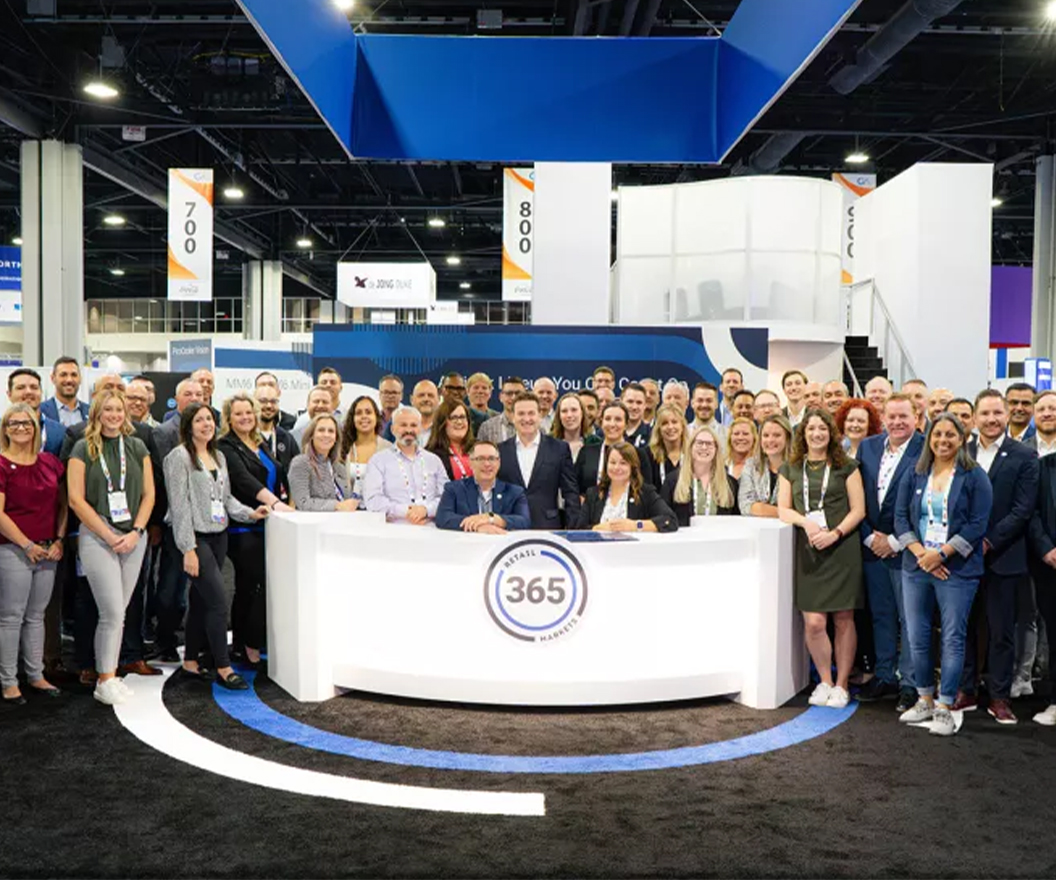
The company describes a dog-friendly workplace and emphasizes internal career progression. Its retrospective includes employees who moved from testing and development into management. Inc. lists collaboration and service among its stated values. For buyers, the useful question is how that culture reaches installation, training and support: an unattended store still needs someone to answer when the technology stops cooperating.
05 / An $848 million checkout.
365 expanded through acquisitions as well as products. Providence Equity Partners took a majority stake in 2020, alongside existing investor McCarthy Capital and management. Impulsify brought hotel and multifamily retail technology in 2024. In May 2026, 365 completed its Cantaloupe acquisition, announced the previous June at approximately $848 million in equity value.
Cantaloupe added payments, telemetry and a device network. The combination also attracted scrutiny. The FTC’s final June 2026 order required divestiture of Three Square Market to Seaga and reasonable, nondiscriminatory hardware and software integrations. The agency alleged the original deal would weaken competition and raise costs. Integration, the very thing operators buy, had become a competition question.
The practical lesson is to begin with the worker’s route and the operator’s costs. Map the minutes lost. Match the assortment to actual demand. Check the fees and replenishment distance. Then choose the equipment. 365’s story starts with an ordinary lunch problem; its usefulness still depends on solving that problem at each individual site.