The confusing thing about electricity in Dallas is that you can change the company on your bill without changing the company that brings the electricity to your house. Pick another plan. Find another price. Somewhere outside, the same poles remain. For millions of Texans, those poles belong to Oncor.
- Oncor runs the delivery network behind retail electricity plans.
- Its 2026-2030 base capital plan totals $47.5 billion.
- The hard part: building for growth while keeping today’s customers connected.
That arrangement makes Oncor an unusually revealing business. The customer wants something almost invisible: a refrigerator that keeps humming, a classroom with working lights, a factory that can open another shift. Delivering that ordinary experience requires an enormous physical system. In August 2026, Oncor described a network exceeding 145,000 circuit miles, serving more than 4.1 million homes and businesses.
The company behind the company on your bill
Oncor occupies the middle of the electricity story. Generators make power. Retailers sell plans. Oncor moves electricity through transmission lines, substations, neighborhood circuits and meters. Its territory determines which customers it serves. A household generally cannot choose a different delivery network by switching retailers.
The economics follow that division. Oncor earns regulated delivery revenues, with distribution charges generally collected through retail providers. Regulators oversee rates and the recovery of eligible costs. Operating cash, borrowing and owner equity support construction. Sempra holds an indirect 80.25% interest; Texas Transmission Investment owns the remainder. Financial safeguards separate Oncor from its owners.
CenterPoint, AEP Texas and Texas-New Mexico Power are regional delivery peers. Their different territories make the comparison rather peculiar: customers usually cannot shop among them. Oncor’s practical test is whether its own network can deliver reliable service at an acceptable cost.
A storm tests two networks
On May 28, 2024, severe weather supplied an unpleasant demonstration of what customers actually buy. More than 600,000 Oncor customers lost power, the company later told the Dallas Observer. Some waited until June 2 for restoration. Falling trees, damaged infrastructure and repeated weather made recovery difficult.
Then the information network stumbled, too. The Observer reported that a notification-system error compounded communication problems. Dallas council member Paula Blackmon requested an investigation into restoration delays and difficulties getting accurate information. A customer waiting in a dark house needs both electricity and a believable account of when it will return.
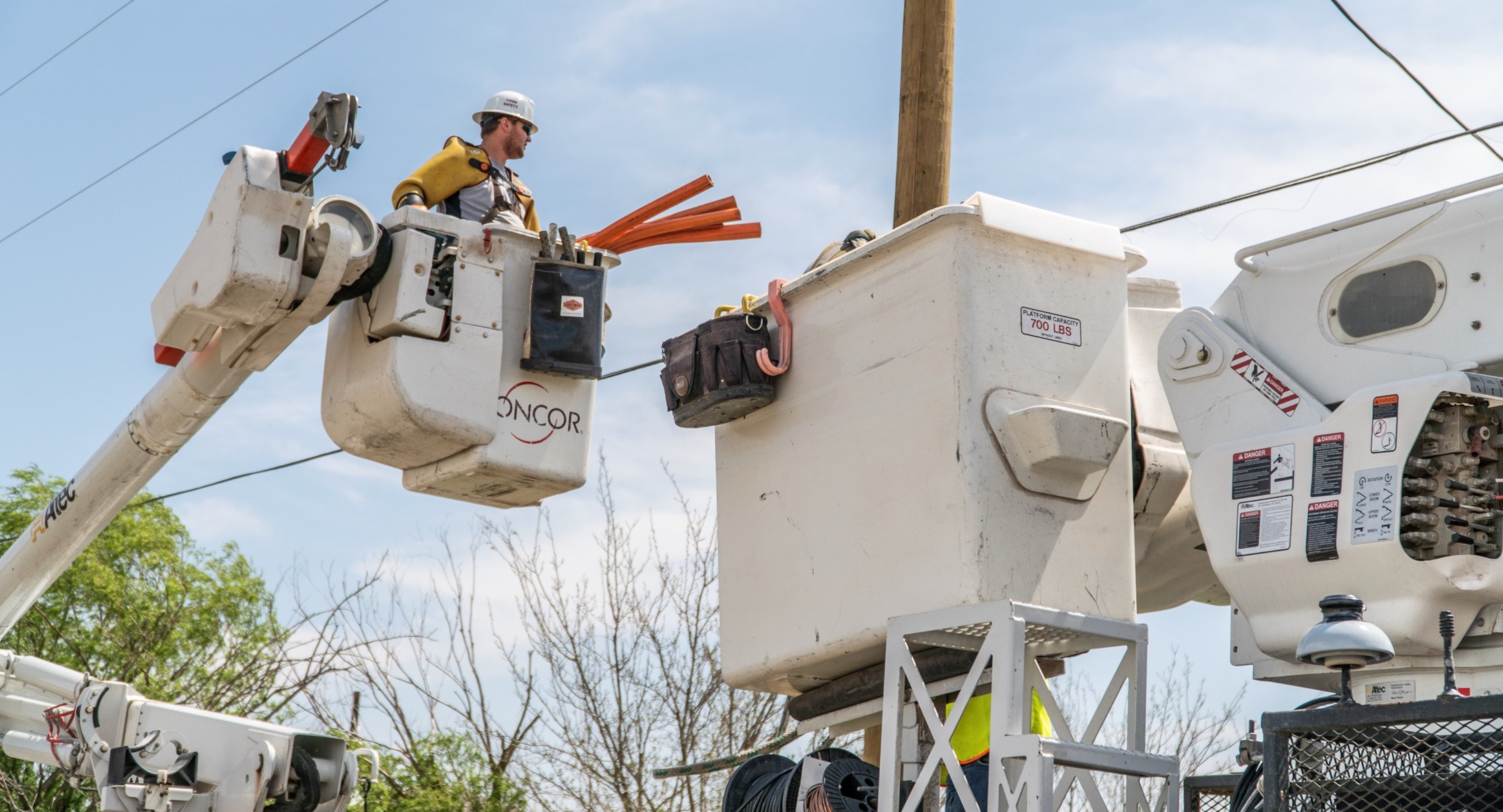
By November 2024, the Public Utility Commission of Texas had approved Oncor’s first System Resiliency Plan: approximately $3 billion over four years. The plan targets reduced storm damage and shorter outages. Oncor’s subsequent account describes ground and drone inspections feeding engineering decisions about where work will have the greatest effect. The initial program does not reach every community.
That is a useful operating lesson: inspect the system, identify where damage creates the most trouble, and spend accordingly. It also has a boundary. Strengthening distribution equipment cannot manufacture missing generation. Better information cannot remove a fallen tree. Each problem needs its own remedy.
The bill for building ahead
Now add growth. In February 2026, Oncor announced a $47.5 billion base capital plan for 2026-2030. The increase from its previous $36.1 billion five-year plan reflected additional Permian Basin work, other transmission projects and distribution needs. These overlapping plans cover different periods; they are not two consecutive spending totals.
For evidence of physical progress, look to June 2026. Oncor put its portion of the 165-mile Delaware Basin Stage 2 transmission project into service, addressing electricity-import constraints in far west Texas. Elsewhere, its joint work with LCRA Transmission Services Corporation includes proposed 765-kilovolt infrastructure. Those proposals still require the applicable approvals.
Who pays matters as much as what gets built. Delivery investments enter a regulated process with consequences for bills. Oncor reported that a temporary surcharge beginning August 1, 2026 would add approximately $3.63 monthly for a residential customer using 1,000 kilowatt-hours. That specific surcharge is not the household price tag for the entire capital plan.
A request is not a reservation
Data centers make planning more awkward. Oncor reported roughly 282 gigawatts of data-center requests in its transmission queue at June 30, 2026. A queue records interest; it does not establish how much power those facilities will ultimately consume.
A connection request tells you what somebody wants. A commitment tells you what they are prepared to risk.THE PLANNING PROBLEM
Oncor held approximately $5.9 billion in customer collateral for generation and large commercial and industrial transmission requests by August 1. The purpose is to reduce the risk that existing ratepayers finance infrastructure for projects subsequently abandoned. For anyone managing scarce capacity, the principle travels well: ask for evidence of commitment before treating demand as certain.
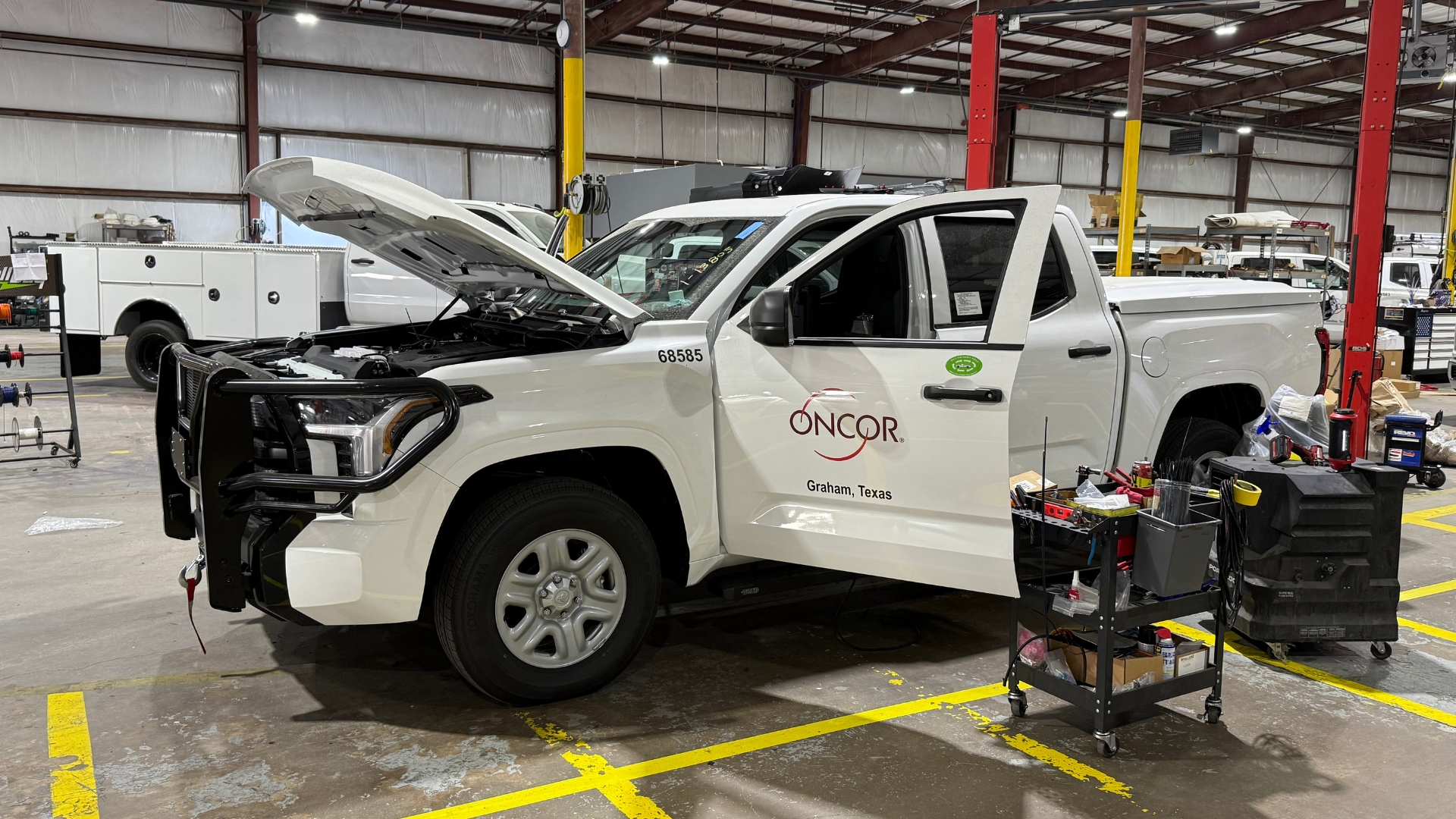
A smaller decision shows the same appetite for preparation. In September 2026, Oncor said it was adding Toyota trucks after nearly two years of evaluation. Supplier diversity, reliability and safety informed the choice. In a restoration business, the vehicle that gets a worker to the fault belongs in the reliability calculation.
There is room for experiments, too. A research collaboration announced with Toyota in 2022 explores vehicle-to-grid technology: the possibility of using electric vehicles as sources of power as well as consumers. It is research, with technical and operational questions to answer before a household could assume that capability is available.
The useful part is already outside
Customers need not wait for a new transmission line to use Oncor. Its outage map, reporting tools and alerts help people track service problems. Smart meters record consumption in 15-minute intervals; Smart Meter Texas provides access to usage information. Developers can request service and coordinate construction. Eligible customers can explore energy-efficiency incentives through participating providers.
The meter is particularly telling. It measures what a customer uses, but also supplies information about the distribution system itself. A familiar billing instrument becomes a network sensor. Oncor’s published safety principles, meanwhile, emphasize caring for coworkers, evaluating hazards and teamwork. A useful signal still needs someone equipped to act on it.
Oncor’s expertise sits where those small interactions meet big construction: asset management, metering, engineering and restoration. The company’s challenge is to make years of preparation disappear into an uneventful Tuesday. Texas keeps adding reasons that Tuesday might become complicated.