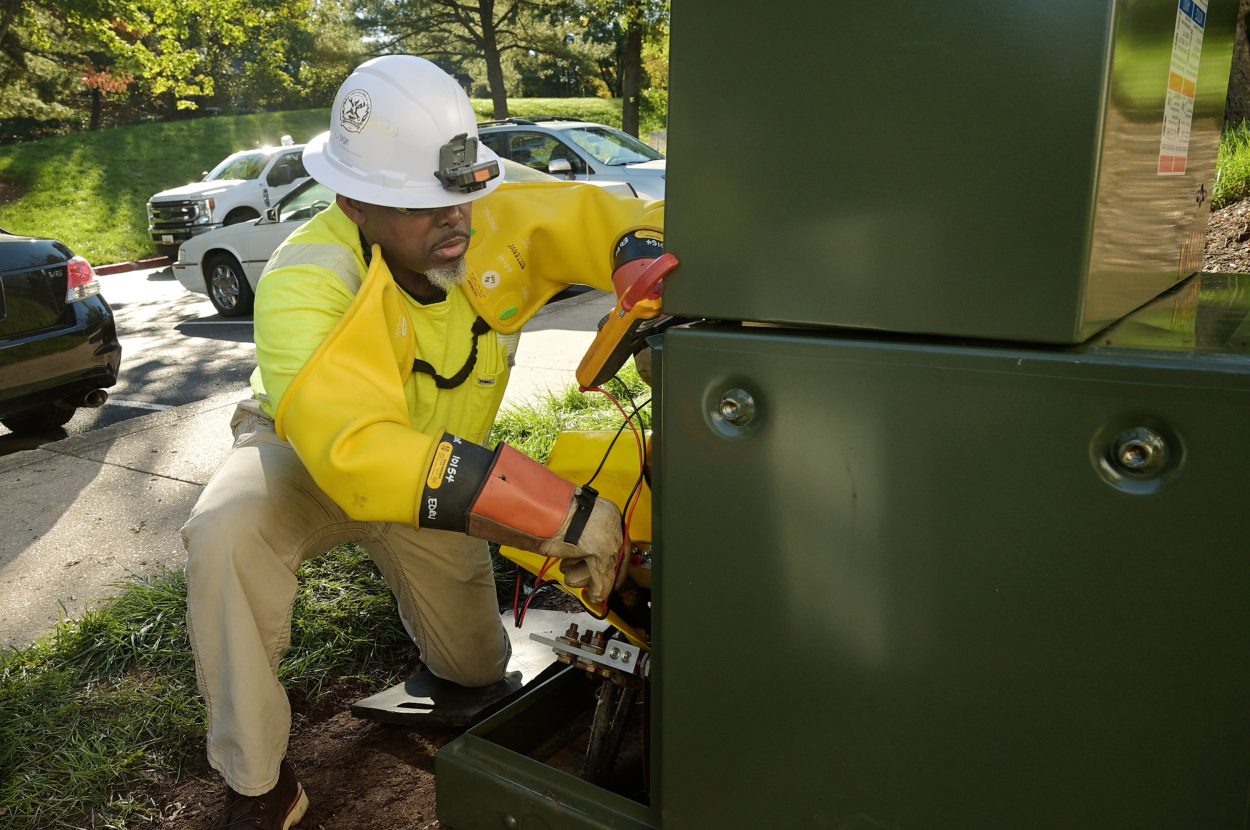
In Columbia, Maryland, a transformer had been doing its job for nearly half a century. Twenty-two homes depended on it. In September 2025, BGE described the crew replacing it before a breakdown forced the issue. There is something wonderfully awkward about selling that accomplishment: the customer gets an ordinary day. The dishwasher runs. The lights work. The expensive intervention disappears into the absence of a problem.
- BGE delivers electricity and gas across central Maryland.
- Its craft combines preventive maintenance, field engineering and customer programs.
- Its central argument is over the price of dependable service.
That small maintenance scene is a useful entrance to Baltimore Gas and Electric. We tend to notice utilities when something breaks, or when a bill becomes startling. Between those moments sits a sprawling business of inspections, pipes, wires, meters and decisions about what needs replacing next. BGE’s product is easy to describe. Making it dependable, at an acceptable price, is harder.
A painter turns on the room
The beginning was rather more theatrical. In 1816, artist and museum proprietor Rembrandt Peale demonstrated gas lighting at his Baltimore museum. People could come to look at paintings and natural-history specimens; the illumination became an attraction of its own. Peale and his partners established the Gas Light Company of Baltimore that June. Public streetlighting followed in 1817.
There is an appealing continuity here. The first business depended on making light visible. Its descendant depends on making the machinery behind light unobtrusive. The company took the Baltimore Gas and Electric name in 1955 and joined Exelon in 2012. The museum experiment became an institution with obligations stretching well beyond the room where the demonstration began.
The wires stay put
Today, BGE serves more than 1.3 million electric customers and more than 700,000 natural gas customers in central Maryland. Those figures describe service accounts, with overlap between the two groups. Households, businesses and institutions depend on its network. The expertise is physical and operational: maintaining distribution equipment, managing gas infrastructure, responding to emergencies and restoring service.
The business model requires a distinction that a monthly bill can obscure. Energy supply and energy delivery are separate activities. Eligible customers can select a competitive supplier while BGE continues delivering through its local network. Choosing another supplier does not send a second set of wires down the street. Regional utilities are useful operating comparisons; they generally are not competing delivery services available at the same address.
BGE earns revenue through regulated service, with authorized infrastructure costs and returns reflected in rates. Its 2025 operating revenues were $5.222 billion. Exelon says BGE’s distribution earnings are decoupled from actual weather and customer usage. That arrangement matters when the utility encourages conservation: lower consumption need not translate directly into lower distribution earnings.
supply
delivery
building
The answer was upside down
Near Baltimore’s Key Bridge, wind presented BGE with a peculiarly concrete problem. Transmission conductors moved out of step, swinging close enough to cause momentary interruptions. For sensitive customers, including hospitals and data centers, a brief interruption still mattered.
The team worked on an interphase spacer. Then a test changed the plan. Fitting components on a mock-up span exposed a problem with the equipment as designed. BGE inverted the arrangement so the swing could restore itself naturally, avoiding premature wear and failure. Exelon subsequently reported no outages in the twelve months following installation and projected $50,000 in savings over five years.
The savings were a forecast, not the installation price. The outage result belonged to this intervention, not the whole network. Within those limits, the lesson travels well: build something you can test, watch how it behaves, and let the observation overrule the drawing. A mock-up earns its keep when it makes a bad assumption cheap to discover.

The customer becomes part of the machine
Some BGE work asks customers to participate. Its energy-efficiency offerings help homes and businesses reduce consumption. Smart Energy Rewards, rolled out beginning in 2013, used bill credits to encourage lower electricity use during designated high-demand periods. PeakRewards approached demand through equipment cycling. Both addressed a grid problem by changing what happened inside buildings.
The difficulty was partly explanatory. A customer could encounter two programs with related benefits and different mechanics. “Customers do get confused,” a BGE representative named Lesh told Utility Dive in 2016. A customer-engagement case study described preparing call-center staff, educating employees and collecting feedback as the rewards program expanded.
Readers can copy that sequence: prepare the people answering questions before expanding the offer. Demand response also needs careful measurement. If someone would have used less electricity anyway, paying a reward does not establish that the incentive caused the saving. A 2016 ACEEE analysis discussed precisely that criticism. Participation figures alone cannot settle the question.
The argument arrives in dollars
By July 2026, affordability was changing BGE’s investment plans. The company said it had delayed its filing, deferred larger projects and narrowed spending toward immediate maintenance and reliability needs. The Maryland Public Service Commission described the resulting request: $156.1 million in additional annual electric base-rate revenue, with an approximately $8 monthly impact on the average customer if approved.
Approximate average electric-bill increase requested. A decision is expected in January 2027.
These are proposed charges. The commission expected a decision in January 2027. Meanwhile, Maryland’s Office of People’s Counsel explained that bills also reflect commodity supply, capacity and transmission costs. Better local maintenance cannot, by itself, remove those pressures. Nor does an engineering success answer how much return investors should receive.
Tamla Olivier, president and CEO since May 2025, leads a company whose work must satisfy both tests: dependable infrastructure and a defensible bill. The Columbia transformer offers a modest picture of the first. Twenty-two homes get another ordinary day. The second test takes place around kitchen tables, where the invoice arrives and the people paying it decide whether ordinary still feels affordable.
Follow the current
BGE website ↗ Energy-saving programs ↗ BGE Now ↗ LinkedIn ↗ X ↗ Instagram ↗ Facebook ↗ BGE videos ↗