A complaint is an awkward gift. It arrives badly wrapped, often in capital letters, and usually at a moment when the recipient has other plans. Omer Deveci made a business out of accepting it. In 2001, he founded Şikayetvar, giving Turkish consumers a place to describe what had gone wrong and companies a place to answer. Later, he founded Saki Products. The entrepreneur who had helped put brands under the customer’s microscope now had a brand of his own.
There is a pleasing complication in that career. A feedback platform can point to the distance between a promise and an experience. An appliance company has to put something into that distance: a handle, a heating control, a product someone will use before they have properly woken up. Deveci’s story follows the complaint across the counter, from the person asking for an answer to the business expected to supply one.
A complaint needs somewhere to go
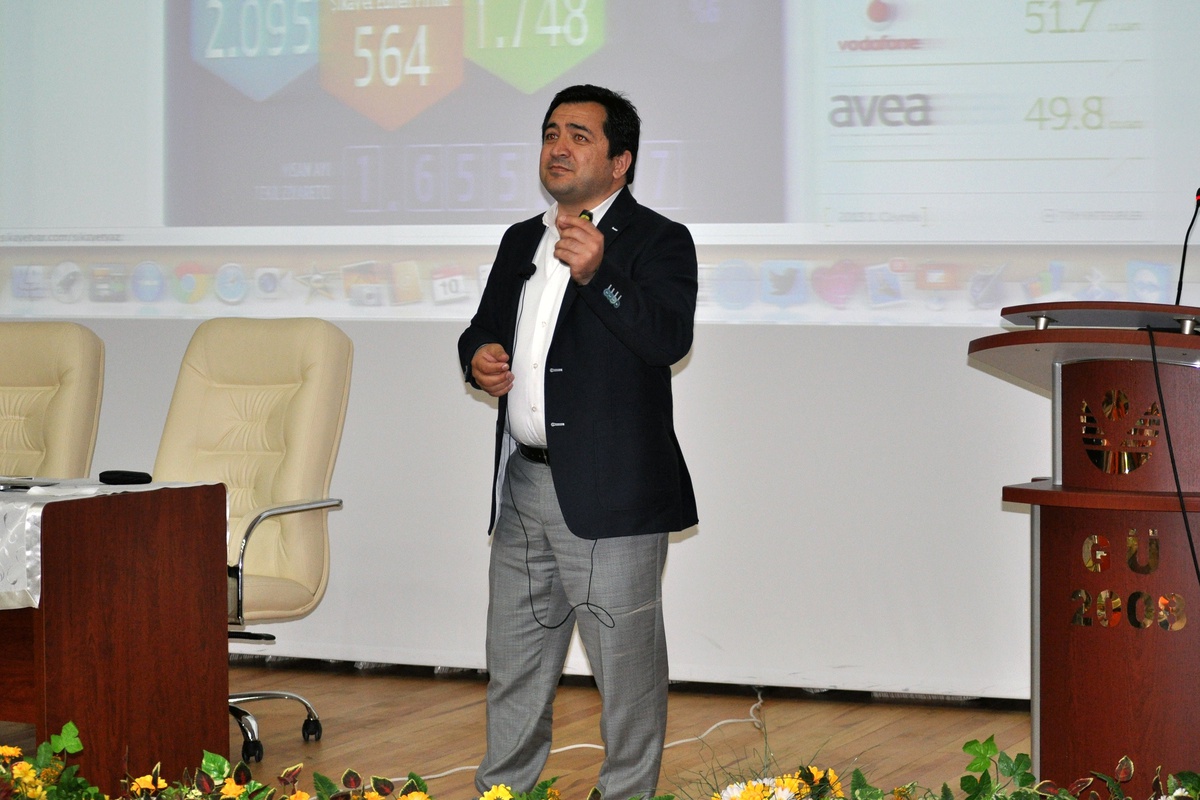
When Deveci spoke at Gümüşhane University in May 2013, the subject was complaint culture. It was a suitably human starting point. Before anyone can build a complaint platform, people have to believe that complaining is a reasonable thing to do. An empty text box cannot, by itself, remove the embarrassment of speaking up.
At that panel, Deveci recalled criticism of the garden outside his Ankara business. Passersby took its appearance as a clue to what might be happening inside. He improved the landscaping. It is a modest anecdote, with no garage, sleepless coding marathon or improbable flash of genius. Someone disliked something. He listened. The garden changed.
By then, he said, Şikayetvar had nearly a million members and around 90,000 daily visitors. Those were his figures in 2013, a snapshot of a platform already well beyond its beginning. The scale gave the garden story a second meaning. A single observation could prompt a small correction. A shared place for observations could help many people recognize the same problem.
The person reading over your shoulder
Deveci has described public customer service using the image of a stadium. A brand and a consumer have their exchange while other people watch. The spectators form opinions. They may become supporters. They may decide to take their custom elsewhere. Even a reply addressed to one person can have a much larger readership.
That observation helps explain why a complaint can matter before a purchase as well as after it. The reader looking over the participants’ shoulders wants to know how the business behaves under pressure. A polished product description has already had its turn. Here is a different kind of demonstration, conducted in public, with an inconvenient question attached.
It also makes the founder’s job more interesting. A complaint platform serves people who want a resolution and people who want to learn from someone else’s experience. The latter may never write a word. Their presence gives the exchange consequences beyond the immediate transaction. Customer service acquires an audience without acquiring a dress rehearsal.
A reading of Deveci’s stadium analogy.
Listening takes rules
Deveci’s account of operating Şikayetvar has never been simply an invitation to turn up the volume. In a 2018 interview, he described checking that complainants were real people and having an editorial team review submissions. He said verification reduced the number of complaints submitted, but defended keeping it. Friction, in this instance, had a purpose.
His argument acknowledged the business on the other side. A brand might represent years of effort. Publishing first and considering the consequences later was, in his view, an inadequate approach. Giving a consumer a hearing carried responsibilities for the person making the complaint and the platform carrying it.
This makes his position more demanding than a cheerful instruction to listen to customers. Someone must decide how a complaint becomes publishable, how a company gets to respond, and how a useful exchange avoids turning into a pile-on. The machinery behind the conversation matters. A platform earns confidence partly through decisions its casual visitors may never notice.
In an earlier interview, originally published in 2014, Deveci described a change he wanted to see in how businesses approached dissatisfaction: moving from closing complaints to managing them. The distinction is practical. Closing describes the end of a case. Management asks what the organization has learned, and what it will do when another customer encounters the same difficulty.
A seventh region, made of the internet
His thinking also reached beyond the exchanges on his own website. Appearing before a Turkish parliamentary commission, Deveci argued for incentives for internet businesses. Turkey had geographically defined incentive regions; he proposed an additional, virtual region for the internet. It was a memorable way to make an intangible industry legible to a system organized around physical places.
He resisted the idea that pushing Google aside was a sufficient answer to competition. Supporting local businesses was the direction he argued for. He also offered the commission Şikayetvar’s sector and company reporting, describing an operation that received 600,000 complaints annually at that time.
The appearance reveals another use for all that customer feedback. Individual complaints can describe one failed transaction. Collected and analyzed, they can help describe an industry. Deveci was bringing that material into a room where policy was discussed, making the case that an internet business could contribute information as well as require support.
Şikayetvar begins.
The year Saki gives for its origin.
Deveci discusses the Baristan’s design with the coffee trade.
The kettle joins the conversation
By June 2022, the object under discussion was a kettle. Saki’s Baristan had a gooseneck spout, a counterweighted handle and a red ring of light around its base. The light remained steady while the water heated and pulsed when the selected temperature was reached. The appliance could communicate across a counter without requiring someone to stand over it.
Deveci described a development process involving local coffee shops, with professional baristas helping to inform the design.
There is something reassuringly concrete about that sentence. A coffee shop gives a design decision repeated exposure to use. The person pouring has a task to finish. The grip and the signal have to make sense in that setting. Feedback moves from an abstract business virtue into a conversation about the thing in someone’s hand.
The glowing base made a small piece of information visible: whether the kettle was still heating or ready. Much of the usefulness of an appliance lives at this scale. The customer should be able to understand what is happening without conducting a small inquiry every morning. A kettle is entitled to boil water; it need not make a mystery of its progress.
“We worked with local coffee shops to improve the design to meet the needs of professional baristas.”
Omer Deveci, on the Baristan, June 2022
Now his name is on the other side
Saki places its origins in 2018 and its headquarters in Newport Beach, California. Deveci leads it as founder and CEO. Arda Deveci directs product development; Almina Deveci directs marketing. The business describes itself as a family enterprise. Its public account links the experience of Şikayetvar to an interest in anticipating the buyer’s disappointment.
The move changes Deveci’s relationship to a familiar problem. Running a brand means making choices that customers will judge through daily use. A website can invite a business to explain itself. A product has to survive the encounter that made the explanation necessary.
His public updates include Saki’s presence at The Inspired Home Show, where he invited visitors to see its products and described meeting people from around the world. A trade-show invitation is a quieter kind of entrepreneurial milestone than a funding announcement. It still contains a useful test: place the work in front of people and let the questions begin.
When Saki presented a revised brand identity and website, Deveci thanked the passion and precision behind the change. The comment gave colleagues their place in the story. A founder’s name travels easily; the decisions that produce an appliance are distributed among people doing different jobs. The brand has to make those decisions feel coherent to the person using it.
Before the next purchase
Deveci’s public interests continue to return to trust. He has promoted TrustBuy, an e-commerce audit and trust-certification initiative emerging from Şikayetvar’s experience. His accompanying message described moving trust toward the center of e-commerce and making reputation more visible. The question extends to the shopper who has yet to choose a seller.
In his message for Şikayetvar’s 2025 transparency report, he set out an ambition for more informed purchasing decisions and stronger relationships between consumers and brands. He connected that ambition to transparent action and cooperation. It is a continuing argument for giving people something they can examine when deciding whom to believe.
Across these businesses, the interesting unit remains the ordinary transaction. A buyer expects a company to do what it said. Something goes wrong, or something works well enough to make the next purchase easier. Deveci has built around both moments. The complaint gives one person a reason to speak. The product gives a company another opportunity to listen.
Follow the conversation
Omer Deveci on LinkedIn ↗Meet Saki ↗The Baristan interview ↗The 2018 customer-feedback interview ↗Şikayetvar’s 2025 transparency report ↗Saki on YouTube ↗Saki on Instagram ↗Saki on Facebook ↗