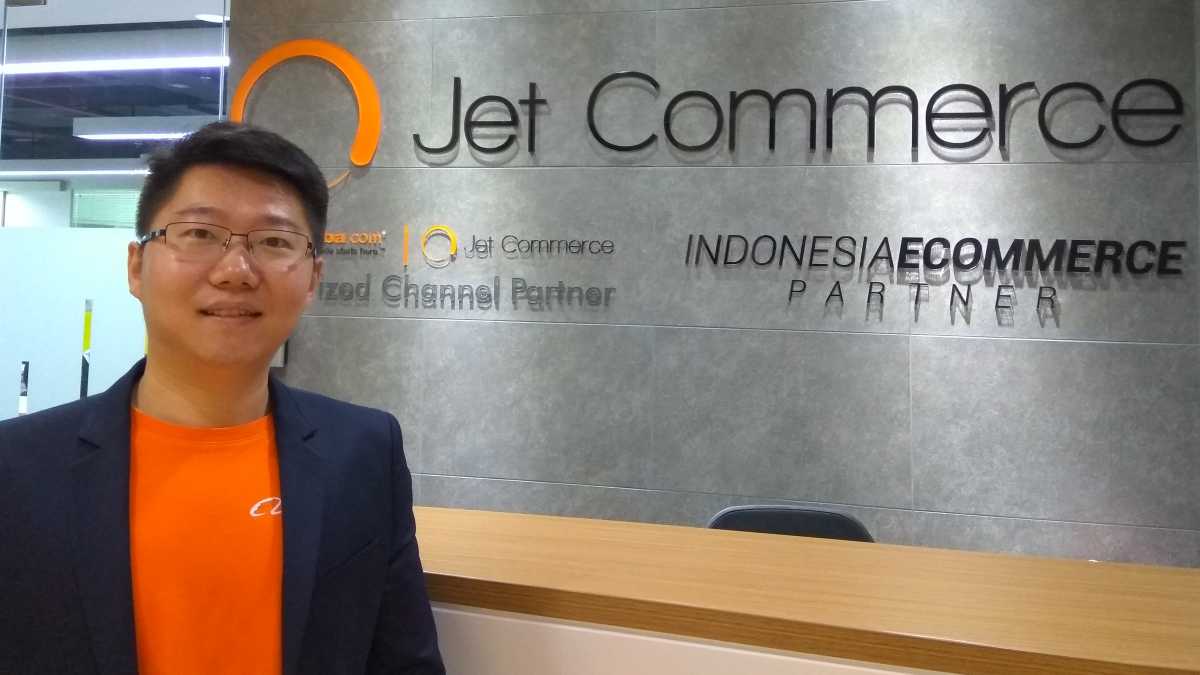
Oliver Yang’s route into Southeast Asian e-commerce began with a scholarship, twelve years before it produced a company. In 2005, after finishing high school in China, he went to Indonesia to attend university. The decision gave him an education with a rather long practical component. He stayed, worked in retail, tried running a business and joined a parcel-delivery company. By the time he founded Jet Commerce in 2017, he had spent years learning how goods and people moved through the country.
That sequence matters. A brand entering a new market can buy advertising, open an official store and announce its arrival in an afternoon. The following morning brings questions about stock, customer messages, packaging and delivery. Yang built a business around taking responsibility for those mornings. His career offers a useful way into a less photogenic side of commerce: the work required to make a promising shop window behave like a functioning shop.
The scholarship came first
The scholarship covered Yang’s university study in Indonesia. After four years, he chose to remain because he saw opportunities in Southeast Asia. His first job was in procurement for a local retail group. Buying products gave him a close view of China’s supply chains and their relevance to businesses abroad. Before there was a cross-border strategy to describe, there were purchasing decisions to make.
He also attempted an earlier venture. In 2015, he joined the newly established J&T Express as a regional head. There, the job involved building and managing a local Indonesian team. The subjects had changed from the university curriculum, but the education continued: suppliers, employees, customers, and the stubborn distance between a plan and its execution.
By 2017, he saw an opening. Brands were moving toward online sales, while marketplaces and delivery networks were developing the foundations they needed. OPPO, already established in Indonesian offline retail, became Jet Commerce’s first brand client. Yang had arrived at the opportunity through several parts of the same commercial chain. The business gave those experiences a common address.
to Indonesia
at J&T Express
begins
in Hangzhou
A shop window is only the beginning
In October 2018, Jet Commerce presented its integrated e-commerce services at Tech in Asia Jakarta. Its offer joined together tasks that a customer experiences as a single purchase: finding the official store, understanding the product, asking a question and receiving the order. Behind that apparently simple transaction sit people with quite different jobs.
Yang’s company offered online strategy, digital marketing, search optimization, customer service and fulfillment. It also supplied photography, video production and other creative work. The combination explains why an operator can be involved in both a product description and a packing process. The buyer has little reason to care which department handled which part. The experience arrives with one brand’s name attached.
For Yang, brand presentation deserved attention alongside transactions. The distinction is practical. A product can sell today while leaving its buyer with a poor impression tomorrow. When the purpose is to help an established brand develop an online business, the tone of a reply or the accuracy of a listing becomes part of the assignment. A sale is a useful event. A customer willing to come back is useful too.
The parcel carries the promise
A detail from Yang’s 2018 interview makes his thinking tangible. For a cosmetics product, the team prepared gift packaging with a thank-you card and a small present. Customers shared the package on social media without being asked. The customer’s encounter with the brand continued after the payment screen had disappeared.
Yang also discussed online chat and detailed product descriptions. Buyers could not touch the goods, so the information had to do more work. Those are ordinary retail problems in an unfamiliar setting. The packaging story is memorable because it gives the operating model something you can hold. A cardboard box has an excellent way of bringing a presentation back down to earth.
The company’s OPPO work received a more formal acknowledgment in 2018, when Jet Commerce won a Marketeers Editor’s Choice Award for the Find X digital marketing campaign. Yang also appeared on an e-commerce panel at MarkPlus Conference 2019. The campaign award belonged to the company’s work, and it supplied a concrete example of the marketing ambitions behind his operating business.
People before pins on a map
Regional expansion made Yang’s approach more demanding. In February 2019, Jet Commerce announced offices and warehouses in Ho Chi Minh City and Bangkok. Local teams covered store operations, marketing, analysis, design, copywriting, customer service and fulfillment. Staff from Indonesia helped transfer knowledge. Existing brand partners had encouraged the move into those markets.
It was a model with two kinds of learning built into it. A company could carry operating experience from one country to another, while people in the new market supplied knowledge of its customers. Yang’s regional ambition depended on both. A process could travel; the decisions about how to apply it still needed people on the ground.
When Malaysia’s expansion was announced in April 2021, he returned to the staffing question. Before expanding internationally, he explained, Jet Commerce built the resources needed to do the work. Local specialists understood culture, shopping habits and the partners with whom they would communicate. Recruitment was part of market entry itself.
That emphasis gives his own years in Indonesia a larger significance. Staying had exposed him to the everyday circumstances a visitor might miss. At company scale, local teams offered a way to make that attention part of the organization. The map could describe the ambition. The hiring decisions had to make it credible.
and operating experience
and shopping habits
Conceptual diagram of the approach Yang describes.
Hangzhou, with the doors open
In 2020, Yang and the founding team established Jet Commerce Group’s headquarters in Hangzhou. The reasons were specific: access to experienced e-commerce recruits, closer contact with Chinese peers, and the ability to bring together supply-chain and financial resources. The decision connected the company to capabilities that could support its businesses abroad.
There was a recruitment reality underneath the geography. Experienced candidates in China were not always willing to move overseas for long periods. A Chinese base allowed those people to contribute to planning while country teams handled execution. Headquarters became a way to organize access to expertise.
The arrangement also demanded judgment about what to borrow. Experience from Chinese e-commerce could inform a plan in Southeast Asia, but the customer, the market and the stage of development still mattered. Yang’s organization had to keep those differences in view while sharing what it knew. Otherwise, a useful precedent could become a very expensive assumption.
Jet Commerce announced more than US$60 million in Series B financing in August 2022. Jinqiu Capital, Hidden Hill Capital and Zhejiang SilkRoad Fund jointly led the round. The planned uses included infrastructure, local recruitment, multi-channel network operations, software development and brand incubation. The list attached money to the operating work Yang had been describing.
At that point, the company reported more than 1,000 employees across eight countries, with local talent accounting for over 90 percent. Those are figures from 2022, a snapshot of the organization during that funding round. Their significance in Yang’s story is structural: a business built around local knowledge had made local hiring a substantial part of its workforce.
The other classroom
Another detail returns the story to education. On May 17, 2021, Yang participated in a curriculum review for Universitas Bunda Mulia’s Chinese Language and Culture program. He emphasized the value of company partnerships that gave students internships and helped prepare them for work. The contribution was specific and practical, much like the problems his company employed people to solve.
There is a pleasing symmetry in that appearance. A scholarship had taken him abroad; years of work had helped turn that move into a business career. Now he was discussing how students could gain useful experience before graduation. His participation connects the founder story to a less conspicuous subject: how the next group of people gets ready to do the work.
The company also had its own occasions for learning and belonging. At its second-anniversary celebration in February 2019, hundreds of colleagues in navy shirts gathered at the Golden Sense Restaurant. Yang opened with remarks about the team’s purpose. The program included performances and a talent competition. Even an operating company needs an evening when the spreadsheet is allowed to remain at home.
Half a step, three steps
In 2022, Yang described an instruction he gave his team: Take half a step forward, then look three steps ahead.
The English is a translation of his Chinese wording. It is an unusually measured piece of founder language. The immediate move is small. The field of attention is wider.
“Take half a step forward, then look three steps ahead.”
Oliver Yang · 2022 interview · translated from Chinese
His stated ambitions included serving more brands within particular categories and, eventually, incubating brands using Chinese supply-chain strengths. Those plans extended his interest beyond operating a store toward helping shape the business behind it. They also kept the same practical questions close: what capabilities were already available, what needed building, and who understood the customer?
Yang’s story gives those questions a long history. The student who stayed in Indonesia became a buyer, an entrepreneur and a logistics manager before founding Jet Commerce. Each role placed him near another part of a purchase. The company brought those parts together. Its work begins where a brand’s announcement ends, with a customer waiting for someone to make good on it.
Follow the work
Jet Commerce website ↗ · Company LinkedIn ↗ · Company Instagram ↗ · Company Facebook ↗
Watch: Yang’s 2019 message on international expansion ↗
Jet Commerce on YouTube ↗
The 2018 business interview ↗
The 2022 conversation about his operating approach ↗
Jet Commerce’s August 2022 financing announcement ↗
Company update: LumbaLumba’s 2024 creative award ↗