localization
(18)
Snack Bar Design Takes on the Work Behind the Launch
The Santa Rosa studio makes the screenshots, videos, and in-app visuals that big software brands need in steady supply. Its business offers a useful lesson in making creative work repeatable.

MultiLingual Technologies Wants AI to Translate. Humans Still Get the Last Word.
The California language company is turning translation, interpreting and training into a connected set of services and software. Its bet: speed is easier to sell when someone remains responsible for the words.

LTC found a business in translation’s unfinished paperwork
The Language Technology Centre built software for the quotes, handoffs and invoices that surround every multilingual project. Its history runs from a linguist’s consultancy to a translation company that became both owner and customer.

RWS Has Spent 68 Years Teaching Machines That Words Are the Easy Part
The patent translator from Maidenhead now wants to become the cultural control layer for enterprise AI. A £690 million business, one trillion machine-translated words and a painful 2025 reset show both the promise and the price of that ambition.

Matt Singer Keeps Choosing the Hard Categories
From HR software to city hall to multilingual AI, the San Diego marketer has made a career of turning complicated software into a reason to care.
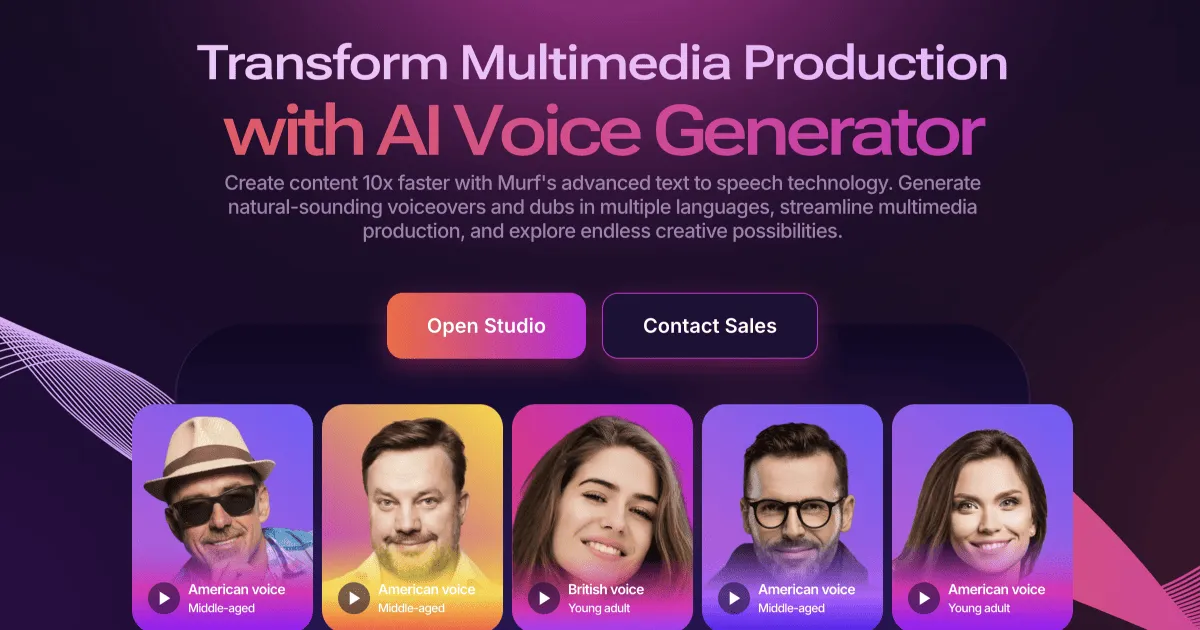
Murf Put the Recording Booth in a Browser
Murf turns scripts into finished narration without the microphone ritual. Its cleverest move is serving two very different customers: the team polishing a training video and the developer trying to make a phone bot answer before the silence gets awkward.

Lina Tonk Is Teaching Marketing to Speak Revenue - and Every Language
The Colombian-born CMO built her career by translating between rooms that often misunderstand one another - marketing and sales, brand and revenue, headquarters and the customer. At Smartling, language itself has become the business.

Nataly Kelly Learned to Read the World Before She Learned to Market It
From an Illinois farm town to Ecuador, HubSpot and Zappi, Kelly built a career around one durable idea: understanding people is the work before the work.

The Global Product Stack Has a Translation Problem
Pendo localizes the product experience. Thematic normalizes the customer voice. Global teams need both jobs done without turning regions into rival versions of the truth.

Voices Built a Marketplace for Humans. Now It Has to Make AI Pay Them.
The Canadian marketplace spent two decades making voice actors easier to hire. Its next act is harder: selling AI voice at enterprise scale without treating the humans behind it as disposable training data.

MadCap Software
How a team of RoboHelp refugees built the quiet workhorse behind the manuals, help sites and owner's guides of thousands of companies you already use.

Smartcat
Smartcat is an AI-powered global content platform that lets enterprises create, translate, and localize content in 280+ languages. It combines a translation management system, computer-assisted translation editor, and a matching engine that routes work to the best AI models, with an integrated marketplace of 500,000+ professional linguists for human review. More than 1,000 companies - including roughly 20% of the Fortune 500 - use Smartcat to scale multilingual content while cutting cost and turnaround time.

Ivan Smolnikov
Ivan Smolnikov is the founder and CEO of Smartcat, an AI-powered language and content platform used by more than 1,000 corporate customers, including roughly 20% of the Fortune 500. A physicist by training, he co-founded ABBYY Language Solutions in 2004 and led it for over a decade before spinning out Smartcat as an independent company in 2016 to replace the slow, manual translation-agency model with software. He is building toward a future of work where human experts collaborate with AI teammates to unlock large productivity gains for global enterprises.

Langfinity
Langfinity (formerly Byrdhouse) is a San Francisco AI company building a real-time voice and text translation platform for global teams. Founded by ex-interpreters Snow Huo and Jacob Greenway, it delivers industry-specific live interpretation across 100+ languages, plugging into video calls and Microsoft Teams so multilingual meetings, sales calls, safety briefings, and training sessions can happen without swapping tools or hiring a human interpreter.

VigourSoft Global Solutions
VigourSoft Global Solutions is a digital transformation and software product engineering services firm founded in 2016, with roots in Pune, India and a presence in the United States. It helps enterprises build and sustain cloud-based products by combining big data analytics, AI/ML, cloud engineering, DevOps, identity & access management, and language/localization technologies. The team positions itself as an engineering partner for companies that want to turn unstructured data into business decisions and modernize aging software.

LILT
LILT is an enterprise AI platform for multilingual content, built around adaptive machine translation and human-in-the-loop workflows. Founded by former Google Translate researchers Spence Green and John DeNero, it serves global enterprises and government agencies who need translation that learns from feedback rather than starting from scratch every time.

Vinay Manglani
Vinay Manglani is the co-founder and CEO of VigourSoft Global Solutions, a Pune-headquartered IT services and software engineering firm with offices across India, the US, and Poland. With over two decades of engineering and leadership experience at companies like Siebel Systems and Symantec, he built VigourSoft in 2016 into a 50+ person shop delivering cloud orchestration, AI/ML, healthcare analytics, software localization, and DevOps solutions for global enterprises. Based across San Francisco and Pune, he bridges Silicon Valley product thinking with India's engineering depth.

Spence Green
Spence Green is the co-founder and CEO of LILT AI, a San Francisco-based enterprise AI translation platform that has raised $95.5M across three funding rounds. A Stanford PhD in computer science and University of Virginia computer engineering graduate, Green built LILT in 2015 alongside co-founder John DeNero after both worked on Google Translate. His research career spans Northrop Grumman defense systems, Johns Hopkins NLP research, and Google, where he developed English-to-Arabic translation models. LILT now serves government agencies including the U.S. Air Force and global enterprises, combining adaptive machine translation with human oversight. Green's guiding philosophy - 'the world belongs to the discontented' - reflects his conviction that universal multilingual information access remains an unsolved problem.