Ofir Krakowski’s office has accommodated a large Yoda poster. A photograph of him and his brother Nir supplies further evidence of their tastes: Captain America stands to one side, the Pink Panther to the other. Between them are two founders trying to persuade software to do something audiences judge almost without thinking. A character speaks. Does the voice belong in the scene?
Krakowski likes the word magic when he talks about filmmaking. His chosen business subjects that magic to a rather practical examination. Change the language. Keep the intention. Make the result convincing enough that viewers can get back to worrying about the plot. The superheroes make cheerful office company; the job description is considerably less forgiving.
A question before the company
Years before Deepdub, Krakowski was already interested in how useful knowledge gets stranded. At WPP’s Stream gathering in 2015, he proposed a discussion about knowledge sharing inside organizations. How long does it take to find the right expert? Is the obvious expert really the right person? Could machine learning help knowledge reach someone when they needed it?
These were questions about people as much as databases. An organization can possess an answer and still fail to deliver it. The distance might be a departmental boundary, a poor search system or the simple fact that nobody knows whom to ask. Reading those questions alongside his later work suggests a recurring interest: access depends on the arrangements around information.
His professional background was in Israeli Air Force technology. He served in Ofek 324 and helped establish its machine learning and innovation department. That experience gave him a route into difficult technical work. It did not dictate that his next customers would be people making television. That choice came with his brother, and with an affection for the things people watch.
Start where the audience is demanding
Ofir and Nir founded Deepdub in 2019. Ofir became CEO; Nir became CTO. They chose to work on dubbing, where a seemingly simple request hides a crowded production schedule. An audience wants to hear a story in a language it understands. Behind that request sit translation, adaptation, casting, voice generation and a finished mix.
The brothers aimed at demanding theatrical work. Krakowski’s reasoning was that solving the problem for a major film production would prepare them to serve other kinds of content. It was an ambitious place to begin. A film can ask a voice to whisper, threaten, flirt or unravel within a few scenes. Correct pronunciation gets the performer through the door. The scene still needs acting.
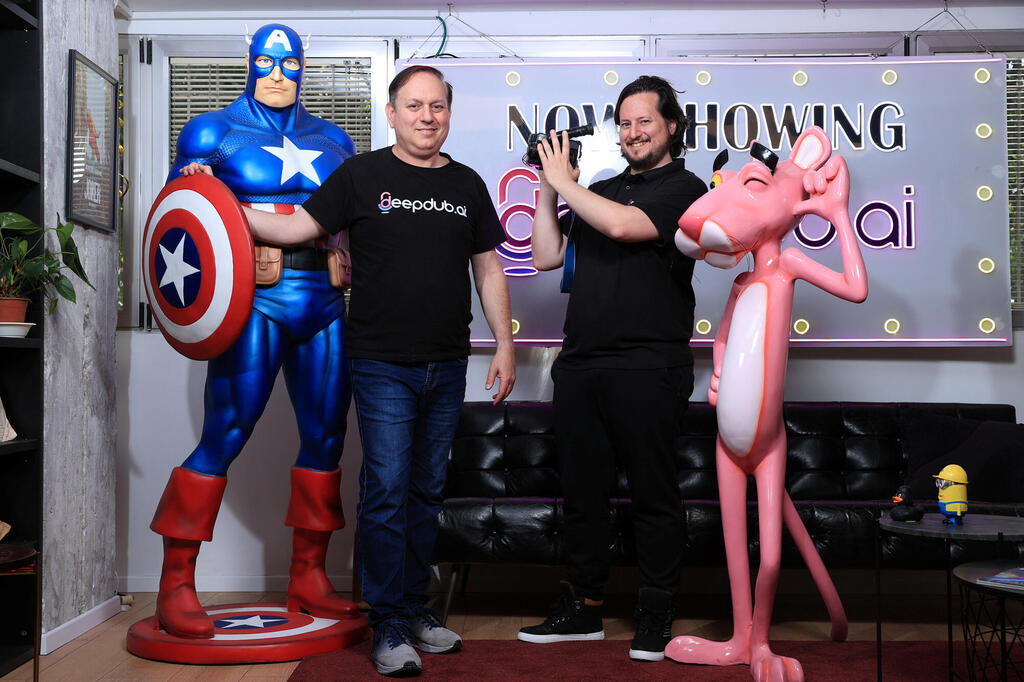
The family connection is explicit; the division of labor is too. Publicly, Ofir explains the audience problem and the business built around it, while Nir leads the technology. Their shared enjoyment of entertainment gives the undertaking a personal starting point. They wanted more people to encounter stories they would otherwise miss.
“Localization has to preserve this magic.”
Ofir Krakowski · 2023
A passport for a performance
A translated script can be accurate and still be wrong for the scene. A joke may depend on a local reference. An idiom can become absurd when carried over word for word. A voice can say something affectionate with an emphasis that makes it sound impatient. Anyone who has sent an unfortunate text message has conducted a small experiment in the importance of delivery.
Krakowski describes localization as a workflow with several judgments along the way. Identify who said what. Translate the dialogue. Adapt it for the audience. Generate the voices. Fit the speech into the surrounding sound. Each stage can introduce a mistake that survives into the next one. Producing convincing speech solves one part of that sequence.
Deepdub’s answer has included human review. Language specialists check translations; production experts listen for naturalness and emotion. Its emotional text-to-speech technology is meant to give generated delivery a wider expressive range. The name sounds technical because it is. The intended result is something a viewer should be able to hear without thinking about the technology.
- 01Understand
Speaker & context - 02Adapt
Language & culture - 03Perform
Voice & emotion - 04Review
Listen & refine
The journey also runs in both directions. Deepdub’s early work included bringing foreign-language series into English through Topic. Krakowski has pointed to the English dubbing of Hatufim, the Israeli series that inspired Homeland. For an American viewer, the original could arrive with a familiar spoken language while retaining its own cast and setting. The remake and the original become two different invitations.
Hollywood brings its own homework
In February 2022, Deepdub announced a $20 million Series A led by Insight Partners. Existing investors Booster Ventures and Stardom Ventures participated, alongside new investors. The announcement also named entertainment executives among the angel investors, including former Fox Television Studios president Emiliano Calemzuk and former HBO Max chief content officer Kevin Reilly.
Those connections matter in a business with established habits and expensive assets. A studio has to decide whether a new supplier understands its production requirements, its delivery standards and its material. An attractive sample can start a conversation. A working relationship asks what happens when the project becomes complicated and somebody needs an answer.
Content security became part of Krakowski’s pitch. In 2023, Deepdub received content-security accreditation through the Motion Picture Association’s Trusted Partner Network. Unreleased footage is a different proposition from a public demonstration clip. A company asking to work on it has to be trusted before its finished dialogue gets an audition.
By November 2024, Krakowski was describing a business serving hundreds of clients and thousands of hours of dubbed content. He also discussed the possibilities within multilingual markets such as India. A border on a map is an incomplete guide to a potential audience. Several languages can share a country; a single language can carry several regional expectations.
The voice still belongs to someone
The ability to generate speech creates an immediate question about permission. A recognizable voice is part of a performer’s livelihood. Turning it into something reusable changes the kinds of agreements that need to be made. Krakowski has addressed those concerns publicly, and Deepdub has made licensing and compensation part of its offering.
In December 2023, the company introduced its Voice Artist Royalty Program. The published process asks performers to apply with voice samples. Producers review the recordings; approved voices can enter a marketplace. Artists are paid when their voices are selected for a project, with use governed by the agreement. The program says performers retain their commercial rights.
The arrangement puts a transaction around something an audio demonstration cannot settle. A listener can judge the sound. The performer also needs terms. In a field where the finished product can circulate far from its original recording session, those terms are part of what makes participation possible.
Paid over the preceding year to voice actors, dubbing directors, dialogue editors and language adapters.
That payout figure covers a wider group than voice artists alone. It describes a production business with several kinds of creative labor in the loop. For Krakowski, the commercial argument is that cheaper localization can open projects and markets that previously failed the budget test. Whether a particular production delivers that opportunity depends on the work and the people paid to do it.
A bigger audience for the lesson
His ambitions reach beyond the entertainment shelf. On learning, Krakowski has described a practical obstacle: a person listening in a second language may spend effort translating when they want to be understanding the subject. A video being available online does not guarantee that its intended viewer can learn comfortably from it.
He has connected part of Deepdub’s motivation to Nir’s experience working with Brazilian colleagues who wanted to deepen their cybersecurity knowledge. English-language material presented an obstacle. That example gives the broader ambition a recognizable setting: capable people, useful instruction and a language standing between the two.
In 2024, Krakowski was also explaining the commercial logic of making previously uneconomic content worth localizing. There is a relationship between that argument and the educational one. Both concern material that exists but reaches fewer people than it might. Production cost helps decide which audience receives an invitation.
His 2015 question about finding expertise inside an organization has an echo here. The scale has changed, and so has the product. The underlying frustration remains recognizable. Useful knowledge can sit close at hand and still require an unreasonable amount of effort to reach.
The next scene is a conversation
In April 2026, Deepdub introduced an Agentic Dubbing Co-Worker inside its production workflow. The company describes software that can work on dialogue, characters and tracks, manage timeline markers and run checks before export. Creative teams remain in command. It extends the attempt to help with the work surrounding the voice.
By September, another announcement moved the setting from screen dialogue to live customer interactions. Phantom Z 3.4 Conversational emphasized multilingual speech and the handling of written dates, numbers and amounts. These details have little cinematic glamour. They become consequential as soon as someone needs an account number read correctly.
Deepdub reports a p95 time to first audio of 150 milliseconds in real-time mode at 48 kHz. That is a reported speech-system measure; the experience of an entire conversation also depends on the surrounding application. Krakowski’s explanation is more memorable than the specification: “Every voice model sounds impressive for two minutes in a demo. Very few survive two weeks with real customers.”
The audience has changed again. A viewer wants to remain inside a story. A caller wants to finish a task. In both settings, attention drifts toward the voice when something goes wrong. Krakowski’s career has brought him to the labor of making those small interruptions less frequent. Captain America can keep his shield. The next difficult line may simply contain a surname.
Keep listening
Conversations, company details and further reading.